
Afuri's Yurakucho location occupies the casual end of Tokyo's ramen hierarchy with consistency that three consecutive years on Opinionated About Dining's Japan Casual list confirms. The Chiyoda City address, inside the Lumine Street complex, places it at the junction of commuter Tokyo and serious bowl culture. For a category that rewards repetition over occasion dining, Afuri earns its place.
Pearl is the En Primeur Club membership app — saves, bookings, and concierge access live there. Same editors, same standards.
- Address
- Japan, 〒100-0006 Tokyo, Chiyoda City, Yurakucho, 2 Chome−9−1 ルミネストリート AFURI 有楽町
- Phone
- +81 3-6206-3609
- Website
- afuri.com
- Directions
- Get directions
 Saves & bookings on Pearl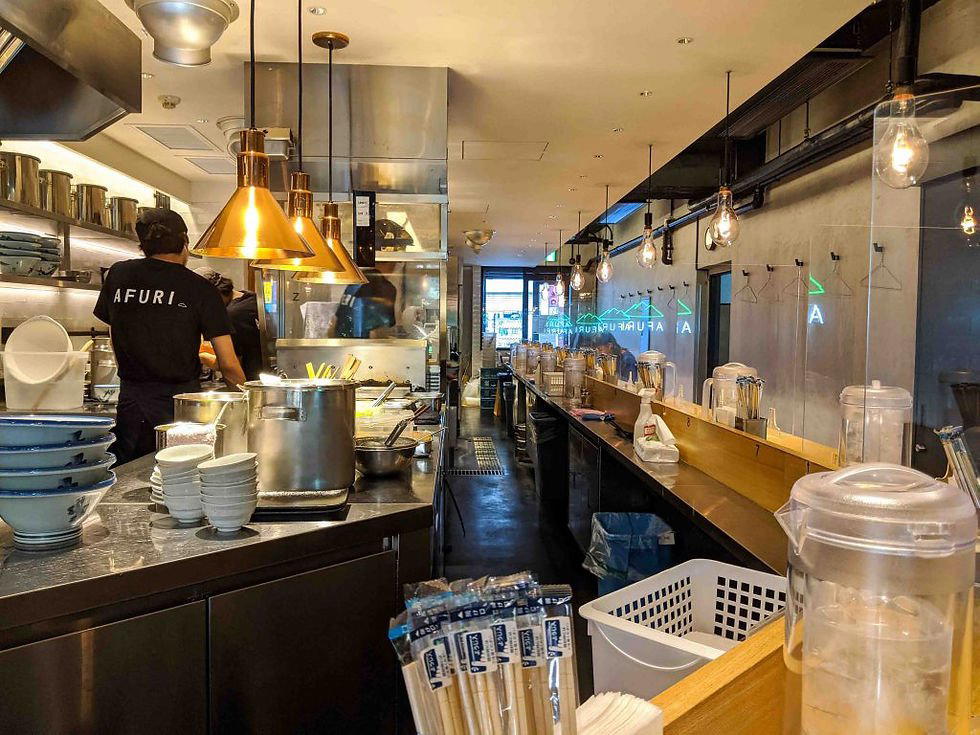
Where Commuter Tokyo Meets Bowl Discipline
The Lumine Street complex at Yurakucho sits in the kind of transit-adjacent commercial space that Tokyo does better than any other city: high footfall, architecturally considered, and home to food operators that treat the format seriously rather than as an afterthought to retail. Afuri's presence here, in Chiyoda City's 2-Chome district, is not incidental.
Ramen in Tokyo has never been a single thing. The city's bowl culture is segmented by broth style, noodle gauge, topping philosophy, and regional lineage in ways that make direct comparison between shops almost meaningless unless you're comparing like for like. Within that segmented field, Afuri has built a position around a lighter, yuzu-inflected shio and shoyu approach that sits at a different coordinate from the tonkotsu-heavy south or the rich, porky bowls that dominate certain Tokyo neighborhoods. That positioning matters when you're reading the awards context around it.
Three Years on the List, What That Actually Signals
Afuri's Yurakucho location has appeared on Opinionated About Dining's Japan Casual ranking for three consecutive years: ranked 60th in 2023, 65th in 2024, and 66th in 2025. OAD's casual list is constructed from sourced critic votes rather than public sentiment, which makes its rankings a different kind of signal than a star count or a user review aggregate.
OAD lists shift as the surveyed universe of voters expands and as new entrants compete for position. It has maintained peer recognition through a period when Tokyo's casual dining scene has seen considerable new entrants, particularly in the ramen and noodle categories where competition from operators like Chukasoba Ginza Hachigou, Chukasoba KOTETSU, and Fuunji has intensified.
For context, Tokyo's shio ramen specialists occupy a smaller niche within the broader bowl category. Afuri's yuzu-forward style aligns it more closely with operators like Hakodate Shioramen Goryokaku than with the rich broth houses that tend to dominate volume rankings. It is worth comparing approaches across this comparable set before committing to a visit if style specificity matters to you.
The Craft Behind the Bowl, Technique Over Origin Story
Japanese ramen, in its serious form, is a production exercise as demanding as any fine-dining kitchen discipline. The variables are broth reduction times, noodle hydration levels, tare concentration, and topping sequencing. What distinguishes the recognized shops from the competent ones is not origin story but execution consistency across service after service. Afuri's staff rotation, given the venue's placement inside a high-traffic commercial complex, means the product has to be systematized rather than dependent on a single craftsperson. That is a different kind of discipline from a counter where one chef controls the bowl end-to-end, but it is no less demanding to maintain at the level that sustains three-year OAD presence.
Afuri is a casual ramen counter in Tokyo's Yurakucho district, known for modern yuzu ramen and a walk-in-friendly setup. It is that Afuri represents a style of ramen shop that Tokyo's food culture has refined into something quite specific: the well-resourced casual operator with a defined flavor signature, consistent enough to attract critic attention, accessible enough to serve a transit-adjacent demographic without compromising the product. That model is increasingly influential, with analogues appearing in cities where Japanese ramen culture has exported, including the Afuri Ramen location in Portland, which represents a different expression of the same flavor logic in a North American context.
Placing Afuri in Tokyo's Broader Dining Sequence
Afuri is a casual ramen counter in Tokyo's Yurakucho district, known for modern yuzu ramen and a walk-in-friendly setup. It occupies the casual tier where OAD recognition carries more weight than star counts, where the reader's decision framework is about which bowl, in which neighborhood, at which time of day, rather than which occasion dining experience to anchor a trip around.
Within the noodle category specifically, the comparison set worth knowing includes Chuogo Hanten Mita for a different broth tradition, and if you are building a serious ramen itinerary across a Tokyo visit, the geographic spread of these addresses across Chiyoda, Shinjuku, and Minato wards requires some planning. The Yurakucho location is among the more convenient for visitors staying in central Tokyo, given its proximity to Yurakucho Station on the Tokyo Metro Yurakucho Line and JR lines.
For those extending a Japan trip beyond the capital, the broader culinary conversation continues with high-investment dining at HAJIME in Osaka, Gion Sasaki in Kyoto, and akordu in Nara, while Goh in Fukuoka anchors the southwest. Closer to Tokyo, 1000 in Yokohama is a day-trip-distance alternative for different dining ambitions. For those curious about ramen culture extending to the American Midwest, Akahoshi Ramen in Chicago represents the category's continued international momentum.
Planning a Visit
Afuri's Yurakucho address inside Lumine Street makes it direct to incorporate into a central Tokyo day without dedicated transport planning. The venue is accessible directly from Yurakucho Station, which sits on both the JR Keihin-Tohoku and Yamanote lines as well as the Tokyo Metro Yurakucho Line, positioning it between Ginza and Tokyo Station in terms of neighborhood geography.
Recognition Snapshot
Comparable venues nearby, for context on price, style, and recognition.
| Venue | Cuisine | Price | Awards | Notes |
|---|---|---|---|---|
| AfuriThis venue — the venue you are viewing | Modern Yuzu Ramen | $$ | Not listed | Not listed |
| Centre Bakery | Japanese Shokupan Bakery Café | $$ | Not listed | Bunkyō |
| Tonki | Classic Tonkatsu | $$ | Not listed | Meguro |
| Fuunji | Rich Tsukemen Ramen | $$ | Not listed | Shibuya |
| Ginza Asami | Traditional Japanese Kaiseki | $$ | Michelin Plate | Chūō |
| Sousakumen Hitosuji | Modern Creative Ramen | $$ | Not listed | Suginami |
Recognition history
Dated appearances from independent guides and award organizations, with the underlying list record or original source where available.
Opinionated About Dining Casual in Japan Ranked #66
Opinionated About Dining
Opinionated About Dining Casual in Japan Ranked #65
Opinionated About Dining
Opinionated About Dining Casual in Japan Ranked #60
Opinionated About Dining
Continue exploring
More in Tokyo
More from Chef Various
Browse all →
Restaurants in Tokyo
Browse all →


Bars in Tokyo
Browse all →

At a Glance
- Modern
- Trendy
- Minimalist
- Casual Hangout
- Solo
- After Work
- Late Night
- Open Kitchen
- Sake Program
Current opening hours
- Monday
- 11 AM–11 PM
- Tuesday
- 11 AM–11 PM
- Wednesday
- 11 AM–11 PM
- Thursday
- 11 AM–11 PM
- Friday
- 11 AM–11 PM
- Saturday
- 11 AM–11 PM
- Sunday
- 11 AM–11 PM
Hours can change for holidays and private events. Last verified .
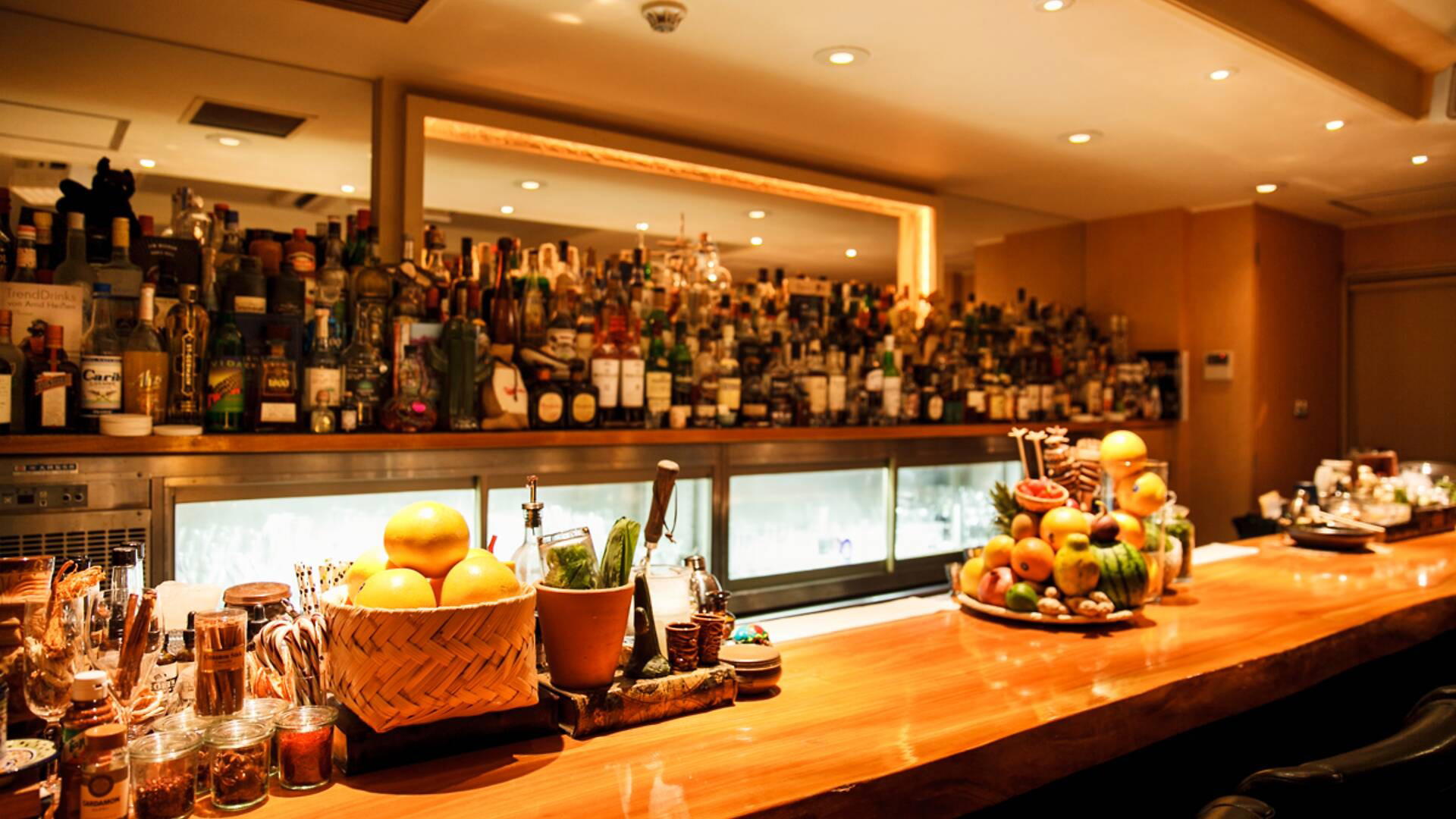
Slick, modern, and clean interior with simple cafe-like design, open kitchen, and minimalist aesthetic.