
A Bib Gourmand-recognised ramen counter in Shimokitazawa, Chukasoba KOTETSU holds consecutive Michelin recognition for 2024 and 2025 while keeping prices at the single-symbol yen tier. Located on a side street in one of Tokyo's most neighbourhood-dense districts, it represents the strand of Tokyo ramen that earns critical attention without abandoning its local identity.
Pearl is the En Primeur Club membership app — saves, bookings, and concierge access live there. Same editors, same standards.
- Address
- Japan, 〒155-0031 Tokyo, Setagaya City, Kitazawa, 2 Chome−39−13 田丸ビル 1F
- Phone
- +81 3-5465-0044
- Website
- twitter.com
- Directions
- Get directions
 Saves & bookings on Pearl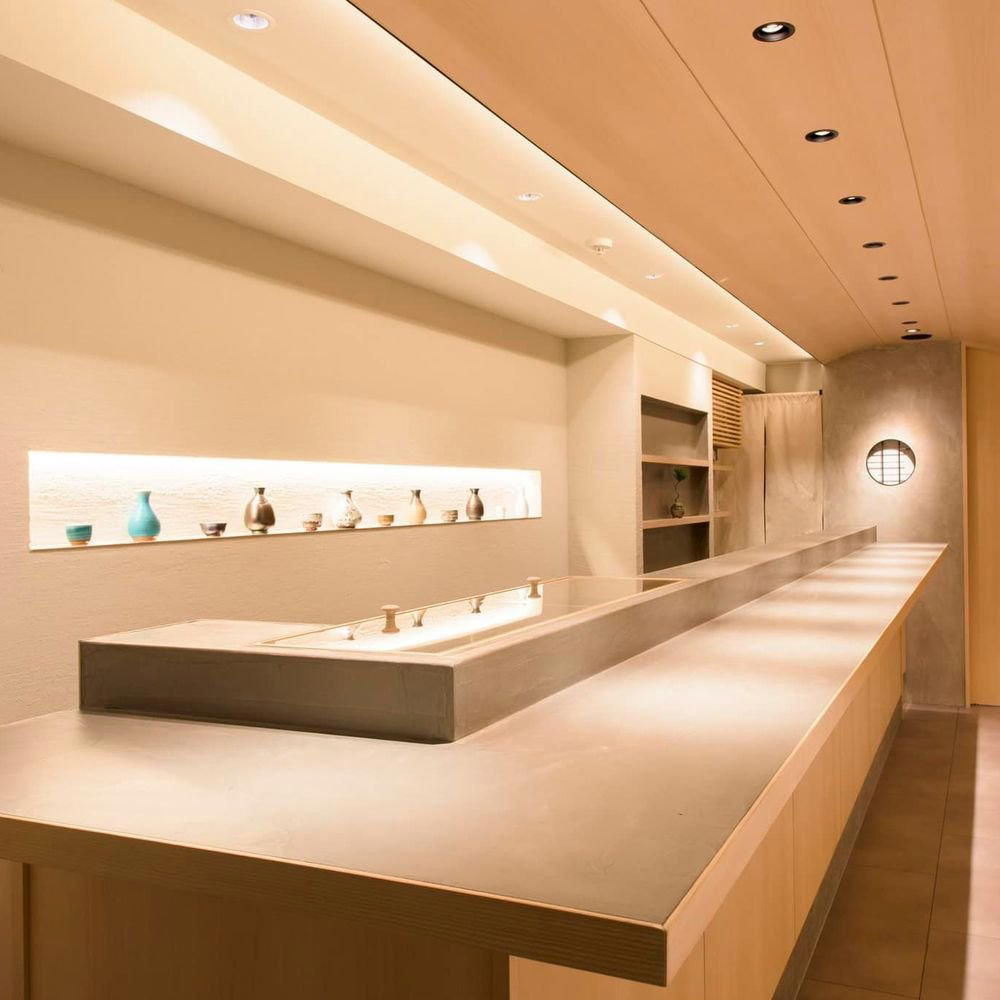
A Side Street in Shimokitazawa That Happens to Have Michelin Recognition
The street noise shifts from the arterial hum of Sangenjaya or Shinjuku to something closer-grained: record shops with hand-lettered signs, coffee roasters with their doors propped open, a fishmonger doing brisk business beside a vintage clothing rail spilling onto the pavement. This is a neighbourhood that has preserved the texture of old Tokyo not through heritage designation but through density and use, where small operators have stayed put and landlords have, so far, resisted the pull of chain conversion. It is in this environment that Chukasoba KOTETSU sits on a ground-floor unit in the Tamaru Building on Kitazawa 2-chome, and it is the environment, as much as the bowl, that defines what the experience means.
Ramen's Relationship With Neighbourhood Identity
Tokyo ramen has a well-documented high-low tension. At one end sit the destination counters whose reputation draws visitors from Osaka, Seoul, and further afield; at the other, the neighbourhood shops whose regulars walk five minutes from home and pay less than a station-side lunch anywhere else in the city. The Bib Gourmand category, which Michelin uses to flag value-led cooking of genuine quality, is specifically designed to recognise the latter type rather than reward ambition with a star.
That consecutive recognition matters more than either year in isolation. A single listing can reflect timing; two consecutive years indicate consistency, which is the quality that neighbourhood cooking lives or dies by. Compare that record against the broader Tokyo ramen field: Afuri has scaled across multiple Tokyo locations and into international markets, a trajectory that shifts its identity from neighbourhood shop to brand. Fuunji in Shinjuku draws queue-forming demand from beyond the immediate area. Chukasoba Ginza Hachigou operates in the commercial density of Ginza, a categorically different context. KOTETSU's Shimokitazawa address is part of its identity claim: the recognition has come to the neighbourhood, not the other way around.
The Chukasoba Category
The name itself carries editorial weight. Chukasoba, literally Chinese noodles, the older Japanese term for what is now commonly called ramen, signals a particular orientation toward the classical, the restrained, and the broth-forward. Shops that use the chukasoba designation often position against the intensified, fat-loaded, or technically baroque end of the ramen spectrum. Hakodate Shioramen Goryokaku similarly works in a register that prioritises clarity over spectacle. This is the end of the spectrum where the quality of the dashi, the precision of the seasoning, and the character of the noodle matter most, because there is less elsewhere in the bowl to obscure them.
That orientation has a particular resonance in Shimokitazawa, a neighbourhood that has consistently attracted residents and operators who prefer the considered over the showy. The area's independent retail culture and its long-standing live music venues operate on a similar aesthetic logic: craft visible in the detail, identity expressed through restraint.
Where KOTETSU Sits in the Tokyo Dining Conversation
Tokyo's Michelin-recognised dining runs from three-star kaiseki and French rooms charging several hundred euros per head to Bib Gourmand counters where the ceiling is still well under two thousand yen. The price at KOTETSU places it at the accessible end of that range, in a different tier from the ¥¥¥¥ world of Gion Sasaki in Kyoto or HAJIME in Osaka. The Bib Gourmand framework treats this as a feature: Michelin is explicitly saying that the quality-to-price ratio here is worth the detour, not that the price is a limitation.
That framing is important for readers calibrating their Tokyo itinerary. A meal here does not compete with the commitment and cost of an omakase counter or a kaiseki room; it fills a different slot, the kind of lunch or early dinner that delivers genuine critical substance at the price of a convenience-store bento multiplied by three. For comparable ramen at Michelin-endorsed quality, Fuunji operates in a similar value register, though in a busier Shinjuku context. Outside Tokyo, the ramen category has drawn serious attention internationally, with Akahoshi Ramen in Chicago and Afuri Ramen in Portland carrying the chukasoba sensibility into American dining contexts.
The Shimokitazawa Factor
Shimokitazawa is accessed via the Odakyu and Keio Inokashira lines, with the neighbourhood spreading out from its two station exits in a low-rise grid that has changed less than most of central Tokyo since the 1980s. The 2-chome address places KOTETSU within walking distance of the area's densest cluster of independent shops and venues. Setagaya City, which administers this ward, has among the higher residential densities in Tokyo without the vertical development profile of central wards. The result is a neighbourhood that functions at a human scale, where a ramen shop on a side street draws its regulars on foot rather than by destination search.
Shimokitazawa rewards an afternoon of wandering before or after a meal. It does not slot naturally into a day structured around Ginza, Shinjuku, or the tourist circuits of Asakusa; it works better as a deliberate neighbourhood visit, which is exactly the register in which KOTETSU operates. Within the Kanto region, 1000 in Yokohama represents a different point on the quality-access spectrum worth knowing. Further afield, Goh in Fukuoka and akordu in Nara illustrate how Japan's regional dining scenes hold their own against the Tokyo concentration. And for an interesting counterpoint between Japanese and Western ramen influences, Chuogo Hanten Mita is worth considering within Tokyo itself. 6 in Okinawa represents the outer edge of how far Japan's serious restaurant culture now reaches.The Essentials
Comparable venues nearby, for context on price, style, and recognition.
| Venue | Cuisine | Price | Notes |
|---|---|---|---|
| Chukasoba KOTETSUThis venue — the venue you are viewing | Setagaya, Classic Shoyu Chukasoba | $$ | Not listed |
| Katsuo Shokudo | Not listed | $$ | Shibuya, Bonito Specialty Japanese Cafeteria |
| Hatsuogawa | Taitō, Traditional Japanese Unagi | $$ | Not listed |
| Mejiro Shunkotei | Not listed | $$ | Toshima, Modern Yoshoku (Japanese-Style Western) |
| Mochibuta Tonkatsu Taiyo | Shinagawa, Tonkatsu | $$ | Not listed |
| Ginza HARU CHAN Ramen | Chūō, Shio Ramen | $$ | Not listed |
Recognition history
Dated appearances from independent guides and award organizations, with the underlying list record or original source where available.
Michelin Bib Gourmand
Michelin
Michelin Bib Gourmand
Michelin






At a Glance
- Cozy
- Intimate
- Casual Hangout
- Solo
- Open Kitchen
- Sake Program
Current opening hours
- Monday
- 11:30 AM–3 PM
- Tuesday
- Closed
- Wednesday
- 11:30 AM–3 PM, 5–9 PM
- Thursday
- 11:30 AM–3 PM, 5–9 PM
- Friday
- 11:30 AM–3 PM, 5–9 PM
- Saturday
- 11:30 AM–3 PM, 5–9 PM
- Sunday
- 11:30 AM–3 PM, 5–9 PM
Hours can change for holidays and private events. Last verified .
Compact counter-only space where diners watch kitchen preparation closely, with a no-frills, authentic ramen shop atmosphere.