
Michelin Bib Gourmand · Tabelog 100 #8
Our verdict
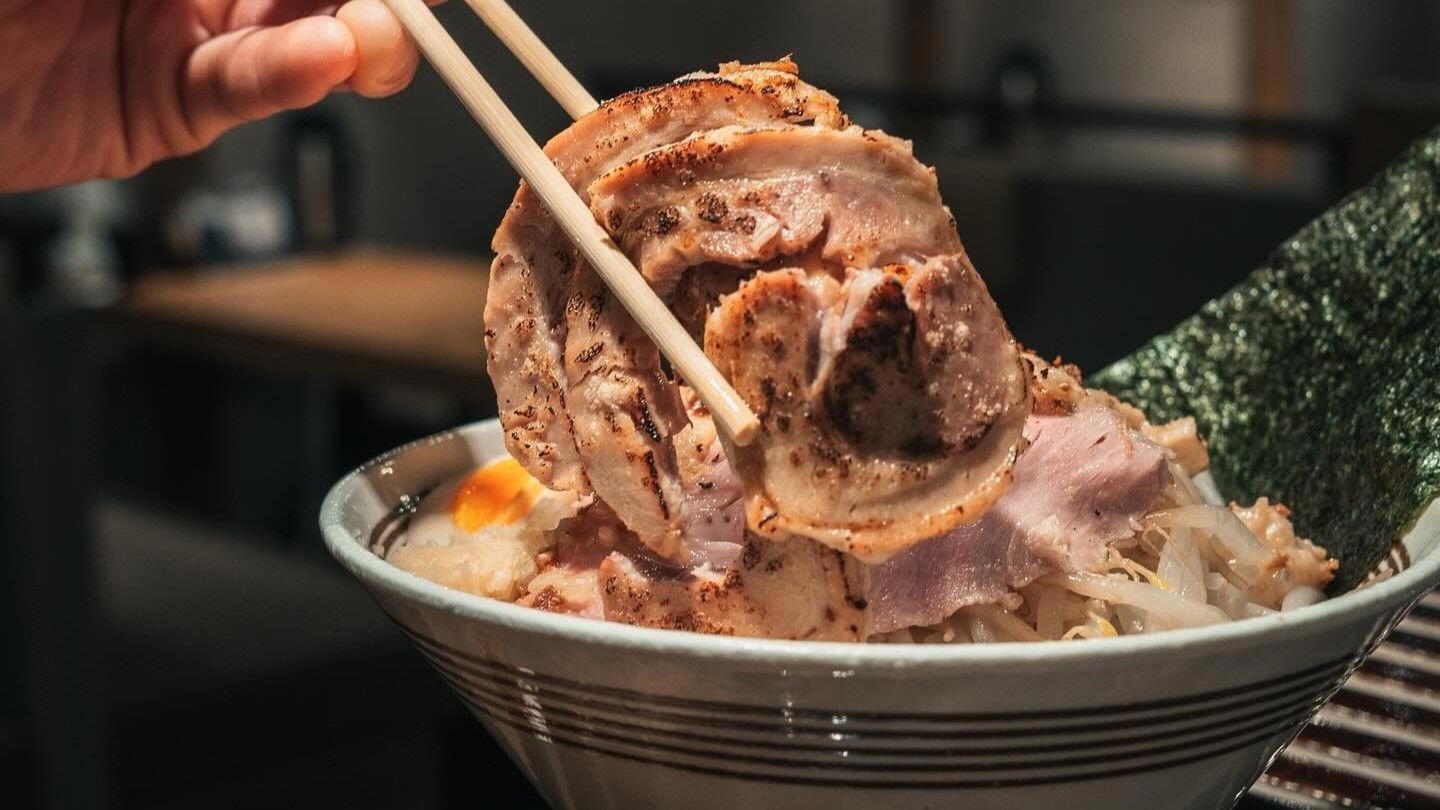
Chukasoba Mugen in Osaka's Fukushima Ward holds consecutive Michelin Bib Gourmand recognition for 2024 and 2025, placing it among the city's most consistently regarded ramen counters. The bowl here carries an almost philosophical premise: the gradual dilution of soup by salt water from cooking noodles is treated as a feature, not a flaw. At the ¥ price point, that level of conceptual intent is rare.

Pearl is the En Primeur Club membership app, where members save venues, book tables and use the concierge.
Classical Music, Salt Water, and the Architecture of a Bowl
Walk into the ramen shops of Osaka's Fukushima Ward on a weekday and the soundtrack is usually the clatter of trays and the hiss of steam. At Chukasoba Mugen, located in the Ebie pocket of Fukushima, classical music plays in the background while bowls arrive at the counter. The pairing sounds affected until you sit with it. The slurping of noodles against a string quartet is not a gimmick; it reframes the act of eating ramen as something worth attending to. That framing matters, because the bowl itself rewards attention.
Japanese ramen culture has always contained within it a serious craft tradition, one that overlaps in unexpected ways with the kaiseki ethos of restraint, seasonality, and compositional precision. Kaiseki, as practiced at the ¥¥¥ and ¥¥¥¥ tier by Osaka houses like Kadoya Shokudo or at the three-Michelin-star level by Taian, operates through a logic of sequential small courses, each calibrated to shift the palate incrementally. Ramen, at its most considered, compresses that arc into a single bowl: the soup changes from first sip to last, the noodles absorb and release flavour as they cook in the broth, and the toppings dissolve at different rates. The diner experiences a timeline, not just a dish.
The Dilution Principle
Mugen makes that timeline explicit. The venue's documented philosophy around salt water from the noodles gradually diluting the soup is not a footnote; it is the central idea. The house instruction is to pour a small amount of broth into a separate vessel before eating, then compare that reserved soup against what remains in the bowl after the noodles are finished. The gap in flavour concentration is the point. What begins as a tightly wound, salt-forward broth opens over the course of the meal into something softer, broader, and more integrated.
This is, structurally, the same principle that governs a long kaiseki sequence: the most assertive element arrives when the palate is freshest; the resolution comes after the palate has been worked. Applied to a single bowl priced at the ¥ level, it is an act of conceptual generosity. Comparable precision at the multi-course end of Osaka's dining spectrum, say at Gion Sasaki in Kyoto or at Fujiya 1935's innovative tasting format, arrives with commensurately higher price tags. Here, the same attentiveness to progression costs a fraction of that.
Fukushima's Position in Osaka's Ramen Tier
Osaka is not primarily a ramen city in the way that Fukuoka or Sapporo are, but it sustains a credible and growing scene at the serious end of the category. The Michelin Bib Gourmand designation, awarded to Mugen in both 2024 and 2025, identifies venues where quality clearly exceeds price expectation. Consecutive recognition confirms consistency rather than a single strong year.
Fukushima Ward itself has shifted over the past decade from a largely residential and light-industrial district into one of the city's more interesting dining corridors, with a concentration of serious independent operators. The ward sits just west of the Umeda transport hub, which makes it accessible without being in the tourist circuit proper. That position tends to keep the clientele local-weighted, which is usually a reliable quality signal in Japanese dining.
Chef Credentials and the French Connection
The chef on record is Cyril Leclerc, a name that situates Mugen in an interesting cross-cultural niche. French chefs working in Japanese ramen represent a small and specific cohort, and the presence of that background tends to introduce a different set of assumptions about stock clarity, fat management, and the structural role of acidity. Whether those influences are visible in the bowl requires a visit to confirm, but the combination of French training instincts and the documented dilution philosophy suggests a kitchen where the soup's arc has been thought through with some rigor.
In the broader context of Western chefs working within Japanese culinary frameworks, the comparison tier runs from Osaka's own high-end French-Japanese fusion houses like Goh in Fukuoka and akordu in Nara to Tokyo omakase counters like Harutaka. Mugen occupies a radically different price register, but the cross-cultural credential is the same kind of signal.
How It Fits into a Wider Osaka Visit
Planning a meal at Mugen does not require extensive logistics. The address in Fukushima's Ebie district places it within reach of central Osaka, and the ¥ price point means it fits naturally as a standalone lunch or an early dinner stop before moving on to a longer evening elsewhere. For a fuller picture of where the bowl sits within Osaka's dining spectrum, from counter ramen at this tier up through the kaiseki and fine-dining levels, see our full Osaka restaurants guide. For those building a multi-day visit, our full Osaka hotels guide, bars guide, and experiences guide cover the surrounding context. The Osaka wineries guide rounds out the full picture for those interested in the regional drink scene.
For context on how ramen at this level compares across Japanese cities, Afuri in Tokyo and its international offshoot Afuri Ramen in Portland represent the lighter, yuzu-forward end of the genre spectrum, while 1000 in Yokohama and 6 in Okinawa show how different regional identities shape the bowl. Mugen's conceptual rigour and Bib Gourmand standing put it at the more considered end of that national conversation.
Frequently asked questions
Does Chukasoba Mugen work for a family meal?
The ¥ price range makes it one of the more accessible options in Osaka's Michelin-recognised dining tier, which works in a family's favour on cost. That said, Chukasoba Mugen's documented philosophy around timed dilution and classical music as part of the bowl experience suggests a contemplative format rather than a lively, child-friendly setting. It suits families with older children or teenagers who can engage with that kind of meal.
How would you describe the vibe at Chukasoba Mugen?
The venue's own philosophy frames the meal as a duet between slurping noodles and classical music playing in the background, which sets it apart from the utilitarian clatter of most Osaka ramen shops. It sits in Fukushima's Ebie district, a neighbourhood that runs quieter than Namba or Shinsaibashi, and the Bib Gourmand recognition in both 2024 and 2025 confirms it draws a crowd that takes the bowl seriously. Focused and unhurried is the honest characterisation.
What distinctions does Chukasoba Mugen have?
Chukasoba Mugen has received recognition including: While eating ramen, salt water from the noodles gradually dilutes the soup. You can experience this for yourself. First, pour a little of the soup into a separate bowl. Finish the noodles in the original bowl, then try sipping the reserved ….
What's the must-try dish at Chukasoba Mugen?
The venue's defining concept is built around the bowl of chukasoba itself and the dilution effect that salt water from the noodles has on the soup over the course of a meal. Mugen's documented approach instructs guests to reserve a small amount of soup before finishing the noodles, then compare it to what remains in the bowl, the shift in flavour concentration is central to the intended experience. That bowl, consumed with that sequence in mind, is the point of the visit.
What's the cuisine at Chukasoba Mugen?
How much does it cost to eat at Chukasoba Mugen?
Pricing at Chukasoba Mugen is listed as ¥.
What part of town is Chukasoba Mugen in?
Chukasoba Mugen is located at Japan, 〒553-0001 Osaka, Fukushima Ward, Ebie, 5 Chome−5−10 前田ビル, Osaka.
A Quick Peer Check
| Venue | Cuisine | Price | Awards | Notes |
|---|---|---|---|---|
| Chukasoba MugenThis venue (the venue you are viewing) | Chukasoba Ramen | $10–20 | Michelin Bib Gourmand · Tabelog 100 #8 | Not listed |
| HAJIME | Avant-Garde Japanese Fine Dining | $300–500 | 3 Michelin Stars · World's 50 Best #83 | French, Innovative |
| La Cime | Modern French with Japanese Ingredients | $150–200 | 2 Michelin Stars · World's 50 Best #13 | French |
| Kashiwaya Osaka Senriyama | Seasonal Kaiseki Omakase | $200–300 | 3 Michelin Stars · La Liste Top Restaurants | Japanese |
| Taian | Traditional Japanese Kaiseki Omakase | $150–200 | 3 Michelin Stars · La Liste Top Restaurants | Kaiseki, Japanese |
| Fujiya 1935 | Modern Japanese with European influences | $100–150 | 2 Michelin Stars · La Liste Top Restaurants | Innovative |
Recognition history
Dated appearances from independent guides and award organizations, with the underlying list record or original source where available.
Michelin Bib Gourmand
Michelin
Tabelog 100 #8 · No. 8
Tabelog · Tabelog 100 - Ramen - OSAKA - 2025
Full recognition history (4 entries)
Michelin Bib Gourmand
Michelin
Michelin Bib Gourmand
Michelin