
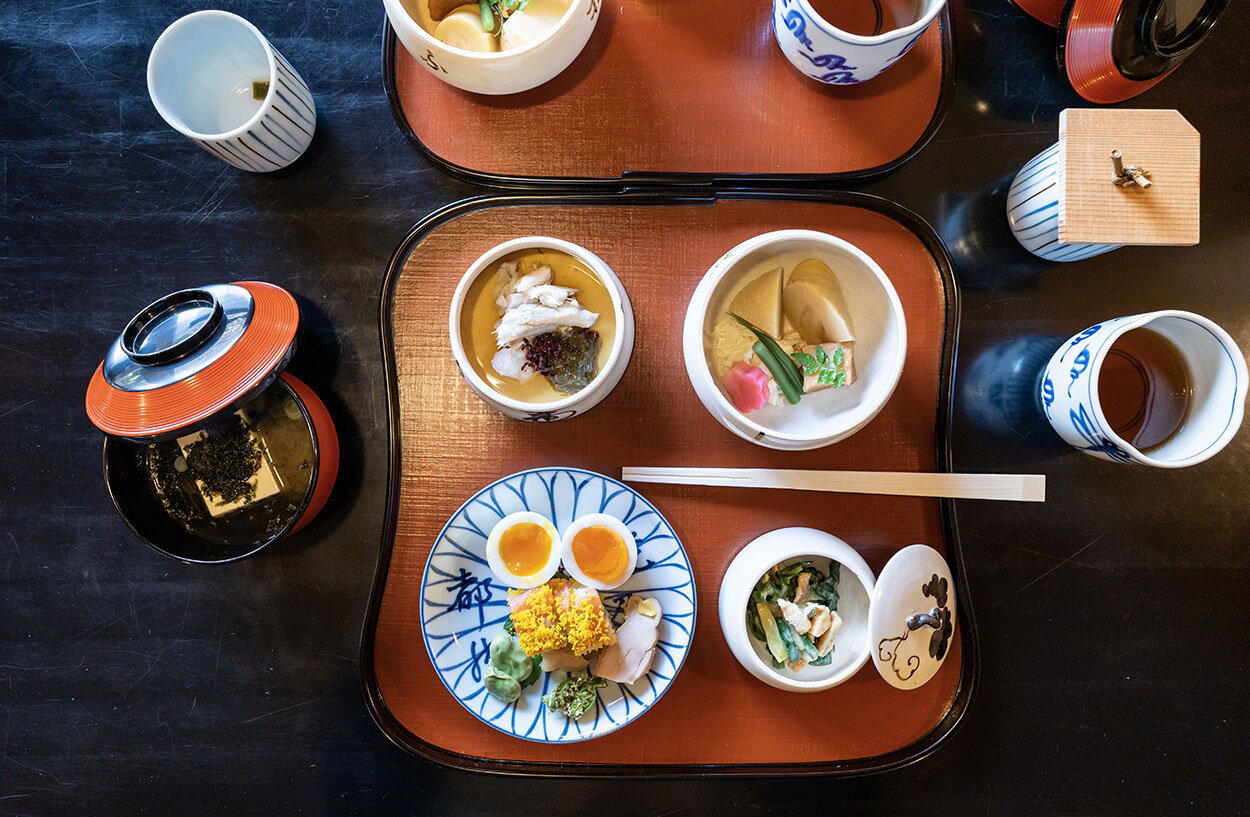
A Michelin Plate-recognised address in Higashiyama Ward where the kitchen draws equal confidence from French and Japanese traditions. Steamed fish with grated turnip sits alongside abalone foie gras; chub mackerel sushi shares the menu with black soybean Mont Blanc. The result is an eclectic, considered cross-cultural conversation at a mid-range price point for Kyoto's dining scene.
Pearl is the En Primeur Club membership app — saves, bookings, and concierge access live there. Same editors, same standards.
- Address
- 392 Kinencho, Higashiyama Ward, Kyoto, 605-0828, Japan
- Phone
- +81 50-5487-3985
- Website
- shuhaku.myconciergejapan.net
- Directions
- Get directions
 Saves & bookings on Pearl
Where Higashiyama Meets the Kitchen
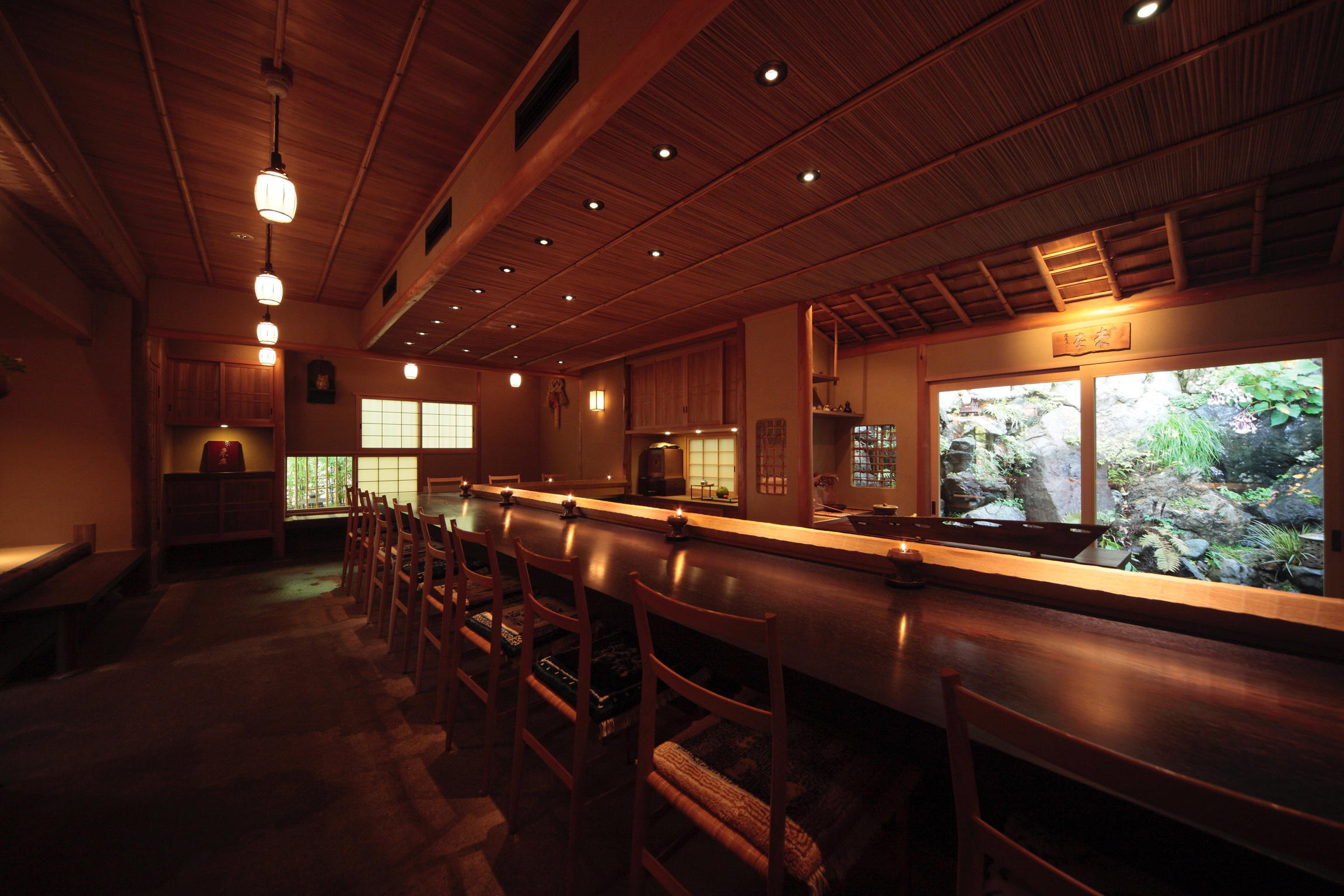
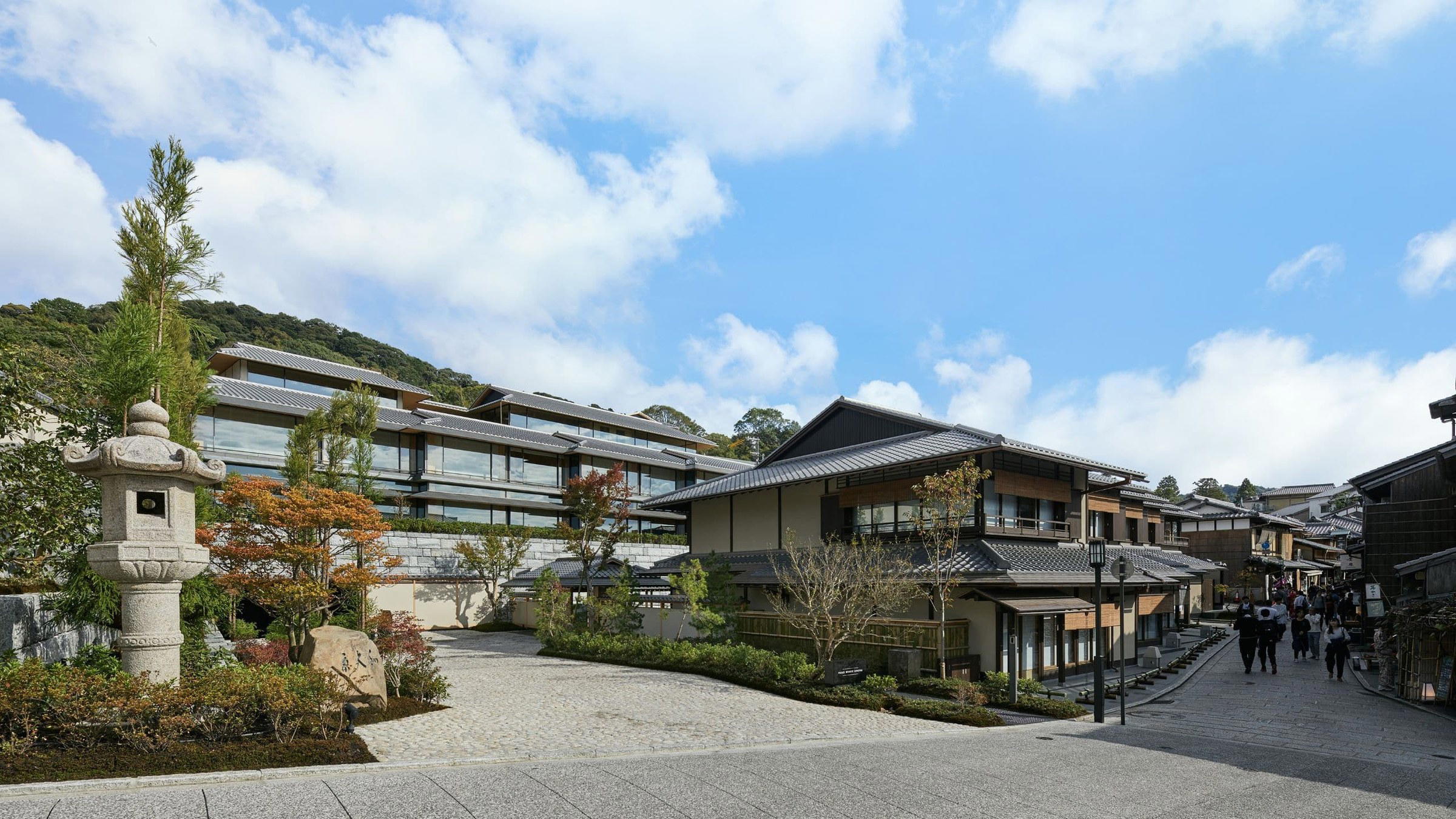
Higashiyama Ward moves at a different pace from central Kyoto. The stone-paved lanes that lead past temple walls and machiya townhouses set an expectation of tradition before you have even sat down anywhere. It is a neighbourhood where the visual grammar is so consistently old-Japan that restaurants operating inside it carry an immediate atmospheric weight, whether they intend to or not. Shuhaku is a French-Japanese Fusion Kaiseki restaurant in Kyoto's Higashiyama Ward at 392 Kinencho, priced around $95 per person. Shuhaku, at 392 Kinencho, occupies that context fully. The address places it inside one of the city's most historically dense corridors, and whatever the dining room communicates in its physical details, the surroundings have already begun the work of framing the meal.
That framing matters because what arrives at the table does something deliberate with expectation. Kyoto's kaiseki tradition is the reference point most visitors carry when they book in this part of the city. A handful of restaurants nearby operate squarely within that register, Kenninji Gion Maruyama and Kodaiji Jugyuan both sit in the Higashiyama orbit and read as more explicitly traditional. Shuhaku is doing something adjacent but distinct: it is a restaurant trained on Japanese sensibility that has also absorbed French culinary logic, and it does not subordinate one to the other.
The Conversation Between Two Kitchens
Japan's appetite for French-Japanese cross-pollination is not new. The dialogue has been active since the 1970s, and by now some of its results have calcified into cliché, butter-enriched dashi, foie gras on everything, European plating on Japanese ingredients. What keeps a kitchen in that tradition interesting is whether the exchange feels considered or decorative. At Shuhaku, the menu architecture suggests a cook who absorbed French ideas early enough that they function as instinct rather than addition.
The evidence sits in the specifics. Steamed fish with grated turnip and chub mackerel sushi represent Kyoto cooking without apology, both dishes are anchored in local seasonal logic and the kind of restraint that defines the city's food culture at its most direct. The abalone foie gras and black soybean Mont Blanc move into different territory without abandoning coherence. The Mont Blanc format, typically a chestnut cream dessert of French origin, rebuilt around black soybean is the kind of substitution that only works when a cook understands the structural role of each component. Borrowed form, local ingredient: it is a cleaner operation than fusion usually manages.
The rice cooked on a traditional kamado, or okudosan, is worth noting as its own signal. The kamado is not aesthetic theatre in a kitchen that takes it seriously. Rice cooked over a wood fire in a clay pot produces a texture and temperature that an induction-fed rice cooker cannot replicate, and in Kyoto's food culture, the attention given to rice at the end of a meal is often where a kitchen's real convictions show.
Lunch Versus Dinner in Kyoto's Mid-Range
Kyoto's premium dining tier, the ¥¥¥¥ addresses like Gion Matayoshi, Isshisoden Nakamura, and Kikunoi Roan, operates largely on dinner economics, with lunch menus that occasionally offer shorter versions of the evening format at reduced prices. At the ¥¥¥ tier, which is where Shuhaku sits, the lunch-versus-dinner divide tends to be more pronounced in mood than in price differential.
Dinner in Higashiyama carries a particular weight in autumn and spring, when the neighbourhood is at its most visited and the light after dark turns the stone lanes and temple walls into something worth lingering over. A meal that runs into the evening in this part of Kyoto belongs to a different rhythm than the same meal taken at midday. Lunch, by contrast, suits the traveller who is moving through the ward on foot, pausing rather than arriving. Shuhaku's mid-range positioning makes it accessible for either mode, though the kamado rice and the fuller cross-cultural menu structure are likely better appreciated when there is no agenda pulling the meal toward its end.
For comparison in the French-Japanese register at a higher price point, HAJIME in Osaka represents what that cross-cultural conversation looks like with a three-Michelin-star ceiling. Closer in price tier, akordu in Nara pursues a different kind of cross-cultural logic, European wine thinking applied to Japanese ingredients, in a city with its own old-capital gravity. Both offer useful orientation for understanding where Shuhaku sits in a regional conversation that extends well beyond Kyoto.
Where It Sits in Kyoto's Current Field
The Michelin Plate recognition in both 2024 and 2025 places Shuhaku in a specific bracket: restaurants the Guide considers worth noting for food quality without yet awarding a star. In Kyoto's dense restaurant field, that distinction is not insignificant. The city has more Michelin-starred addresses per capita than almost anywhere in the world, and the Plate functions here as a signal that a kitchen is operating at a credible level within a competitive pool.2 across 61 reviews suggests the experience translates to guests who arrived with specific expectations.
Within Kyoto's ¥¥¥ tier, the competition includes cenci, which pursues Italian cooking with Japanese ingredient sourcing, and Kyo Seika, which works in a Chinese register. Shuhaku's French-Japanese position is less occupied at this price point. The restaurants doing that work most visibly in Japan tend to skew either higher in price or toward more urban, less historically charged settings. Kyoto addresses with that cross-cultural ambition and this neighbourhood position are less common than the city's reputation might suggest. For more on where Shuhaku sits among Kyoto's wider options, the Our full Kyoto restaurants guide provides fuller context across price tiers and styles.
Elsewhere in Japan, the French-Japanese dialogue at restaurants with comparable ambition includes Myojaku in Tokyo, Azabu Kadowaki, and Harutaka in Tokyo, all operating in Tokyo's denser, more competitive field. Goh in Fukuoka and 1000 in Yokohama extend the regional picture further. 6 in Okinawa operates in an entirely different culinary geography but shares the interest in cross-cultural structure. Together, they sketch the range of what this kind of cooking looks like across Japan at different price points and in different local contexts.
Planning Your Visit
Address: 392 Kinencho, Higashiyama Ward, Kyoto, 605-0828, Japan. Cuisine: French-Japanese Fusion Kaiseki. Budget: about $95 per person. Reservations: appointment only.
Comparable Spots
Comparable venues nearby, for context on price, style, and recognition.
| Venue | Cuisine | Price | Notes |
|---|---|---|---|
| ShuhakuThis venue — the venue you are viewing | French-Japanese Fusion Kaiseki | $$$$ | Not listed |
| Miyagawacho Hotta | Modern Kaiseki Omakase | $$$$ | Higashiyama |
| Iida | Classical Kaiseki | $$$$ | Nakagyō |
| Kamoryori Tabuchi | Kawachi Duck Specialty | $$$$ | Kita |
| Takezaki | Traditional Kappo Kaiseki | $$$$ | Nakagyō |
| Sakagawa | Traditional Kaiseki | $$$$ | Higashiyama |
Recognition history
Dated appearances from independent guides and award organizations, with the underlying list record or original source where available.
Michelin Plate
Michelin
Michelin Plate
Michelin
Michelin Plate
Michelin
Continue exploring
More in Kyoto
Restaurants in Kyoto
Browse all →
Bars in Kyoto
Browse all →
Hotels in Kyoto
Browse all →
Wineries in Kyoto
Browse all →
At a Glance
- Intimate
- Elegant
- Sophisticated
- Classic
- Date Night
- Special Occasion
- Celebration
- Chefs Counter
- Open Kitchen
- Historic Building
- Extensive Wine List
- Local Sourcing
Current opening hours
- Monday
- Closed
- Tuesday
- 12–1 PM, 6:30–7:30 PM
- Wednesday
- 12–1 PM, 6:30–7:30 PM
- Thursday
- 12–1 PM, 6:30–7:30 PM
- Friday
- 12–1 PM, 6:30–7:30 PM
- Saturday
- 12–1 PM, 6:30–7:30 PM
- Sunday
- 12–1 PM, 6:30–7:30 PM
Hours can change for holidays and private events. Last verified .
Serene and intimate with traditional Japanese decor, warm lighting from a wood-fired stove, and an open kitchen where diners watch the chef prepare each course with meticulous attention to detail.