

3 Michelin Stars
Our verdict
One of Kyoto's most historically rooted kaiseki addresses, Isshisoden Nakamura traces its origins to a travelling fishmonger supplying Wakasa Bay fish to city markets. Now holding three Michelin stars under sixth-generation chef Motokazu Nakamura, the house operates at the top of Kyoto's formal dining tier, where provenance, well water, and multi-generational technique shape every course.

Pearl is the En Primeur Club membership app — saves, bookings, and concierge access live there. Same editors, same standards.
- Address
- 136 Matsushitacho, Nakagyo Ward, Kyoto, 604-8093, Japan
- Phone
- +81 75-221-5511
- Hours
- Mon–Sat 12–2 PM, 5–6:30 PMSun Closed
- Website
- kyoto-nakamura.com
- Directions
- Get directions
Where the Supply Chain Is the Recipe
In Kyoto's kaiseki tradition, the question of where ingredients come from has always been inseparable from how they are cooked. The city sits at the end of the old Saba Kaido — the mackerel highway — a route along which fish from Wakasa Bay on the Sea of Japan were carried inland, packed in salt, arriving in a state of controlled fermentation that Kyoto cooks turned into a defining flavour. Few restaurants embody that supply-chain logic as literally as Isshisoden Nakamura in Nakagyo Ward, a house whose origins lie not in a dining room but in the act of transporting fish from Wakasa Bay to scattered city markets. The transition from fishmonger to restaurant is not a marketing story; it is the explanation for why sourcing, not decor or theatrics, sits at the centre of how this kitchen operates.
Kyoto's three-Michelin-star tier is a small group. In 2025, very few kaiseki addresses hold three stars in the city, and those that do, including Kyokaiseki Kichisen, tend to share a commitment to raw-material quality that goes well beyond seasonal menu writing. What separates them from the broader kaiseki field is usually the depth of the sourcing relationship: not simply which market they buy from, but how far back in the supply chain their influence reaches. Isshisoden Nakamura's history as a fish carrier is, in that context, a credential rather than a curiosity.
Approaching the House in Nakagyo
Nakagyo Ward sits in central Kyoto, east of Nijo Castle and north of Shijo, in the dense residential and commercial fabric that most visitors pass through rather than stop in. The address on Matsushitacho is a few streets removed from the more tourist-trafficked corridors of Kawaramachi and Gion, which means arriving here feels like entering a working neighbourhood rather than a dining district. The building presents in the manner of established Kyoto machiya architecture: understated from the street, with the formality concentrated inside. For a house that has been accumulating craft across six generations, there is nothing in the approach that announces itself aggressively. The reserve is appropriate.
Kyoto's formal restaurant culture has long operated on the principle that the room should not distract from the food. Compared to the more theatrical end of Japanese fine dining, the counter drama of Tokyo's premium omakase scene, or the architectural ambition of international tasting-menu formats, the atmospheric register at houses like this one is quieter and more austere. The attention the room demands flows toward the plate.
The Sourcing Logic Behind the Kitchen
The editorial angle on Isshisoden Nakamura is not what the kitchen does to ingredients but where those ingredients come from and what that origin implies about technique. Wakasa Bay, the body of water that supplied the old fishmonger route, remains a source of high-quality seafood for the Kyoto market, and the tilefish, or amadai, that features in the house's sake-grilled preparation is among the bay's most prized catches. Amadai is a fish that appears across Kyoto kaiseki, but the manner in which the kitchen handles it here is inseparable from the sourcing logic: the fish arrives via a supply relationship with roots going back generations, not via a spot-purchase at Nishiki Market.
The sake-grilled tilefish preparation, doused in sake multiple times during cooking, building successive layers of flavour rather than applying a single seasoning pass, is a technique that rewards a fish with defined fat structure and firm flesh. The repetition of sake applications concentrates and complexes what is already there; it is not a technique that rescues an indifferent ingredient. The sourcing is the prerequisite for the method.
A parallel logic applies to the white miso zoni, a preparation associated specifically with Kyoto's New Year tradition, in which mochi and vegetables are served in a white miso broth. At this kitchen, the water used to dissolve the miso is drawn from a well on the premises. This is not a decorative detail. Water hardness, mineral content, and temperature all affect how miso hydrates and how its flavour compounds behave in broth. The decision to use well water rather than municipal supply reflects a position: that the ingredient chain extends all the way to the water source, and that each link in that chain is a variable worth controlling. Kyoto's historic reliance on underground water sources for tofu, sake, and kaiseki cooking gives this practice a documented regional context.
Within Kyoto's wider kaiseki field, Gion Matayoshi, Kenninji Gion Maruyama, and Kikunoi Roan each represent distinct positions on the sourcing and format spectrum. Kikunoi Roan is part of the Kikunoi group, which allows it to operate at multiple price tiers while maintaining the family lineage. Kodaiji Jugyuan takes a different approach to the kaiseki format entirely. Isshisoden Nakamura's position in this field is defined by the merchant origin story and the multi-generational depth of its sourcing network, characteristics that do not map neatly onto any peer house.
Generational Transmission as Craft Continuity
Sixth-generation head Motokazu Nakamura works alongside his son, who trained abroad before returning to the family kitchen. The pattern of overseas training followed by return to a traditional house is not unusual in this tier of Japanese fine dining, it reflects the industry's recognition that technique exposure from outside Japan can sharpen rather than dilute classical practice. What matters editorially is less the biographical arc and more what it implies about the kitchen's orientation: it is not a closed system, but it is a deeply rooted one. The craft flows forward because each generation was trained by the previous one before any outside influence was added.
In a city where several kaiseki lineages have been commercialised into multi-branch groups, the single-succession model at this house is itself a statement about what the kitchen prioritises. Continuity of judgment, not scalability of output.
Across Japan's three-Michelin-star cohort, this kind of generational depth appears in different configurations. Harutaka in Tokyo represents a different tradition of single-artisan authority, while HAJIME in Osaka takes a more conceptually driven approach to Japanese fine dining. akordu in Nara, Goh in Fukuoka, and further afield 1000 in Yokohama and 6 in Okinawa each occupy distinct regional positions. In Tokyo's kaiseki-adjacent Japanese fine dining scene, Myojaku and Azabu Kadowaki demonstrate the breadth of what high-level Japanese cuisine looks like across the capital. Isshisoden Nakamura sits apart from all of them, not better or worse by some universal measure, but differently positioned in terms of what the house considers its foundational asset.
Seasonal Positioning and When to Visit
Kyoto's kaiseki calendar tracks the agricultural and aquatic seasons closely. The white miso zoni that defines the house's New Year preparation is, by its nature, a winter dish, one that speaks to the cold months when root vegetables, mochi, and warming broths are the appropriate register. Winter visits carry additional meaning here because the preparation that most directly expresses the sourcing philosophy (well water, miso, seasonal produce) is at its most contextually relevant between December and early February.
That said, Wakasa Bay tilefish is a year-round sourcing relationship, and the sake-grilled preparation is not limited to a single season. The argument for visiting in spring, when Kyoto's culinary calendar shifts toward bamboo shoots, mountain vegetables, and lighter broths, is equally strong at this tier. The house holds two consecutive years of three Michelin stars (2024 and 2025), which confirms that the kitchen's quality is consistent across seasons rather than peaking at a single point.
For broader context on the city's dining and hospitality options, see our full Kyoto restaurants guide, our full Kyoto hotels guide, our full Kyoto bars guide, our full Kyoto wineries guide, and our full Kyoto experiences guide.
Know Before You Go
- Address: 136 Matsushitacho, Nakagyo Ward, Kyoto, 604-8093, Japan
- Price tier: ¥¥¥¥ (leading price bracket for Kyoto dining)
- Awards: Michelin three stars (2024, 2025)
- Head chef: Motokazu Nakamura (sixth generation)
- Cuisine: Japanese kaiseki, rooted in Wakasa Bay seafood sourcing
- Booking: Reservations required well in advance; at this tier, same-week availability is not realistic. Hotel concierge assistance or a specialist reservation service is advisable for international visitors.
Frequently asked questions
What should I eat at Isshisoden Nakamura?
The kitchen operates on a kaiseki format, which means the menu is set and seasonal rather than a la carte. Two preparations documented from the house's own record are the sake-grilled tilefish, a Wakasa Bay fish doused repeatedly in sake to build layered flavour, and the white miso zoni, a Kyoto-tradition soup made with water drawn from the well on the premises. Both preparations reflect the sourcing logic that defines the kitchen at its three-Michelin-star level. The broader menu will track the season of your visit.
What should I expect atmosphere-wise at Isshisoden Nakamura?
Nakagyo Ward is central but not touristic, and the house presents with the restraint typical of Kyoto's serious kaiseki tier. At ¥¥¥¥ and three Michelin stars, the register is formal and quiet: the room directs attention toward the food rather than creating ambient spectacle. Compared to the more visually theatrical end of Japan's fine dining scene, the atmosphere here is considered and composed. Conversation at a low volume, traditional dress welcome but not required, and unhurried pacing are all reasonable expectations at a house of this standing.
Is Isshisoden Nakamura good for families?
At the ¥¥¥¥ price tier with three Michelin stars in a formal kaiseki setting in Kyoto, this is not a venue oriented toward children or casual family dining. The format, a structured sequence of courses in a quiet room, requires patience and engagement with the progression of the meal. Families with older teenagers who have an interest in serious Japanese cuisine and are comfortable with extended formal dining could find the experience appropriate. For younger children or groups looking for a relaxed family atmosphere, Kyoto's dining scene offers many alternatives at lower price tiers with more flexible formats.
Peers Worth Knowing
A quick peer check to anchor this venue’s price and recognition.
| Venue | Cuisine | Price | Awards | Notes |
|---|---|---|---|---|
| Isshisoden NakamuraThis venue — the venue you are viewing | Traditional Kyoto Kaiseki | $200–300 | 3 Michelin Stars | Not listed |
| Gion Sasaki | Modern Kaiseki | $300–500 | 3 Michelin Stars · La Liste Top Restaurants | Kaiseki, Japanese |
| cenci | Innovative Italian-Japanese Fusion | $100–150 | 1 Michelin Star · World's 50 Best #76 | Italian |
| Ifuki | Sumibi Kappo Kaiseki | $200–300 | 2 Michelin Stars · La Liste Top Restaurants | Kaiseki |
| Kyokaiseki Kichisen | Kyoto Kaiseki | $200–300 | 2 Michelin Stars · La Liste Top Restaurants | Japanese |
| Kyo Seika | Seasonal Chinese Fine Dining in Kyoto | Not listed | 1 Michelin Star | Chinese |
Recognition history
Dated appearances from independent guides and award organizations, with the underlying list record or original source where available.
Michelin 3 Stars
Michelin
Opinionated About Dining Top Restaurants in Japan Recommended
Opinionated About Dining
Full recognition history (4 entries)
Michelin 3 Stars
Michelin
Michelin 3 Stars
Michelin
Continue exploring
More in Kyoto
More from Chef Motokazu Nakamura
Browse all →
Restaurants in Kyoto
Browse all →

Bars in Kyoto
Browse all →


Hotels in Kyoto
Browse all →

Wineries in Kyoto
Browse all →
Details
- Elegant
- Intimate
- Classic
- Quiet
- Sophisticated
- Special Occasion
- Date Night
- Private Dining
- Garden
- Sake Program
- Garden
- Tasting Menu
- Set Menu
Current opening hours
- Monday
- 12–2 PM, 5–6:30 PM
- Tuesday
- 12–2 PM, 5–6:30 PM
- Wednesday
- 12–2 PM, 5–6:30 PM
- Thursday
- 12–2 PM, 5–6:30 PM
- Friday
- 12–2 PM, 5–6:30 PM
- Saturday
- 12–2 PM, 5–6:30 PM
- Sunday
- Closed
Hours can change for holidays and private events. Last verified .
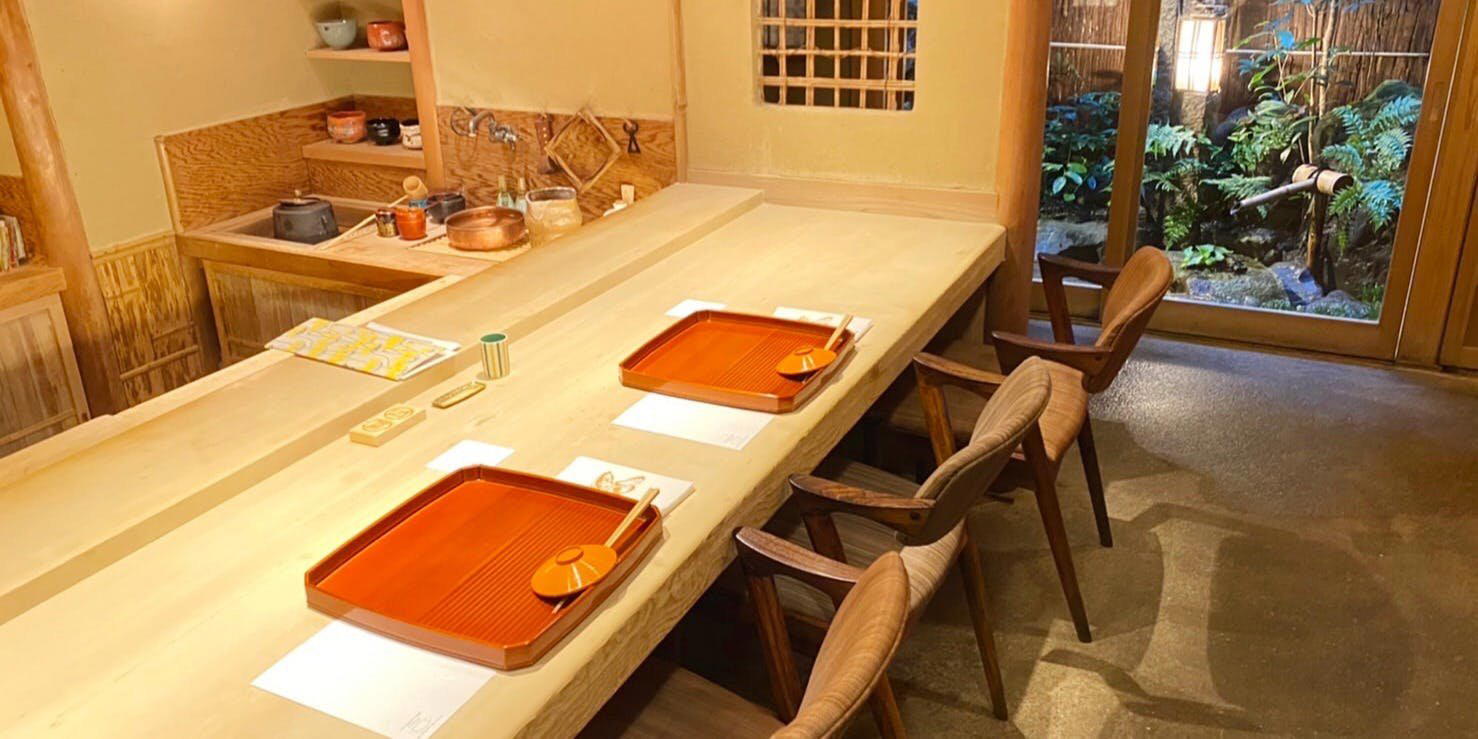
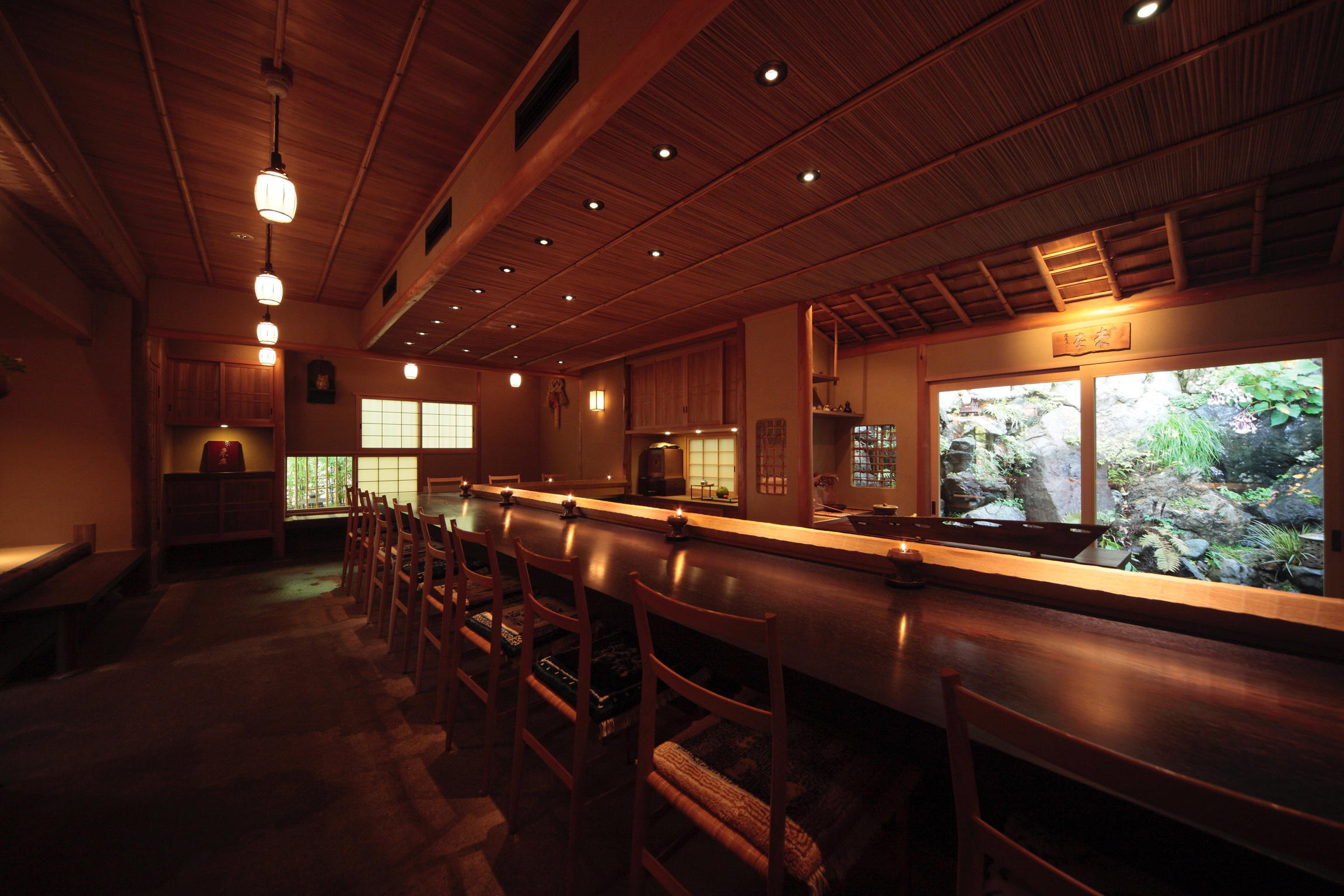
Serene and traditional with private tatami rooms featuring private gardens viewed through bamboo screens, polished red tables, and notable Japanese hospitality.