MO-MO-PARADISE Shibuya Koendori sits on the eighth floor of the New Nanax Shibuya Koendori building in Udagawacho, placing it squarely inside Tokyo's shabu-shabu and sukiyaki dining tradition. The format is all-you-can-eat hot pot, a structure that prioritises table time and ingredient volume over tasting-menu restraint. For visitors calibrating between solo counter dining and group formats, it represents the social, participation-led end of the Tokyo dining spectrum.
Pearl is the En Primeur Club membership app — saves, bookings, and concierge access live there. Same editors, same standards.
- Address
- Japan, 〒150-0042 Tokyo, Shibuya, Udagawacho, 20−15 ヒューマックスパビリオン渋谷公園通り 8F
- Phone
- +815018078908
- Website
- mo-mo-paradise.com
- Directions
- Get directions
 Saves & bookings on Pearl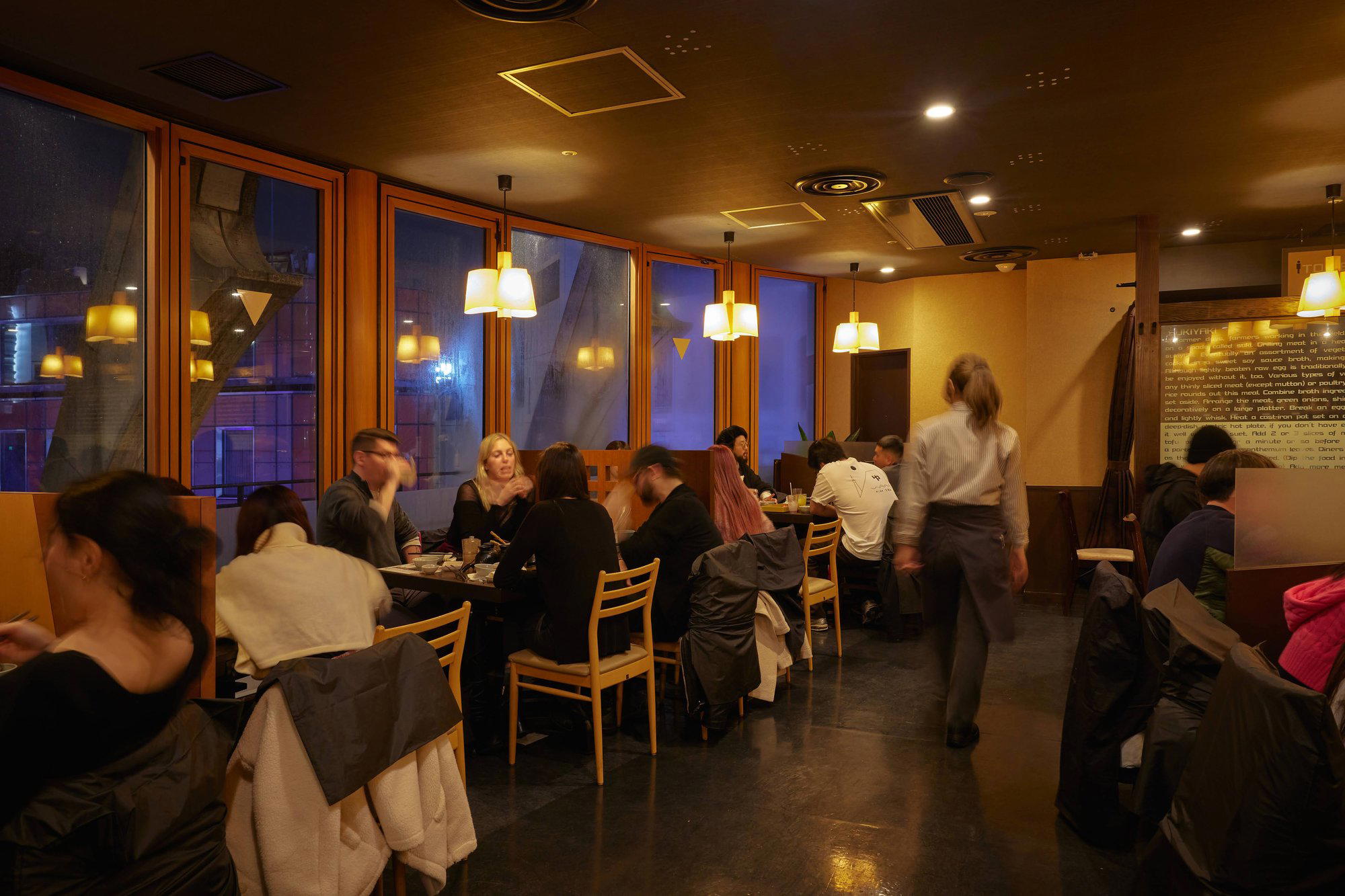
Hot Pot on the Eighth Floor: Reading Shibuya Through Its Shabu-Shabu Counters
There is a particular kind of dining room that Tokyo does better than almost anywhere else in the world: the refined casual, where a format that looks accessible on paper is executed with more operational precision than most Western equivalents manage at twice the price. Shibuya's Udagawacho district, the dense retail corridor running west from Shibuya Station toward Koendori, contains several of these rooms. MO-MO-PARADISE Shibuya Koendori occupies the eighth floor of the New Nanax Shibuya Koendori building, a location that removes it from street-level foot traffic and places it in a format context that prioritises repeat local visitors over tourist walk-ins.
That vertical remove matters. Tokyo's all-you-can-eat hot pot category operates on a different logic from the city's headline-grabbing omakase counters. Where Harutaka and the broader sushi tier demand absolute deference to the chef's sequence, shabu-shabu and sukiyaki chains like MO-MO-PARADISE invert the dynamic entirely: the diner controls the pace, the quantity, and the combination of ingredients that go into the broth. The menu architecture reflects that inversion at every level.
How the Menu Is Built, and What That Tells You
The all-you-can-eat shabu-shabu format, which MO-MO-PARADISE operates across multiple Tokyo locations, is structured around tiered meat selection, rotating dipping sauces, and a broth choice that functions as the meal's foundational decision. This is menu design built for participation rather than narration. There is no chef-driven sequence, no amuse-bouche calibrated to prime your palate, no closing sweet that signals the kitchen's closing argument. Instead, the structure hands editorial control to the table.
That structure places it in sharp contrast with Tokyo's kaiseki tradition. RyuGin, which operates at the tasting-menu tier in Roppongi, uses the kaiseki sequence to argue a specific seasonal position across a dozen or more courses. L'Effervescence and Sézanne do the same through a French fine-dining frame. MO-MO-PARADISE's format makes no such argument. Its menu is a list of available ingredients, and the architecture depends on the diner assembling them in real time. That is not a lesser form of dining — it is a different genre entirely, with its own satisfactions and its own demands on the table's attention.
In the broader context of Tokyo casual dining, the all-you-can-eat shabu-shabu tier occupies significant volume. Groups returning from shopping in Shibuya's Udagawacho blocks, families visiting for weekend meals, and office groups cycling through after-work dinners constitute the core audience. The menu's tiered structure accommodates that range: lower entry-level tiers allow access at a price point that makes it viable for frequent visits, while premium meat tiers push the experience toward something closer to a dedicated yakiniku or specialty beef restaurant.
Shabu-Shabu in the Tokyo Group Dining Map
Tokyo's group dining category has its own geography. The high-end end of the group format spectrum is served by private-room kaiseki restaurants in Ginza and Nihonbashi, where omakase sequences are adjusted for party sizes and sake pairings are handled table-side. Below that tier, the shabu-shabu and sukiyaki chains occupy a middle band that is less about a single chef's vision and more about format reliability and ingredient quality at scale. MO-MO-PARADISE has built its reputation in that middle band, with multiple Shibuya-area locations that function as a known quantity for groups who want hot pot without the variables of a single-chef independent restaurant.
The Shibuya Koendori location's eighth-floor position in the New Nanax building gives it a degree of separation from the street-level density of Udagawacho. Arriving via elevator rather than a ground-floor entrance is a minor logistical note, but it signals something about the format: this is a destination, not a walk-past impulse stop. Diners who find themselves in the building have generally committed to the meal in advance, either by booking or by deliberate choice. That committed-diner profile shapes the atmosphere in the room.
For a sense of how the broader Japan dining map positions itself, the range runs from formats like MO-MO-PARADISE's participatory hot pot through to single-chef destination restaurants in secondary cities: HAJIME in Osaka, Gion Sasaki in Kyoto, akordu in Nara, and Goh in Fukuoka each operate at a different register entirely. The comparison is not invidious — it maps the full width of Japan's dining formats and helps calibrate where participatory hot pot sits in the country's culinary structure.
Who This Format Serves best
The all-you-can-eat hot pot model is calibrated for groups with divergent appetites and a preference for an unhurried table. It does not suit the diner looking for a chef's editorial point of view, a wine list with depth, or a sequence that builds toward a specific conclusion. It does suit groups who want to eat at their own pace, share a broth across multiple ingredients, and spend two hours at a table without feeling the pressure of timed reservation slots. That is a specific use case, and MO-MO-PARADISE fills it with operational consistency across its Shibuya locations.
Innovative approaches to Tokyo dining can be found at Crony in the French-innovative tier, or further afield in Japan at spots like 一本木 奈川制 in Nanao, 夕佳山乃 in Sapporo, 湖畔庵 in Takashima, 庭羽屋 in Nishikawa Machi, Birdland in Sakai, and Bistro Ange in Toyohashi. Each represents a different application of Japanese hospitality logic, from artisan counter dining to regional French. For those comparing Tokyo dining to international reference points, Le Bernardin in New York and Atomix in New York anchor the tasting-menu end of what fine dining can do at full extension. Our full Tokyo restaurants guide maps the broader scene across formats and price tiers.
Planning Your Visit
| Venue | Format | Price Tier | Cuisine | Booking Lead Time |
|---|---|---|---|---|
| MO-MO-PARADISE Shibuya Koendori | All-you-can-eat hot pot | ¥¥ | Shabu-shabu / Sukiyaki | Walk-in or same-day typical |
| Harutaka | Omakase counter | ¥¥¥¥ | Sushi | Several months ahead |
| RyuGin | Tasting menu | ¥¥¥¥ | Kaiseki | Weeks to months ahead |
| Sézanne | Tasting menu | ¥¥¥¥ | French | Weeks to months ahead |
How MO-MO-PARADISE Shibuya Koendori compares with similar nearby venues.
| Venue | Cuisine | Price |
|---|---|---|
| Biodinamico | Italian | Not listed |
| Ichiran | Ramen | Not listed |
| Bio Cafe | Not listed | JPY 3,000 - JPY 3,999 JPY 1,000 - JPY 1,999 |












At a Glance
- Lively
- Modern
- Energetic
- Group Dining
- Family
- Casual Hangout
- After Work
- Standalone
- Sake Program
Current opening hours
- Monday
- 11:30 AM–3 PM, 5–10:30 PM
- Tuesday
- 11:30 AM–3 PM, 5–10:30 PM
- Wednesday
- 11:30 AM–3 PM, 5–10:30 PM
- Thursday
- 11:30 AM–3 PM, 5–10:30 PM
- Friday
- 11:30 AM–3 PM, 5–10:30 PM
- Saturday
- 11:30 AM–3 PM, 5–10:30 PM
- Sunday
- 11:30 AM–3 PM, 5–10:30 PM
Hours can change for holidays and private events. Last verified .
Casual, social and table-focused, with a conversational atmosphere suited to shared hot-pot meals rather than formal fine dining.
Know Before You Go
- Getting there
- Japan, 〒150-0042 Tokyo, Shibuya, Udagawacho, 20−15 ヒューマックスパビリオン渋谷公園通り 8F