Hinomaru occupies a basement address in Kabukicho, Shinjuku's most concentrated entertainment district, placing it inside one of Tokyo's most competitive dining corridors. The address alone signals a particular kind of commitment: venues at this depth in Kabukicho earn their clientele through substance rather than street-level visibility. A reference point for those working through Tokyo's serious dining options beyond the obvious Michelin circuit.
Pearl is the En Primeur Club membership app — saves, bookings, and concierge access live there. Same editors, same standards.
- Address
- Japan, 〒160-0021 Tokyo, Shinjuku City, Kabukicho, 1 Chome−6−6 B1F
- Phone
- +81357619997
- Website
- hotpepper.jp
- Directions
- Get directions
 Saves & bookings on Pearl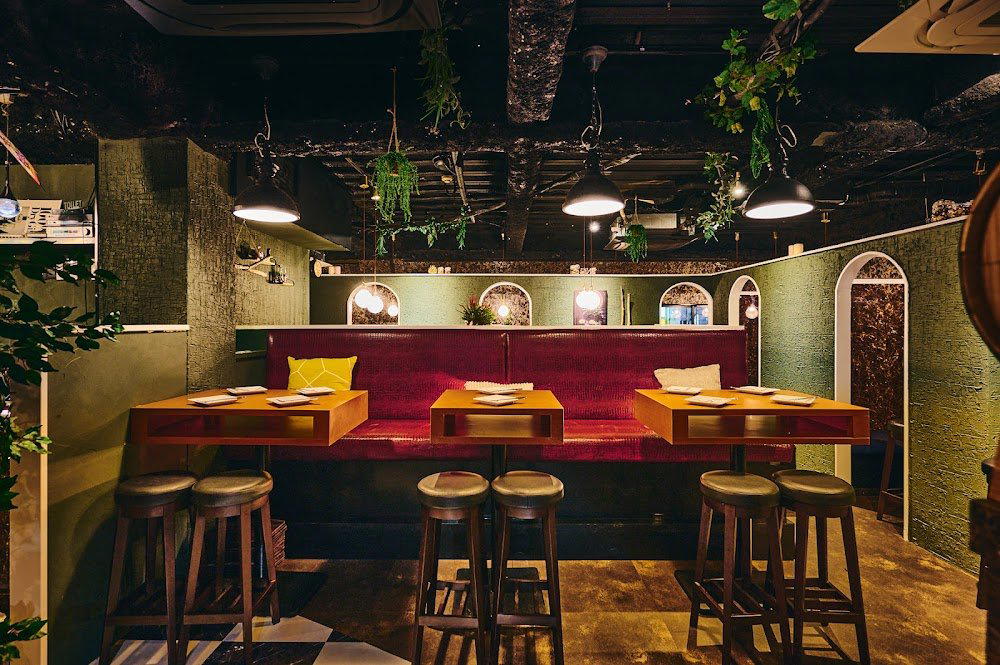
Below Street Level in Kabukicho
Shinjuku's Kabukicho district layers its dining options vertically as much as geographically. Street-level frontage goes to the high-turnover yakitori counters and ramen shops that define the area's public identity. The more serious rooms drop below grade, into basement floors where noise from the street dissolves and the atmosphere contracts around the table. Hinomaru sits at B1F on 1-chome 6-6, an address that positions it squarely in that subterranean tier where Tokyo's dining culture often does its most concentrated work.
Kabukicho is worth understanding as a dining context before walking in. The district's reputation is built on volume and spectacle at street level, which means venues that build a following here despite that backdrop are operating on different terms. The basement placement is not incidental. It is the standard architecture for a certain class of Tokyo restaurant that prioritises controlled environment over passing foot traffic.
Where Kabukicho Sits in Tokyo's Dining Map
Tokyo's serious dining is distributed unevenly across its wards. Ginza and Minami-Aoyama hold the highest concentration of Michelin-starred counters. Shinjuku, and Kabukicho specifically, operates as a more mixed zone: high volume at one end, genuine craft at the other. Venues like Harutaka in the ¥¥¥¥ sushi bracket and L'Effervescence in French fine dining occupy Tokyo's upper tier and price accordingly. RyuGin represents the kaiseki tradition at the same price point. Kabukicho venues tend to sit at a different position in that hierarchy, offering access to serious cooking without the full ceremony and pricing architecture of the Ginza circuit.
That positioning matters for the reader deciding where Hinomaru fits. Tokyo's dining scene has a relatively clear tier structure, and a Kabukicho basement address suggests a venue operating in a mid-to-upper bracket that values neighbourhood character over prestige postal codes. For reference points in the innovative French space, Crony and Sézanne both demonstrate how Tokyo absorbs international culinary frameworks and refines them on local terms. Hinomaru's Kabukicho address suggests a different entry point into that broader conversation.
The Cellar Question in Tokyo's Dining Scene
Tokyo's relationship with wine has matured considerably over the past two decades. The city now holds a concentration of serious wine programs that rival European capitals, distributed across its kaiseki rooms, French bistros, and independent counters. What distinguishes a credible wine program in this context is not list length but selection logic: the degree to which the cellar reflects a coherent point of view rather than a generic parade of recognisable labels.
Basement venues in Shinjuku carry a specific advantage here. Temperature and humidity stability below street level creates natural cellar conditions that above-ground rooms require expensive climate control to replicate. For a venue operating at B1F in Kabukicho, the physical environment and the wine program are not separate considerations. The architecture enables a certain kind of cellar ambition that would cost significantly more to maintain in a higher-floor Ginza address.
Japan's broader drinking culture has also shaped how wine is presented in serious Tokyo rooms. The sommelier role in Tokyo fine dining carries weight that goes beyond label recognition. The leading programs in the city, whether at French-influenced rooms or at hybrid counters, reflect deep engagement with producer relationships, often extending to direct importation of small Burgundy or natural wine allocations that do not appear in conventional distribution. A venue at Hinomaru's address in Kabukicho, operating in that dense dining corridor, would be evaluated by knowledgeable local diners on exactly those terms.
For comparison points outside Tokyo, wine-serious dining in Japan extends to HAJIME in Osaka and Gion Sasaki in Kyoto, both of which demonstrate how regional Japanese fine dining handles cellar curation differently from the Tokyo model. akordu in Nara represents a more European-inflected approach to the same question. Further afield, Goh in Fukuoka shows how Japan's secondary cities build their own wine programs with distinct regional identities.
Planning a Visit
The Kabukicho address is direct to reach: Shinjuku Station's east exit places visitors within a short walk of the 1-chome area, making Hinomaru one of the more accessible serious dining options in the city from a transport standpoint. Shinjuku Station handles multiple lines including the JR Yamanote and the Tokyo Metro Marunouchi Line, which means access from most central Tokyo hotels involves a single connection at most. The basement entrance on 1-chome 6-6 requires attention on the first visit; Kabukicho's density of signage means that B1F addresses can take a moment to locate among the vertical layers of street-level information.
Tokyo dining at any serious level benefits from advance planning; the city's leading rooms at comparable addresses book out weeks ahead, and while Hinomaru's specific lead time is not documented here, the Kabukicho dining tier generally rewards early enquiry over walk-in optimism.
Those building a broader Tokyo itinerary around serious dining can anchor their research in our full Tokyo restaurants guide, which maps venues across price tiers and neighbourhoods. For dining outside the capital, the guide network extends to 一本杉川嶋 in Nanao, 古代山乃 in Sapporo, 湖畔庵 in Takashima, 鷹羽屋 in Nishikawa Machi, Birdland in Sakai, and Bistro Ange in Toyohashi. For international comparison across the same fine-dining conversation, Le Bernardin in New York City and Atomix in New York City provide useful reference points for how other cities handle the relationship between serious cooking and serious wine programs.
How Hinomaru compares with similar nearby venues.
| Venue | Price |
|---|---|
| Katsu Pulipo | JPY 8,000 - JPY 9,999 JPY 4,000 - JPY 4,999 |
| PRETTY PORK FACTORY | JPY 6,000 - JPY 7,999 JPY 3,000 - JPY 3,999 |
| Yugen Tei Shinjuku | JPY 15,000 - JPY 19,999 JPY 5,000 - JPY 5,999 |
| SHOGUN BURGER Shinjuku ten | JPY 1,000 - JPY 1,999 JPY 1,000 - JPY 1,999 |














At a Glance
- Serene
- Elegant
- Intimate
- Special Occasion
- Sake Program
Current opening hours
- Monday
- 11:30 AM–5 AM
- Tuesday
- 11:30 AM–5 AM
- Wednesday
- 11:30 AM–5 AM
- Thursday
- 11:30 AM–5 AM
- Friday
- 11:30 AM–5 AM
- Saturday
- 11:30 AM–5 AM
- Sunday
- 11:30 AM–5 AM
Hours can change for holidays and private events. Last verified .
Serene atmosphere with a beautiful wooden counter.
Know Before You Go
- Getting there
- Japan, 〒160-0021 Tokyo, Shinjuku City, Kabukicho, 1 Chome−6−6 B1F