Meat the Fish occupies a dual address across Saifi Village in Beirut and the Faqra Club in Kferdebian, making it one of the few dining concepts in Lebanon that operates credibly in both a dense urban neighbourhood and a mountain resort setting. The name signals a deliberate pairing format built around surf-and-turf thinking, placing it in a small category of Beirut restaurants that treat the combination as a structural menu principle rather than a menu footnote.
Pearl is the En Primeur Club membership app — saves, bookings, and concierge access live there. Same editors, same standards.
- Address
- Marea، Saifi Village Mkhallissiye Street Faqra Club, Kferdebian, Beirut, Lebanon
- Phone
- +9611993606
- Website
- meatthefish.com
- Directions
- Get directions
 Saves & bookings on Pearl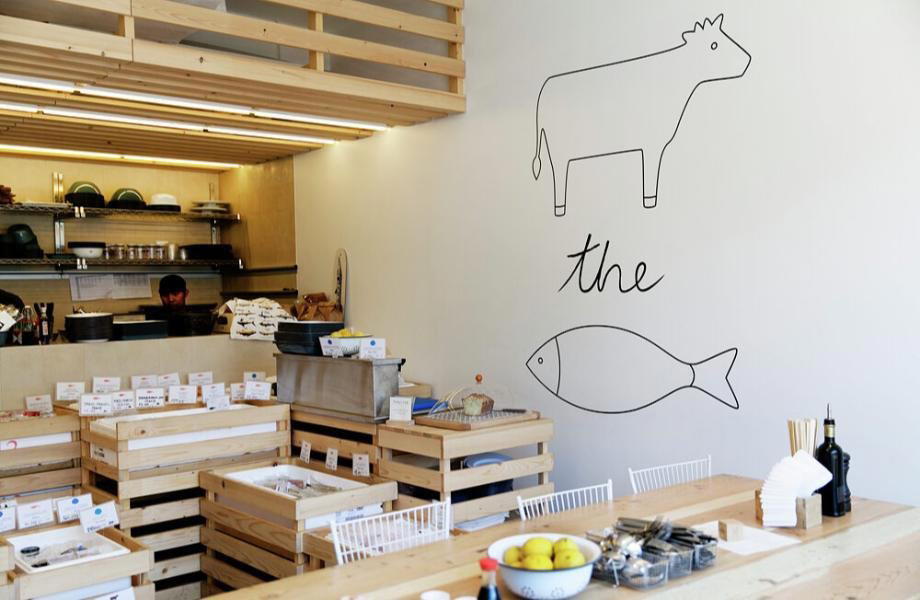
Two Addresses, One Concept: How Meat the Fish Fits the Beirut Dining Map
Beirut's restaurant culture has long sorted itself into distinct tiers and territories. The Saifi Village quarter, with its reclaimed stone architecture and pedestrian-friendly lanes, draws a mix of design-conscious locals and visitors who want proximity to Gemmayzeh and Mar Mikhael without the noise. Meanwhile, Faqra Club in Kferdebian represents a different axis entirely: a mountain resort crowd that spends weekends at altitude and expects a dining standard to match. Few restaurant concepts operate convincingly across both registers. Meat the Fish does, with a listed presence at both Saifi Village and Faqra Club, which tells you something about the ambition of the format before you have looked at a single menu item.
That dual geography is not merely a franchise decision. It reflects a broader pattern in Lebanese hospitality, where successful urban concepts extend to mountain venues to capture the significant seasonal migration between Beirut and the Mount Lebanon resorts. For a concept whose name alone signals a structural premise, surf-and-turf as a menu architecture rather than an occasional special, that migration makes sense. The crowd willing to drive up to Kferdebian in summer or winter is broadly the same crowd that books tables in Saifi during the week.
The Format: Surf-and-Turf as a Menu Philosophy
The surf-and-turf category occupies an interesting position in global fine dining. At its lower end it is a steakhouse add-on, a lobster tail beside a rib-eye as an upsell mechanism. At its more considered end, as seen at destination restaurants in New York and elsewhere, the pairing becomes a structural principle, with the kitchen treating both protein families with equal depth and technique. Le Bernardin in New York City has spent decades making the case that fish deserves the same rigour applied to meat; Meat the Fish's name suggests an awareness of that debate and a position within it.
In Beirut specifically, the combination lands differently than it would in Paris or London. Lebanese culinary tradition is deeply comfortable with seafood, particularly along the coastal strip, and equally serious about grilled and slow-cooked meats that anchor the mezze table. A concept that formalises the pairing of both is not introducing foreign logic to Lebanese diners; it is giving explicit structure to something that already happens informally across a long meal of shared dishes. The question the kitchen has to answer is whether the surf-and-turf frame adds precision or merely adds price.
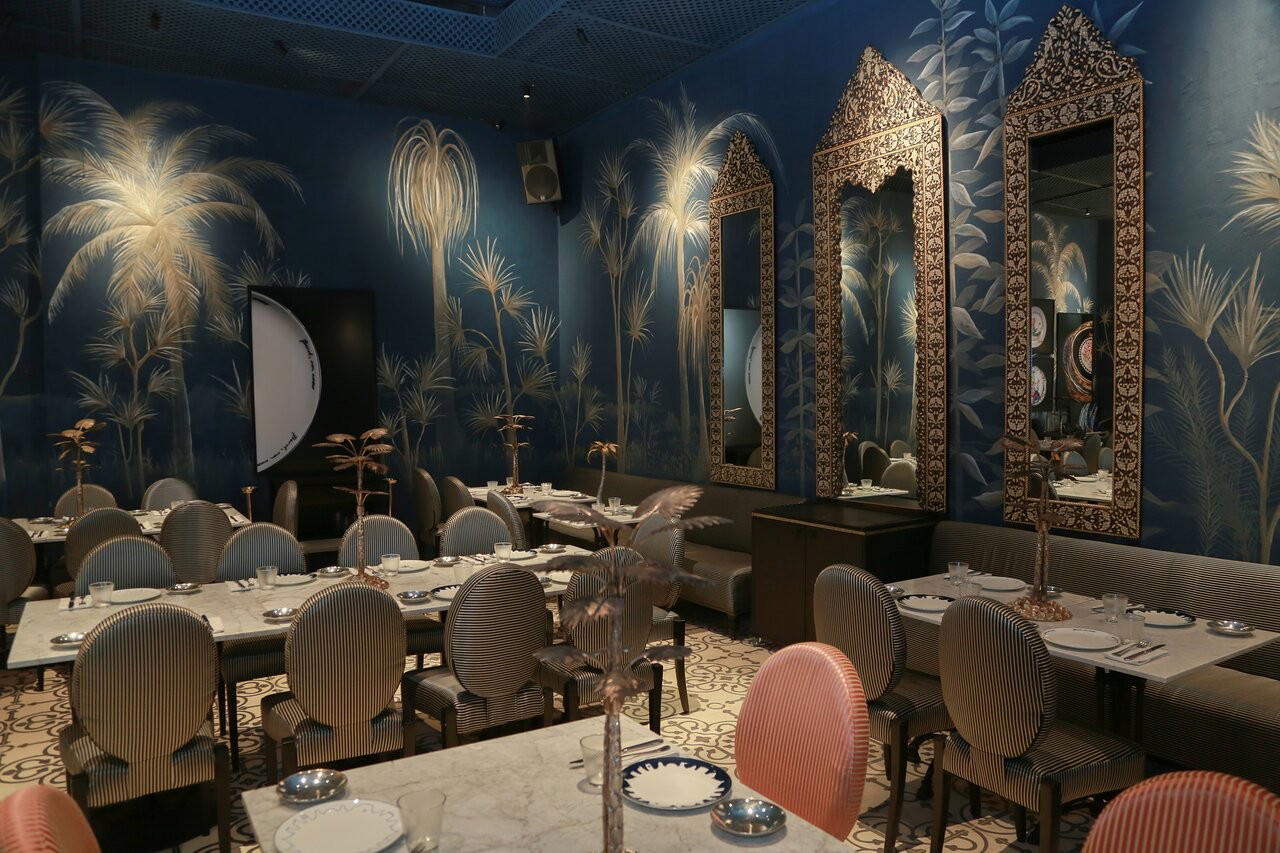
For context on how other Beirut kitchens handle the tension between tradition and contemporary format, Em Sherif represents one pole: a maximalist, heritage-rooted approach where the table is covered in ceramic dishes and abundance is the aesthetic. Albergo Rooftop sits at the other end, with a terrace format and a Lebanese cuisine menu calibrated for a hotel crowd. Meat the Fish occupies different ground from both, with a concept-led identity rather than a heritage-led or setting-led one.
The Saifi Village Setting
Arriving at the Saifi Village address means entering one of the more deliberately curated neighbourhoods in central Beirut. The area's restoration, which accelerated in the post-civil war reconstruction era and continued through the 2000s, produced a zone of low-rise stone buildings, courtyard restaurants, and galleries that feels markedly different from the chaotic energy of Hamra or the density of Verdun. The streets are walkable and the scale is human, which creates a particular kind of dining approach: guests tend to arrive on foot from nearby hotels or residences, linger, and move between venues.
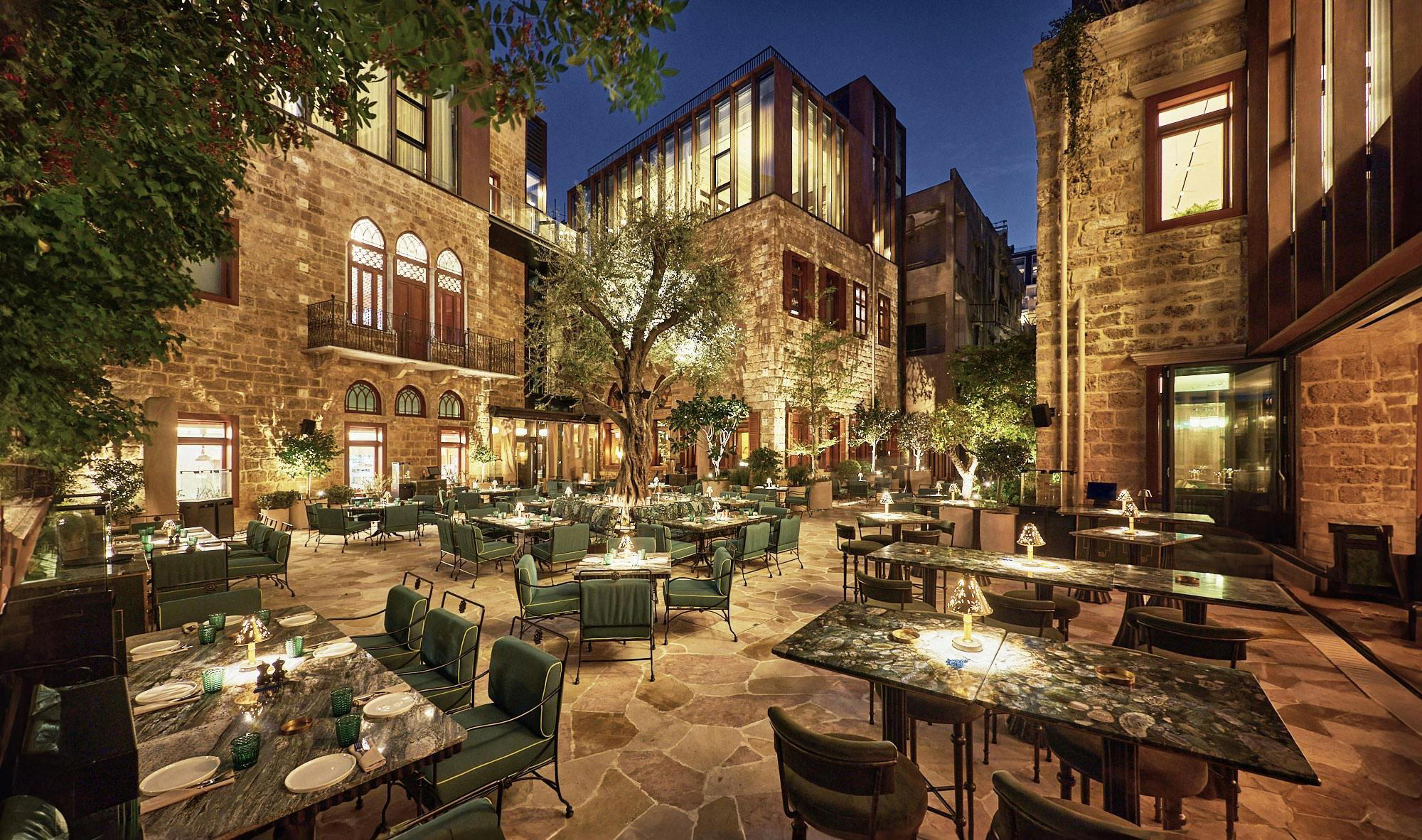
That pedestrian character shapes how a restaurant like Meat the Fish functions socially. It is not a destination that requires a dedicated taxi journey followed by a committed evening; it is the kind of address you might reach after walking through the neighbourhood, which tends to attract a self-selecting crowd that is already in the mode of exploration rather than obligation. Nearby, Al Halabi represents the more traditional end of the Beirut dining spectrum, with a mezze format rooted in Syrian-Lebanese tradition. Al Falamanki Sodeco draws a different crowd entirely, with an all-day cafe format built around nargileh and a relaxed social pace.
Planning a Visit: What to Know Before You Go
Given that restaurant operates across two geographically distinct locations, the first question for any visitor is which address is relevant to their trip. The Saifi Village location is accessible from central Beirut and sits within reach of the main hotel belt. The Faqra Club address in Kferdebian is a mountain drive from the city, appropriate for visitors who are already spending time in the Keserwan District or who are making a deliberate excursion from Beirut. For context on what else the mountain area offers, BRUT by Youssef Akiki in Keserwan District represents a natural wine-focused alternative that draws a younger, chef-table crowd to the same general area.
Visitors should treat this as a venue that rewards a degree of advance planning: confirm which location is open on your intended date, particularly if visiting outside peak season when mountain venues may operate on reduced schedules. The Faqra Club setting is tied to the resort's seasonal rhythms, with winter ski crowds and summer mountain-escape visitors creating distinct demand spikes. Booking a table during those peaks without advance contact would be optimistic.
For visitors building a broader Beirut itinerary, our full Beirut restaurants guide maps the city's dining options across neighbourhoods and formats. Those extending beyond Beirut into the wider Lebanon circuit will find relevant reference points at Jammal in Batroun District, Feniqia in Byblos, and Lakkis Farm in Baalbek, each of which anchors a different geographic and culinary tradition. For those spending time south of the city, Al Rawda Shatila offers a street-level counterpoint to the Saifi Village register. The Bekaa Valley adds further depth through Laiterie Massabki in Chtoura and Shams Restaurant in Aanjar, both worth the drive for visitors tracing Lebanese food culture beyond the capital. In the wider Beirut orbit, Onno Bistro in Bourj Hammoud and Al Halabi in Matn District both extend the dining map east of central Beirut, as does Kitchen Garage in Aley District for those heading into the Chouf mountains. For a complete counterpoint to any sit-down format, Falafel Sahyoun remains the city's most direct argument for street-level eating over restaurant dining.
Comparable Spots, Quickly
Comparable venues nearby, for context on price, style, and recognition.
| Venue | Cuisine | Price | Notes |
|---|---|---|---|
| Meat the FishThis venue — the venue you are viewing | MediterAsian | $$ | Not listed |
| Casablanca | Asian-Mediterranean Fusion | $$$ | Ain el-Mreisseh |
| Tawlet | Traditional Lebanese Home Cooking | $$ | Mar Mikhael |
| Lobby Café & Courtyard | Mediterranean Café with Italian Accents | $$$ | Achrafieh |
| Al Rawda - Shatila - Restaurant | Traditional Lebanese | $$ | Manara |
| Hanna Mitri | Traditional Lebanese Bouza & Sweets | $ | Achrafieh |
Continue exploring
More in Beirut
Restaurants in Beirut
Browse all →
Bars in Beirut
Browse all →
Hotels in Beirut
Browse all →

At a Glance
- Casual
- Trendy
- Casual Hangout
- Brunch
- Open Kitchen
- Sustainable Seafood
Current opening hours
- Monday
- 9 AM–11 PM
- Tuesday
- 9 AM–11 PM
- Wednesday
- 9 AM–11 PM
- Thursday
- 9 AM–11 PM
- Friday
- 9 AM–11 PM
- Saturday
- 9 AM–11 PM
- Sunday
- 9 AM–11 PM
Hours can change for holidays and private events. Last verified .
Casual and inviting with communal seating, crates as outdoor chairs, and a market-like display of fresh fish on ice.