BRUT by Youssef Akiki
In the mountain village of Hrajel above the Keserwan District, BRUT by Youssef Akiki operates at the intersection of Lebanese terroir and contemporary technique. The kitchen draws directly from the agricultural landscape surrounding it, positioning itself within a small but growing cohort of Lebanese restaurants treating provenance as the starting point for every dish. It is one of the more compelling arguments for leaving Beirut's dining corridor entirely.
Pearl is the En Primeur Club membership app — saves, bookings, and concierge access live there. Same editors, same standards.
- Address
- Unnamed Road, Hrajel, Lebanon
- Phone
- +96170227300
- Website
- brutlb.com
- Directions
- Get directions
 Saves & bookings on Pearl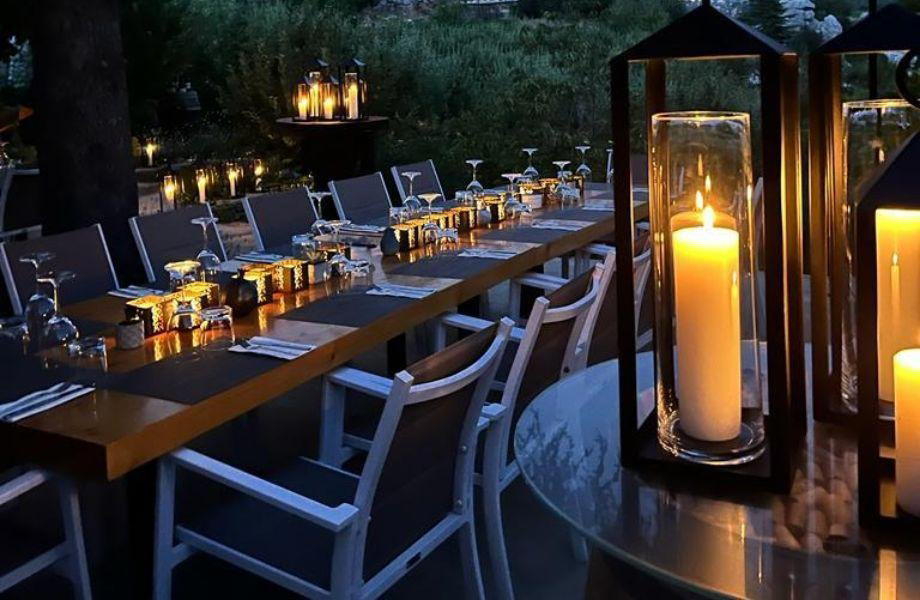
Above the City, Closer to the Source
The drive up to Hrajel already tells you something about what BRUT by Youssef Akiki is trying to do. The Keserwan mountain villages sit above the coastal sprawl of Greater Beirut, and by the time you reach the altitude where the cedar slopes begin and the air carries the particular cold clarity of the Lebanese highlands, the logic of a restaurant rooted in local sourcing becomes hard to argue with. You are in the ingredients. The unnamed road that leads to the restaurant speaks to a specific idea about where food should come from and what it should taste like when done well.
Lebanon's mountain dining has long existed in a separate register from the city. Restaurants in villages like Ehden, Ammiq, or Deir el Qamar have historically traded on altitude, air, and a slower pace rather than on culinary ambition. BRUT sits differently. It represents a format that has emerged more recently in the Lebanese dining conversation: the chef-driven mountain address that draws on the surrounding terroir not as background color but as the primary material. In that sense, it belongs to a comparable set that includes Lakkis Farm in Baalbek and Feniqia in Byblos, restaurants where geography is the organizing principle of the kitchen rather than an incidental detail.
The Sourcing Argument in Practice
Ingredient sourcing at this altitude in the Keserwan District is not an affectation. The region produces some of Lebanon's most distinct agricultural output: wild herbs from the sub-alpine zones, fruit from terraced orchards that have been in continuous cultivation for generations, dairy from small-scale producers whose herds graze on mountain grasses unavailable at lower elevations. A kitchen positioned in Hrajel has direct access to supply chains that a Beirut restaurant, even one with strong sourcing intentions, can only approximate through intermediaries and early-morning market runs.
This is the advantage that terrain-embedded restaurants hold over their urban counterparts, and it is a pattern visible across mountain dining. Atelier Moessmer Norbert Niederkofler in Brunico has made the Alpine sourcing principle the foundation of a Michelin-starred program; the underlying logic, that proximity to ingredient origin produces a different quality and specificity of flavor, translates across geographies. BRUT applies a version of that logic to the Lebanese mountain context, where the distance between farm and kitchen can, in theory, be measured in minutes rather than supply-chain hours.
The approach also pushes back against the dominant mode of Lebanese fine dining, which has historically centered on Beirut's coastal corridor. Em Sherif in Beirut represents the urban high-end of Lebanese cuisine, with elaborate mezze traditions and a formal register that reflects the city's cosmopolitan self-image. BRUT operates on a different axis: less about abundance and presentation, more about specificity and the particular character of ingredients sourced from the surrounding district. These are not competing philosophies so much as different answers to the question of what Lebanese cuisine can express at its most serious.
Where BRUT Sits in the Keserwan Dining Picture
The Keserwan District is not a destination dining region in the way that the Bekaa Valley's agricultural zones or the Batroun coastline have become. It functions primarily as mountain retreat territory for Beirutis seeking weekend respite, and the dining options reflect that: resort restaurants, village grill houses, and a handful of addresses that aspire to more. Le Pelican sits within this district as well, and the two represent different points on the spectrum of what contemporary Keserwan dining can offer. BRUT occupies the more ambitious, kitchen-forward end of that spectrum.
For visitors approaching from Beirut or the coast, the Keserwan circuit is increasingly worth building a full day around. The ascent through villages like Jounieh and Zouk Mosbeh gives way quickly to the quieter mountain pace of Hrajel and its surroundings. The full Keserwan District restaurants guide maps this terrain in more detail, but BRUT functions as a primary reason to make the drive rather than a secondary stop.
For those building a wider picture of Lebanese dining beyond the capital, the comparison points are instructive. Jammal in Batroun District works a different coastal terroir with a similarly serious approach to sourcing, while Onno Bistro in Matn and Al Halabi Restaurant in Matn District represent the more classically rooted end of the greater Beirut periphery. Shams Restaurant in Aanjar and Laiterie Massabki in Chtoura operate further east in the Bekaa with their own regional specificity. Taken together, these addresses constitute a Lebanese dining geography that extends well beyond the Beirut dining corridor that most international visitors default to.
The international peer conversation is worth noting too. Globally, the format of small, chef-driven restaurants embedded in agricultural territory has produced particularly discussed tables of the past decade. Lazy Bear in San Francisco and Atomix in New York City have both built recognition around the principle that format and sourcing discipline, more than raw ingredient prestige, define a restaurant's identity. Dal Pescatore in Runate has sustained decades of relevance through proximity to its regional ingredients. BRUT operates within this broader pattern, translated to a Lebanese mountain context where the raw material is, among the more underexplored in the Eastern Mediterranean.
Planning a Visit
Hrajel is approximately 40 to 45 minutes from central Beirut by car, depending on coastal traffic through Jounieh. The mountain road requires a vehicle, and the final approach is leading attempted in daylight, particularly if you are unfamiliar with the district's road network. Direct contact with the restaurant ahead of any visit is advisable. Summer and early autumn represent favorable seasons for mountain dining in this region: temperatures are significantly cooler than the coast, and the surrounding landscape is at its most active in terms of local harvests, which directly affects what the kitchen has to work with. The Kitchen Garage in Aley District offers a comparable mountain-drive format further south.
Comparable Venues
Comparable venues nearby, for context on price, style, and recognition.
| Venue | Cuisine | Price | Notes |
|---|---|---|---|
| BRUT by Youssef AkikiThis venue — the venue you are viewing | Levantine Farm-to-Table Fine Dining | $$$ | Not listed |
| Le Pelican | Fresh Seafood | $$$ | Keserwan District |
| Meat the Fish | MediterAsian | $$ | Saifi Village |
| Babel Bay | Modern Lebanese Seafood | $$$ | Zaitunay Bay |
| Le Chef | Authentic Lebanese Home Cooking | $$ | Gemmayze |
| Liza | Modern Lebanese | $$$ | Achrafieh |
Continue exploring
More in Keserwan District
Restaurants in Keserwan District
Browse all →
Bars in Keserwan District
Browse all →
Hotels in Keserwan District
Browse all →

At a Glance
- Intimate
- Modern
- Scenic
- Special Occasion
- Date Night
- Open Kitchen
- Farm To Table
- Local Sourcing
- Mountain
Intimate mountain hideaway surrounded by nature with enchanting river and sea views, offering a charming, nature-inspired atmosphere.