On Damascus Road, Falafel Sahyoun is one of Beirut's most enduring street-food addresses, where the falafel tradition runs deeper than the menu suggests. The format is fast, the prices are accessible, and the clientele spans every demographic the city produces. For visitors trying to read Beirut through what it eats, this is a useful starting point.
 Discover on Pearl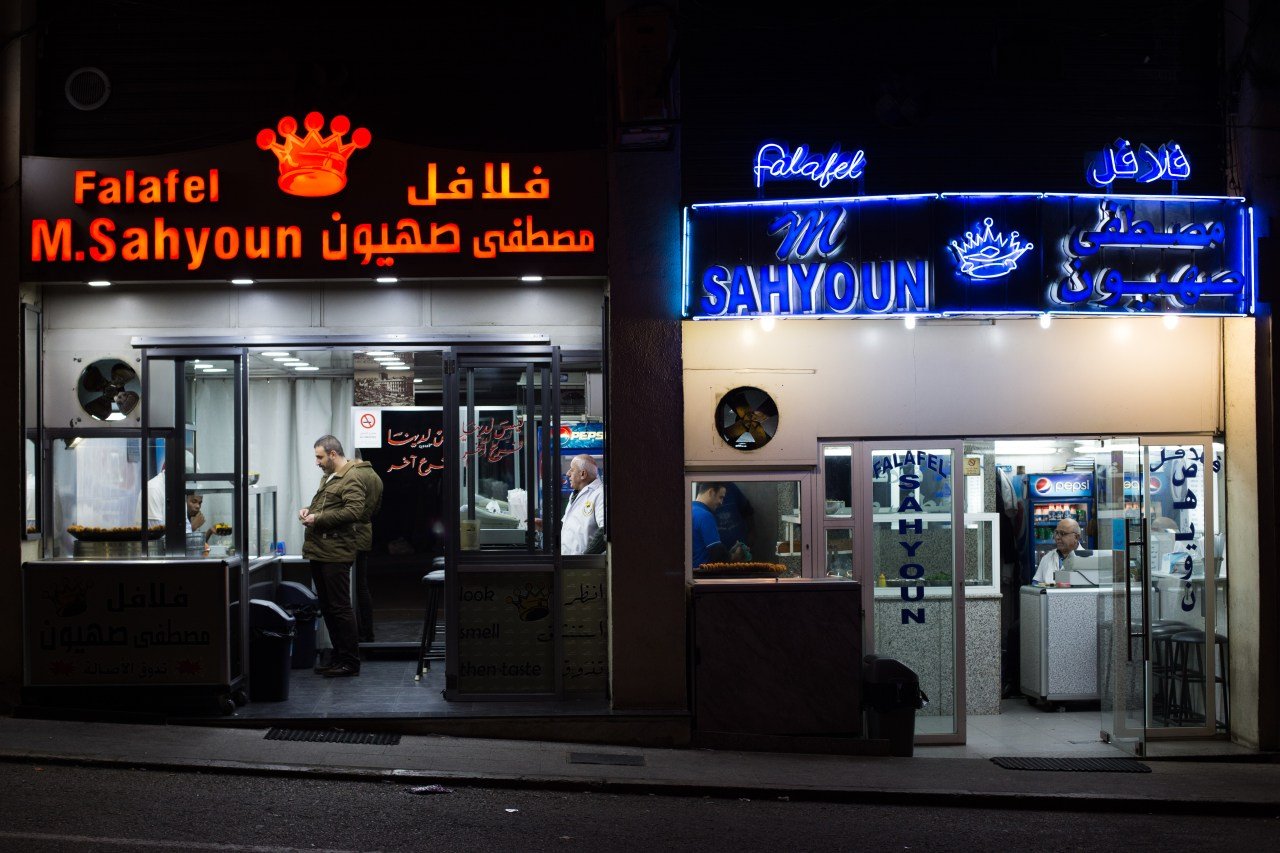
Damascus Road and the Grammar of Beirut Street Food
Approach Falafel Sahyoun on Damascus Road and you are already inside an argument about what Beirut values. The street itself is a working artery, not a curated dining district, and the queue that forms outside addresses like this one is a social cross-section the city's more polished restaurants rarely manage. Families, students, office workers, and travellers all converge around the same counter. That convergence is not incidental. In Beirut, falafel has always functioned as a civic food, a preparation that cuts across confession and class in ways that more elaborate Lebanese cooking does not.
The physical environment is spare by design. The focus is the fryer, the bread, and the assembly speed. There is no ambient lighting calibrated for a particular mood, no curated playlist. What you hear is the city: traffic from Damascus Road, orders called across a narrow space, the rhythm of a kitchen that has been doing this long enough to have developed its own internal logic. That setting is part of the information. Street-food counters in Beirut operate without the layer of hospitality theatre that places like Em Sherif in Beirut deploy, and that absence is its own editorial statement about what the food needs to do on its own.
The shortlist, unlocked.
Hard-to-book tables, cellar releases, and concierge-planned trips.
Get Exclusive Access →What Falafel Actually Is in This Context
Across Lebanon, falafel operates within a specific ingredient logic that separates it from the broader Middle Eastern category. The Lebanese version relies primarily on dried chickpeas, soaked but not cooked before grinding, which produces a denser, more textured interior than versions made with canned legumes or with a higher proportion of fava beans. The chickpea is the structural argument of the dish. Its provenance, dryness at time of soaking, and age all affect the result, which is why operators working at any serious level of this tradition pay attention to sourcing in ways that would not be legible to a casual observer.
The herbs folded into the mixture, typically flat-leaf parsley and coriander, are the other variable that separates counters in Beirut. Freshness at grinding time determines whether the interior stays green and aromatic through the frying window or oxidises into something muted. The oil temperature and frying time control the exterior texture. None of this is complex by the standards of a tasting-menu kitchen, but all of it requires consistency that only comes from volume and repetition. In that sense, the ingredient sourcing discipline at a serious falafel counter is not so different in kind from what drives sourcing decisions at destination restaurants like Atelier Moessmer Norbert Niederkofler in Brunico, even if the register is entirely different.
The accompaniments follow their own logic. Tahini made from sesame paste of varying quality is immediately detectable. Pickled vegetables bring acidity that cuts the richness of the fried chickpea. Fresh tomato and parsley add moisture and freshness. The flatbread, typically a thin Lebanese pita, is the container and the delivery mechanism. When the bread is fresh and warm, it changes the experience materially. When it is not, the whole assembly loses coherence. These are not minor details; they are the framework within which the main ingredient either works or does not.
Where Sahyoun Sits in Beirut's Street Food Tier
Beirut's falafel map divides roughly between neighbourhood staples operating within a local radius and addresses that have accumulated enough cross-city recognition to function as reference points for the format itself. Falafel Sahyoun occupies the latter category. Its position on Damascus Road places it between the older commercial core of the city and areas that connect to multiple residential and transit flows, which historically has made it accessible to a wider catchment than strictly neighbourhood operations.
Comparing this tier to the broader Lebanese dining scene requires some perspective. The country's restaurant culture ranges from internationally recognised Lebanese cuisine, as found at formal dining addresses across Beirut, through to the network of regional speciality operations across the country. Places like Lakkis Farm in Baalbek and Shams Restaurant in Aanjar are part of a separate tradition of produce-anchored regional cooking, while operations in the Bekaa Valley like Laiterie Massabki in Chtoura reflect yet another strand. Falafel Sahyoun sits outside all those categories and inside its own, which is the street-food counter tradition that has no tasting menu, no reservation system, and no narrative to sell except the food itself. For a broader picture of where this fits within the city's eating options, our full Beirut restaurants guide maps the range.
The comparison set within the falafel category itself includes Al Falamanki Sodeco, which operates in a more relaxed, café-adjacent format and pulls a different kind of regular. The counters are not competing for the same occasion; they are competing for the same reputation, which in Beirut's street-food conversation is argued through consistency, chickpea quality, and frying discipline over time.
Planning Your Visit
Damascus Road is reachable from most central Beirut neighbourhoods without significant difficulty, and Sahyoun operates in the tradition of Beirut street-food counters that keep their own hours rather than fixed posted schedules. The practical approach is to arrive with some flexibility in timing, since peak periods generate queues that move quickly given the format's throughput. The price point sits at the accessible end of any Beirut eating budget, which makes it viable for almost any visitor and explains the demographic range of the regular clientele. No booking is required or possible. Come, queue, eat.
Visitors building a wider picture of Lebanese cooking across regions would do well to pair a Damascus Road stop with something from the country's more formal dining tier, whether that is the Levantine kitchen tradition at places like Al Halabi Restaurant in Matn District or the neighbourhood bistro format at Onno Bistro in Bourj Hammoud. For those interested in how Lebanese cooking connects to Mediterranean dining more broadly, the coastal operations at Feniqia in Byblos and Jammal in Batroun District offer useful contrast. The full range of what Lebanese cooking can be, from a counter on Damascus Road to a destination address in the mountains, is part of what makes the country's food culture worth understanding on its own terms, separate from what international fine-dining programmes at addresses like Le Bernardin in New York or Atomix in New York City represent.
Frequently Asked Questions
- Is Falafel Sahyoun good for families?
- Yes, the price point and informal format make it one of the more practical options for families eating in Beirut's city centre.
- What is the overall feel of Falafel Sahyoun?
- If you arrive expecting a sit-down dining experience, this is not it. The format is counter service, the pace is fast, and the appeal is in the food itself rather than any surrounding hospitality. For visitors who understand that Beirut's street-food tradition operates on different terms than its formal restaurant tier, that directness is the point.
- What do regulars order at Falafel Sahyoun?
- Order the falafel sandwich. The wrapping format, with tahini, pickles, and fresh vegetables in warm flatbread, is the standard and the measure by which the counter's chickpea sourcing and frying discipline are most legible. There is no other menu to negotiate.
- Why does Falafel Sahyoun have a following that extends beyond its immediate neighbourhood?
- In Beirut, a falafel counter builds cross-city reputation through consistency rather than through marketing or awards, since the format operates entirely outside the systems that credential formal restaurants. Sahyoun's position on Damascus Road, a high-traffic artery connecting multiple parts of the city, has given it exposure to a broader and more varied clientele than most neighbourhood counters accumulate, and sustained quality over time is what converts that exposure into a durable reputation. It is a reference point for the format in the way that some Beirut dining addresses are reference points for Lebanese cuisine at the formal end.
Quick Comparison
These are the closest comparables we have in our database for quick context.
| Venue | Cuisine | Price | Awards | Notes |
|---|---|---|---|---|
| Falafel Sahyoun | This venue | |||
| Albergo Rooftop | Lebanese Cuisine | Lebanese Cuisine | ||
| Em Sherif | World's 50 Best | |||
| Beihouse | ||||
| Buco | ||||
| Al Falamanki Sodeco |
Need a table?
Our members enjoy priority alerts and concierge-led booking support for the world's most difficult tables.
Get Exclusive AccessThe shortlist, unlocked.
Hard-to-book tables, cellar releases, and concierge-planned trips.
Get Exclusive Access →