Our verdict
Al Rawda sits on Chouran Street in the Manara area, facing the Nejmeh Club, placing it firmly within a neighbourhood where traditional Lebanese hospitality has always operated at street level. The restaurant draws on the deep-rooted meze culture that defines Beirut's informal dining tradition, where shared plates and long tables set the rhythm of a meal rather than any single dish or chef persona.

Pearl is the En Primeur Club membership app — saves, bookings, and concierge access live there. Same editors, same standards.
- Address
- Manara area, chouran street, facing nejmeh club Beirut، 1626, Lebanon
- Phone
- +961 76 997 743
- Hours
- Daily 7 AM–12 AM
- Directions
- Get directions
The menu
What to order
- Foul
- Balila
- Msabaha
- Mezze
- Mashawi
Chouran Street and the Logic of Neighbourhood Dining in Beirut
The Manara area of Beirut operates on a different register from the polished restaurant strips of Gemmayzeh or the curated terraces of Achrafieh. Chouran Street, facing the Nejmeh Club, belongs to a part of the city where restaurants earn their place through repetition and reliability rather than through seasonal menus or design moments. Al Rawda sits in that tradition, positioned in a neighbourhood where the dining culture is shaped by proximity, loyalty, and the assumption that the table is something you return to rather than something you discover.
This matters as context. Beirut's restaurant culture has always split between two modes: the occasion-driven dining of venues like Em Sherif, where Lebanese cuisine is framed for formal celebration and international audiences, and the neighbourhood institution that feeds the same families across generations. Al Rawda operates in the second category, and that distinction carries genuine editorial weight when reading the city's food culture as a whole.
The Cultural Architecture of Lebanese Meze
To understand a neighbourhood restaurant in Beirut is to understand what Lebanese meze actually represents as a dining structure. The format is not simply a collection of small plates in the way that Spanish tapas or Cantonese dim sum might be understood from the outside. In the Lebanese context, meze is a pacing mechanism, a social contract, and a form of hospitality all at once. A table at a Beirut meze restaurant is set with the understanding that the meal will take time, that dishes will arrive in waves rather than in sequence, and that the act of eating is inseparable from the act of being together.
The cold meze arrives first: hummus, mutabbal, tabbouleh, fattoush, labneh, kibbeh nayeh when the kitchen does it, various pickles and olives that establish the table's geography before any cooked dish appears. Warm meze follows, then grilled proteins, and the meal closes not with a formal dessert course but with fruit, perhaps some kanafeh or ma'amoul, and strong Arabic coffee. This rhythm is observed in neighbourhood restaurants as faithfully as in celebrated dining rooms, and venues like Al Falamanki Sodeco have built their entire concept around recreating the unhurried pacing of traditional Lebanese table culture for a contemporary urban audience.
Al Rawda's location in the Manara area connects it to a part of the city where this format has always been practised without irony or reinvention. The Nejmeh Club across the street represents a parallel institution, a social anchor for a neighbourhood that has maintained its identity through decades of difficult urban change in Beirut.
Where Al Rawda Sits in Beirut's Wider Dining Spectrum
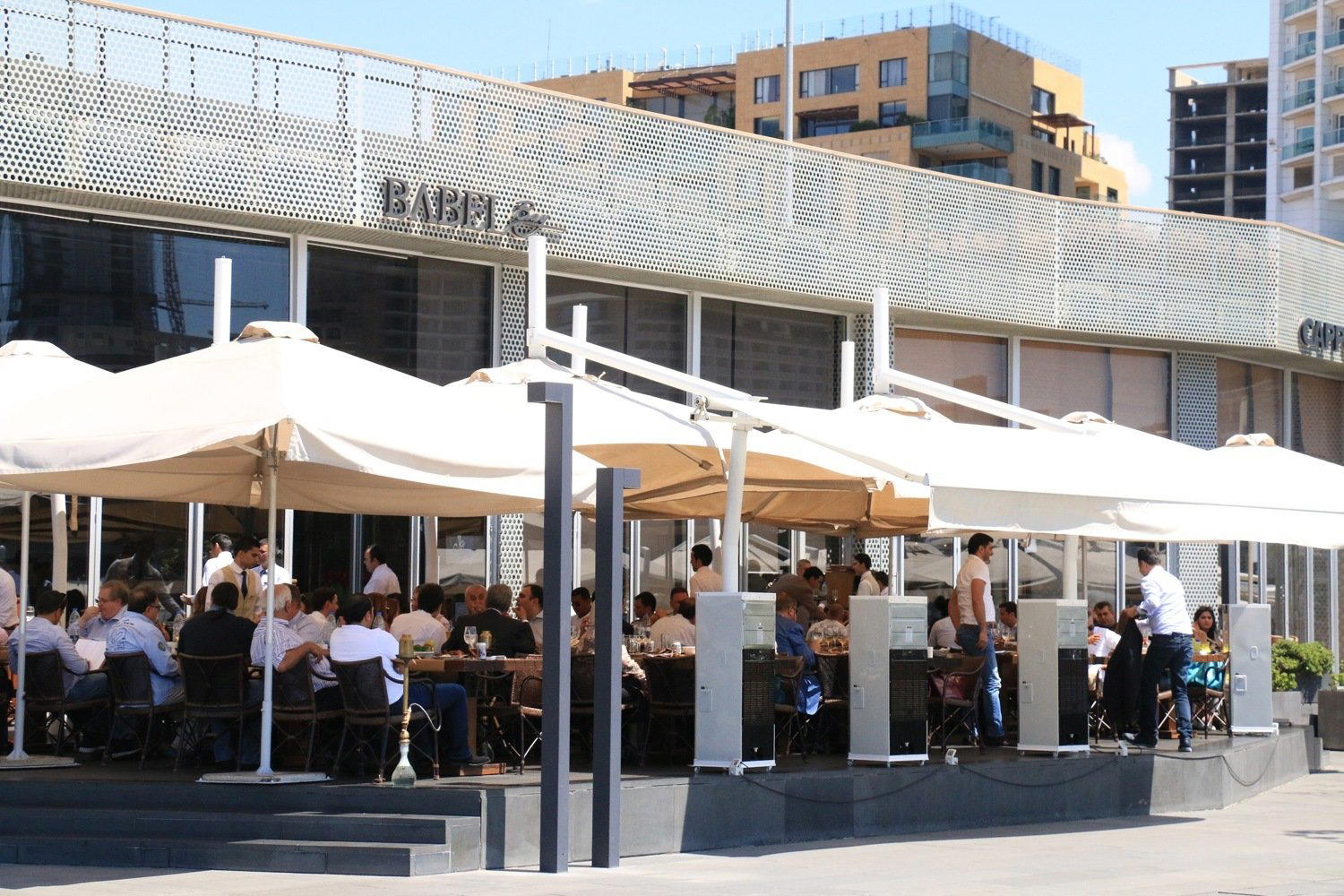
Beirut supports an unusually wide range of Lebanese cuisine expressions for a city of its size. At one end, restaurants like Al Halabi represent the institutionalised, high-capacity Lebanese table with decades of operational history and a menu engineered for consistency at scale. At another end, Albergo Rooftop places Lebanese cuisine in a boutique hotel frame, with views and setting doing significant work alongside the food. Babel Bay operates at the seafront-terrace register, where the maritime context reshapes the dining expectation entirely.
Al Rawda occupies none of those positions. The Chouran Street address, the Nejmeh Club facing, the Manara neighbourhood: these are signals of a restaurant that has never needed to reposition itself for changing demographics or tourism flows. That kind of stability is increasingly rare in a city that has absorbed significant economic and political disruption over the past decade, and it gives venues in this category a particular credibility among Beirutis who track where the city actually eats rather than where it performs eating.
Beyond Beirut, the broader Lebanese dining tradition extends across the country in ways that reward exploration. Jammal in Batroun District works the northern coast's seafood-forward tradition, while Shams Restaurant in Aanjar draws on the Armenian-Lebanese synthesis of the Bekaa approach. Further into the Bekaa, Lakkis Farm in Baalbek grounds its offer in agricultural provenance. Each represents a different expression of what Lebanese hospitality means at the table, and together they map a country that treats cooking as a form of cultural insistence rather than mere sustenance.
The Neighbourhood as Context for the Meal
Dining on Chouran Street situates the meal within a Beirut that many visitors moving between Gemmayzeh and the Corniche do not encounter. The Manara area runs toward the lighthouse and the sea, a residential density that gives way to the Mediterranean at its western edge. The neighbourhood's dining culture is shaped by its population: local families, university students from the nearby American University of Beirut campus to the north, and the kind of long-term residents who have stayed through multiple cycles of Beirut's compressed and turbulent recent history.
Restaurants in this part of the city tend to price against local purchasing power rather than against the international visitor's expectations. That pricing logic, wherever it applies, tends to produce a different quality of hospitality from venues that have calibrated themselves to the tourist economy. The food becomes less performative and more direct. For readers building a Beirut itinerary that moves beyond the established dining circuit, our full Beirut restaurants guide maps the city's neighbourhoods in detail and places venues like Al Rawda within the broader dining geography.
For those interested in tracking Lebanese cuisine across its regional variations, Feniqia in Byblos offers a coastal Phoenician-inflected frame, while Laiterie Massabki in Chtoura represents the dairy-led, Bekaa Valley table tradition. In Matn, Al Halabi Restaurant and Onno Bistro in Bourj Hammoud extend the conversation into the mountain suburbs. Keserwan contributes BRUT by Youssef Akiki, which places Lebanese produce within a contemporary fine-dining frame shaped by European technique. And for a ground-level comparison of what a Beirut street food institution looks and tastes like, Falafel Sahyoun and Kitchen Garage in Aley District sit at the casual end of a long and serious tradition.
Planning a Visit
Al Rawda is located on Chouran Street in the Manara area, directly facing the Nejmeh Club. Specific hours, pricing, and booking details are not published through centralised channels, which is itself characteristic of neighbourhood restaurants in this tier of Beirut's dining culture. The practical approach is to visit in the early evening when Lebanese meze restaurants typically operate with the most kitchen momentum, and to arrive with a group rather than as a solo diner, since the format rewards the shared table. As no reservation platform or website is currently listed, direct contact through the address or local inquiry is the advised approach.
Frequently asked questions
What part of town is Al Rawda - Shatila - Restaurant in?
Al Rawda - Shatila - Restaurant is located at Manara area, chouran street, facing nejmeh club Beirut، 1626, Lebanon, Beirut.
What makes Al Rawda - Shatila - Restaurant different from Beirut's destination dining scene?
Al Rawda is located on Chouran Street in the Manara area, directly facing the Nejmeh Club, placing it within a residential dining corridor rather than the destination-traffic zones of Gemmayzeh or Achrafieh. That address signals a kitchen built around repeat local custom rather than tourist rotation, which tends to produce a more grounded expression of Lebanese meze cooking. For visitors moving between the Corniche and the city's better-known restaurant strips, Chouran Street represents a less-trafficked but authentically residential alternative.
What do people recommend at Al Rawda - Shatila - Restaurant?
Al Rawda operates within the traditional Lebanese meze format standard to Manara-area neighbourhood dining, which means the table is structured around a spread of shared cold and hot dishes rather than individual plating. The cuisine type follows the conventions of that format: dips, grilled meats, and seasonal vegetable preparations ordered communally. Because no specific menu data is published, the safest approach is to order broadly and let the kitchen's rotation guide the table.
Can I walk in to Al Rawda - Shatila - Restaurant?
Al Rawda sits on Chouran Street in the Manara area, a residential corridor where neighbourhood restaurants typically operate on a walk-in basis rather than through structured reservation systems. No booking platform or phone number is publicly listed for the venue, which further points toward direct walk-in access. Visiting outside peak lunch and dinner windows reduces wait times at restaurants of this type in the area.
Cost Snapshot
| Venue | Cuisine | Price | Awards | Notes |
|---|---|---|---|---|
| Al Rawda - Shatila - RestaurantThis venue — the venue you are viewing | Traditional Lebanese | $10–20 | Not listed | Not listed |
| Albergo Rooftop | Mediterranean with Italian Accents | $50–100 | Relais Chateaux Award | Lebanese Cuisine |
| Em Sherif | Traditional Lebanese Fine Dining | $50–100 | World's 50 Best #13 | Not listed |
| Beihouse | Modern Levantine Mediterranean | $50–100 | World's 50 Best #5 · The Best Chef One Knife | Not listed |
| Buco | Modern Gastro Burgers | Not listed | World's 50 Best #39 | Not listed |
| Al Falamanki Sodeco | Traditional Lebanese | $20–30 | Not listed | Not listed |
Continue exploring
More in Beirut
Restaurants in Beirut
Browse all →
Bars in Beirut
Browse all →
Hotels in Beirut
Browse all →

Details
- Cozy
- Classic
- Rustic
- Casual Hangout
- Family
- Brunch
- Terrace
- Garden
- Waterfront
- Waterfront
- Street Scene
- A La Carte
- Halal
Current opening hours
- Monday
- 7 AM–12 AM
- Tuesday
- 7 AM–12 AM
- Wednesday
- 7 AM–12 AM
- Thursday
- 7 AM–12 AM
- Friday
- 7 AM–12 AM
- Saturday
- 7 AM–12 AM
- Sunday
- 7 AM–12 AM
Hours can change for holidays and private events. Last verified .
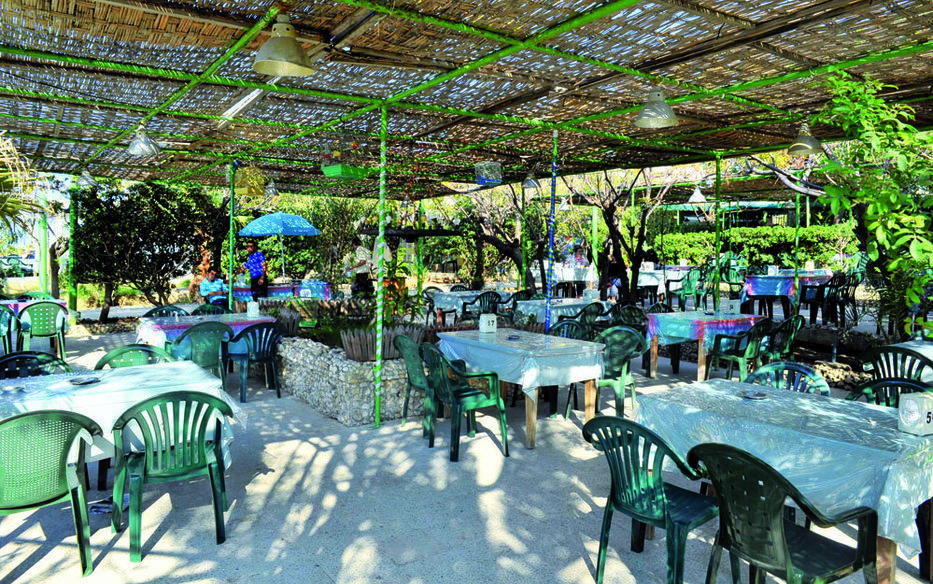
Cozy retro atmosphere with greenery, trees, and a sprawling garden leading to the sea's edge, providing relaxed seaside vibes.