Our verdict
St. Nicolas Street and the Weight of the Lebanese Table Restos St. Nicolas in Beirut is one of those streets where the evening air carries competing kitchens, charcoal, citrus, dried herbs, and where the decision of where to sit is made as...

Pearl is the En Primeur Club membership app — saves, bookings, and concierge access live there. Same editors, same standards.
- Address
- Restos St. Nicolas, Beirut, Lebanon
- Phone
- +96170443316
- Hours
- Daily 12 PM–12 AM
- Website
- instagram.com
- Directions
- Get directions
The menu
What to order
- Oriental Cappuccino
- Mixed Grill Large Platter
- KaaKet Knefeh
St. Nicolas Street and the Weight of the Lebanese Table
Restos St. Nicolas in Beirut is one of those streets where the evening air carries competing kitchens — charcoal, citrus, dried herbs — and where the decision of where to sit is made as much by instinct as by recommendation. Café D'Orient occupies this stretch, a restaurant that positions itself within a dining culture shaped by centuries of mezze ritual, Levantine hospitality, and the particular Beiruti habit of turning a meal into an extended social event that resists rush.
Lebanon's dining tradition is built around sequence and generosity. A table is not set for one dish but for many, and the progression from cold mezze through hot preparations to larger proteins follows a logic that most Lebanese diners absorb early. That architecture, the slow build, the layering of texture and temperature, is what distinguishes the Lebanese table from other Arab culinary traditions and what a restaurant on a street like St. Nicolas inherits whether it chooses to or not. Café D'Orient, by its name and its address, is working within that inheritance.
How the Meal Builds
The Lebanese mezze sequence functions as both an opening act and, often, an entire meal in itself. Cold preparations arrive first: the labneh pressed to varying degrees of density, the muhammara with its pomegranate sharpness cutting through walnut paste, the tabbouleh calibrated by parsley-to-bulgur ratio (in Lebanon, the herb dominates). These dishes establish the table's register before anything warm appears.
Hot mezze follow a different logic. Kebbeh, fatayer, sujuk, fried cauliflower with tahini, these are the transition point in a well-sequenced Lebanese meal, where the kitchen shifts from assembly to active cooking. The reader eating through this progression is not consuming courses in the Western sense; they are participating in a communal act where dishes arrive as they are ready and the table accumulates rather than clears.
For visitors accustomed to European tasting-menu structures, where each course replaces the last, the Lebanese approach can feel initially disorienting, plates stack up, bread appears and disappears, and the signal to stop ordering is social rather than culinary. Restaurants on St. Nicolas, serving a local clientele that knows this code instinctively, tend to pace tables accordingly. The mezze spread at a neighbourhood address like Café D'Orient is not a preamble to something more serious; it is the serious thing.
Grilled meats arrive when the mezze have run their course, and in the Lebanese sequence they function as punctuation rather than climax, a settling note after the complexity that precedes them. Kafta, shish taouk, and mixed grills are the customary endpoints, accompanied by pickles and garlic paste (toum) that continue to work on the palate even as the meal technically winds down. In this tradition, the table does not clear; it gradually stills.
Where Café D'Orient Sits in the Beirut Dining Picture
Beirut's restaurant scene divides along several fault lines. At one end, places like Em Sherif represent the grand-format Lebanese table, high production, elaborate mezze arrays, theatrical scale. At the other, neighbourhood addresses on residential streets offer the same culinary tradition at a register closer to how most Beirutis actually eat: without ceremony, with familiar staff, and at prices that make repeat visits reasonable. Al Falamanki Sodeco and Al Halabi occupy different points in that middle range, each with their own handling of the Lebanese canon.
Café D'Orient, on St. Nicolas, reads as a neighbourhood-tier address within this spectrum, the kind of place that serves a local catchment before it serves a visitor one. That is not a limitation; it is a positioning that often produces more honest food than rooms built primarily for the tourism or expense-account circuit. For context on how the Beirut restaurant scene maps across neighbourhoods and price points, the full Beirut restaurants guide covers the field more broadly.
Lebanese cuisine beyond Beirut follows regional patterns that are worth understanding for anyone eating seriously through the country. Al Rawda - Shatila works within a different neighbourhood register, while Albergo Rooftop takes Lebanese cuisine upward into a hotel dining format. Outside the capital, addresses like Feniqia in Byblos, Jammal in Batroun, and Shams in Aanjar represent how the tradition shifts with geography, coastal, mountain, and Bekaa Valley kitchens each draw on different ingredient pools and preparation habits.
Further into Lebanon's interior, Lakkis Farm in Baalbek and Laiterie Massabki in Chtoura connect the table to agriculture in a way that urban Beirut restaurants rarely do. And for readers who eat across international contexts, the sequencing discipline of Lebanese mezze tradition has loose structural cousins in tasting-format restaurants like Lazy Bear in San Francisco or the course-by-course precision of Le Bernardin in New York, though the social logic is entirely different.
The Mount Lebanon dining circuit extends the picture further: Onno Bistro in Bourj Hammoud, Al Halabi in the Matn District, BRUT by Youssef Akiki in Keserwan, and Kitchen Garage in the Aley District each represent a version of how Lebanese food is evolving outside the capital's immediate gravity. Falafel Sahyoun operates in a different register entirely, street-level, stripped back, and instructive about what the Lebanese table looks like when it removes all but the essential.
Planning a Visit
Café D'Orient sits on Restos St. Nicolas in Beirut, a street where foot traffic from the surrounding neighbourhood sustains dinner service most evenings.m. at neighbourhood addresses of this type in Beirut) or inquire locally about current service patterns, which in post-2019 Beirut have shifted frequently for venues across all price tiers. Evenings earlier in the week tend to move at a quieter pace than Friday and Saturday, when St. Nicolas and its surrounding streets in central Beirut draw larger crowds.
Frequently asked questions
Where do I go for Café D'Orient?
Café D'Orient is located at Restos St. Nicolas, Beirut, Lebanon, Beirut.
How does Café D'Orient compare to other restaurants on Restos St. Nicolas in Beirut?
Restos St. Nicolas functions as a cluster of restaurant addresses in central Beirut rather than a single dining destination, meaning Café D'Orient shares the street with other neighbourhood-tier options. Its position within Lebanon's mezze tradition places it alongside comparable addresses rather than above them, which makes the street itself worth treating as the destination — arriving early and reading the room before the Thursday-to-Saturday evening peak fills the terrace seating.
What should I eat at Café D'Orient?
Order across both cold and hot mezze before considering grilled mains — that sequencing reflects how the Lebanese table actually works. Cold preparations anchor the opening: labneh, hummus, fattoush, and baba ghanoush. Hot mezze, which follow, shift the meal's register entirely. On St. Nicolas, portions tend toward the communal, so arriving with two or more people allows a broader sweep of the menu.
Should I book Café D'Orient in advance?
On St. Nicolas, neighbourhood-tier restaurants generally accommodate walk-ins, with the street reaching its busiest period Thursday through Saturday evenings. Arriving before 8pm on peak nights is the practical hedge.
What makes Café D'Orient worth seeking out?
Café D'Orient sits within the Lebanese mezze tradition at a scale that the grand-format restaurants — Em Sherif and similar production-heavy addresses — do not replicate. Restos St. Nicolas sustains dinner service through consistent neighbourhood foot traffic rather than destination marketing, which tends to keep the kitchen oriented toward regulars. That dynamic usually produces a more honest read on daily Lebanese cooking than a fully tourist-facing room.
Is Café D'Orient good for vegetarians?
Lebanese cuisine accommodates vegetarians structurally: cold mezze, which form the bulk of any table's opening, are plant-based by default — hummus, tabbouleh, fattoush, baba ghanoush, and labneh cover the category without adaptation. Hot mezze introduce dishes like falafel and stuffed vine leaves alongside meat preparations, so vegetarians can build a full meal without relying on a separate menu or special requests.
Recognition Snapshot
| Venue | Cuisine | Price | Awards |
|---|---|---|---|
| Café D'OrientThis venue — the venue you are viewing | Oriental Middle Eastern | $20–30 | Not listed |
| Albergo Rooftop | Mediterranean with Italian Accents | $50–100 | Relais Chateaux Award |
| Em Sherif | Traditional Lebanese Fine Dining | $50–100 | World's 50 Best #13 |
| Beihouse | Modern Levantine Mediterranean | $50–100 | World's 50 Best #5 · The Best Chef One Knife |
| Buco | Modern Gastro Burgers | Not listed | World's 50 Best #39 |
| Al Falamanki Sodeco | Traditional Lebanese | $20–30 | Not listed |
Continue exploring
More in Beirut
Restaurants in Beirut
Browse all →
Bars in Beirut
Browse all →
Hotels in Beirut
Browse all →

Details
- Sophisticated
- Elegant
- Classic
- Casual Hangout
- Group Dining
- Standalone
- Craft Cocktails
- A La Carte
- Coffee
- Vegetarian Friendly
Current opening hours
- Monday
- 12 PM–12 AM
- Tuesday
- 12 PM–12 AM
- Wednesday
- 12 PM–12 AM
- Thursday
- 12 PM–12 AM
- Friday
- 12 PM–12 AM
- Saturday
- 12 PM–12 AM
- Sunday
- 12 PM–12 AM
Hours can change for holidays and private events. Last verified .
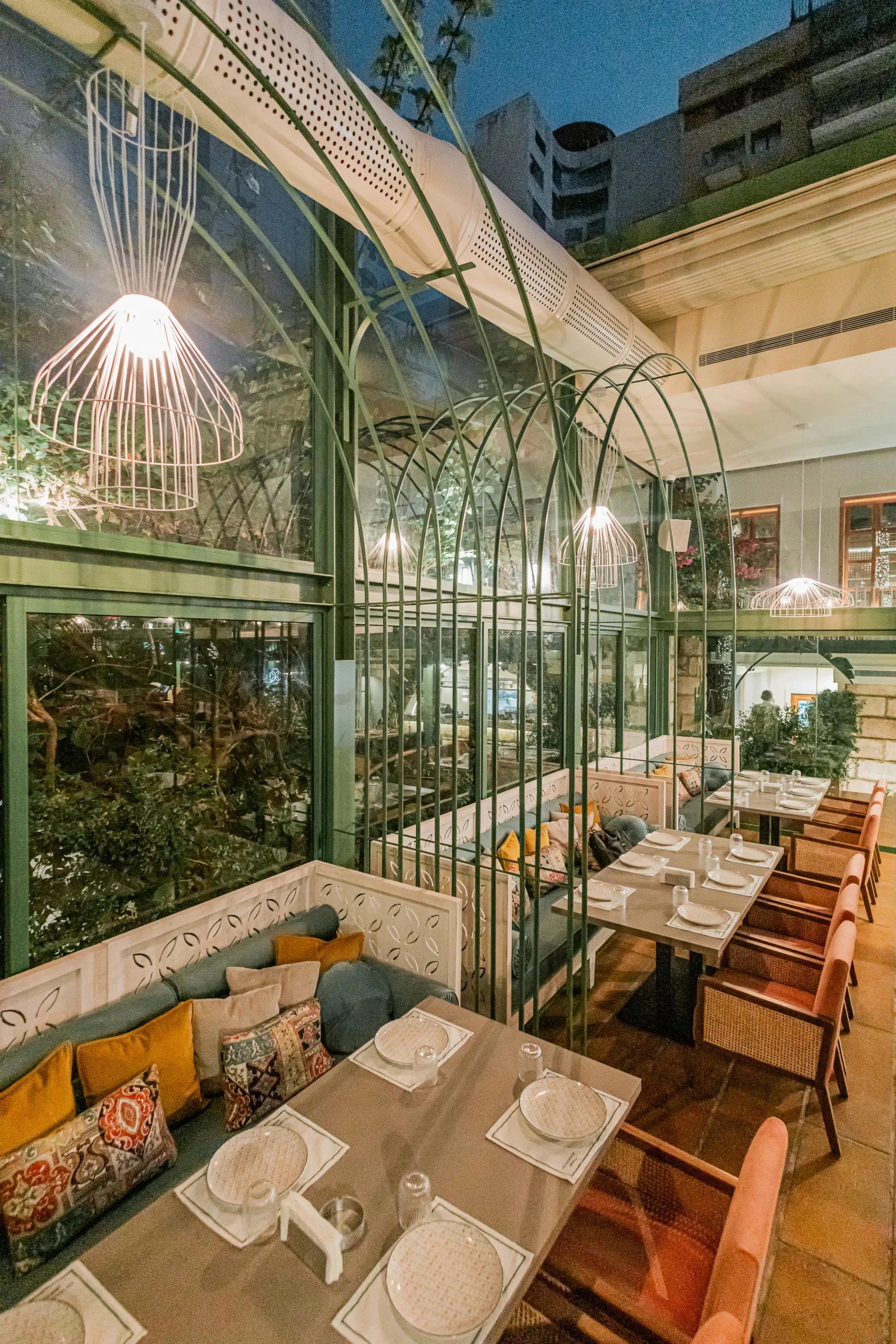
Stylish decor with inviting and sophisticated atmosphere highlighted by excellent service.