Our verdict
In the Bekaa Valley town of Aanjar, Shams Restaurant draws on the agricultural abundance surrounding it — a setting where the Levantine table still reflects the land it sits on. The restaurant occupies a position familiar to Bekaa dining: grounded, generous, and shaped by proximity to some of Lebanon's most productive farming country. A reliable address in a town better known for its Umayyad ruins than its restaurant scene.

Pearl is the En Primeur Club membership app — saves, bookings, and concierge access live there. Same editors, same standards.
- Address
- Aanjar, Aanjar
- Directions
- Get directions
The menu
What to order
- Grilled trout
Where the Bekaa Valley Sets the Table
Aanjar sits in the southern Bekaa Valley at an elevation that moderates the summer heat and keeps the soil productive across a long growing season. The town is better known internationally for its remarkably preserved Umayyad ruins than for its restaurants, which means the dining scene here has developed largely for residents and regional visitors rather than international food tourists. That insularity, common to agricultural towns throughout the Bekaa, tends to produce a particular kind of restaurant: one calibrated to local expectations of generosity, seasonality, and ingredient quality rather than to the concerns of a broader audience. Shams Restaurant sits within that tradition.
The Bekaa Valley as a whole is Lebanon's agricultural engine. Tomatoes, cucumbers, stone fruits, herbs, and legumes move out of this valley toward Beirut and beyond, but the restaurants that sit within it have first access. That proximity shapes what ends up on the table in ways that a city restaurant, sourcing through a supply chain, cannot fully replicate. The mezze tradition, which forms the backbone of Levantine dining across Lebanon, depends heavily on this kind of freshness: the quality of a fattoush or a tabbouleh is almost entirely a function of how recently the herbs and vegetables were cut, and in the Bekaa, that interval is measured in hours rather than days.
The Ingredient Logic of Bekaa Dining
Lebanese cuisine at its most functional is a cuisine of assembly and proportion. The cook's role is less about transformation and more about selection — choosing the right tomato at the right moment, pressing the right olive oil, sourcing the right labneh from a producer whose milk has the correct fat content and acidity. This is why towns like Aanjar, Chtoura, and Baalbek sustain a restaurant culture that punches beyond what their populations alone would suggest. The raw materials are there, and the knowledge of how to handle them has accumulated over generations.
For context on what ingredient-led sourcing looks like at a different scale and register, Lakkis Farm in Baalbek operates as a farm-to-table format where the sourcing logic is made explicit as part of the offer. The Bekaa's dairy tradition is also well represented at Laiterie Massabki in Chtoura, where the cheese and dairy production chain is integral to the restaurant identity. Shams occupies a quieter position in this ecosystem — not marketing its sourcing as a concept, but embedded in a town where sourcing locally is simply the default.
The mezze format, which dominates Bekaa restaurant culture, rewards this kind of embedded sourcing. A spread of cold and hot mezze, hummus, mutabbal, kibbeh, warak enab, grilled meats, is not evaluated dish by dish in isolation. It is evaluated as a system, where the cumulative quality of ingredients either holds together or falls apart. In agricultural Bekaa towns, the odds of that system holding together are structurally higher than in urban settings, because the supply chain is shorter and the producer relationships are direct.
Aanjar's Position in Lebanon's Regional Dining Map
Within Lebanon's broader restaurant conversation, Beirut absorbs most of the critical attention. Venues like Em Sherif in Beirut represent the high-end Lebanese dining format at its most curated, elaborate, lavish, and priced for the capital's international audience. Al Halabi Restaurant in the Matn District occupies a similarly polished tier. The Bekaa operates at a different register: less formal, more ingredient-forward, and often more honest about what Lebanese cooking actually is when it is not being performed for export.
The mountain towns to the west offer their own contrasts. Kitchen Garage in the Aley District represents the contemporary bistro format that has taken hold in Lebanon's cooler upland areas. BRUT by Youssef Akiki in the Keserwan District sits at the wine-led, produce-forward end of the Lebanese scene, where local natural wine production and seasonal cooking have begun to converge. These are self-consciously modern propositions. The Bekaa's restaurants, including Shams, tend to be less concerned with positioning and more concerned with the mechanics of feeding people well from the land that surrounds them.
For travelers moving through the Bekaa, whether visiting the Roman temples at Baalbek, the Umayyad ruins in Aanjar itself, or the wineries that have made this valley Lebanon's primary wine region, the question of where to eat is often answered by proximity and recommendation rather than by advance research. Aanjar is a logical stop on the route between Baalbek and Beirut, and Shams functions as a dependable address in a town that does not have a deep bench of restaurant options. Our full Aanjar restaurants guide covers the town's dining options in more detail for visitors planning a longer stop.
Practical Notes for Visiting Aanjar
Aanjar is approximately 90 kilometers northeast of Beirut via the Beirut-Damascus highway, making it a feasible day trip or a natural stop on a Bekaa Valley circuit. The town itself is small, with a population concentrated in the Armenian community that settled here in the early twentieth century, a demographic that has contributed its own culinary influences to the Bekaa's already layered food culture. Visiting hours and booking details for Shams are best confirmed locally or through the town's tourism contacts, as the restaurant does not maintain a prominent digital presence. That absence is itself characteristic of Bekaa dining at this level: the audience is largely repeat and regional, and the marketing is word of mouth. Visiting in spring or early summer gives access to the valley's produce at its most varied, though the autumn harvest period, when stone fruits, figs, and late-season tomatoes are at their peak, is equally worth timing a visit around.
Travelers who have used the Bekaa as a base for wine visits to estates in the Chtaura and Baalbek zones will find that the valley's restaurant culture pairs naturally with its wine production: the same climate and soil that supports viticulture also drives the agricultural abundance that shapes the local table. For comparable regional restaurant experiences elsewhere in Lebanon's coastal and mountain belt, Feniqia in Byblos, Jammal in the Batroun District, and Onno Bistro in Matn each offer a distinct regional reading of the Lebanese table.
Frequently asked questions
Can I bring kids to Shams Restaurant?
Aanjar's dining culture is family-oriented by nature, and restaurants in the town generally reflect that. Shams sits in Aanjar itself, a community-scale setting where multigenerational tables are the norm rather than the exception.
What's the vibe at Shams Restaurant?
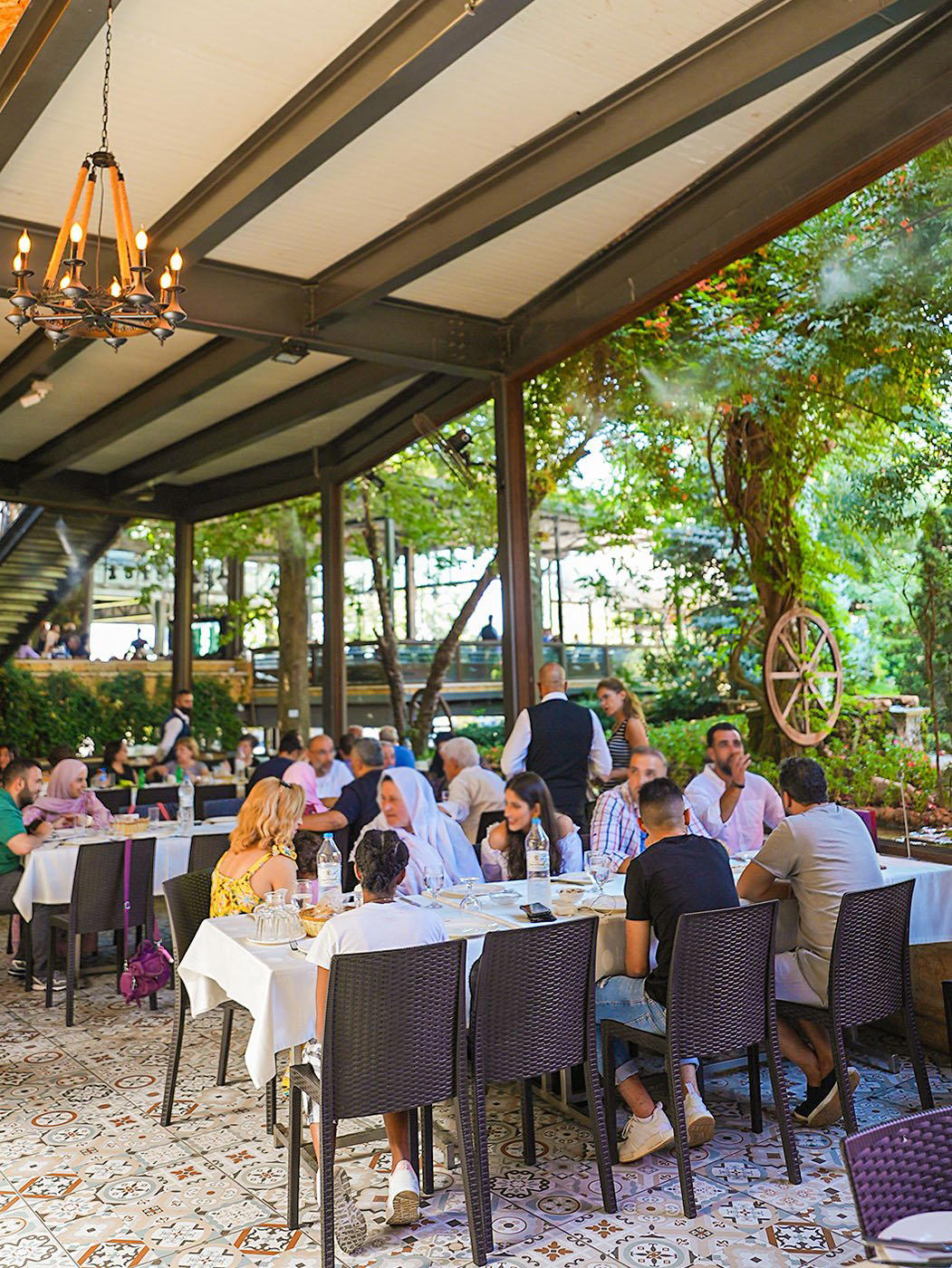
Aanjar is a small town in the southern Bekaa Valley, and Shams operates within that context: expect a low-key, locally grounded atmosphere rather than the polished production of a Beirut dining room. The setting reflects the agricultural character of the region, where the meal is tied to the valley's produce and the rhythms of the surrounding landscape. It reads more as a working lunch destination for travellers on the Beirut-Damascus corridor than as a destination venue in its own right.
Is Shams Restaurant a good stop when visiting the Aanjar Umayyad ruins?
The Umayyad ruins at Aanjar are the primary reason most visitors make the detour into the town, and Shams Restaurant is located in Aanjar itself, making it a practical option before or after touring the archaeological site. The Bekaa Valley's agricultural output means local restaurants in the area typically work with produce grown within a short radius, which gives the food a seasonal character tied to the region. For visitors planning a day trip from Beirut — roughly 90 kilometres via the Damascus highway — pairing the ruins with a meal at Shams covers both the historical and culinary dimensions of the stop.
What dish is Shams Restaurant famous for?
No specific signature dish is documented for Shams Restaurant at this time. Given its location in the Bekaa Valley, the broader regional tradition leans on mezze-driven spreads, fresh vegetables, grilled meats, and herb-forward preparations that reflect what the valley's long growing season yields. For confirmed menu details, check the venue's official channels.
Where is Shams Restaurant in Aanjar?
Shams Restaurant is located at Aanjar, Aanjar, Aanjar.
How hard is it to get a table at Shams Restaurant?
Aanjar draws a steady stream of visitors passing through on the Beirut-Damascus highway, as well as day-trippers coming to see the Umayyad ruins, which means weekend lunch periods can fill up at local restaurants. No advance booking data is available for Shams specifically, so calling ahead before a weekend or holiday visit is a reasonable precaution.
What makes Shams Restaurant worth seeking out?
Aanjar occupies a position that Beirut's restaurant circuit rarely covers: a Bekaa Valley town where the sourcing chain between farm and plate is short and the cooking reflects that directly. Shams sits in this context, offering access to regional Lebanese food at its most functional — ingredient-led rather than concept-driven. For travellers already routing through the Bekaa, it represents a grounded alternative to making the full return trip to Beirut for lunch.
Fast Comparison
| Venue | Cuisine | Price | Awards | Notes |
|---|---|---|---|---|
| Shams RestaurantThis venue — the venue you are viewing | Traditional Lebanese with Armenian Influences | $20–30 | Not listed | Not listed |
| Albergo Rooftop | Mediterranean with Italian Accents | $50–100 | Relais Chateaux Award | Lebanese Cuisine |
| Em Sherif | Traditional Lebanese Fine Dining | $50–100 | World's 50 Best #13 | Not listed |
| Beihouse | Modern Levantine Mediterranean | $50–100 | World's 50 Best #5 · The Best Chef One Knife | Not listed |
| Buco | Modern Gastro Burgers | Not listed | World's 50 Best #39 | Not listed |
| Kitchen Garage | Modern Lebanese | Not listed | Not listed | Not listed |
Continue exploring
More in Aanjar
Restaurants in Aanjar
Browse all →
Bars in Aanjar
Browse all →
Hotels in Aanjar
Browse all →

Details
- Cozy
- Family
- Group Dining
- Garden
- Open Kitchen
- Local Sourcing
- Garden
- A La Carte
- Vegetarian Friendly
- Vegan Options
- Gluten Free Options
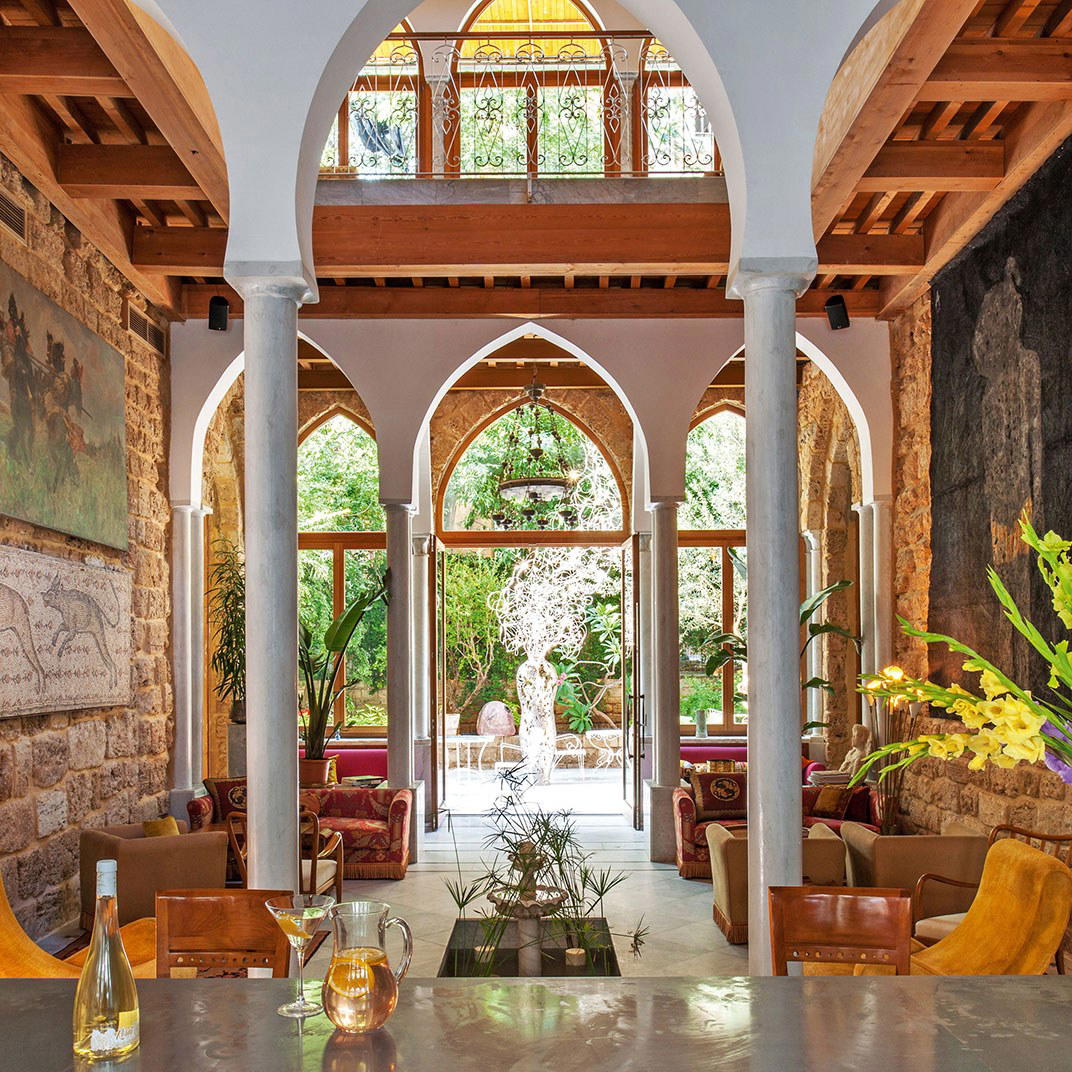
Relaxing atmosphere in a beautiful Bekaa Valley setting with enchanted floral gardens, fountains, and family-friendly amusements.