Our verdict
Hanna Mitri is one of Beirut's most enduring addresses for traditional Lebanese sweets and pastries, drawing generations of locals who treat a visit as ritual rather than occasion. The shop occupies a particular place in the city's collective memory, where the act of selecting, wrapping, and sharing sweets carries as much weight as the sweets themselves. For anyone tracing the spine of Lebanese confectionery tradition, it belongs on the itinerary alongside the city's broader dining canon.

Pearl is the En Primeur Club membership app — saves, bookings, and concierge access live there. Same editors, same standards.
- Address
- Beirut, Lebanon
- Directions
- Get directions
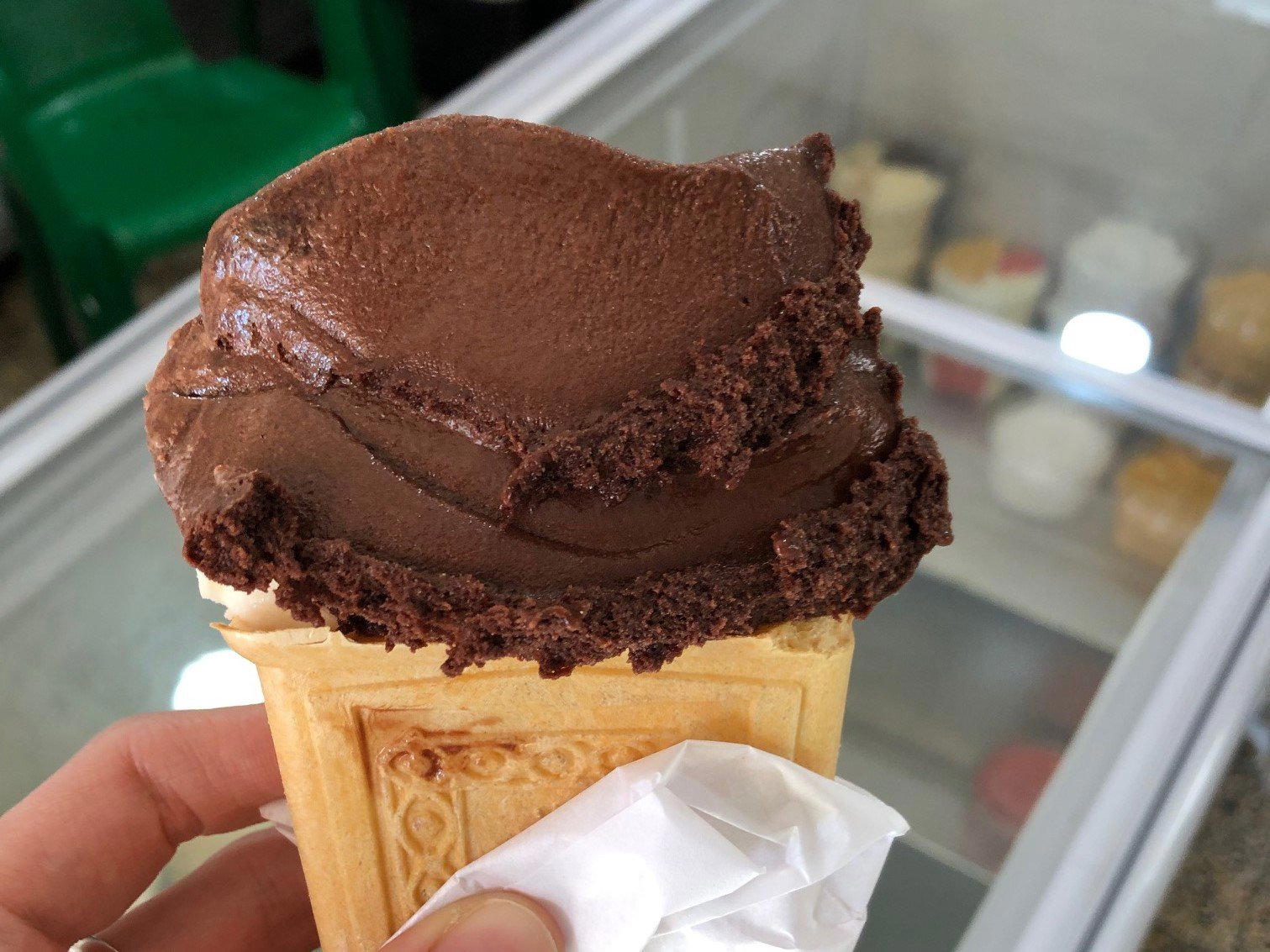
The menu
What to order
- Pistachio ice cream
- Strawberry ice cream
- Apricot ice cream
- Maamoul
- Maakroun
Where the Sweet Comes Before the Meal
In Beirut, the pastry shop has always functioned as a social institution as much as a retail one. You do not simply stop in, pay, and leave. You deliberate. You consult. You watch the person behind the counter lay out trays of knafeh or arrange maamoul by filling, and you consider what the occasion demands. Hanna Mitri, one of the city's oldest surviving confectionery addresses, operates squarely within that tradition. Walking in is less a transaction and more a small ceremony — the kind that Beirutis have been repeating across generations, often without consciously registering it as anything other than ordinary life.
The broader context matters here: Lebanese pastry-making sits at a crossroads of Ottoman, Arab, and Levantine technique, and Beirut has long been the city where those influences converge most visibly. Sugar syrups perfumed with orange blossom and rose water, semolina doughs worked by hand, pistachios sourced from Aleppo — these are not decorative flourishes but load-bearing elements of a tradition that predates any individual shop. Hanna Mitri's longevity in that tradition is itself a credential, the kind that no single award can fully confer.
The Ritual of Ordering
Lebanese confectionery culture operates on a logic of abundance and generosity. You rarely buy for yourself alone. The standard purchase is a box, assembled to order, destined for a host's table or a family gathering. The pacing of that selection process is deliberate by design: you are expected to look, to ask, to change your mind. Shops that have survived long enough in Beirut understand this rhythm and build their counter experience around it rather than against it.
At Hanna Mitri, the format aligns with this expectation. The shop belongs to a category of specialist confectioners, distinct from the grander, more theatrical Lebanese patisseries that have proliferated in recent decades, where the focus stays narrow and the execution runs deep. In a city where Em Sherif has made a case for Lebanese cuisine at its most ceremonially grand and Al Halabi represents the formal sit-down mezze tradition, Hanna Mitri occupies a different register entirely: the everyday sacred, the ritual without a reservation.
Beirut's Confectionery Tradition and Where Hanna Mitri Fits
Understanding what Hanna Mitri represents requires some orientation within Beirut's broader food character. The city's dining scene has always stratified along lines of occasion: the quick street-level bite at a place like Falafel Sahyoun, the leisurely afternoon at Al Falamanki Sodeco with its shisha and shared plates, the more formal table at Albergo Rooftop for Lebanese cuisine with a view. The pastry shop sits orthogonal to all of these: it is not a meal, not a snack stop, but a ritual punctuation mark, something you do before or after, on the way to someone's home, or simply because the date demands it.
Specialist confectioners in Lebanon tend to anchor themselves in one or two product categories rather than spreading across the full sweet spectrum. The operational logic is sound: mastery of knafeh requires different skills and equipment than mastery of baklawa, and the shops that try to do everything rarely do anything with the precision that repeat customers demand. Hanna Mitri's reputation rests on that kind of specialist credibility, the sort built not through marketing but through the stubborn consistency that keeps a neighbourhood coming back across decades.
For visitors arriving from outside Lebanon, it is worth understanding that Lebanese sweets are not a dessert course in the Western sense. They are a social currency, brought to occasions, offered to guests, consumed with Arabic coffee or tea in a context of conversation rather than solitary eating. The meal, in this tradition, often ends before the sweets begin, or begins after they have been offered and declined twice as politeness demands. That etiquette is worth knowing before you walk in, because it shapes what you order and how much of it.
Placing Hanna Mitri Among Beirut's Dining Coordinates
Beirut's food scene in 2024 remains resilient in ways that defy the city's economic turbulence. Across the country, from Kitchen Garage in Aley District to Lakkis Farm in Baalbek, there is an ongoing conversation about what Lebanese food is and what it can become. In Byblos, Feniqia works within a coastal interpretation of the tradition; in Batroun, Jammal represents a regional variation. Even in the Bekaa Valley, Shams Restaurant in Aanjar and Laiterie Massabki in Chtoura show how the country's food identity stretches well beyond the capital.
Within Beirut itself, the conversation about heritage and innovation runs through every category. BRUT by Youssef Akiki in Keserwan District has attracted attention for its wine-forward approach to Lebanese produce, while Onno Bistro in Bourj Hammoud and Al Rawda in Shatila speak to the city's neighbourhood-level eating culture. Al Halabi Restaurant in Matn District extends the formal mezze tradition into the suburbs. Hanna Mitri does not compete with any of these, it occupies a category that has no direct challenger in the same heritage register.
For a full picture of where to eat and drink across the capital, the EP Club Beirut restaurants guide maps the city's dining geography in considerably more detail.
Planning a Visit
Hanna Mitri operates as a walk-in destination in the conventional Lebanese confectionery mould, no reservation required, no tasting menu, no dress code beyond the implicit standard of a neighbourhood shop that takes itself seriously. The appropriate time to visit is late morning or mid-afternoon, when the day's production is fresh and the counter is fully stocked. Arriving in the evening risks finding depleted trays; arriving too early risks missing items produced in batches. Budget generously if you are buying for a gathering: in Lebanese confectionery culture, bringing too little is the only real faux pas. Prices, while not publicly listed, tend to reflect the specialist positioning of the shop rather than the commodity end of the market.
Frequently asked questions
How does Hanna Mitri fit into Beirut's broader confectionery scene compared to other long-standing pastry shops?
Hanna Mitri holds its place within that tradition as a walk-in counter built around the city's gifting logic rather than tourist-facing retail.
What dish is Hanna Mitri famous for?
Hanna Mitri is rooted in the Lebanese confectionery tradition, which centres on sugar-syrup pastries, nut-filled sweets, and semolina-based preparations that form the backbone of the city's gifting culture. The shop operates within a broader Beirut pastry lineage rather than a single signature dish. What draws regulars is the consistency of the assortment across the box-purchase format standard to Lebanese confectionery.
Do I need a reservation for Hanna Mitri?
No reservation is required. Hanna Mitri operates on a walk-in basis, consistent with the traditional Lebanese confectionery model where counter service and immediate purchase are the norm. There is no tasting menu format, no ticketed seating, and no dress code.
What's Hanna Mitri best at?
Hanna Mitri functions at its strongest as a social and ceremonial stop: the kind of place Beirutis use when they need a box of sweets for a gathering, a family visit, or a formal gesture. That role as a confectionery institution within the city's food culture is what separates it from a generic retail bakery.
Can Hanna Mitri accommodate dietary restrictions?
Lebanese confectionery as a tradition relies heavily on nuts, semolina, dairy derivatives, and refined sugar, so the format is naturally limited for guests with nut allergies or strict dietary needs. Visitors with dietary restrictions should verify the current assortment directly at the counter.
Is a meal at Hanna Mitri worth the investment?
Hanna Mitri is not a sit-down restaurant and does not position itself as a dining destination in that sense. The value proposition is in the purchase of a curated box of Lebanese sweets, which in Beirut's confectionery culture functions as both a social gesture and a direct expression of the city's pastry tradition.
Cuisine Lens
Comparable venues nearby, for context on price, style, and recognition.
| Venue | Cuisine | Price | Notes |
|---|---|---|---|
| Hanna MitriThis venue — the venue you are viewing | Traditional Lebanese Bouza & Sweets | $1–10 | Not listed |
| Basterma Mano | Armenian Shawarma & Basterma | $1–10 | Borj Hammoud |
| Frank Würst Fine Hotdog | American Hot Dogs | Not listed | Beirut |
| Rizk Chicken | Lebanese Fried Chicken & Shawarma | $10–20 | Bachoura |
| Falafel Sahyoun | Lebanese Falafel | $1–10 | Ras El-Nabeh |
| Restaurant Joseph | Lebanese Street Food | $10–20 | Sin El Fil |
Continue exploring
More in Beirut
Restaurants in Beirut
Browse all →
Bars in Beirut
Browse all →
Hotels in Beirut
Browse all →


Details
- Well Known
- Cozy
- Classic
- Casual Hangout
- Solo
- Historic Building
Simple, charming, and unpretentious with minimal signage; a cramped but cozy single-room shop in a weathered building that feels frozen in time.