Our verdict
Burgundy occupies a specific position in Beirut's mid-to-upper dining tier, where the name signals a French-inflected sensibility in a city that has long maintained an unusually close relationship with the wines and food culture of eastern France. Against peers like Em Sherif and Al Falamanki Sodeco, it reads as a quieter, more intimate proposition in a scene that rarely rewards restraint.

Pearl is the En Primeur Club membership app — saves, bookings, and concierge access live there. Same editors, same standards.
- Address
- Beirut, Lebanon
- Phone
- +9611999820
- Hours
- Mon–Fri 12–3 PM, 8–10 PMSat 8–10:30 PMSun Closed
- Website
- burgundybeirut.com
- Directions
- Get directions
- Booking
- Book on the venue's website
The menu
What to order
- Steak Tartare
- Pan-Seared Sea Bass
- Kobe Beef
- Foie Gras
A City That Drinks French, Eats Lebanese, and Occasionally Blurs the Line
Beirut has always held France at arm's length and close to the chest simultaneously. The colonial trace runs through the language, through the wine lists, through the names above restaurant doors. A venue called Burgundy lands in that particular cultural register: it is not a French restaurant in the way Paris has French restaurants, nor is it simply Lebanese with European styling. It sits in the space Beirut has always occupied between those two poles, where the reference is European but the energy and the room are distinctly local.
That positioning matters because Beirut's dining scene has sorted itself into relatively legible tiers over the past decade. At the leading sit the grand-format Lebanese restaurants — Em Sherif being the clearest example, where the mezze tradition is presented at a scale and price point calibrated for the regional visitor and the Beiruti who treats dinner as an occasion. Below that, the neighbourhood-rooted places hold a different kind of loyalty: Al Falamanki Sodeco and Al Halabi occupy the register where tradition and familiarity are the selling proposition. Burgundy's name places it in a narrower, more specific niche: the French-inflected Beirut table that was once as common as a brasserie on a Parisian side street and is now considerably rarer.
The Room as Reference
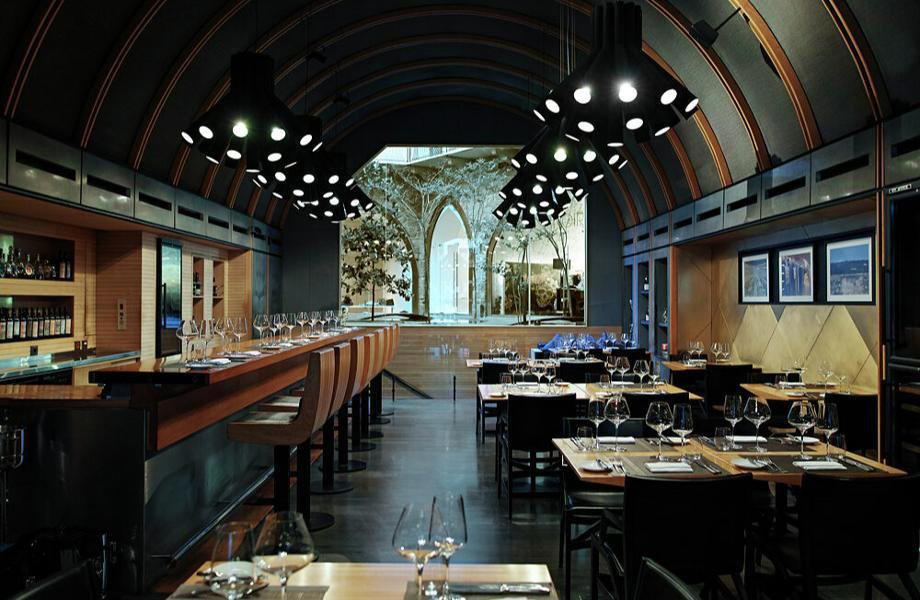
The design vocabulary of Beirut's more considered restaurants has shifted considerably since the mid-2010s. The raw-concrete aesthetic that swept through the city's post-war rebuilding gave way, gradually, to warmer interiors: plaster walls, aged wood, lighting that references the warmth of a Lyonnais bouchon rather than the cool precision of a Scandinavian bistro. Burgundy's name alone signals where on that spectrum the room is likely to sit. Wine-region naming conventions in Beirut tend to track a specific aesthetic code: dark wood, a serious wine list displayed with deliberate care, tablecloths or their deliberate absence as a statement, and a lighting scheme that favours shadow over brightness.
In the broader context of how Beirut restaurants handle space, the mid-capacity room operating at deliberate pace is distinct from the high-volume formats that define the city's more commercial dining corridors. The Albergo Rooftop operates within the hotel's architectural identity; Al Rawda - Shatila reads through a completely different cultural lens. Burgundy, by name and implied format, is the kind of room that works against spectacle. In a city where spectacle is available on almost every block, that is a considered choice rather than a limitation.
The French-Lebanese Table: A Longer History Than Most
The relationship between Lebanese cooking and French technique predates the modern restaurant industry by several generations. During the Mandate period, French culinary grammar entered Lebanese kitchens at the professional and domestic level in ways that never fully retreated. The result is a city where the wine list skews heavily Burgundian and Bordelais even at restaurants serving kibbeh nayyeh and fattoush, and where the tasting-menu format has found a more receptive audience than might be expected given the dominance of mezze culture.
This history gives a venue named Burgundy a specific kind of depth. It is not importing a foreign concept; it is referencing a tradition that Beirut has already partially absorbed and made its own. The question for any restaurant operating in this space is how it balances that inheritance: whether the kitchen leans into the French reference with technical discipline, or uses it as a frame for dishes that are fundamentally Lebanese in their sourcing and seasoning. The most interesting kitchens in this tier do both, and sometimes within the same course.
Beyond the city, the wider Lebanese dining geography rewards exploration for those already oriented toward the Burgundy register. BRUT by Youssef Akiki in Keserwan District represents the natural-wine-inflected end of the French-Lebanese table. Feniqia in Byblos operates in a coastal setting that shifts the same reference points through a Mediterranean seafood lens. Jammal in Batroun District is the northern equivalent, where the proximity to local producers pulls the kitchen toward a more seasonal, market-driven approach. Burgundy's urban Beirut position places it in a different context from all three.
Reading Beirut's Wine-Named Venues Against Their Peers
Wine-region naming in Beirut dining has its own internal logic. Venues that invoke French appellations are making a claim about seriousness and register that comes with an implicit contract: the wine list should reflect that claim, and the food should sit comfortably alongside it. The Bordeaux-Burgundy split that structures French wine culture maps loosely onto two different dining personalities in Beirut: the Bordeaux-coded venue tends toward formality and occasion dining, while the Burgundy-coded venue, at its finest, gestures toward something more food-focused and terroir-conscious.
That tradition runs parallel to what places like Onno Bistro in Bourj Hammoud are doing from a different cultural starting point, or what Kitchen Garage in Aley District represents in the mountain-adjacent casual tier. The diversity of Lebanon's dining geography is more legible when these venues are read against each other rather than in isolation. For the full scope of what Beirut's restaurant scene spans, our full Beirut restaurants guide maps the range from neighbourhood staples to destination-level dining.
Further afield, the producers and suppliers that feed Beirut's better kitchens often come from regions that have their own food culture worth investigating directly: Lakkis Farm in Baalbek, Laiterie Massabki in Chtoura, and Shams Restaurant in Aanjar represent the agricultural and culinary hinterland that makes Beirut's dining scene more grounded than it might appear from the city alone. Even Falafel Sahyoun belongs to that broader picture of what Lebanese food actually is outside the fine-dining frame.
Planning Your Visit
Beirut's summer (July and August) brings a different crowd dynamic, with the diaspora returning and rooftop formats competing with indoor venues for the same reservation slots. The Al Halabi Restaurant in Matn District operates across that seasonal pattern and provides a useful comparison point for how the city's mid-to-upper tier manages the summer surge.
For those building a broader Lebanon itinerary around the kind of food and drink culture Burgundy references, the combination of a Beirut base with day trips toward the Bekaa Valley and Batroun covers most of the relevant ground. Lazy Bear in San Francisco and Le Bernardin in New York City offer useful calibration points for the international traveller assessing where Beirut's better tables sit globally: technically accomplished, culturally specific, and operating in a city context that adds a layer of meaning unavailable elsewhere.
Frequently asked questions
Where is Burgundy located?
Burgundy is located at Beirut, Lebanon, Beirut.
Does Burgundy's French wine-region name signal anything about the actual wine list?
In Beirut's dining scene, invoking a French appellation like Burgundy is a deliberate positioning statement rather than a decorative choice — venues that take this naming route typically signal seriousness about the wine programme and the Franco-Lebanese table tradition behind it. Lebanon's own wine industry, anchored in the Bekaa Valley, regularly appears alongside French selections at this tier of Beirut restaurant.
What should I eat at Burgundy?
EP Club does not hold verified menu data for Burgundy at this time. What the venue's positioning within Beirut's French-Lebanese dining tradition suggests is a kitchen working somewhere between Lebanese produce and French technique — the pairing that has defined the city's mid-to-upper tier for decades. Visiting with an open order strategy, guided by the day's kitchen direction, is the standard approach at venues operating in this register.
How far ahead should I plan for Burgundy?
As a general guide, Beirut restaurants positioned within the French-Lebanese dining tier — particularly those with a wine-serious identity — tend to fill weekend tables quickly, especially post-summer when the city's dining season peaks. Contacting the venue directly a week or two ahead for weekday visits and further in advance for weekends is the reliable approach across this category in Beirut.
A Tight Comparison
Comparable venues nearby, for context on price, style, and recognition.
| Venue | Cuisine | Price | Awards | Notes |
|---|---|---|---|---|
| BurgundyThis venue — the venue you are viewing | Modern French Fine Dining | $50–100 | Not listed | Not listed |
| Casablanca | Asian-Mediterranean Fusion | $30–50 | Not listed | Ain el-Mreisseh, Asian-Mediterranean Fusion |
| Lobby Café & Courtyard | Mediterranean Café with Italian Accents | $30–50 | Relais Chateaux Award | Achrafieh, Mediterranean Café with Italian Accents |
| Babel Bay | Modern Lebanese Seafood | $50–100 | Not listed | Zaitunay Bay, Modern Lebanese Seafood |
| Malak Al Tawouk | Lebanese Fast Food | $1–10 | Not listed | Dora, Lebanese Tawouk & Fast Food |
| Liza | Modern Lebanese | $50–100 | Not listed | Achrafieh, Modern Lebanese |
Continue exploring
More in Beirut
Restaurants in Beirut
Browse all →
Bars in Beirut
Browse all →
Hotels in Beirut
Browse all →

Details
- Elegant
- Sophisticated
- Modern
- Intimate
- Date Night
- Special Occasion
- Business Dinner
- Wine Cellar
- Extensive Wine List
- Tasting Menu
- A La Carte
- Burgundy Wine
Current opening hours
- Monday
- 12–3 PM, 8–10 PM
- Tuesday
- 12–3 PM, 8–10 PM
- Wednesday
- 12–3 PM, 8–10 PM
- Thursday
- 12–3 PM, 8–10 PM
- Friday
- 12–3 PM, 8–10 PM
- Saturday
- 8–10:30 PM
- Sunday
- Closed
Hours can change for holidays and private events. Last verified .
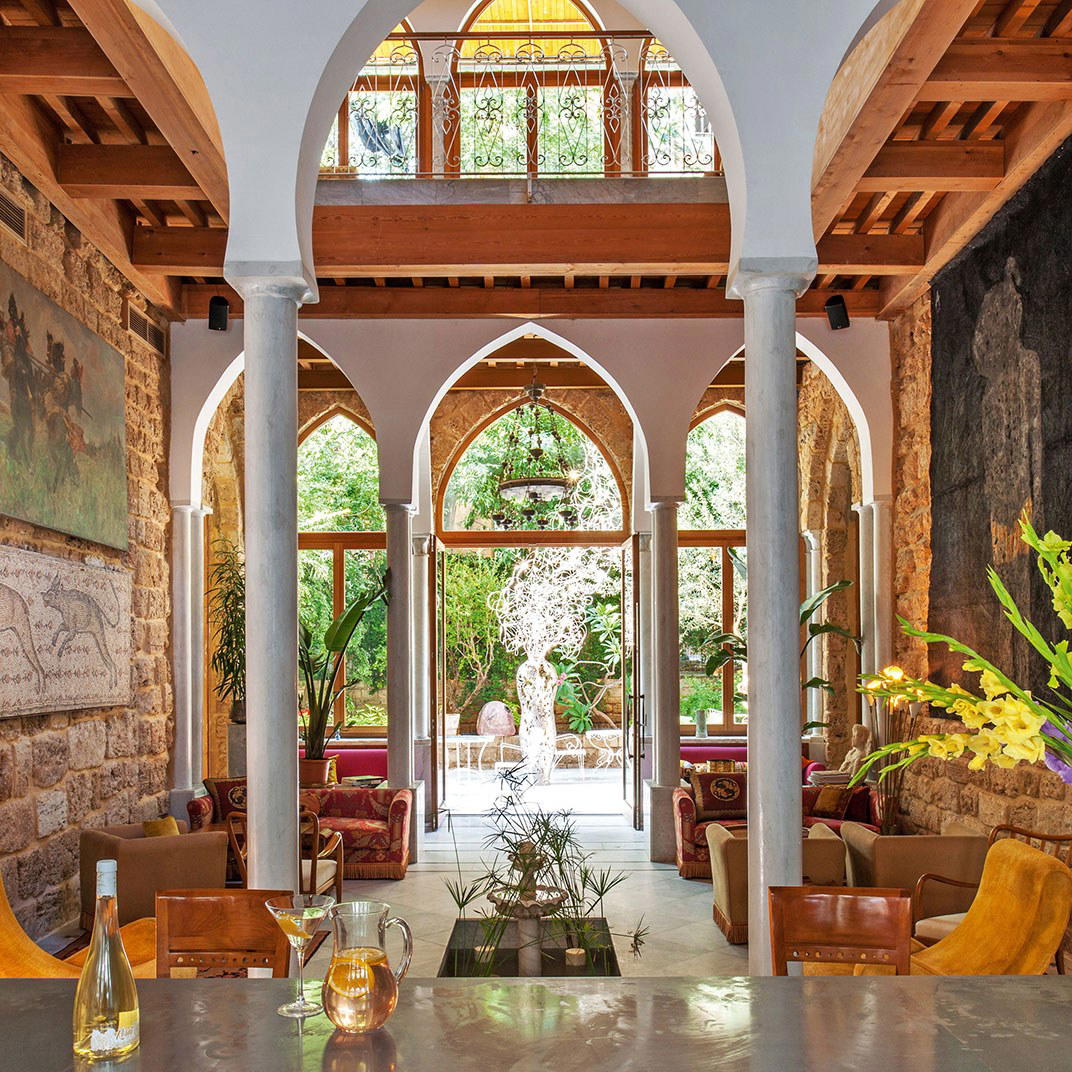
Elegant interiors with striking light installations, long bar, wooden chairs, industrial chic feel, metal, wood and concrete in a modernistic, pure and refined dining hall under an arched ceiling.