Our verdict
Located in Mar Mikhael, one of Beirut's most active dining corridors, Marinella represents the kind of neighbourhood restaurant that anchors a street rather than merely occupying it. The kitchen draws on Lebanese coastal and mezze traditions, placing it in a category where the progression of shared plates tells a more complete story than any single dish could manage on its own.

Pearl is the En Primeur Club membership app — saves, bookings, and concierge access live there. Same editors, same standards.
- Address
- VGWF+PM5, Mar Mikhael, Beirut, Lebanon
- Phone
- +9613559987
- Hours
- Mon ClosedTue–Sat 12–4 PM, 7–11:30 PMSun 12–4 PM
- Website
- facebook.com
- Directions
- Get directions
The menu
What to order
- Gnocchi Al Limone
- Rigatoni Alla Vodka
- Osso Bucco
- Vitello Tonnato
- Langoustine Linguini
Mar Mikhael and the Logic of the Neighbourhood Table
Mar Mikhael has spent the better part of the last decade cycling through iterations of itself: warehouse conversions, cocktail bars, concept restaurants, and the wreckage of the 2020 port explosion that forced much of the strip to rebuild from scratch. What survived that cycle, and what emerged from it, tends to share a common quality — a seriousness about the table that the neighbourhood's louder, more decorative phases couldn't quite sustain. Marinella sits in that zone, on a stretch of Mar Mikhael where the buildings still carry the marks of recent history and the restaurants that remain open carry a certain earned weight. Approaching from the street, the address reads as part of the neighbourhood's texture rather than as a departure from it.
That positioning matters in Beirut more than in most cities. The dining scene here has always operated under pressure — economic, political, physical, and the restaurants that read as genuine tend to be the ones where the format reflects the constraints and opportunities of the place rather than importing a template from elsewhere. In Mar Mikhael specifically, that has meant a lean toward the communal and the sequential: meals that build through rounds of small plates before arriving at something more substantial, a structure borrowed from the meze tradition but applied with varying degrees of discipline across the neighbourhood's different dining rooms.
How a Lebanese Meal Builds
The architecture of a well-constructed Lebanese meal is one of the more instructive eating formats in the eastern Mediterranean. It doesn't follow the European sequence of courses so much as it layers simultaneously and then resolves. Cold meze arrive first, and the quality of that opening round establishes the kitchen's relationship to ingredients: the acidity in the fattoush, the texture gradient in a good hummus, the freshness of raw vegetables used as vehicles rather than garnish. These are not throwaway dishes. In serious kitchens across Beirut, from the grand-format rooms of Em Sherif to the more intimate settings along Mar Mikhael, the cold meze round is where a restaurant announces what it believes about produce and seasoning.
Warm meze follow, and this is where fire and technique enter the conversation. Grilled halloumi, kibbeh in its various forms, hot fatayer, and the rotation of stuffed and fried preparations that vary by kitchen and by season. The transition from cold to warm is the meal's first inflection point, and restaurants that handle it well tend to create a momentum that carries through to the protein courses. At the other end of the spectrum, those that rush or flatten this transition rarely recover the pacing. The broader Beirut dining scene offers instructive comparisons: Al Halabi and Al Rawda both demonstrate how the warm-to-main transition can anchor a meal's identity, each applying different emphases to the grill and to the stuffed-vegetable preparations that characterise the inland tradition.
The main course in the Lebanese format often arrives almost as punctuation: a grilled fish, a whole roasted bird, or a slow-cooked cut of lamb that has been in preparation since the morning. By the time it reaches the table, the meze have primed the palate, and the main functions as resolution rather than revelation. Understanding this sequencing is essential to eating well in the Lebanese tradition, a meal approached with European course-by-course expectations will consistently feel either excessive or anticlimactic, depending on how you've paced yourself through the earlier rounds.
Where Marinella Sits in That Sequence
Marinella's location in Mar Mikhael places it inside a neighbourhood that has developed its own sub-dialect of Beirut dining, slightly more informal than the grand meze houses of central Beirut, more rooted than the concept-driven openings that came and went in the neighbourhood's more frenetic periods. The Mar Mikhael corridor, running roughly parallel to the port, has produced a cluster of restaurants where the format is built around staying rather than moving on: long tables, replenished bread, the slow accumulation of empty plates that signals a meal working as intended.
Across Lebanon more broadly, the question of where to find this kind of cooking at its most committed takes you beyond Beirut's city limits. Lakkis Farm in Baalbek and Feniqia in Byblos both operate versions of the extended table format that connect more directly to agricultural supply chains, while Jammal in Batroun brings a coastal inflection that shapes both the fish selection and the mezze that surround it. Within Beirut, the comparison set for a Mar Mikhael address like Marinella also includes the more design-conscious rooms: Albergo Rooftop offers Lebanese cooking in a setting where the view forms part of the proposition, while Al Falamanki Sodeco has built its identity around a different kind of informality, the kind that leans into nargileh culture and extended afternoon visits.
For diners coming to Mar Mikhael from outside Lebanon, the reference points shift. The communal and sequential logic of Lebanese meze has parallels in other serious tasting formats, the progression-based discipline evident at places like Atomix in New York shows how sequential dining, when executed with intention, communicates through accumulation rather than individual showpieces. The difference in Lebanon is that the format is not chef-driven in the auteur sense; it is culturally embedded, which means the kitchen's contribution is measured against a shared standard rather than against a personal vision.
Planning a Visit to Mar Mikhael
Mar Mikhael restaurants are accessible by service taxi or ride-share from most central Beirut addresses, with the main arterial streets running from the port precinct through to Gemmayzeh. The neighbourhood works well in the evening, when the daytime heat has eased and the tables fill at a pace that allows conversation to extend through multiple rounds of meze without any pressure to turn the room. For those exploring the wider Lebanese food scene beyond Beirut, Laiterie Massabki in Chtoura and Shams Restaurant in Aanjar are worth building into a Bekaa Valley loop, while Kitchen Garage in the Aley District and BRUT by Youssef Akiki in Keserwan represent the more contemporary edge of Lebanese cooking outside the capital. For a thorough overview of the city's dining options across all neighbourhoods and price points, the EP Club Beirut restaurants guide maps the full range. Street-level eating around the capital, including the essential quick-service stops like Falafel Sahyoun and the cross-district comparisons available through Onno Bistro in Bourj Hammoud and Al Halabi in Matn District, rounds out the picture of how Lebanese food operates across different urban registers.
Frequently asked questions
What part of town is Marinella in?
Marinella is located at VGWF+PM5, Mar Mikhael, Beirut, Lebanon, Beirut.
Is Marinella in Mar Mikhael suitable for a group dinner in Beirut?
Mar Mikhael's dining culture is built around shared plates and extended table time, making it one of the more group-compatible neighbourhoods in Beirut. Marinella's location in that corridor — accessible by service taxi or ride-share from most central addresses — positions it practically for group logistics. No private dining or group booking details are currently documented for the venue, so confirming arrangements in advance is the sensible route.
What should I order at Marinella?
Marinella sits in Mar Mikhael, a neighbourhood where the Lebanese communal table format shapes most menus. A well-constructed Lebanese meal typically builds through cold mezze, hot mezze, and a main, so ordering across those stages gives you the fullest read of a kitchen.
Do I need a reservation for Marinella?
Mar Mikhael restaurants vary considerably on this point — some of the area's more established addresses fill midweek, others remain walk-in friendly. Contacting the venue directly before visiting is advisable, particularly on weekends when the neighbourhood draws significant foot traffic from across Beirut.
What's the signature at Marinella?
Marinella's address in Mar Mikhael places it within a sub-district that has developed a slightly more informal register than central Beirut's formal dining rooms. The neighbourhood's signature is the long, shared table meal rather than à la carte precision. Without documented dish-level detail for Marinella specifically, the Lebanese communal format itself is the clearest framework for what to expect.
Can Marinella accommodate dietary restrictions?
Lebanese cuisine structurally supports a wide range of dietary requirements — cold mezze alone covers substantial vegetarian and plant-based ground, and the format lends itself to selective ordering. Raising requirements at the time of booking or on arrival is standard practice across the neighbourhood.
Reputation Context
Comparable venues nearby, for context on price, style, and recognition.
| Venue | Cuisine | Price | Notes |
|---|---|---|---|
| MarinellaThis venue — the venue you are viewing | Classic Italian Trattoria | $50–100 | Not listed |
| Casablanca | Asian-Mediterranean Fusion | $30–50 | Ain el-Mreisseh |
| El Soussi | Traditional Lebanese Breakfast | $20–30 | Mar Elias |
| Basterma Mano | Armenian Shawarma & Basterma | $1–10 | Borj Hammoud |
| Hanna Mitri | Traditional Lebanese Bouza & Sweets | $1–10 | Achrafieh |
| Le Chef | Authentic Lebanese Home Cooking | $10–20 | Gemmayze |
Continue exploring
More in Beirut
Restaurants in Beirut
Browse all →
Bars in Beirut
Browse all →
Hotels in Beirut
Browse all →

Details
- Intimate
- Elegant
- Modern
- Cozy
- Business Dinner
- Group Dining
- Casual Hangout
- Terrace
- Standalone
- Street Scene
- A La Carte
- Italian Wine
- Vegetarian Friendly
- Vegan Options
Current opening hours
- Monday
- Closed
- Tuesday
- 12–4 PM, 7–11:30 PM
- Wednesday
- 12–4 PM, 7–11:30 PM
- Thursday
- 12–4 PM, 7–11:30 PM
- Friday
- 12–4 PM, 7–11:30 PM
- Saturday
- 12–4 PM, 7–11:30 PM
- Sunday
- 12–4 PM
Hours can change for holidays and private events. Last verified .
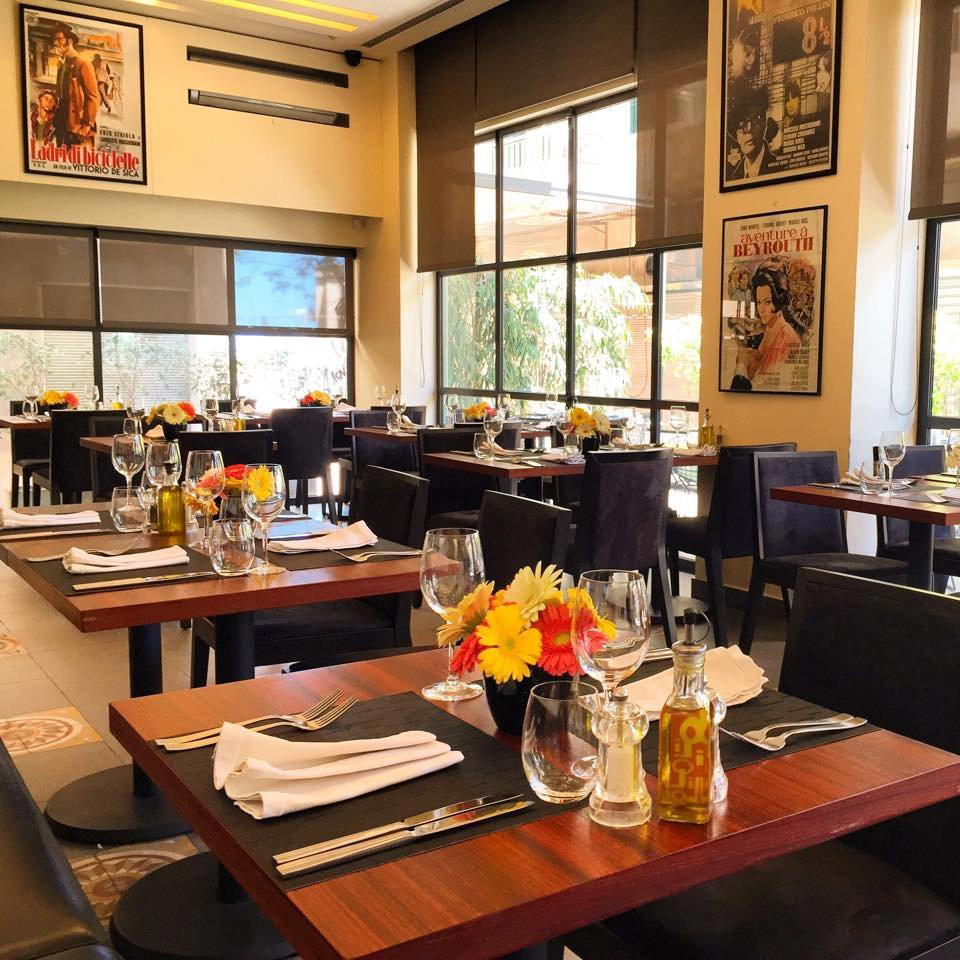
Stylish and contemporary with warm, intimate lighting; features a leafy terrace and intimate interior with urban chic character reflecting Mar Mikhael's artistic surroundings.