Our verdict
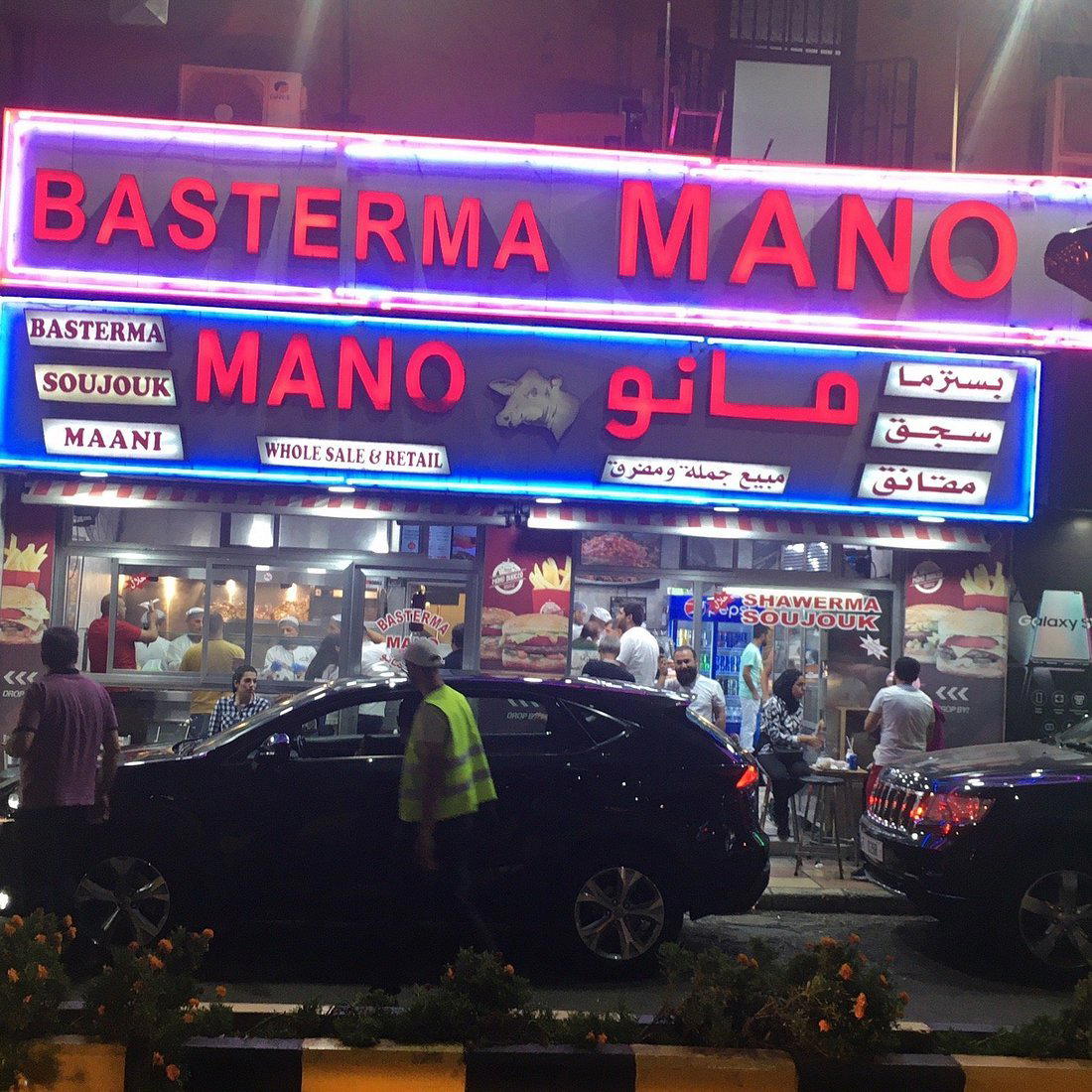
Basterma Mano is a Beirut institution built around the cured-meat tradition that gives it its name. Regulars return not for novelty but for consistency: the kind of Lebanese mezze and charcuterie-forward table that feels earned rather than designed. In a city where dining rooms open and close at speed, this one holds its ground through repetition and loyalty.

Pearl is the En Primeur Club membership app — saves, bookings, and concierge access live there. Same editors, same standards.
- Address
- Beirut, Lebanon
- Directions
- Get directions
The menu
What to order
- Sujuk Shawarma
- Basterma Shawarma
- Chicken Shawarma
- Lamb Shawarma
What the Regulars Already Know
In Beirut, the restaurants that survive economic pressure, power cuts, and the general entropy of the city tend to share one quality: a clientele that has already decided the place is theirs. Basterma Mano belongs to that category. The name itself is a signal. Basterma, the spiced, air-dried beef that threads through Armenian and Levantine culinary tradition, is not a crowd-pleasing opener. It is assertive, cured, and particular. A restaurant that puts it front and centre is not hedging toward broad appeal. It is making a declaration about the kind of table it keeps.
That specificity is exactly what draws repeat visitors. Beirut has no shortage of restaurants positioning themselves around Lebanese heritage in general terms, from the polished mezze spreads at Em Sherif to the neighbourhood familiarity of Al Falamanki Sodeco. Basterma Mano operates with a narrower lens, the kind of focus that tells a regular exactly what they are getting before they sit down.
The Cured-Meat Tradition in Lebanese Dining
To understand why basterma still carries cultural weight in Beirut, it helps to understand the city's Armenian community and its long presence in Bourj Hammoud and surrounding districts. Armenian culinary influence on Lebanese food is not decorative. It is structural. Cured meats, fermented vegetables, and spiced preparations arrived with communities displaced in the early twentieth century and have been absorbed so thoroughly into Beirut's food culture that many diners no longer register them as distinct. Basterma, soujouk, and their relatives appear on Lebanese breakfast tables and mezze spreads with the same ease as kibbeh or fattoush.
A restaurant that names itself after this tradition is anchoring to something specific within that history. It is a different proposition from the broader Lebanese mezze format you find at Al Halabi or the rooftop dining experience offered at Albergo Rooftop. The comparison is not a ranking. It is a way of mapping the terrain: Basterma Mano occupies a niche defined by provenance and product rather than setting or occasion.
The Unwritten Menu and the Logic of Loyalty
The phrase "unwritten menu" describes something real in Beirut's older dining rooms. Regulars at these places do not consult the card in any serious way. They know which preparations arrive in which season, which cuts are worth ordering at which time of day, and how to communicate preferences that the kitchen will understand. This kind of relationship between diner and kitchen is not built on novelty. It is built on return visits, on the same faces behind the counter, on consistency that holds across years rather than months.
Basterma Mano appears to operate in this register. The draw for returning guests is the reliability of the thing itself: cured meat prepared with care, the mezze accompaniments that frame it, and the lack of pressure to perform the experience for anyone outside the room. This is a different atmosphere from, say, the wine-driven ambition of BRUT by Youssef Akiki in Keserwan or the Armenian-inflected neighbourhood character of Onno Bistro in Bourj Hammoud. Those venues are building something forward-facing. Basterma Mano is holding something that already exists.
The broader Lebanese dining scene has seen a wave of concept-driven openings over the past decade, many of them excellent, some of them designed as much for photography as for eating. Against that backdrop, a place organized around cured meat and its traditional accompaniments reads as counterpoint rather than competition. This is where the regulars go when they want the real thing, whatever that phrase means to them specifically.
Beirut's Dining Geography and Where This Fits
Beirut's restaurant geography rewards specificity. Different districts carry different culinary identities: the Bekaa Valley producers whose output reaches Beirut tables, the Armenian quarter's charcuterie tradition, the fishing-village heritage of coastal restaurants. Lakkis Farm in Baalbek and Shams Restaurant in Aanjar represent the inland, agricultural end of Lebanese dining. Feniqia in Byblos and Jammal in Batroun District anchor the coast. Basterma Mano sits inside Beirut's urban core and within a specific culinary tradition that the city's restaurant scene, even now, does not over-supply.
For visitors arriving from cities with Lebanese diaspora restaurants, the point of reference matters. A place like Le Bernardin in New York operates in a context where French technique and a particular kind of institutional authority define the tier. In Beirut, authority in a restaurant like Basterma Mano comes from something closer to neighbourhood credibility and product fidelity. The two are not comparable in form, but the mechanism of trust is similar: diners return because the kitchen has earned the repetition.
For a broader orientation to what the city offers, the full Beirut restaurants guide maps the range from high-format tasting menus to long-standing neighbourhood institutions. Basterma Mano belongs firmly in the latter category, alongside places like Al Rawda in Shatila and Falafel Sahyoun, venues where the food is the point and the experience follows from it.
Planning a visit is leading approached with flexibility on timing and an openness to sharing the table in the way that Lebanese mezze dining traditionally works. For visitors also planning meals outside Beirut, Kitchen Garage in Aley District, Laiterie Massabki in Chtoura, and Al Halabi in Matn District fill out a regional itinerary that extends the culinary logic beyond the capital.
Frequently asked questions
Does Basterma Mano represent the Armenian dining tradition in Beirut's Bourj Hammoud district?
Basterma Mano operates in a city where the Armenian community has maintained a continuous culinary presence for over a century, concentrated historically in Bourj Hammoud. The restaurant's name foregrounds basterma directly — an Armenian-origin cured beef that rarely appears with this kind of focus elsewhere in the Beirut dining scene. That specificity of identity, in a city where menus often aggregate influences, is what places it within a distinct and documented cultural tradition.
What's the signature dish at Basterma Mano?
The name says it plainly: basterma, the Armenian-origin cured beef rubbed in a fenugreek and spice paste called chemen, is the organising principle of the kitchen. In Beirut's Armenian dining tradition, this is not a garnish or a side — it is the centrepiece around which the rest of the table is built. Specific preparations vary and are best understood by asking the person who seats you.
How hard is it to get a table at Basterma Mano?
Venues of this type in Beirut operate on a loyalty economy rather than an online booking infrastructure. Regulars tend to have an arrangement; first-time visitors do better arriving early or calling ahead if a contact number can be sourced locally. No reservation platform listing is publicly documented for this address.
What is Basterma Mano known for?
Basterma Mano sits within Beirut's Armenian dining tradition, a culinary strand rooted in the community that settled predominantly in Bourj Hammoud following the early twentieth-century diaspora. The restaurant's reputation is built on cured-meat preparation and the kind of menu literacy that exists in the room rather than on paper — where what gets ordered depends on what's been made that day and who's asking.
Do they accommodate allergies at Basterma Mano?
Traditional Armenian cured-meat kitchens rely on a short, fixed repertoire of preserved and spiced proteins, which means dietary flexibility is limited by the nature of the cooking rather than by any policy. Guests with serious allergies should communicate directly with staff before visiting, as no formal allergen documentation is publicly.
Is Basterma Mano worth the price?
No price range is on public record for Basterma Mano, which itself is characteristic of older Beirut neighbourhood tables where value is understood contextually rather than listed. Restaurants of this profile in the city typically sit in the mid-range, with the draw being provenance and consistency rather than elaborate production.
When is the best time to go to Basterma Mano?
Midweek lunches tend to offer the clearest access at Beirut's older neighbourhood dining rooms, where weekend trade skews toward established regulars and extended family groups. Arriving before the midday rush gives first-time visitors the best chance of a conversation with whoever is running the room and an honest read of what's available that day.
What It’s Closest To
A quick peer reference to anchor this venue in its category.
| Venue | Cuisine | Price | Awards | Notes |
|---|---|---|---|---|
| Basterma ManoThis venue — the venue you are viewing | Armenian Shawarma & Basterma | $1–10 | Not listed | Not listed |
| Albergo Rooftop | Mediterranean with Italian Accents | $50–100 | Relais Chateaux Award | Lebanese Cuisine |
| Em Sherif | Traditional Lebanese Fine Dining | $50–100 | World's 50 Best #13 | Not listed |
| Beihouse | Modern Levantine Mediterranean | $50–100 | World's 50 Best #5 · The Best Chef One Knife | Not listed |
| Buco | Modern Gastro Burgers | Not listed | World's 50 Best #39 | Not listed |
| Liza | Modern Lebanese | $50–100 | Not listed | Not listed |
Continue exploring
More in Beirut
Restaurants in Beirut
Browse all →
Bars in Beirut
Browse all →
Hotels in Beirut
Browse all →

Details
- Casual
- Lively
- Well Known
- Casual Hangout
- Solo
- Standalone
- A La Carte
- Counter Dining
- Halal
Busy, popular street-level fast-food environment in the heart of Bourj Hammoud's Armenian community with quick service and casual counter ordering.