Le Chef occupies a quiet address on Gouraud Street in Gemmayzeh, one of Beirut's most historically layered dining corridors. It operates in the tradition of the Lebanese neighbourhood lunch house, where the meal follows the kitchen's rhythm rather than the customer's clock. For visitors and locals alike, it represents an introduction to how Beirut actually eats when it is not performing for an audience.
Pearl is the En Primeur Club membership app — saves, bookings, and concierge access live there. Same editors, same standards.
- Address
- VGV8+X24, Gouraud, Beirut, Lebanon
- Phone
- +961 1 445 373
- Directions
- Get directions
 Saves & bookings on Pearl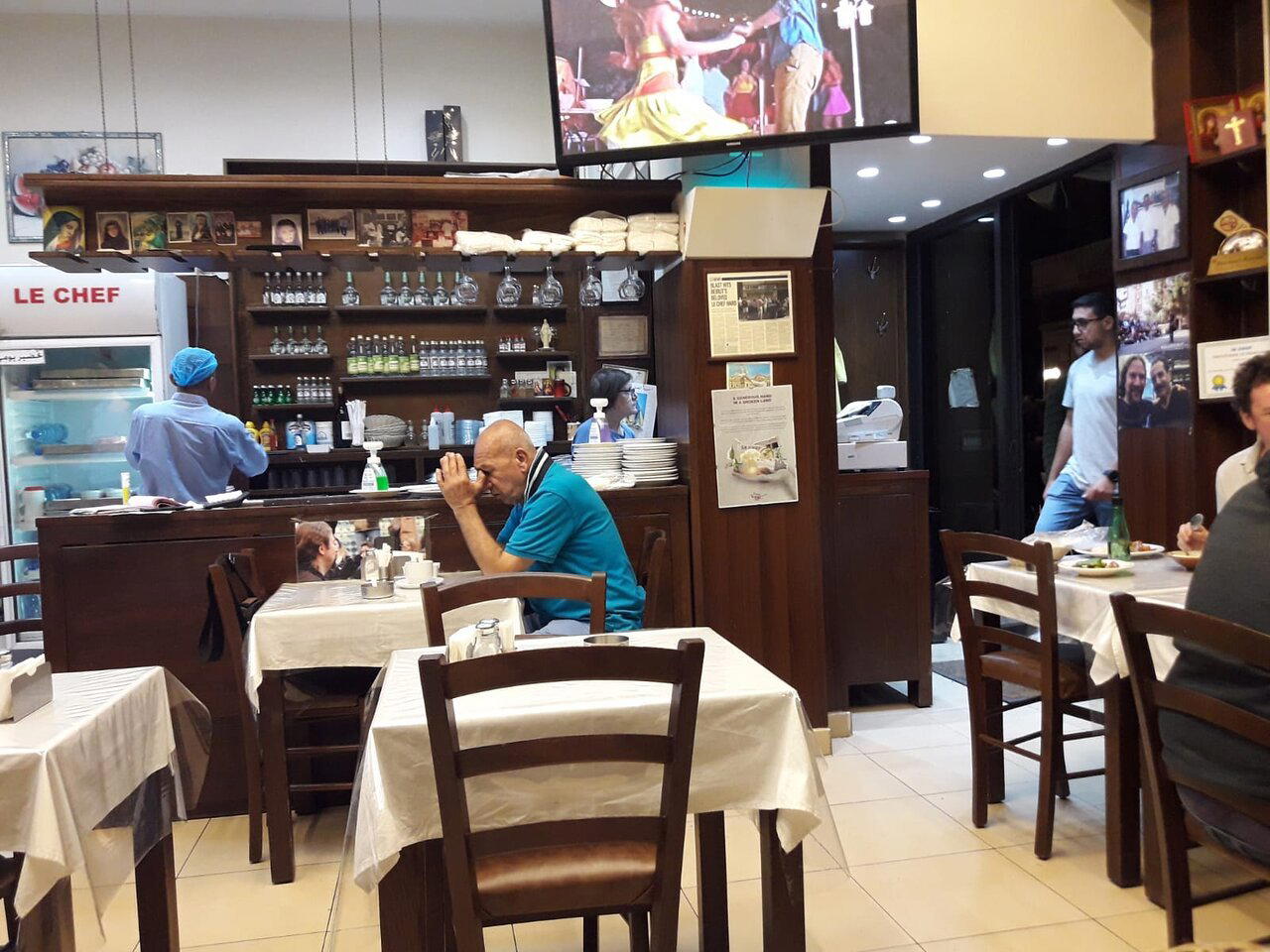
Gouraud Street and the Logic of the Neighbourhood Table
Gemmayzeh runs east from the edge of Achrafieh toward Mar Mikhael, and Gouraud Street is its spine. The neighbourhood has absorbed decades of reinvention, bombed, rebuilt, gentrified, then shaken again by the 2020 port explosion, and its dining character reflects that layering. Alongside wine bars and small-plates newcomers, a handful of older lunch institutions have persisted, operating on a schedule and a philosophy that predate the city's more recent appetite for fine-dining theatre. Le Chef sits among them, on a stretch of Gouraud where the foot traffic is local and the rhythm of service belongs to the kitchen.
In a city where Em Sherif has made a case for Lebanese cuisine as a formal, ceremony-laden event, and where Albergo Rooftop frames it against a skyline backdrop designed to signal occasion, Le Chef operates in the opposite register. It belongs to the tradition of the Lebanese maktab lunch, the midday table where civil servants, tradespeople, and neighbourhood regulars eat quickly, eat well, and leave without ceremony. That tradition has its own discipline, and understanding it is the correct frame for reading what Le Chef is.
The Ritual of the Lebanese Lunch House
Lebanese home-style cooking follows a logic that is fundamentally different from the tasting-menu or à la carte models that dominate international fine dining. The meal begins with whatever meze the kitchen has prepared that day, small plates of hummus, tabbouleh, fattoush, labneh, and seasonal pickles, and the main course arrives as a function of what came in from the market that morning. The diner does not so much choose as accept. This is not a diminished form of hospitality; it is a more confident one. The kitchen is telling you what is good today, and the correct response is to eat it.
Restaurants in this tradition, found in pockets of Gemmayzeh, Bourj Hammoud, and across greater Beirut, tend to keep short hours, run out of food rather than waste it, and operate on the assumption that lunch, not dinner, is the serious meal. Al Falamanki Sodeco has built a more extended, café-adjacent identity around a similar democratic premise, while Al Halabi in Beirut and its counterpart Al Halabi in Matn District represent the more polished, multi-generation end of the Lebanese restaurant family. The restaurant occupies the more unvarnished middle: reliable, unhurried in its own way, and entirely unconcerned with presentation beyond what the food requires.
What the Meal Looks Like in Practice
The physical environment on Gouraud Street is modest by design. These rooms are built for throughput and familiarity, not spectacle. Tables are close, service is direct, and the menu's scope is deliberately narrow, a sign that the kitchen is cooking what it knows rather than assembling a catalogue. This is characteristic of Lebanese lunch houses across the country, from the simpler establishments in Aanjar to farm-to-table formats like Lakkis Farm in Baalbek, where the relationship between kitchen and ingredient is similarly direct.
Pacing at this type of venue follows a compressed arc. Dishes arrive quickly, the meze is already made, the mains are kept warm rather than cooked to order, and the meal tends to conclude within an hour. That compression is not a limitation; it is the format's honesty. The food is intended to be eaten at midday, at a temperature that suits its preparation, without the extended theatre of a multi-course tasting. Visitors accustomed to slower European or Japanese meal pacing should adjust their expectations accordingly and treat the efficiency as information about the food's character.
For visitors mapping a broader eating itinerary across Lebanon, this type of institution pairs well with longer, more architecturally considered meals elsewhere in the country. Feniqia in Byblos, Jammal in Batroun District, and Onno Bistro in Bourj Hammoud each represent different registers of Lebanese cooking, and understanding the lunch-house format adds context for how those more elaborate meals relate to the everyday eating culture they draw from.
Where Le Chef Sits in the Gemmayzeh Picture
Gemmayzeh's dining scene has bifurcated over the past decade. One branch runs toward natural wine lists, small-plates formats, and internationally trained chefs returning from stints abroad, a category represented more fully by venues like BRUT by Youssef Akiki in Keserwan, which signals the ambitions of a new Lebanese cooking generation. The other branch holds older, plainer institutions that have outlasted multiple cycles of neighbourhood transformation by doing exactly what they have always done.
The restaurant belongs to the second branch. Its competitive set is not Em Sherif or the rooftop restaurants vying for the expense-account dinner. It sits closer to Falafel Sahyoun in spirit, places defined by a single thing done reliably over time, and to the unpretentious neighbourhood model represented by Kitchen Garage in Aley District and Laiterie Massabki in Chtoura, both of which derive their authority from local specificity rather than formal recognition. In international terms, the comparison is not with Le Bernardin or Lazy Bear, it is with the class of place that feeds the neighbourhood on a Tuesday without making a production of it.
That positioning is worth stating plainly, because it determines how the meal should be read. Arriving with fine-dining expectations will produce the wrong conclusions. Arriving with an appetite and a willingness to eat what the kitchen offers will produce the correct ones.
Visitors combining the restaurant with a broader Gemmayzeh or Al Rawda-Shatila itinerary will find that the neighbourhood's pedestrian density makes sequential visits manageable within a single afternoon. The restaurant is not a destination in the sense that requires planning weeks in advance; it is the kind of place that rewards the traveller who builds their day around it rather than fitting it into the margins of something else.
What It’s Closest To
Comparable venues nearby, for context on price, style, and recognition.
| Venue | Cuisine | Price | Notes |
|---|---|---|---|
| Le ChefThis venue — the venue you are viewing | Authentic Lebanese Home Cooking | $$ | Not listed |
| Al Rawda - Shatila - Restaurant | Traditional Lebanese | $$ | Manara |
| Tawlet | Traditional Lebanese Home Cooking | $$ | Mar Mikhael |
| Al Falamanki Sodeco | Traditional Lebanese | $$ | Sodeco |
| Malak Al Tawouk | Lebanese Tawouk & Fast Food | $$ | Dora |
| M. Sahyoun Falafel | Lebanese Falafel | $ | Ras El-Nabeh |
Continue exploring
More in Beirut
Restaurants in Beirut
Browse all →
Bars in Beirut
Browse all →
Hotels in Beirut
Browse all →

At a Glance
- Cozy
- Classic
- Intimate
- Casual Hangout
- Family
- Standalone
Current opening hours
- Monday
- 8 AM–9 PM
- Tuesday
- 8 AM–9 PM
- Wednesday
- 8 AM–9 PM
- Thursday
- 8 AM–9 PM
- Friday
- 8 AM–9 PM
- Saturday
- 8 AM–9 PM
- Sunday
- Closed
Hours can change for holidays and private events. Last verified .
Warm, homely atmosphere with friendly service in a cozy, unassuming setting.