

Tabelog 100 #89
Our verdict
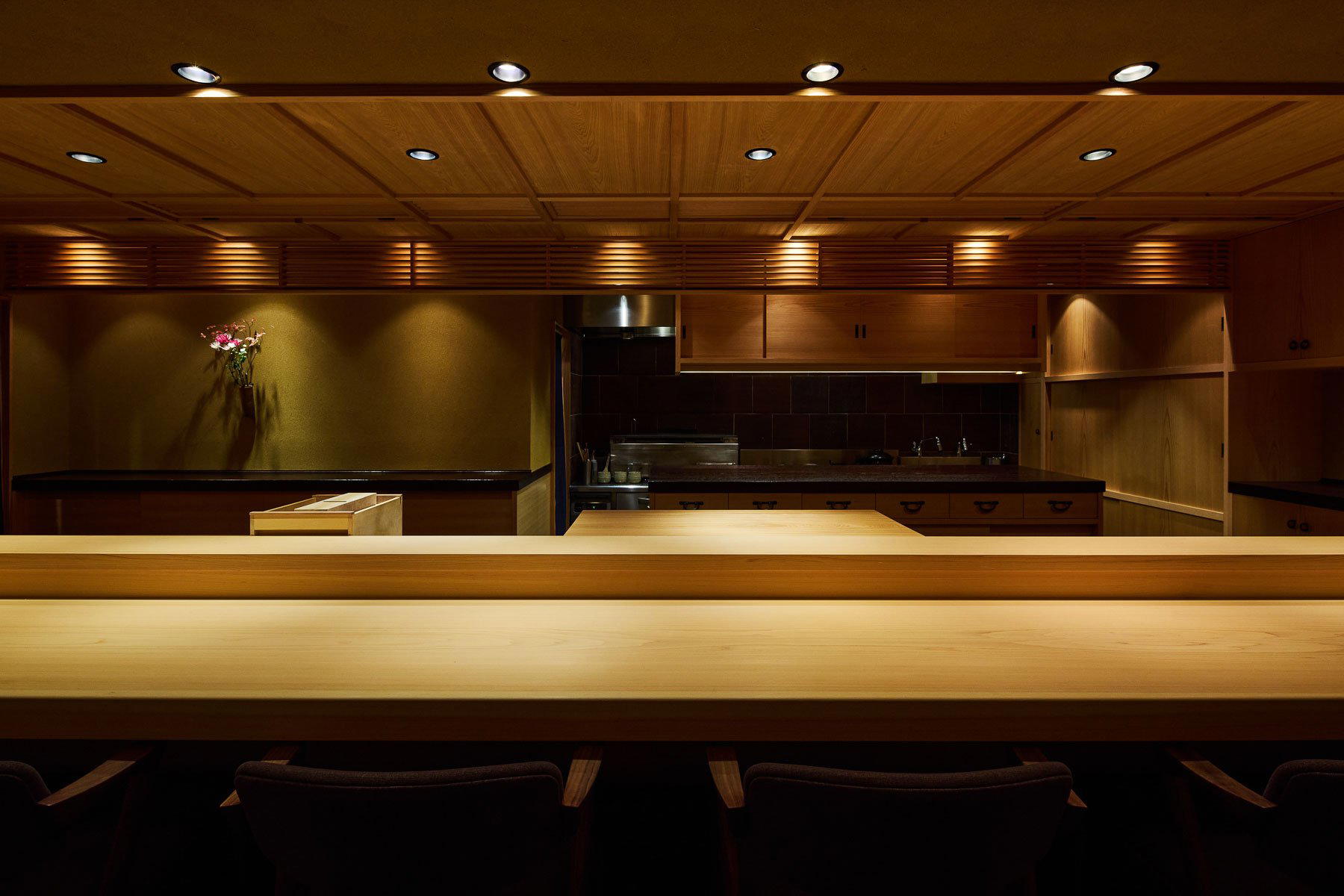
Kappo Muroi occupies a first-floor address in Nishiazabu, one of Tokyo's quieter pockets of serious dining, where the kappo format, chef-led, counter-driven, and structured around the progression of a meal rather than a fixed menu, defines the experience. The restaurant sits within a category that Tokyo has long treated as distinct from both kaiseki formality and omakase sushi, and it draws a crowd that understands the difference.

Pearl is the En Primeur Club membership app, where members save venues, book tables and use the concierge.
The menu
What to order
- Soft-shell turtle
- Charcoal-grilled eel
- Ise ebi
- Nodoguro
- Awabi risotto
- Shiro gohan
Nishiazabu and the Counter That Sets the Pace
Minato's Nishiazabu district operates at a different register than Ginza or Roppongi. The streets are quieter, the signage more restrained, and the density of serious cooking per city block is, by Tokyo standards, unusually high. This is where kappo, Japan's oldest counter-dining tradition, predating kaiseki's formalization, finds some of its most considered modern expressions. Kappo Muroi sits on the first floor of a low-profile building on Nishiazabu 2-chome, a placement that is less about discretion as aesthetic and more about the simple fact that this neighbourhood has been accumulating kitchens of this kind for decades.
The kappo format asks something specific of the diner. Unlike kaiseki, where a full sequence arrives in fixed ceremonial order, or omakase sushi, where the chef's hand is the centrepiece, kappo sits between these poles. The kitchen is open, the chef cooks in view, and the meal unfolds as a conversation between what is seasonal and what the counter can absorb. In Tokyo's competitive fine-dining tier, a bracket that includes RyuGin on the kaiseki side and Harutaka at the sushi counter, kappo occupies a position that prizes technique equally but frames it through immediacy rather than ceremony.
How a Kappo Meal Moves
The editorial logic of kappo is its sequencing. A meal here does not announce itself with a printed menu and then deliver against expectations. It builds, typically from lighter, more acidic preparations through to richer, more substantial dishes, finishing with something that settles rather than punctuates. The progression is disciplined even when it appears casual, and that discipline is where the kitchen reveals its competence.
In the broader context of Tokyo's premium dining scene, this kind of meal structure has become increasingly valued by international visitors who arrive already fluent in tasting menus at places like L'Effervescence or Sézanne but want the Japanese counter experience without the full weight of kaiseki's multi-hour formalism. Kappo sits at exactly that intersection. The pacing is generous but not elongated. The courses are purposeful. And the counter proximity means you read the kitchen's rhythm directly rather than inferring it from what arrives at the table.
Seasonal produce drives the logic of what appears at any given sitting. Winter brings dishes built around root vegetables, citrus, and cold-water fish; spring shifts toward mountain vegetables and lighter dashi constructions. This is not incidental, it is the organising principle of the format. Kappo kitchens that lose sight of seasonality tend to drift toward hybrid menus that serve neither tradition well.
Where Kappo Muroi Sits in Tokyo's Current Dining Tier
Tokyo's fine-dining counter scene has stratified considerably since the early 2010s. At the leading, heavily awarded kaiseki and sushi counters price against international peers rather than domestic alternatives. Below that band sits a more interesting and arguably more honest tier: smaller operations with clear culinary lineage, limited seating, and pricing that reflects craft without the premium layered on by global reputation. Kappo Muroi operates within this middle tier, a position it shares with a specific kind of Tokyo counter that values the quality of the meal over the status of its recognition.
Compared to the kaiseki formality of RyuGin or the French-Japanese synthesis at Crony, Muroi's register is more direct. This is Japanese cooking, technique-led, season-anchored, counter-served, without the overlay of international influence that has shaped much of Minato's dining offer over the past decade. For diners who want to read the meal as a document of what Japanese culinary training produces when it is not asked to perform for a Western reference point, this is a meaningful distinction.
The geography of serious kappo extends well beyond Tokyo. Gion Sasaki in Kyoto and HAJIME in Osaka each represent different inflections of counter-led Japanese cooking, with Kyoto's version historically more restrained and Osaka's more willing to absorb influence. Goh in Fukuoka and akordu in Nara add further regional texture. Tokyo's version, and Nishiazabu's version specifically, tends to synthesise these traditions without claiming allegiance to any single one. For a broader map of where Kappo Muroi sits within the city's dining geography, our full Tokyo restaurants guide provides comparative context across categories and price tiers.
Planning Your Visit
Counter restaurants of this type in Tokyo operate with booking windows that vary by season and by how actively a venue manages its reservation flow. As a general principle, Nishiazabu kappo counters at this level should be approached with at least three to four weeks' lead time, and weekend sittings during high season, cherry blossom in March and April, autumn foliage in November, can require longer planning. Contact directly to confirm current availability and any specific menu or dietary requirements before arrival.
| Venue | Format | Price Tier | Seating Style | Booking Lead Time |
|---|---|---|---|---|
| Kappo Muroi | Kappo counter | Confirm on booking | Counter | 3–4 weeks (estimate) |
| RyuGin | Kaiseki | ¥¥¥¥ | Table and counter | 2–4 weeks |
| Harutaka | Omakase sushi | ¥¥¥¥ | Counter only | 1–3 months |
| L'Effervescence | French tasting menu | ¥¥¥¥ | Table | 2–6 weeks |
Beyond Tokyo, the EP Club network covers counter-dining in multiple Japanese cities. Readers with itineraries that extend beyond the capital will find relevant entries at 一本杉川嶋制 in Nanao, 古仁屋山乃 in Sapporo, 湖畔庵 in Takashima, and 羽根屋 in Nishikawa Machi. For those whose travel connects to other dining traditions, Birdland in Sakai and Bistro Ange in Toyohashi offer further reference points across different categories. International comparisons for counter-led tasting-menu formats include Le Bernardin in New York City and Atomix, which brings a Korean-American counter sensibility to a similar price tier.
Frequently asked questions
Where is Kappo Muroi in Tokyo?
Kappo Muroi is located at Japan, 〒106-0031 Tokyo, Minato City, Nishiazabu, 2 Chome−16−4 1f, Tokyo.
How does Kappo Muroi differ from a kaiseki restaurant in Tokyo?
Kappo and kaiseki both follow a seasonal, multi-course structure, but the formats diverge in setting and interaction. Kaiseki is typically served in private rooms with a defined ceremony of presentation, while kappo places the diner at a counter in direct sight of the kitchen, and the chef may plate and serve courses personally. At Nishiazabu's Kappo Muroi, that counter dynamic is the central proposition: the meal unfolds as a live exchange between kitchen and guest rather than a choreographed sequence delivered from a separate room.
What should I order at Kappo Muroi?
Kappo dining does not work like a menu-driven restaurant. At a counter in Nishiazabu operating in the kappo format, the kitchen sequences courses according to season and what the chef judges to be at its peak that day. You do not order in the conventional sense; you receive what the counter is offering. Communicating preferences or restrictions before the meal is the appropriate channel for any adjustments.
Is Kappo Muroi reservation-only?
Counter restaurants of this format in Tokyo's Nishiazabu district almost universally require advance booking, and walk-ins are rarely accommodated. Reservation windows can extend several weeks or longer depending on the season. Contacting the venue directly or going through a hotel concierge in Minato City is the most reliable approach.
What's Kappo Muroi best at?
The defining strength of a kappo counter is the sequencing: courses build on each other in a logic set by the kitchen rather than the diner. Kappo Muroi sits in Nishiazabu, a district where the dining register is quieter and more considered than Ginza or Roppongi, which aligns with a format that rewards attention over spectacle. The counter setting also places the kitchen's technique directly in view.
What if I have allergies at Kappo Muroi?
Because kappo meals are composed by the kitchen without a printed à la carte menu, allergy and dietary information needs to be communicated at the time of booking, not on arrival. This is standard practice at counter restaurants in Tokyo operating this format. Be specific about the nature of the allergy rather than using broad category terms, as ingredient overlap in Japanese cooking can be subtle.
Is a meal at Kappo Muroi worth the investment?
Kappo counters in Nishiazabu occupy a serious tier of Tokyo dining, where the cost reflects the proximity to the kitchen, the quality of seasonal ingredients, and the hours of preparation behind a meal that may not be visible in the final plate count. Whether the investment aligns with your expectations depends on how much you value the sequenced, chef-led format over the autonomy of ordering freely. For those familiar with Tokyo's counter culture, Minato's quieter dining scene tends to reward the trade-off.
Accolades, Compared
Comparable venues nearby, for context on price, style, and recognition.
| Venue | Cuisine | Price | Awards | Notes |
|---|---|---|---|---|
| Kappo MuroiThis venue (the venue you are viewing) | Traditional Kappo Kaiseki | $200–300 | Tabelog 100 #89 | Not listed |
| 鮨よしたけ | 3-Michelin-Star Omakase Sushi | $500+ | La Liste Top Restaurants · Tabelog Bronze #530 | Ginza |
| Torisawa 22 | Yakitori Omakase | $200–300 | Tabelog 100 #79 | Minato |
| nami.nami | Modern Japanese Kaiseki | $50–100 | Not listed | Shibuya |
| Suiren | Modern Japanese Kaiseki | $200–300 | Not listed | Chiyoda |
| Sushi Kozue | Intimate Sushi Omakase Counter | $200–300 | Tabelog 100 #32 | Minato |
Recognition history
Dated appearances from independent guides and award organizations, with the underlying list record or original source where available.
Opinionated About Dining Top Restaurants in Japan Recommended
Opinionated About Dining
Tabelog 100 #89 · No. 89
Tabelog · Tabelog 100 - Japanese cuisine - TOKYO - 2025
Continue exploring
More in Tokyo
Restaurants in Tokyo
All restaurants in Tokyo →



Bars in Tokyo
All bars in Tokyo →




Details
- Elegant
- Intimate
- Sophisticated
- Quiet
- Special Occasion
- Date Night
- Chefs Counter
- Open Kitchen
- Natural Wine
- Sommelier Led
- Local Sourcing
- Omakase
- Counter Dining
- Tasting Menu
- Champagne
- Burgundy
- Oolong Tea
Serene and refined atmosphere in a quiet back street setting with counter seating, warm personality from the chef, and careful attention to every sensory element of the dining experience.