
Tabelog 100 #79
Our verdict
Torisawa 22 occupies a quiet address in Nishiazabu, one of Tokyo's more discreet dining corridors, where the yakitori tradition operates at a register well above the casual skewer bar. The format here belongs to the serious counter-dining tier that Tokyo does with unusual discipline: focused, unhurried, and deliberately removed from the broader city noise.

Pearl is the En Primeur Club membership app, where members save venues, book tables and use the concierge.
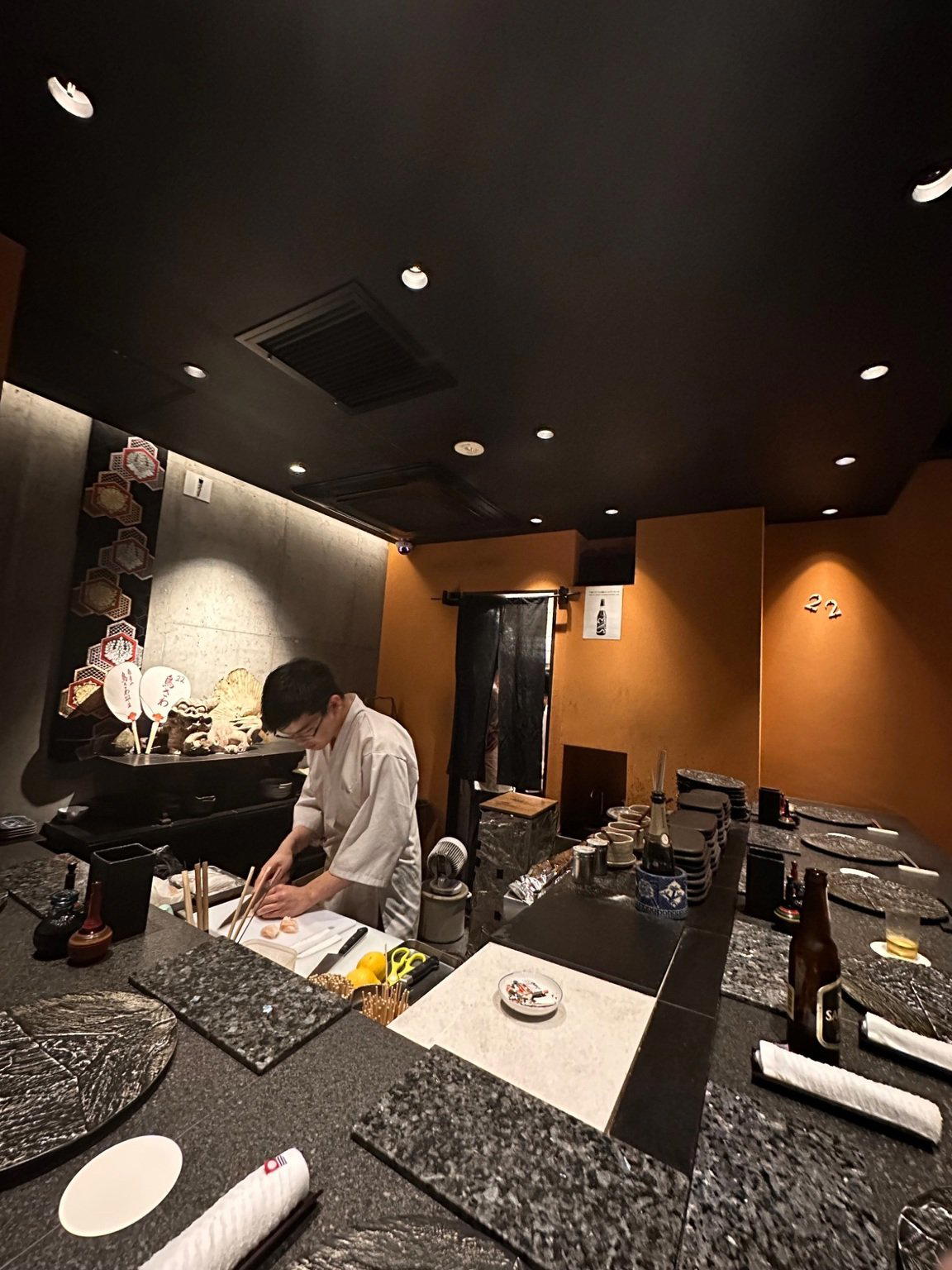
Nishiazabu and the Serious Yakitori Counter
Tokyo's yakitori scene divides more sharply than outsiders expect. At one end, the smoky, standing-room yakitori-ya beneath train tracks in Yurakucho or Shimbashi; at the other, a smaller set of counter establishments in quieter residential and mixed-use neighbourhoods where the format is treated with the same discipline applied to sushi or kaiseki. Nishiazabu sits firmly in the latter geography. The area, just west of Roppongi and south of Aoyama, has accumulated a concentration of serious dining rooms over the past two decades, drawing chefs and operators who want proximity to a sophisticated clientele without the volume or visibility of the major entertainment districts. Torisawa 22, at its address on 4 Chome-18-17 Nishiazabu, sits inside that pattern.
The neighbourhood itself signals the register before you arrive. Nishiazabu's streets run quieter than Roppongi's main corridors, the signage is smaller, and the buildings mix low-rise residential with the kind of discreet commercial premises that house some of Tokyo's more considered restaurants. Arriving here, especially after dark, involves a degree of deliberate navigation that functions as an informal filter: the guests who make it are, by definition, the ones who planned ahead.
The Atmosphere of the Smoke and the Counter
The sensory experience of high-end yakitori is specific and worth understanding before you sit down. The cooking medium is always charcoal, traditionally binchotan, the dense white oak charcoal from Wakayama Prefecture that burns at sustained, even heat with minimal smoke flare and almost no ash. The smell of binchotan in use is not the heavy, aggressive char of a garden grill; it is drier, cleaner, with a faint mineral quality. In a small counter room, that scent settles into the space and becomes part of the ambient atmosphere rather than a distraction.
Sound profile of a yakitori counter at this level is similarly contained: the low hiss of fat meeting heat, the soft percussion of skewers being turned, conversation at a register that stays close to the bar. The counter format itself, which defines the serious yakitori room, puts the cooking directly within the guest's sightline. You watch each skewer from raw to finished. The transparency is part of the experience; there is no kitchen wall between the guest and the work. This is a format that rewards attention from the guest, not passive consumption. For comparable counter-oriented precision in Tokyo's fine dining tier, Harutaka applies the same logic to sushi, where the counter acts as both stage and evidence of technique.
Where Torisawa 22 Sits in Tokyo's Fine Dining Spread
Tokyo operates the densest concentration of serious restaurants of any city measured by Michelin star count per capita, and the yakitori category has its own recognised tier within that structure. Premium yakitori counters in neighbourhoods like Nishiazabu, Ginza, and Shinjuku price and position against each other rather than against casual street-level skewer bars. The guest experience at this level is structured differently: courses are sequential, the cuts of bird are specific and often sourced from named regional producers, and the ratio of gizzard-to-breast-to-skin-to-liver is a considered editorial decision rather than a function of whatever arrived that morning.
That positioning puts venues like Torisawa 22 in a peer group with Tokyo's other serious dinner counters rather than in competition with volume establishments. For guests building a multi-night Tokyo itinerary, the relevant comparison set spans counter formats across categories: the French-influenced precision of L'Effervescence, the kaiseki structure of RyuGin, and the ingredient-led innovation at Crony. These are all different traditions, but they share the same underlying logic: small rooms, deliberate sequences, and cooking that requires and rewards proximity.
For those extending their Japan itinerary beyond Tokyo, the counter dining tradition translates well across cities. HAJIME in Osaka and Gion Sasaki in Kyoto each work within their own regional registers, while Goh in Fukuoka demonstrates how the same counter discipline applies in a city with its own distinct culinary identity. Further afield, akordu in Nara shows how European technique integrates into Japan's quieter secondary cities. Japan's regional dining network, documented through venues like 一本木 名川割烹 in Nanao, 夕佳亭山之 in Sapporo, 湖魚庵 in Takashima, and 羽根屋 in Nishikawa Machi, makes clear that Tokyo is a starting point rather than the whole picture.
Planning a Visit
Nishiazabu counter restaurants at this level operate on reservation, and walk-in access is not the norm for the serious yakitori tier in Tokyo. The expectation is advance planning, typically through a hotel concierge, a reservation service, or direct contact if booking details are publicly listed. Guests should treat securing a seat as part of the trip's preparation rather than a spontaneous decision. The Nishiazabu address is accessible from Hiroo or Roppongi stations on the Tokyo Metro, with Roppongi being the closer of the two, though the actual walk involves navigating residential backstreets rather than main thoroughfares. Arriving by taxi is more direct and avoids the mild complexity of locating the building on foot for a first visit.
For guests comparing Tokyo's premium dining tier with international reference points, the counter format here shares structural logic with what Le Bernardin in New York does with seafood or Atomix in New York does with Korean fine dining: a defined sequence, a specific culinary tradition, and a room built around a single strong idea. The yakitori counter is Tokyo's own contribution to that international conversation. Our full Tokyo restaurants guide places Torisawa 22 within the broader dining map of the city, alongside recommendations across categories and neighbourhoods.
For guests with an interest in the yakitori format across Japan's regions, Birdland in Sakai offers a useful regional comparison, while Bistro Ange in Toyohashi shows how Western technique operates in Japan's smaller cities. The Sézanne counter in Tokyo, working from a French base, demonstrates how the counter format itself crosses culinary traditions within a single city.
Frequently asked questions
Where is Torisawa 22 in Tokyo?
Torisawa 22 is located at 4 Chome-18-17 Nishiazabu, Minato City, Tokyo 106-0031, Japan, Tokyo.
Is Torisawa 22 suitable for a special occasion dinner in Tokyo?
The counter format and Nishiazabu location position Torisawa 22 within a tier of Tokyo yakitori restaurants where the experience is deliberate and unhurried, the kind of setting where a two-hour progression through charcoal-grilled skewers constitutes a full evening rather than a prelude to one. That makes it a considered choice for a focused dinner in Tokyo's Minato City, though given the reservation-only nature of counters at this level, planning several weeks ahead is advisable.
What should I eat at Torisawa 22?
Torisawa 22 sits in the serious yakitori tier in Nishiazabu, where the format is typically a sequential course of skewers determined by the kitchen rather than à la carte selection. At counters of this type in Tokyo, the chef controls the order and pacing of cuts, from lighter pieces early in the progression to richer offal and dark-meat skewers later. Arriving with dietary restrictions communicated in advance is standard practice at this level.
Can I walk in to Torisawa 22?
Walk-in access is not realistic for Nishiazabu counter restaurants operating at the serious yakitori tier. Seats at counters in this neighbourhood and category are allocated by reservation, often weeks or months ahead.
What is Torisawa 22 known for?
Torisawa 22 is a yakitori counter in Nishiazabu, Minato City, operating within Tokyo's fine dining end of the charcoal-grill spectrum, a category that sits well apart from the casual yakitori-ya found under train tracks in districts like Yurakucho. The address at 4 Chome-18-17 Nishiazabu places it in a neighbourhood associated with low-profile, high-commitment restaurants rather than tourist-facing dining.
Style and Standing
Comparable venues nearby, for context on price, style, and recognition.
| Venue | Cuisine | Price | Awards | Notes |
|---|---|---|---|---|
| Torisawa 22This venue (the venue you are viewing) | Yakitori Omakase | $200–300 | Tabelog 100 #79 | Not listed |
| Akasaka Asada | Traditional Kaga Kaiseki (Ryotei) | $150–200 | Not listed | Akasaka |
| Nishiazabu Yakiniku X | Luxury Yakiniku with Tajima Wagyu | $200–300 | Tabelog 100 #65 | Minato |
| ジュリア | Modern Japanese Fine Dining | $200–300 | Michelin Plate · Star Wine List | Shibuya |
| しんせん割烹 佐乃家 | Kaiseki Kappo | $150–200 | Not listed | Shibuya |
| T nakameguro | Modern Japanese Wagyu T-Bone Steakhouse | $150–200 | Tabelog 100 #11 | Meguro |
Recognition history
Dated appearances from independent guides and award organizations, with the underlying list record or original source where available.
Tabelog 100 #79 · No. 79
Tabelog · Tabelog 100 - Yakitori - EAST - 2025
Continue exploring
More in Tokyo
Restaurants in Tokyo
All restaurants in Tokyo →










Details
- Intimate
- Elegant
- Sophisticated
- Date Night
- Special Occasion
- Chefs Counter
- Open Kitchen
- Sake Program
- Omakase
- Counter Dining
Current opening hours
- Monday
- 5–11 PM
- Tuesday
- 5–11 PM
- Wednesday
- 5–11 PM
- Thursday
- 5–11 PM
- Friday
- 5–11 PM
- Saturday
- 5–11 PM
- Sunday
- Closed
Hours can change for holidays and private events. Hours as of .
Intimate counter seating for 8 in a dedicated, relaxed atmosphere focused on the grilling craft.