

1 Michelin Star
Our verdict
A Michelin-starred omakase counter in Shibuya's Higashi district, Jukuseizushi Yorozu pairs the Edomae tradition of aged and matured fish with the quieter, more considered pace that defines Tokyo's mid-tier sushi scene. Ranked 370th on the 2025 Opinionated About Dining Japan list and carrying, it operates at the ¥¥¥¥ price point where craft justifies cost and the lunch sitting often presents the sharper value.

Pearl is the En Primeur Club membership app, where members save venues, book tables and use the concierge.
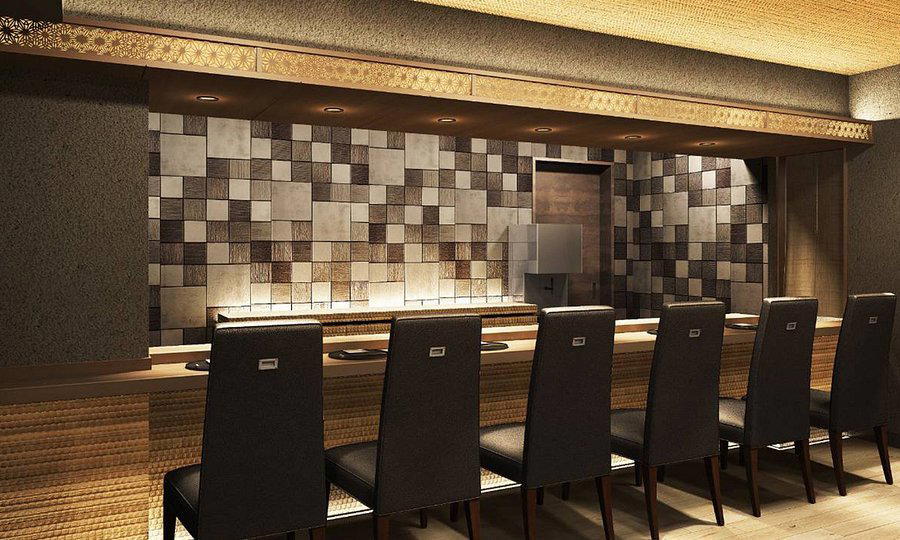
Shibuya's Sushi Counter and the Case for Aging
Approach the Higashi district of Shibuya on a weekday afternoon and the neighbourhood's character becomes clear quickly: residential blocks pressed against small commercial streets, far enough from the station's chaos to carry a different register entirely. The building at 4 Chome-6-5 Higashi offers no spectacle at street level, which is consistent with how Tokyo's more serious sushi counters present themselves. The signal of quality here is the absence of noise, not its presence.
Jukuseizushi Yorozu holds a Michelin one star (2024) and appears at number 370 on the Opinionated About Dining Leading Restaurants in Japan ranking for 2025. Within a city that carries more Michelin stars than any other on earth, a single star at the ¥¥¥¥ tier places a counter in a specific competitive bracket: above the neighbourhood staples, below the multi-starred rooms where price reaches into six figures per head, and squarely inside the tier where the chef's technical choices, rather than brand recognition, do the work.
Jukuseizushi: What the Name Actually Means
The word jukusei translates, approximately, to maturation or aging, and it signals the primary editorial framework for understanding what this counter does and why it occupies the space it does within Tokyo's sushi scene. Edomae tradition, the Tokyo school of sushi that developed over two centuries, always involved intervention: fish were salted, marinated in kombu, cured in vinegar, or left to age under controlled conditions to develop flavour complexity and texture that raw, same-day fish cannot offer. That tradition diverged over the twentieth century, with many counters moving toward the fresher, lighter approach associated with broadcast-friendly sushi culture.
The counters that have returned explicitly to jukusei technique sit in a smaller sub-category within the Tokyo scene. They tend to draw guests with existing knowledge of the tradition, and they invite a different kind of attention from the diner. A piece of fish that has been aged correctly arrives at the counter with a concentrated, quieter flavour than its fresh counterpart, and the conversation it generates is technical rather than aesthetic. Against peers like Sushi Kanesaka in Ginza or Harutaka, which operate at the upper tier of the Tokyo omakase bracket, Yorozu positions itself through craft specificity rather than lineage prestige.
The Lunch Sitting: Why Daytime Often Wins
Tokyo's high-end sushi counters have a structural quirk that rewards the guest who understands it: lunch and dinner at the same counter frequently deliver the same fish, the same rice, the same chef, and the same sequence of nigiri, but the pacing and atmosphere differ substantially. Lunch sittings at single-star Edomae counters tend to run tighter, with guests who have carved time from a working day and a slightly less performative atmosphere than the evening, when the room shifts toward occasion dining and the expectations that accompany it.
At the ¥¥¥¥ price tier, some counters offer a compressed lunch format at a lower price point, while others hold the same menu and cost across both sittings. Either way, the daytime booking is frequently easier to secure than evening, and the light entering the room during a Tokyo afternoon changes how the fish reads visually. For a technique-forward counter like Yorozu, where the maturation process is part of the story, seeing the colours of aged and cured fish in natural light rather than counter spots is not a negligible difference.
For guests staying outside Shibuya, the district is accessible from multiple central points. Shibuya station connects to the Yamanote Line, the Ginza Line, and the Fukutoshin Line, making Higashi reachable from most hotel clusters without requiring a taxi. A daytime visit can be sequenced into a broader Shibuya afternoon without the logistical weight that evening bookings in Ginza or Roppongi often carry.
Where Yorozu Sits in the Tokyo Sushi Conversation
Tokyo's omakase market has stratified sharply over the past decade. At the leading, three-starred counters like Sukiyabashi Jiro Roppongiten operate within a global prestige economy where reservations function more like allocations. Below that, the one- and two-star tier contains the majority of the city's serious sushi work, and within that tier, counters differentiate primarily through technique emphasis, fish sourcing philosophy, and the specific Edomae sub-tradition they claim.
Chef Akira Shirayama leads the counter at Yorozu. Within the editorial context relevant here, his role is to execute the jukusei approach at a level that sustains Michelin recognition.
Counters with comparable positioning in the Edomae revival conversation include Edomae Sushi Hanabusa and Hiroo Ishizaka, both of which operate within the same technical tradition and price bracket. The Opinionated About Dining ranking at 370 places Yorozu within the credentialed mid-range of Japan's restaurant hierarchy, below the elite tier but clearly inside the range where the OAD community, which skews toward professional and serious amateur diners, registers consistent quality.
Sushi Beyond Tokyo: The Regional Picture
The arguments made by counters like Yorozu about maturation and Edomae tradition resonate differently when set against Japan's broader high-end dining scene. Omakase sushi remains most concentrated in Tokyo, but the country's other major cities have developed their own reference points. HAJIME in Osaka and Gion Sasaki in Kyoto represent the kaiseki and progressive Japanese traditions in their respective cities, while Goh in Fukuoka operates in a city with direct access to some of Japan's most prized seafood. akordu in Nara and 1000 in Yokohama extend the picture further, and 6 in Okinawa represents a different marine tradition altogether.
For guests building a Japan itinerary around serious dining, Tokyo's Edomae counters remain the primary reference, but the conversation has widened. The jukusei approach in particular has found practitioners outside the capital, and comparing what Yorozu does in Shibuya against what regional counters do with local fish is a worthwhile exercise for any guest who returns to Japan regularly.
The same tradition that underpins Yorozu has also travelled internationally. Sushi Shikon in Hong Kong and Shoukouwa in Singapore both carry Michelin recognition and operate within the Edomae framework, offering a point of comparison for guests who have experienced Tokyo-style omakase outside Japan and want to understand where the source material sits.
Planning Your Visit
Jukuseizushi Yorozu is located at 301, 4 Chome-6-5 Higashi, Shibuya, Tokyo 150-0011. Budget: ¥¥¥¥, placing it at the higher end of the single-star bracket. Reservations: Timing: The lunch sitting is the recommended entry point for first-time guests: easier to secure, consistent in quality, and better suited to observing the counter's technique-forward approach without the occasion weight of an evening booking. Getting there: Shibuya station, served by the Yamanote, Ginza, Den-en-toshi, and Fukutoshin lines, is the nearest major hub; from there, the Higashi address is a short taxi or walk. Dress: No confirmed dress code, but smart casual is the appropriate default for a Michelin-starred counter in Tokyo.
For broader planning across Tokyo's dining, drinking, and accommodation options, see our full Tokyo restaurants guide, our full Tokyo hotels guide, our full Tokyo bars guide, our full Tokyo wineries guide, and our full Tokyo experiences guide.
What Do People Recommend at Jukuseizushi Yorozu?
Guests and reviewers consistently point to the counter's commitment to aged and matured fish as the defining feature of the experience. Within the jukusei tradition, the handling of fish, the precision of rice temperature, and the sequencing of the omakase are the primary subjects of discussion rather than any single dish. The Michelin one star awarded in 2024 and the 370th position on the 2025 Opinionated About Dining Japan list confirm that the counter's approach registers with both the establishment guide and the more technically focused dining community. Chef Akira Shirayama's name appears as the practitioner behind the counter, and within the context of a technique-led room, the question of what to order resolves simply: the omakase sequence as offered, with particular attention to how the matured pieces differ in character from the fresher cuts served alongside them.
Cuisine and Recognition
| Venue | Cuisine | Price | Awards | Notes |
|---|---|---|---|---|
| Jukuseizushi YorozuThis venue (the venue you are viewing) | Aged Sushi Omakase | $200–300 | 1 Michelin Star | Not listed |
| Harutaka | Edo-Style Omakase Sushi | $200–300 | 3 Michelin Stars · World's 50 Best #76 | Sushi |
| RyuGin | Modern Kaiseki | $500+ | 3 Michelin Stars · World's 50 Best #41 | Kaiseki, Japanese |
| L'Effervescence | Modern French with Japanese Influences | $200–300 | 3 Michelin Stars · World's 50 Best #69 | French |
| HOMMAGE | Modern French with Japanese Influences | $150–200 | 2 Michelin Stars · World's 50 Best #78 | Innovtive French, French |
| MAZ | Innovative Peruvian-Japanese Fusion | $150–200 | 2 Michelin Stars · World's 50 Best #28 | Innovative |
Recognition history
Dated appearances from independent guides and award organizations, with the underlying list record or original source where available.
Michelin 1 Star
Michelin
Opinionated About Dining Top Restaurants in Japan Recommended
Opinionated About Dining
Full recognition history (3 entries)
Opinionated About Dining Top Restaurants in Japan Ranked #370
Opinionated About Dining
Continue exploring
More in Tokyo
Restaurants in Tokyo
All restaurants in Tokyo →


Bars in Tokyo
All bars in Tokyo →







Details
- Intimate
- Elegant
- Sophisticated
- Minimalist
- Date Night
- Special Occasion
- Chefs Counter
- Sake Program
- Local Sourcing
- Omakase
- Counter Dining
- Sake
Current opening hours
- Monday
- 5–8 PM, 8:30–11:30 PM
- Tuesday
- 5–8 PM, 8:30–11:30 PM
- Wednesday
- 5–8 PM, 8:30–11:30 PM
- Thursday
- 5–8 PM, 8:30–11:30 PM
- Friday
- 5–8 PM, 8:30–11:30 PM
- Saturday
- 5–8 PM, 8:30–11:30 PM
- Sunday
- Closed
Hours can change for holidays and private events. Last verified .
Cozy black and natural wood interior with adjustable subtle lighting that shifts with the meal progression.