
Tokyo yakitori has moved well beyond casual smokehouse shorthand, and Tori Aroma belongs to the tighter, reservation-led end of that shift. The Jinbocho address combines a 20-seat format, counter focus, sake and wine emphasis, and repeated Tabelog Yakitori EAST 100 selections from 2023 through 2025, placing it in a serious poultry-and-charcoal conversation rather than a neighbourhood skewer stop.
Pearl is the En Primeur Club membership app — saves, bookings, and concierge access live there. Same editors, same standards.
- Address
- 2 Chome-12番3 Kanda Jinbocho, Chiyoda City, Tokyo 101-0051, Japan
- Phone
- +81 3-3263-0596
- Website
- tabelog.com
 Saves & bookings on Pearl
Jinbocho after dark moves differently from Ginza or Shibuya: bookshops thin out, office lights remain above narrow streets, and dinner becomes less theatrical than exacting. Yakitori suits that setting: close-range cooking, short decisions, and timing over decoration. Tori Aroma works in that Tokyo mode, with counter seating at the centre and a room scaled for concentration, not spectacle.
The broader Tokyo yakitori story matters here. A generation ago, many visitors saw the category as casual drinking food, useful after work and rarely judged beside sushi or kappo. That view is dated. The city’s stronger yakitori rooms now price, book, and compose themselves like specialist restaurants, treating chicken parts, charcoal control, tare, salt, and drinks as one system. Tori Aroma’s JPY 10,000 to JPY 14,999 dinner range places it in that newer tier: not luxury tasting-menu pricing, but well beyond a spontaneous skewer crawl.
Jinbocho yakitori in its current, more serious phase
Jinbocho is useful context because it resists obvious Tokyo dining shorthand. It is not a hotel-dining district, nightlife corridor, or tourist-first food quarter. Its reputation rests on publishing, universities, secondhand books, curry shops, coffee, and compact independent restaurants, a mix that rewards places making sense to regulars before visitors. Nearby, Bondy Chiyoda kanda jinbou honten represents the neighbourhood’s everyday curry fame, while KHAO and ALTER EGO show how international cooking fits the district’s smaller dining grid. Against that background, a focused yakitori counter feels less like a destination dropped into Jinbocho than a continuation of its taste for specialist addresses.
The recognition signal is specific. Tori Aroma was selected for Tabelog Yakitori EAST 100 in 2023, 2024, and 2025, and carries a Tabelog score of 3.99. Those numbers matter in Japan because Tabelog’s user culture can be exacting, especially in locally literate categories. A 2025 selection does not make the meal a trophy hunt, but it places the restaurant in a crowded eastern-Japan field where technique, consistency, and category fluency are heavily scrutinised.
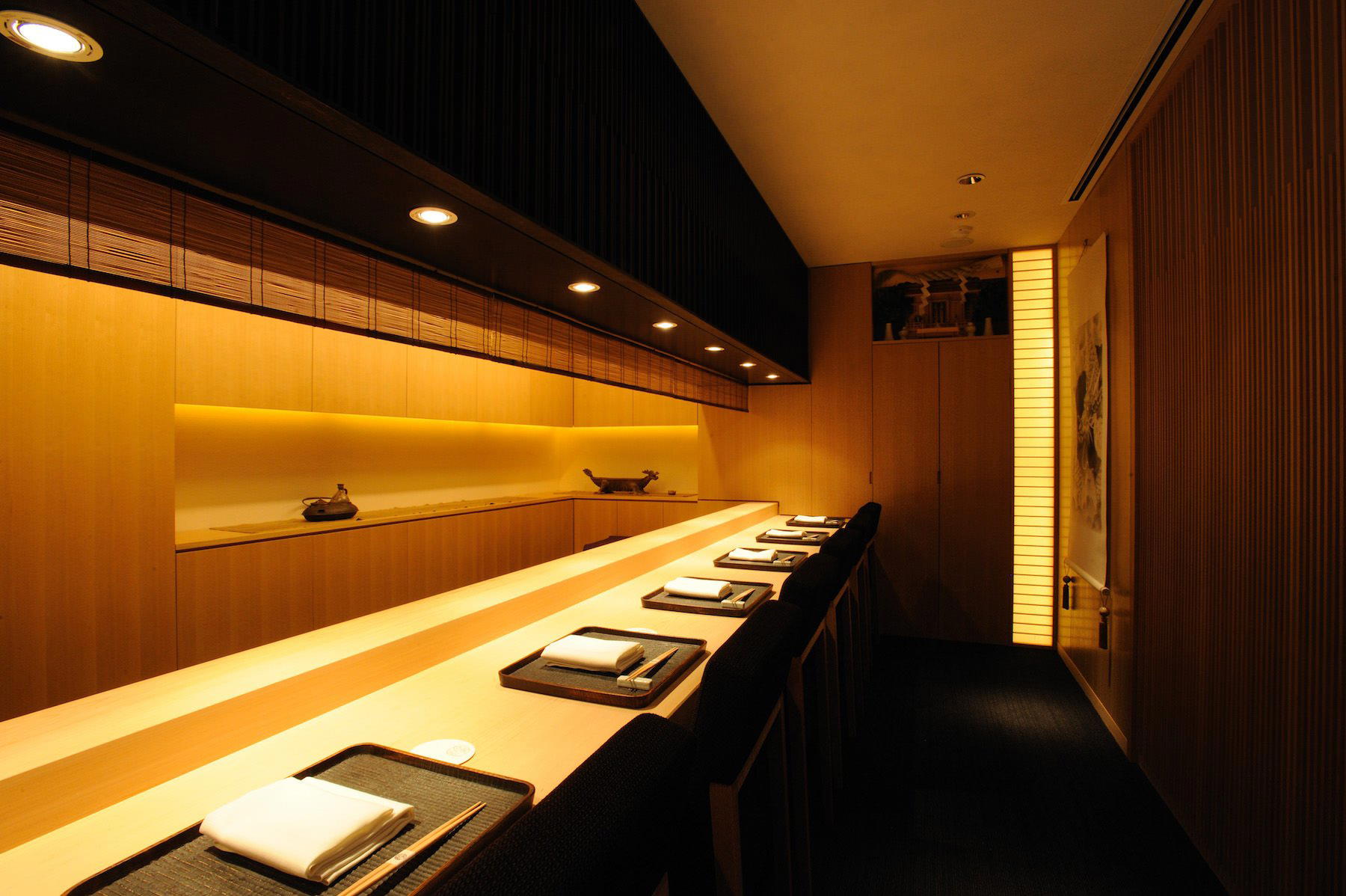
Yakitori’s Tokyo evolution is less about making chicken formal than giving the format its proper frame. The counter is the point: heat, sequence, and pacing are visible, and the guest is close enough to see the thin margin between careful grilling and mere grilling. The restaurant’s 20 seats, split between 12 counter seats and 8 table seats, suggest a room built around that close-focus logic. Tables broaden access for small groups, but the counter remains the category’s stronger expression.
What the format says about the meal
The listed categories are yakitori, chicken dishes, and oyako-don, keeping the kitchen’s identity tightly drawn. That matters in Tokyo, where premium casual restaurants can drift into breadth: seasonal small plates, wine-bar gestures, and a little of everything. A poultry-led menu has less camouflage. The meal depends on sourcing, cut selection, heat management, seasoning, and a sequence that holds attention without leaning on novelty.
The drinks signal is equally telling. Sake and wine are both emphasised, including a stated focus on nihonshu and wine. That dual track reflects a wider shift in Tokyo yakitori, where the old beer-and-shochu frame has expanded without disappearing. Sake can follow the meal’s salt, fat, and tare; wine, when chosen with restraint, brings acidity and aromatic lift to cooking that can otherwise be read too narrowly through smoke and savour. Their presence does not make the room international by default. It shows how contemporary yakitori counters speak to diners comparing a chicken skewer sequence with sushi omakase, tempura counters, and modern kappo, not only izakaya cooking.
Private rooms and private use are unavailable, which is not a flaw here. It keeps the room in the public rhythm of a small counter restaurant. The non-smoking policy also matters: in charcoal cooking, smoke belongs to the grill, not the dining room. Payment covers major credit cards, while electronic money and QR code payments are not accepted. That feels Tokyo-practical rather than visitor-tailored.
Compared with nearby formats, the decision is clear. Steak & Wine Jinbo works at a lower dinner bracket, and folk burgers & beers sits in a casual price band. Bondy is a neighbourhood curry institution rather than a long-form evening. The restaurant asks for a planned dinner, higher spend, and attention to a narrow craft. For a broader scan of the city’s restaurant range, use Our full Tokyo restaurants guide; for adjacent planning, EP Club also maintains Our full Tokyo hotels guide, Our full Tokyo bars guide, Our full Tokyo wineries guide, and Our full Tokyo experiences guide.
Know Before You Go
- Address: 2 Chome-12-3 Kanda Jinbocho, Chiyoda City, Tokyo 101-0051.
- Nearest station: Jimbocho Station, with the A4 exit listed as a 1-minute walk; Suidobashi Station is listed as a 12-minute walk from the east exit.
- Hours: Dinner runs 6–11 PM Monday to Saturday; Sunday is closed.
- Price frame: Dinner is listed at JPY 10,000 to JPY 14,999.
- Seats: 20 seats, including 12 counter seats and 8 table seats.
- Reservations: Reservations are available; reservation inquiries are listed for 11:00 to 17:00.
- Policies: Non-smoking; no private rooms; no parking; no dress code listed.
- Payments: VISA, Master, JCB, AMEX, and Diners are accepted; electronic money and QR code payments are not accepted.
Readers mapping yakitori and Japanese casual-specialist dining around Tokyo may also compare 124. KAGURAZAKA (Yakitori), 12/10 Shinjuku ten. 鮪と炭火焼き うお炭 秋葉原店, 3 Chome no Curry Ya San, and 2D Cafe. For wider Japan planning, useful contrasts include -Grilled beef Sukiyaki- KAMAKURA TANUKIAN 鎌倉 たぬき庵 in Kamakura.cafe in Osaka.know in Kumamoto, (Shoku) Vietnam in Kawasaki, [Curry Senmon Ten] Maruyama Kyoju. in Sapporo, and [ki:] in Kyoto. Across the Pacific, Jōdo Saké Bar in Los Angeles and Onigiri Time in Pasadena show how Japanese drinking and casual formats translate outside Japan.
Just the Basics
Comparable venues by category and price.
| Venue | Cuisine | Price | Notes |
|---|---|---|---|
| Tori AromaThis venue — the venue you are viewing | Chiyoda, Hinai Jidori Yakitori Omakase | $$$ | Not listed |
| Soba Koji Sawarabi | Chiyoda, Traditional soba noodle shop | $$$ | Not listed |
| Tokyo Kyobashiya Curry | Chūō, Additive-free Japanese curry house | $$$ | Not listed |
| Tempura Ginza Tentei | Chūō, Traditional Ginza Tempura Counter | $$$ | Not listed |
| Yakiniku Toka | Chūō, Modern nostalgic Wagyu yakiniku | $$$ | Not listed |
| New Shin Mikan | Not listed | $$$ | Minato, Sea urchin and oyster-focused Japanese izakaya counter |
Recognition history
Dated appearances from independent guides and award organizations, with the underlying list record or original source where available.
Tabelog 100 #31 · No. 31
Tabelog · Tabelog 100 - Yakitori - EAST - 2025







At a Glance
- Cozy
- Elegant
- Intimate
- Modern
- Date Night
- Special Occasion
- After Work
- Business Dinner
- Solo
- Chefs Counter
- Open Kitchen
- Standalone
- Design Destination
- Sake Program
- Extensive Wine List
- Local Sourcing
Current opening hours
- Monday
- 6–11 PM
- Tuesday
- 6–11 PM
- Wednesday
- 6–11 PM
- Thursday
- 6–11 PM
- Friday
- 6–11 PM
- Saturday
- 6–11 PM
- Sunday
- Closed
Hours can change for holidays and private events. Last verified .
Small, stylish and relaxed counter-focused space with only 20 seats, where guests sit close to the grill for an intimate, quietly lively yakitori omakase experience that feels refined but not formal.