





3 Michelin Stars · La Liste Top Restaurants · Tabelog Silver #44
Our verdict
Kagurazaka Ishikawa holds three Michelin stars and consecutive Tabelog Silver Awards from 2017 through 2026, placing it among Tokyo's most consistently recognised kaiseki counters. Chef Hideki Ishikawa's approach draws on a principle of restraint, ingredients lead, technique recedes, and the 25-seat room in Kagurazaka's cobbled backstreets reflects that same economy. Dinner runs JPY 50,000–59,999 with a 10% service charge.

Pearl is the En Primeur Club membership app, where members save venues, book tables and use the concierge.

The menu
What to order
- Steamed rice variations
- Sea urchin sashimi
- Blackthroat seaperch rice
Kagurazaka, Kaiseki, and the Architecture of Restraint
Tokyo's leading kaiseki counters occupy a tier that has, over the past decade, grown both smaller and more expensive. Three-Michelin-star kaiseki in the city now sits in genuine peer company with its equivalents in Kyoto, and the handful of rooms that have held that recognition across multiple consecutive guide cycles form a particularly tight competitive set. Kagurazaka Ishikawa belongs to that group: three Michelin stars as of the 2024 and 2025 guides, a Tabelog score of 4.42, consecutive Tabelog Silver Awards from 2017 through 2026, and three separate selections for the Tabelog Japanese Cuisine Tokyo Top 100 (2021, 2023, 2025). La Liste placed the restaurant at 92 points in its 2026 ranking, and Opinionated About Dining positioned it 39th among Japan's restaurants in 2025, up from 34th in 2023. For a kaiseki room outside Kyoto's established corridors, that sustained cross-platform recognition is noteworthy.
The neighbourhood itself matters to the reading. Kagurazaka is one of Tokyo's older residential and dining districts, a slope of narrow lanes and former geisha streets that runs between Iidabashi and the Ushigome-Kagurazaka subway stations. Its dining character is quieter than Ginza and less performative than the high-profile kaiseki rooms in the Marunouchi or Roppongi hotel circuits. A kaiseki counter at this address signals a deliberate choice: the room competes on depth rather than address prestige.
The Room, the Counter, and How the Evening is Structured
The physical layout of the restaurant encodes the kitchen's editorial priorities. Twenty-five seats divide between seven counter positions and four private rooms, four rooms for four guests each and one room for six, giving the space a range that runs from intimate counter dining to discreet group occasions. The counter seats are where the team's collaboration is most legible: service staff and kitchen move in what La Liste's 2026 entry describes as "the practised solidarity of a well-rehearsed team," a formulation that captures the particular quality of kaiseki service when floor and kitchen are genuinely synchronised rather than merely co-ordinated.
That synchronisation is not incidental to the food; in kaiseki, timing is flavour. The progression of courses in this format depends on each element arriving at the correct temperature, in the correct sequence, with transitions managed by a front-of-house team that reads the table rather than the clock. Rooms that get this right tend to produce evenings where the effort is invisible, and the invisibility is the achievement. Kagurazaka Ishikawa's consistent critical recognition across reviewers who assess exactly this quality suggests the standard holds.
The beverage program extends the same institutional seriousness. The restaurant is noted for particular attention to both sake (nihonshu) and wine, operating with the kind of dual-track drinks list that reflects a room confident enough to serve the full premium tier of Japanese nihonshu alongside a considered wine selection. This is less common in traditional kaiseki contexts, where sake alone often dominates. BYO is also permitted, a practical consideration for guests travelling with allocated bottles.
Chef Hideki Ishikawa and the Principle of Mui-Shizen
In kaiseki, the chef's guiding philosophy is not a marketing position; it is a structural constraint on what the kitchen can and cannot do. Hideki Ishikawa's stated principle is mui-shizen, service to nature, free from artifice. In practice, this means the technique applied to any ingredient is proportional to what that ingredient requires rather than what would demonstrate the most skill. Flavours are kept light; presentations derive their force from harmony rather than spectacle. Niigata rice, cooked fresh and served in earthen bowls, appears as a reference point for this approach: a regional ingredient from Ishikawa's homeland, treated with the kind of care that makes a simple thing land as something considered.
Kagurazaka Ishikawa sits firmly in the latter camp. Comparisons with Azabu Kadowaki or Kioicho Fukudaya are common in this segment of the Tokyo Japanese cuisine market, where the question is less about which room is more technically ambitious and more about whose restraint reads as most coherent. Rooms like Myojaku, Ginza Fukuju, and Jingumae Higuchi occupy adjacent territory within the broader Tokyo Japanese dining map.
Beyond Tokyo, the same philosophical approach surfaces in kaiseki contexts across Japan. Gion Sasaki in Kyoto and Isshisoden Nakamura in Kyoto represent the Kyoto tradition from which much of this vocabulary originates, while Kashiwaya Osaka Senriyama in Osaka and HAJIME in Osaka show how the form has evolved in the Kansai context. Across Japan, other formats that engage seriously with seasonal Japanese ingredients include akordu in Nara, Goh in Fukuoka, 1000 in Yokohama, and 6 in Okinawa.
What Regulars Order, and What That Signals
In kaiseki, the menu is set: guests do not order à la carte, and the kitchen controls the progression of courses entirely. What regulars actually choose is the format and occasion rather than any individual dish. The private room configuration (four rooms for four, one for six) draws repeat visitors for celebratory meals; the restaurant accommodates surprises and special occasions explicitly. The counter seats attract guests who want proximity to the kitchen's rhythm, where the team dynamic described above is most directly perceptible.
The rice course, Niigata koshihikari, fresh-cooked, served in earthen bowls, functions in many regulars' accounts as an anchor point. In kaiseki, the rice course near the end of the meal is a structural signal: this is where the kitchen shows its confidence in simplicity. A room that sources and cooks rice with the same precision applied to its most elaborate courses is communicating something about proportion and about where it believes quality actually lives. For guests returning across seasons, that course is often the one that makes the strongest case for what the kitchen believes.
Planning Your Visit
Kagurazaka Ishikawa is a dinner-only venue, open from 17:00 onwards, closed Sundays, Mondays, and public holidays, with seasonal closures in late March, mid-August, and over the year-end and New Year period. The restaurant is accessible from multiple transit lines: Ushigome-Kagurazaka Station on the Toei Oedo Line (four-minute walk), Iidabashi Station on the Tokyo Metro Yurakucho and Namboku Lines (four-minute walk), Iidabashi Station West Exit on the JR Chuo Line (six-minute walk), and Kagurazaka Station on the Tokyo Metro Tozai Line (seven-minute walk). No on-site parking; several paid lots in the surrounding streets.
Reservations: By phone at 050-3138-5225 or via the restaurant's dedicated reservation website at kagurazaka-ishikawa.co.jp. For post-booking inquiries, a separate line operates at 03-5225-0173. Budget: JPY 50,000–59,999 per person at both lunch and dinner, plus a 10% service charge. Payment: Major credit cards accepted (Visa, Mastercard, JCB, Amex, Diners); electronic money and QR code payments are not accepted. Children: Guests aged 12 and over are welcome provided they eat from the same menu as adults. Accessibility: The space is wheelchair accessible. Dress: No stated dress code, though the setting and price point align with smart casual at minimum.
For broader context on where this room sits within Tokyo's dining infrastructure, the covers the city's Japanese cuisine tiers in detail. Additional Tokyo planning resources: hotels, bars, wineries, and experiences.
Frequently Asked Questions
What do regulars order at Kagurazaka Ishikawa?
Kaiseki is a set-menu format, so guests do not select individual dishes. What regulars tend to choose is the occasion and seat type: counter positions for those who want to observe the kitchen's service rhythm directly, and private rooms for celebratory meals. The rice course, Niigata koshihikari cooked fresh in earthen bowls, is frequently noted in reviews as the course that most clearly communicates the kitchen's priorities. The beverage program, which gives serious attention to both premium nihonshu and wine, also draws returning guests with specific sake interests. For an overview of comparable kaiseki experiences in Tokyo, see our notes on Azabu Kadowaki and Myojaku, and for the broader Japanese cuisine context, the provides additional reference points.
Style and Standing
Comparable venues nearby, for context on price, style, and recognition.
| Venue | Cuisine | Price | Awards | Notes |
|---|---|---|---|---|
| Kagurazaka IshikawaThis venue (the venue you are viewing) | Traditional Japanese Kaiseki | $200–300 | 3 Michelin Stars · La Liste Top Restaurants | Not listed |
| Kanda | Contemporary Kaiseki | $100–150 | 3 Michelin Stars · La Liste Top Restaurants | Minato |
| Azabu Kadowaki | Modern Japanese Kaiseki with Truffle Rice | $300–500 | 3 Michelin Stars · La Liste Top Restaurants | Minato |
| ESqUISSE | Modern French with Japanese Influences | $200–300 | 2 Michelin Stars · World's 50 Best #67 | Chūō |
| Kohaku | Modern Japanese Kaiseki | $300–500 | 2 Michelin Stars · La Liste Top Restaurants | Shinjuku |
| L'OSIER | Classic French Fine Dining | $300–500 | 3 Michelin Stars · La Liste Top Restaurants | Chūō |
Recognition history
Dated appearances from independent guides and award organizations, with the underlying list record or original source where available.
Michelin 3 Stars
Michelin
La Liste Top Restaurants
La Liste
Black Pearl 2 Diamond
Black Pearl
Opinionated About Dining Top Restaurants in Japan Ranked #42
Opinionated About Dining
Tabelog Silver #44
Tabelog
Full recognition history (13 entries)
La Liste Top Restaurants
La Liste
Michelin 3 Stars
Michelin
Opinionated About Dining Top Restaurants in Japan Ranked #39
Opinionated About Dining
Tabelog 100 #84 · No. 84
Tabelog · Tabelog 100 - Japanese cuisine - TOKYO - 2025
Tabelog Silver
Tabelog
The Best Chef Three Knives
The Best Chef
Michelin 3 Stars
Michelin
Opinionated About Dining Top Restaurants in Japan Ranked #34
Opinionated About Dining
Continue exploring
More in Tokyo
Restaurants in Tokyo
All restaurants in Tokyo →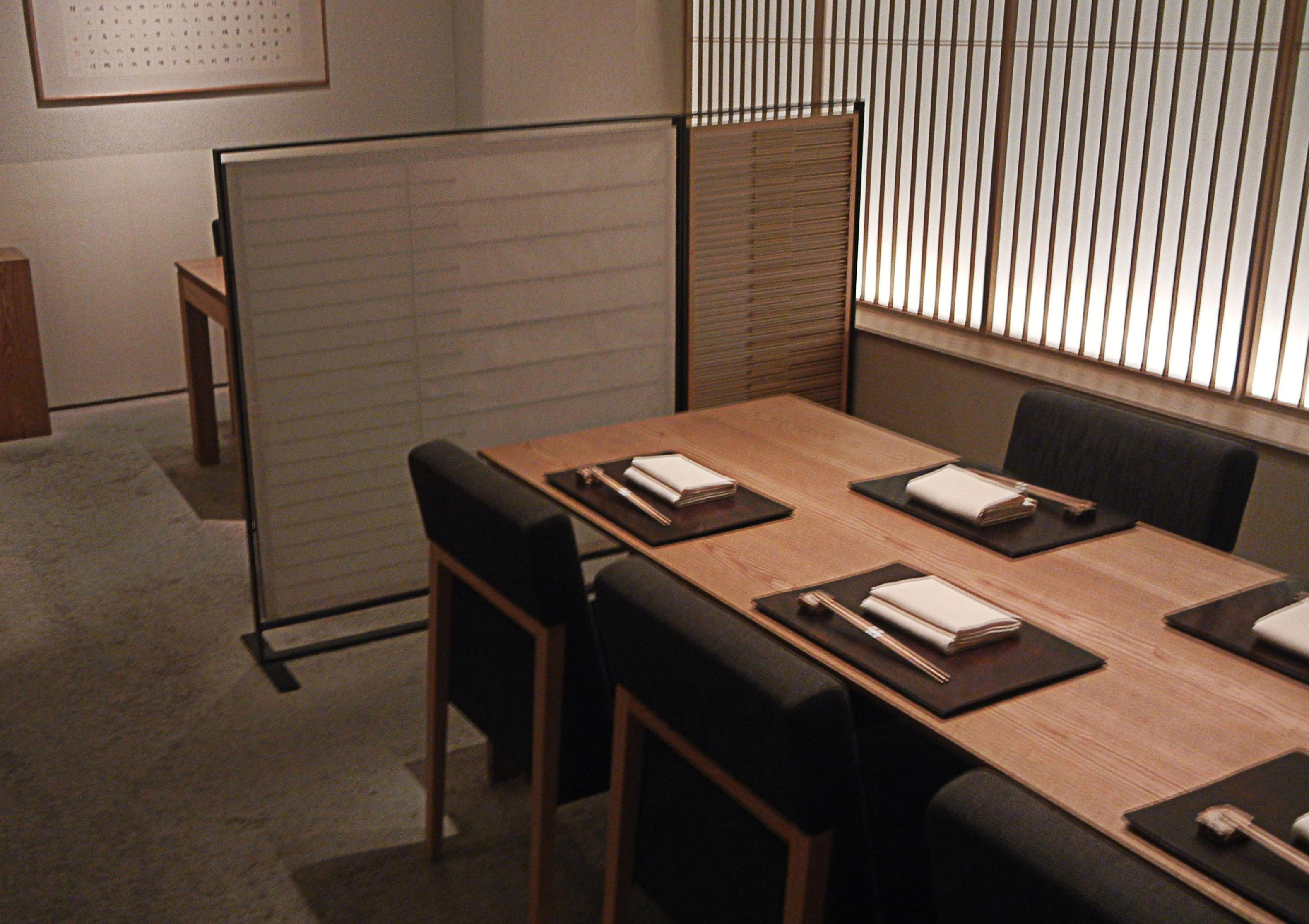


Bars in Tokyo
All bars in Tokyo →




Details
- Elegant
- Sophisticated
- Intimate
- Quiet
- Classic
- Special Occasion
- Business Dinner
- Celebration
- Date Night
- Private Dining
- Sake Program
- Tasting Menu
- Sake Program
Current opening hours
- Monday
- Closed
- Tuesday
- 5 PM–12 AM
- Wednesday
- 5 PM–12 AM
- Thursday
- 5 PM–12 AM
- Friday
- 5 PM–12 AM
- Saturday
- 12 PM–12 AM
- Sunday
- Closed
Hours can change for holidays and private events. Hours as of .
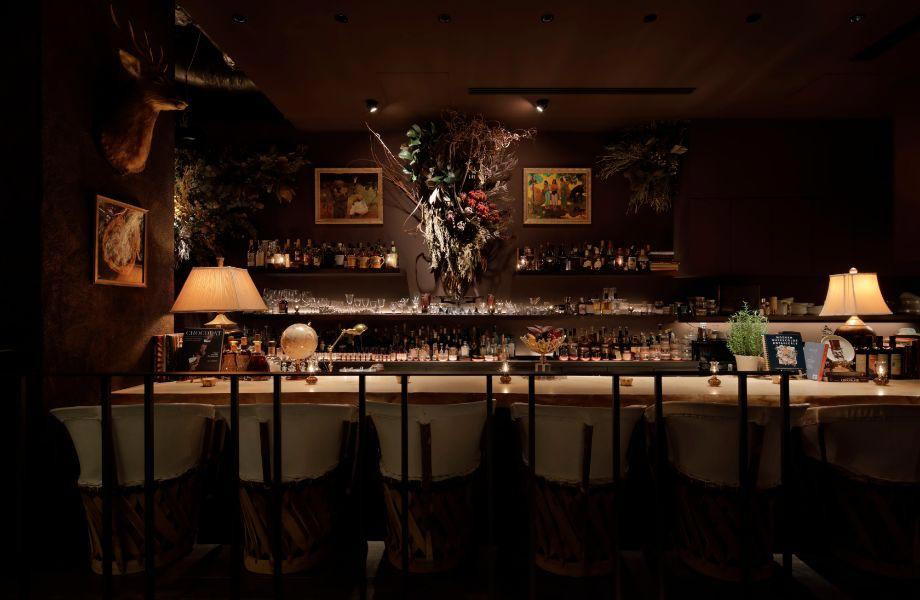
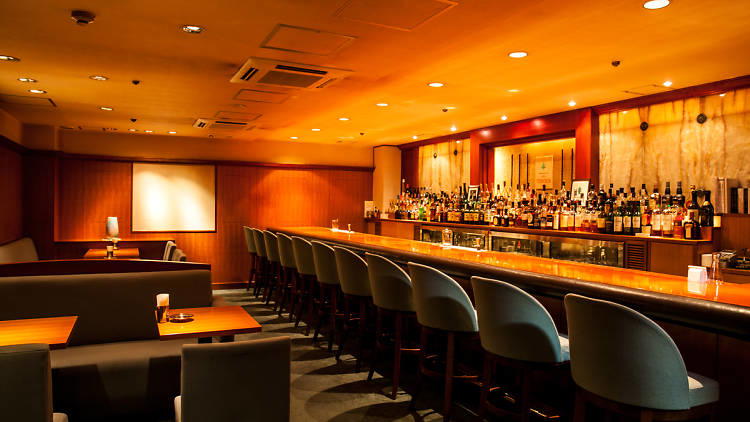
Serene and warm wooden interior with simple sophistication, providing a relaxing and intimate atmosphere.