
Tabelog 100 #36
Our verdict
Ebisu yakitori has moved into a polished middle tier: compact counters, serious drink lists, and prices that sit above casual izakaya grazing but below luxury omakase. Kirin fits that bracket with 20 seats, counter and private-room formats, Tabelog 100 Yakitori EAST recognition in 2025, and a menu orbiting yakitori, mizutaki, sake, shochu, and wine.

Pearl is the En Primeur Club membership app, where members save venues, book tables and use the concierge.
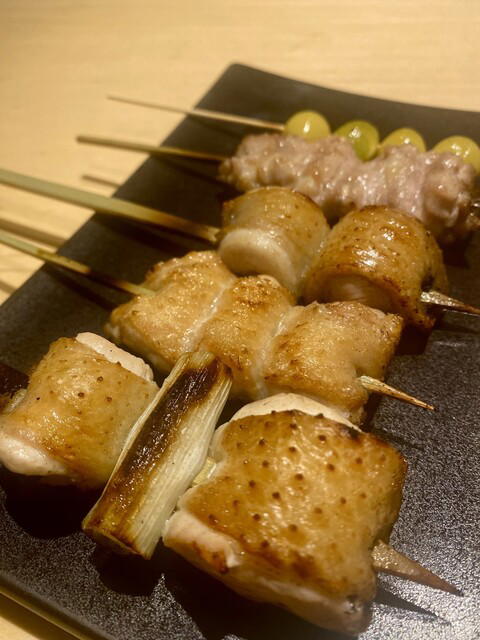
The menu
What to order
- Kyoto-Danba black chicken yakitori
- Water-simmered chicken hot pot
- Seasonal small plates
Tokyo changes register quickly from one dining room to the next: office crowds, date-night traffic, compact rooms, and the quiet theatre of cooking behind narrow doors. In that setting, yakitori carries a particular urban logic. It is compact, resource-aware by design, and built around using chicken with more precision than a skewer-and-beer cliché allows. Kirin belongs to that more serious Tokyo lane, where the appeal is less about spectacle than about a focused poultry-led meal.
Tokyo’s yakitori scene has become increasingly split. At one end are casual after-work shops where drink, speed, and informality define the evening. At the other are reservation-minded rooms that treat chicken cookery as a sequence of cuts, textures, heat management, and pacing. Kirin sits in that more deliberate conversation without needing the ceremonial austerity of the city’s most formal dining rooms. Its listed dinner price band of JPY 8,000 - JPY 9,999 places it in a considered Tokyo night-out bracket; travellers comparing moods might also look at sumiyaki kadota or yourisu zuki, Nawa Noren, BAR Go, Cafe Tram, or Le Grenier a Pain Atore ebisu ten for different kinds of city stops.
Yakitori in Tokyo, read through grilling, portioning, and restraint
Yakitori is one of Japan’s more convincing arguments for low-waste luxury. The form rewards butchery knowledge: different parts of the bird can be portioned for separate skewers, supporting dishes may extend the meal, and the rhythm depends on small servings rather than abundance as spectacle. Kirin’s listed categories, yakitori, mizutaki, and izakaya cooking, place it inside that tradition rather than in a narrow tasting-menu category. Mizutaki, a chicken hot pot, also signals a broader use of poultry beyond grilled skewers, which is where sustainability becomes practical rather than decorative.
The Tabelog Hyakumeiten recognition in 2025 gives the restaurant a useful credential because it places the room within a broader yakitori conversation, not simply a local dining cluster. That recognition matters in a city where small restaurants often flare briefly and then disappear from serious consideration. A Tabelog score of 3.66 is not a Michelin-style declaration, but within Japan’s user-review culture it suggests sustained approval rather than tourist-only visibility.
The format of yakitori supports a controlled grill programme. Skewers do not improve by waiting, and careful heat work becomes less convincing when a kitchen has to lose focus on timing. The appeal is therefore not only visual. It is the kind of cooking that lets heat, seasoning, and pacing stay close to the meal. More private or conversational evenings may shift the experience toward occasion dining, but the essential point remains the same: a compact poultry-led meal where repetition is avoided through cut, texture, and cooking method.
Drinks point to an adult izakaya, not just a skewer bar
Kirin’s izakaya category helps frame the experience. The restaurant is not only a place to order grilled chicken in isolation; it belongs to a broader Japanese tavern tradition in which food, drink, pacing, and conversation are part of the same evening. Tokyo has been moving this way for years, with diners expecting the informality of izakaya food alongside more care in the cooking.
This is where the environmental angle becomes part of the dining grammar rather than a slogan. Yakitori’s portioning encourages moderation, while the izakaya frame reduces the need for a single rigid dining script. The meal can stay flexible: a few skewers, a hot pot element, and choices shaped around appetite rather than a fixed procession. That flexibility is one reason yakitori remains one of Tokyo’s strongest formats for diners who want craft without the waste and theatre that can accumulate around luxury dining.
The tone is also distinct from older, looser tavern stereotypes. In a Tokyo setting, contemporary yakitori can feel like a generational marker: grilling remains central, but the meal is increasingly judged by precision, pacing, and comfort rather than by nostalgia alone. That distinction matters. It keeps attention on the cooking and the table rather than on the compromises that once came with late-night Japanese tavern dining.
How to place Kirin in a Tokyo dining plan
Kirin is a dinner-led choice for travellers who already understand that Tokyo’s strongest meals are not always formal. The smarter comparison is not with sushi counters or kaiseki rooms, but with other compact restaurants where a single technique defines the night. For a broader Tokyo restaurant map, use Our full Tokyo restaurants guide; for a different yakitori angle, compare it with other Tokyo dining rooms that put grilling, pacing, and poultry cookery at the center of the meal. Nearby and category-adjacent browsing can include other casual counters, grill-focused rooms, cafés, and tavern-style restaurants across the city.
For readers building a wider Japan itinerary, contrast Tokyo’s grill-and-small-room culture with other dining rooms elsewhere in Japan, from beef-focused meals and cafés to curry specialists and sake-led bars. Tokyo planning can extend beyond dinner through Our full Tokyo hotels guide, Our full Tokyo bars guide, Our full Tokyo wineries guide, and Our full Tokyo experiences guide. For an international comparison, look generically at how Japanese everyday formats translate abroad through rice shops, sake bars, and casual counters outside Japan.
The editorial case for Kirin is not maximalism. It is the usefulness of a tight Tokyo dining format: recognized yakitori, a clear dinner price band, and poultry cookery that naturally rewards full use of ingredients. In Tokyo, where restaurants often compete through noise and novelty, that kind of disciplined grill work has more staying power than another theme-driven night out.
Frequently asked questions
What are the opening hours for Kirin?
Current opening hours for Kirin should be confirmed directly with the restaurant.
What does dinner at Kirin typically cost?
Pricing at Kirin is listed as JPY 8,000 - JPY 9,999.
What part of town is Kirin in?
Tokyo.
What's Kirin best at?
Kirin is strongest as a Tokyo yakitori address: it has Tabelog Hyakumeiten recognition for 2025, and its listed categories are yakitori, mizutaki, and izakaya cooking.
Is Kirin good for vegetarians?
Kirin is built around yakitori and mizutaki, so the kitchen’s focus is clearly on chicken rather than vegetarian cooking. Vegetarian diners should confirm suitable options directly with the restaurant before booking.
Is Kirin okay with children?
Kirin’s listed focus remains yakitori, mizutaki, and izakaya cooking rather than a child-specific format. Families should confirm suitability directly with the restaurant before visiting.
Peers You’d Cross-Shop
Comparable venues to calibrate price, style, and recognition.
| Venue | Cuisine | Price | Awards | Notes |
|---|---|---|---|---|
| KirinThis venue (the venue you are viewing) | Yakitori | $50–100 | Tabelog 100 #36 | Not listed |
| Nawa Noren | Stand-up Horumon & Grilled Tripe Bar | $30–50 | Tabelog 100 #19 | JPY 3,000 - JPY 3,999 View spending breakdown |
| BAR Go | Japanese Cocktail Bar | Not listed | Tabelog 100 #23 | JPY 4,000 - JPY 4,999 |
| Cafe Tram | Not listed | Not listed | Not listed | JPY 1,000 - JPY 1,999 |
| sumiyaki kadota or yourisu zuki | Charcoal-grilled Japanese diner & motsunabe | $50–100 | Tabelog 100 #25 | JPY 8,000 - JPY 9,999 JPY 1,000 - JPY 1,999 |
| Le Grenier a Pain Atore ebisu ten | French bakery & café | $10–20 | Tabelog 100 #70 | JPY 1,000 - JPY 1,999 JPY 1,000 - JPY 1,999 View spending breakdown |
Recognition history
Dated appearances from independent guides and award organizations, with the underlying list record or original source where available.
Tabelog 100 #36 · No. 36
Tabelog · Tabelog 100 - Yakitori - EAST - 2025
Continue exploring
More in Tokyo
Restaurants in Tokyo
All restaurants in Tokyo →



Bars in Tokyo
All bars in Tokyo →



Details
- Cozy
- Intimate
- Sophisticated
- Elegant
- Date Night
- Business Dinner
- Group Dining
- Special Occasion
- Casual Hangout
- Chefs Counter
- Private Dining
- Standalone
- Sake Program
- Beer Program
- Counter Dining
- Set Menu
- A La Carte
- Sake
- Beer
Current opening hours
- Monday
- 5–11:30 PM
- Tuesday
- 5–11:30 PM
- Wednesday
- 5–11:30 PM
- Thursday
- 5–11:30 PM
- Friday
- 5–11:30 PM
- Saturday
- 4–11:30 PM
- Sunday
- 4–11:30 PM
Hours can change for holidays and private events. Hours as of .
An underground adult hideaway with a refined, counter-centric atmosphere built around the charcoal grill and private rooms.