A hutong courtyard address in Dongcheng, Dali Courtyard occupies a preserved siheyuan on Xiaojingchang Hutong and draws a crowd that books weeks ahead. The format sits at the intersection of Yunnan-inflected cooking and old Beijing residential architecture, making it one of the more sought-after informal reservations in the city. Plan ahead: walk-ins are rarely possible.
Pearl is the En Primeur Club membership app — saves, bookings, and concierge access live there. Same editors, same standards.
- Address
- 67 Xiaojingchang Hu Tong, Dongcheng, Beijing, China, 100009
- Phone
- +861084041430
- Website
- thebeijinger.com
- Directions
- Get directions
 Saves & bookings on Pearl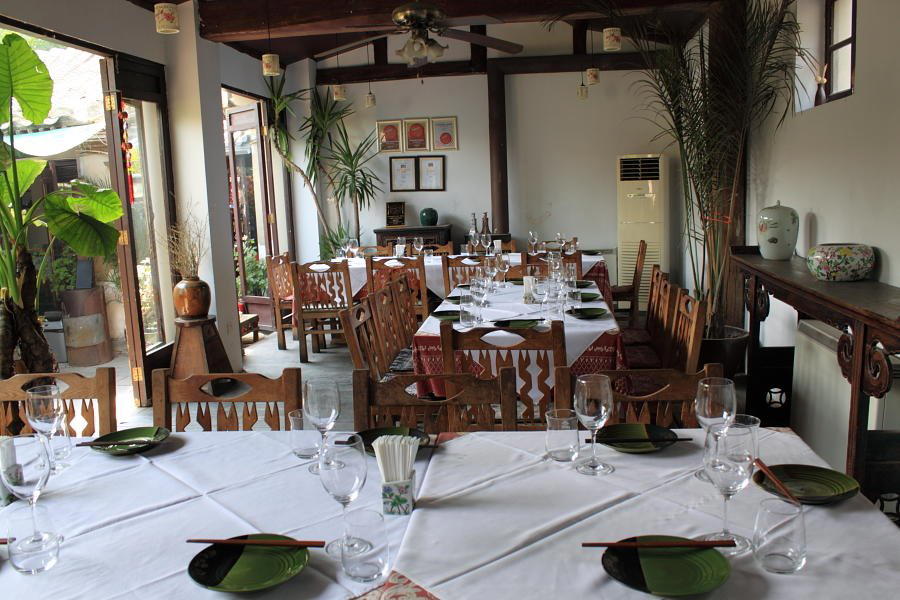
A Hutong Table That Requires Planning
Beijing's hutong dining scene has bifurcated sharply over the past decade. On one side sit the high-production courtyard restaurants that package nostalgia for corporate banquets and tourist groups. On the other, a smaller cluster of informal addresses uses the same architectural bones, the grey-brick siheyuan, the moon gate, the open sky overhead, to run something closer to a private dinner party than a restaurant service. Dali Courtyard, at 67 Xiaojingchang Hutong in Dongcheng, belongs firmly to the second category. Arriving means navigating one of the older residential lanes north of Di'an Men, where delivery bikes and neighbourhood residents share the same narrow passage. That friction is the point. The experience begins before you sit down.
What the Setting Does for the Food
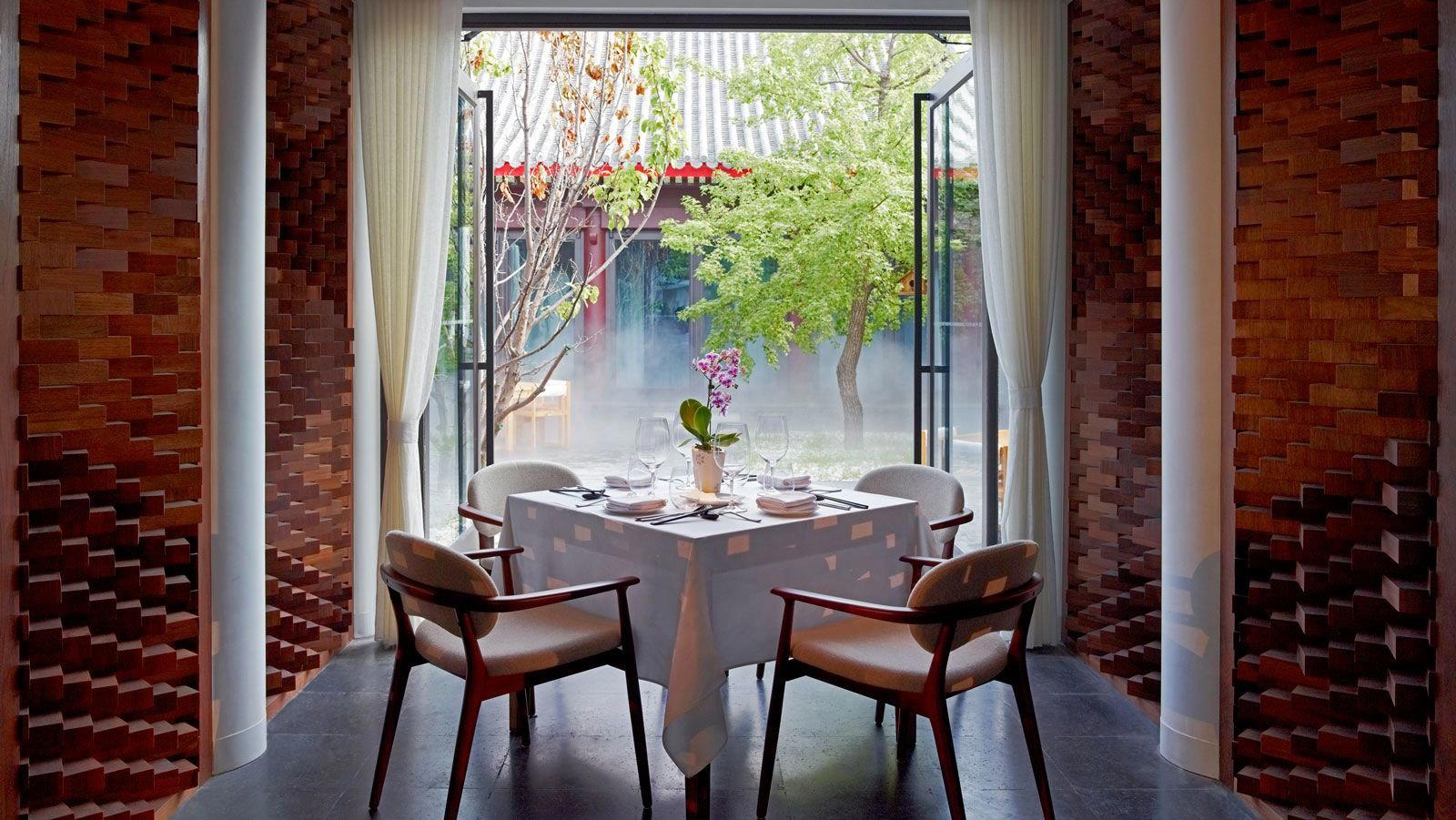
Siheyuan architecture was designed around a central open courtyard, and that spatial logic shapes how meals here feel. Diners eat in proximity to the sky rather than under a ceiling, which changes the rhythm of a long meal in ways that enclosed dining rooms simply cannot replicate. The format, a set menu without extensive à la carte choices, built around seasonal Yunnan ingredients, has defined this address for years. Yunnan cuisine, sourced from China's southwest, brings dried mushrooms, mountain herbs, flower-based preparations, and cured proteins that read as unfamiliar to guests expecting northern Chinese cooking. At Dali Courtyard, those ingredients arrive in a residential context that reinforces their informality. This is not the polished plating tier occupied by addresses like King's Joy or Lamdre, both of which represent Beijing's more composed vegetarian and Chinese fine dining register. The cooking here reads more like a considered home kitchen than a competition plate.
Where It Sits in Beijing's Restaurant Hierarchy
Beijing's premium Chinese dining tier is well-documented. Jingji anchors the Beijing Cuisine segment at the ¥¥¥¥ level, while Xin Rong Ji on Xinyuan South Road and Chao Shang Chao in Chaoyang sit at a similar price point with Taizhou and Chaozhou registers respectively. Dali Courtyard operates at a different register entirely: lower ceremony, lower price relative to that tier, but with a booking difficulty that places it in a comparable set defined by demand rather than price. The comparison is less about competitive cuisine categories and more about the informal prestige circuit, addresses where the scarcity of seats is itself the signal. Internationally, this model has parallels. Lazy Bear in San Francisco built a similar reputation around a dinner-party format and a booking system that required advance commitment. The mechanism is different here, no ticketed system, just a telephone or walk-in approach that rewards persistence, but the social logic is the same. Demand-constrained informal dining occupies a particular space in urban food culture that formal, award-tracked restaurants do not.
The Booking Problem
The editorial angle on the restaurant is, ultimately, a logistical one. Reservations require advance planning; the hutong location means no passing trade to fill last-minute gaps; and the format, which does not run multiple seatings on a factory schedule, caps daily covers at a level that makes spontaneous visits unrealistic. The practical posture is to treat this like booking a sought-after counter in Tokyo or a tasting seat at Le Bernardin in New York: decide early, contact directly, and have an alternative ready. That friction also keeps the atmosphere at a remove from the optimised-for-reviews crowd; the dining room tends to fill with people who made a deliberate effort to be there.
Yunnan Cooking in a Northern Capital
Yunnan cuisine occupies an interesting position in Beijing's restaurant mix. The province's food traditions are linguistically and geographically distant from the capital's roast duck and braised pork canon, which means Yunnan restaurants in Beijing function as a form of internal travel, a reminder of how vast and internally varied Chinese food culture remains. Across the country, the format has found different expressions: the vegetable-forward tasting menus at Fu He Hui in Shanghai represent one refined interpretation of ingredient-led Chinese cooking, while addresses in Hangzhou like Ru Yuan pursue a different regional register entirely. The restaurant's contribution to that conversation is specifically about context: Yunnan ingredients served inside a hutong courtyard in Dongcheng, where the physical setting amplifies the sense of displacement from metropolitan Beijing. The architecture does editorial work that plating alone cannot do.
Planning a Visit
Xiaojingchang Hutong sits in Dongcheng district, accessible from Di'an Men or the broader Gulou area, which remains one of Beijing's most coherent surviving hutong neighbourhoods. The lane itself is residential in character; there is no surrounding restaurant cluster to default to if the booking falls through, which makes confirming in advance non-negotiable. Timing within the Beijing calendar matters: spring and autumn bring particularly comfortable courtyard conditions; the open-air format makes deep winter visits more variable in comfort. For comparison across the wider Chinese dining circuit, the Macau register at Chef Tam's Seasons, the Fuzhou end of the spectrum at Wenru No.9, and the Suzhou experience at Pingjiangsong all offer useful reference points for how courtyard and garden settings interact with regional cooking traditions elsewhere in China. The same logic applies further afield: Shang Palace in Yangzhou, Dai Yuet Heen in Nanjing, Fleurs Et Festin in Xiamen, and Imperial Treasure Fine Chinese Cuisine in Guangzhou each demonstrate how the relationship between setting, regional identity, and dining format plays out differently across the country. And for those building a Chengdu leg into a broader China trip, the Taizhou register at Xin Rong Ji in Chengdu offers a useful contrast to the hutong informality of the restaurant's model.
A Quick Peer Check
Comparable venues nearby, for context on price, style, and recognition.
| Venue | Cuisine | Price | Notes |
|---|---|---|---|
| Dali CourtyardThis venue — the venue you are viewing | Yunnanese | $$ | Not listed |
| 丽æå¡å°é¡¿é åºçé¤å | chinese | Not listed | Balizhuang |
| 功德林 | Modern Chinese | $$$ | Zhengyilu |
| Yatang | Regional Chinese with Peking Duck | $$$ | Tuanjiehu |
| FuRong Hu'nan Cuisine by Rong | Upscale Hunan cuisine by Xin Rong Ji | $$$ | Xicheng |
| LEI GARDEN | Authentic Cantonese Dim Sum | $$$ | Chaoyang |

At a Glance
- Romantic
- Cozy
- Intimate
- Rustic
- Date Night
- Special Occasion
- Courtyard
Current opening hours
- Monday
- 11 AM–11 PM
- Tuesday
- 11 AM–11 PM
- Wednesday
- 11 AM–11 PM
- Thursday
- 11 AM–11 PM
- Friday
- 11 AM–11 PM
- Saturday
- 11 AM–11 PM
- Sunday
- 11 AM–11 PM
Hours can change for holidays and private events. Last verified .
Tranquil and romantic with lantern-lit courtyard seating, rustic wooden furnishings, and a cozy, dimly-lit atmosphere.