

1 Michelin Star
Our verdict
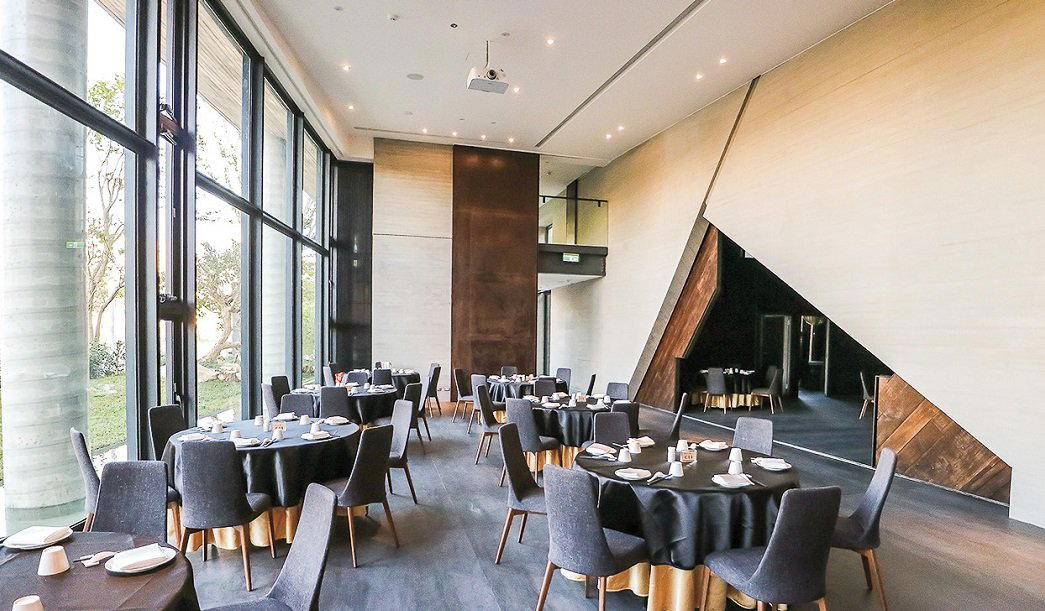
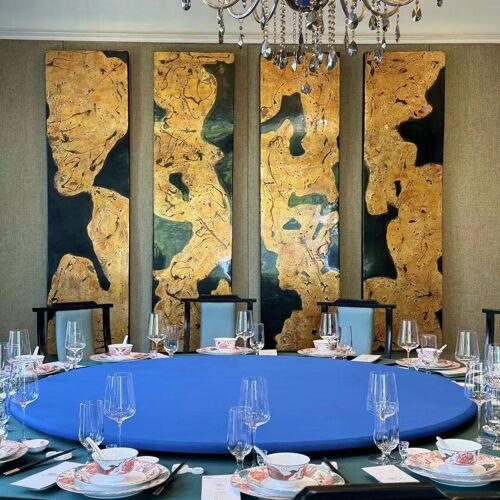
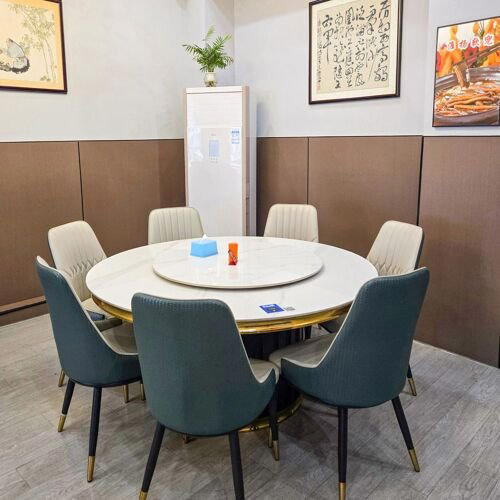
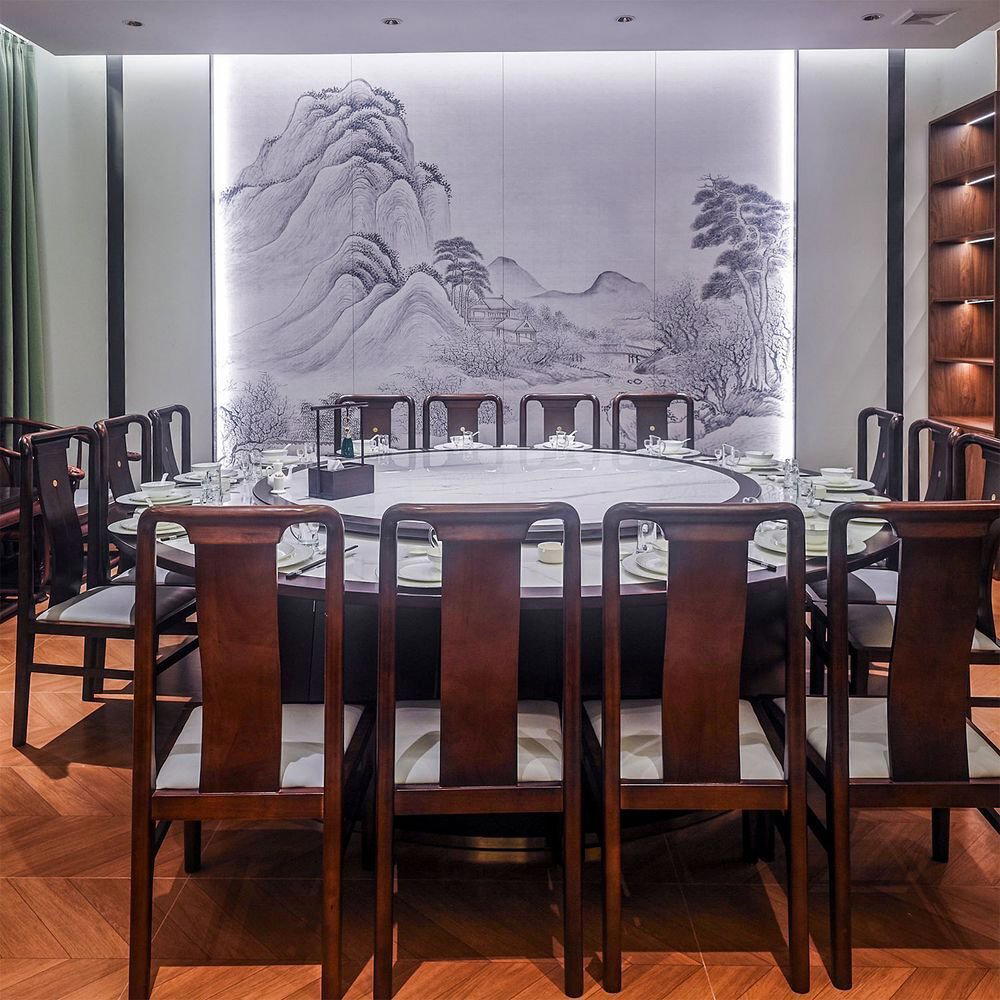
Michelin-starred Shang Palace Yangzhou elevates traditional Huaiyang cuisine through innovative artistry, where a young chef's "new three heads" trilogy reimagines classics like lion's head pork balls in an elegantly appointed setting with eighteen private rooms.

Pearl is the En Primeur Club membership app, where members save venues, book tables and use the concierge.
The menu
What to order
- Crispy-braised Veal
- Stewed Meatball, Yangzhou Style
- Yangzhou Fried Rice
Arriving at the Standard for Huaiyang Fine Dining
Wenchang West Road in Yangzhou's Hanjiang District is not a street that announces itself with the drama of a Shanghai bund or a Beijing hutong lane. The city moves at a quieter register, canals, classical gardens, the unhurried pace of a place that has been curating its cooking traditions for well over a millennium. Shang Palace sits within that context, and the address itself sets expectations: you are coming to Yangzhou, one of the four cities that define Huaiyang cuisine, to eat the food that helped shape imperial banquet culture across China. The surroundings outside are civic rather than theatrical. What the restaurant delivers inside is a different matter.
Huaiyang at This Level: What the Cuisine Actually Demands
To understand why eating at Shang Palace carries the weight it does, it helps to understand what Huaiyang cuisine requires of a kitchen. The tradition originates from the Huai River and Yangtze Delta region, encompassing Yangzhou, Zhenjiang, Huai'an, and Nanjing, and its reputation rests on knife technique, broth clarity, and a philosophy of letting primary ingredients carry the plate. There are no heavy spice arrays masking imprecision. A lion's head meatball reveals whether pork has been correctly textured by hand; a clear crab roe tofu soup betrays every shortcut in stock preparation. The cuisine is, in this sense, merciless about technique.
At the fine dining tier, Huaiyang kitchens face additional pressure: the canon is fixed enough that deviation reads as error, yet strict replication without refinement reads as museum cooking. The restaurants that hold Michelin recognition in this space, Shang Palace among them, alongside The Huaiyang Garden, Huaiyang in Macau and Huaiyang Fu (Dongcheng), Huaiyang in Beijing, tend to thread that needle by grounding seasonal selection in classical presentation while maintaining execution precision that justifies premium positioning.
Chef Daniel Sheung leads the kitchen at Shang Palace. The name carries some context worth noting: Sheung has worked in Chinese fine dining at the Michelin level, and his presence in Yangzhou rather than in one of the larger metropolitan markets signals something about the venue's intent. Eating the tradition in the city that owns it matters, both as culinary argument and as experience logic.
The Competitive Set and What the Price Point Says
At the ¥¥ price range, Shang Palace occupies the middle tier of Yangzhou's restaurant market rather than its ceiling. That positioning is worth parsing. Within the city, you can eat Huaiyang cooking across the full price spectrum: Cai Gen Xiang Xiao Guan at the ¥ level delivers accessible classics, and Mountain Restaurant operates in the same ¥¥ bracket. What Shang Palace's awards data adds to the ¥¥ tier is a Michelin star and international guide placement, a combination that makes it an outlier within its own price band rather than a direct premium spend.
Compare it against its Huaiyang peers in other Chinese cities, and the picture sharpens further. Huaiyang Fu (Dongcheng), Huaiyang in Beijing operates in a capital-city market where overhead and expectation both run higher. The Huaiyang Garden, Huaiyang in Macau competes in a gaming-tourism environment where Chinese regional fine dining is fighting for attention against international formats. Shang Palace exists in none of those contexts. It is in Yangzhou: a city where Huaiyang cuisine is ambient, where every other table in the restaurant likely knows exactly what a properly made wensi tofu should taste like, and where the standard of informed local scrutiny is built into the daily audience.
For broader reference on Chinese fine dining at Michelin level, Xin Rong Ji (Xinyuan South Road) in Beijing, 102 House in Shanghai, Ru Yuan in Hangzhou, Xin Rong Ji in Chengdu, Chef Tam's Seasons in Macau, and Imperial Treasure Fine Chinese Cuisine in Guangzhou represent the range of what formal Chinese dining looks like across different regional traditions and city contexts. Within that landscape, Shang Palace's proposition, classical Huaiyang, in Yangzhou, at a mid-range price point, with a Michelin star, occupies a genuinely distinct position.
Planning the Visit: Booking, Timing, and Getting the Most from the Trip
The editorial angle on Shang Palace is inseparable from its location, and that location requires advance thinking. Yangzhou is accessible from Nanjing (roughly an hour by high-speed rail) and from Shanghai (under two hours on the faster connections), which makes it practical as a day trip from either city or as a one-night stop on a longer Jiangsu itinerary. The address on Wenchang West Road places the restaurant within reach of Yangzhou's classical garden circuit, Slender West Lake sits nearby, so building a half-day of garden walking before or after lunch is a natural structure for the visit.
Shang Palace operates at a middle price point but holds Michelin recognition, which typically means advance booking is advisable rather than optional. No specific booking method is listed in the public record, so contacting the venue directly or through your hotel concierge in Yangzhou is the practical approach. For context on the city's broader restaurant and hospitality options, see our full Yangzhou restaurants guide, our full Yangzhou hotels guide, our full Yangzhou bars guide, and our full Yangzhou experiences guide for planning the surrounding itinerary.
Yangzhou's food culture is most active at lunch, a pattern consistent across many Jiangsu cities where the formal mid-day meal carries greater social weight than dinner. For visitors arranging a single meal, lunch is historically the stronger session for classical Huaiyang presentations. The OAD and Michelin rankings apply to the full operation, but timing your reservation for midday aligns with how the city itself eats its most considered food.
For those exploring the full range of Yangzhou's Huaiyang options beyond Shang Palace, Quyuan Plus and Quyuan Teahouse (Changchun Road) offer alternative formats within the city, while Hu Yuan Mei Shi represents another local option for those spending more than a single meal in town. Our full Yangzhou wineries guide covers what is available for those interested in extending the experience into local drink.
What the Awards Trajectory Means for the Visitor
The upward movement on OAD rankings across consecutive years, from recommended in 2023, to 291st in Asia and 183rd Classical in 2024, to 320th in Asia and 171st Classical in 2025, alongside the Michelin star, describes a kitchen gaining traction with the international critical community rather than plateauing. For the traveller making a decision now, that trajectory matters: you are visiting at a point where the recognition is established but the restaurant is not yet in the tier where booking difficulty becomes prohibitive. That window tends to be the most rewarding time to visit a restaurant in ascent.
The Classical category ranking on OAD, which applies to restaurants preserving and executing established culinary traditions at high precision rather than innovating beyond them, is a meaningful designation for a Huaiyang kitchen. It positions Shang Palace not as a restaurant that is reworking the canon but as one that is executing it at a level the guide's network of informed eaters considers worth tracking internationally. For travellers who come to Yangzhou specifically to eat Huaiyang cuisine as it has been cooked here for centuries, that framing is the endorsement that matters most.
What should I eat at Shang Palace?
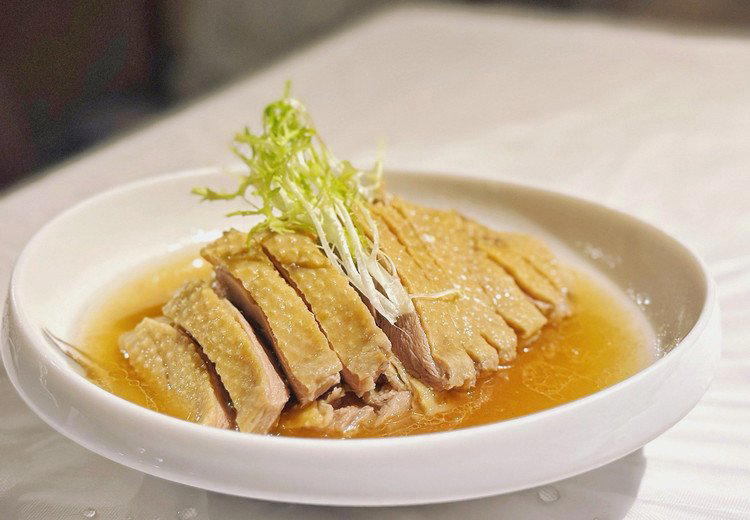
Shang Palace's awards recognition is built on the Huaiyang canon: the cuisine for which Yangzhou is the primary source. The classical dishes of the tradition, including preparations built around pork, freshwater fish, crab roe, and hand-cut tofu, are the direct evidence of what has earned the kitchen its Michelin star and OAD placement. Chef Daniel Sheung leads the kitchen, and the restaurant's Classical ranking from OAD signals that the approach here is precision within the tradition rather than reinvention of it. No specific dishes are confirmed in the public record, so ask for the kitchen's seasonal selection when booking. The ¥¥ price positioning means a considered meal is accessible without the ceremonial spending commitment of a tasting-menu-only format.
Frequently asked questions
What part of town is Shang Palace in?
Shang Palace is located at 472 Wenchang W Rd, Hanjiang District, Yangzhou, Yangzhou, Jiangsu, China, 225009, Yangzhou.
What awards or recognition does Shang Palace have?
Shang Palace has received recognition including: Opinionated About Dining Classical in Europe Ranked #171 (2025); Opinionated About Dining Top Restaurants in Asia Ranked #320 (2025); Michelin 1 Star (2025); Opinionated About Dining Classical in Europe Ranked #183 (2024); Opinionated About….
What should I eat at Shang Palace?
Shang Palace holds its Michelin star and consecutive OAD Asia rankings on the strength of the Huaiyang canon: the precise knife work, slow-braised preparations, and delicate stock-based dishes for which Yangzhou is the primary source city in China. The classical repertoire includes lion's head meatballs, Yangzhou fried rice in its original form, and soft-shell tofu preparations that require the kind of technical control the kitchen's recognition is built on. Order from the core Huaiyang menu rather than peripheral dishes to understand what the awards trajectory is tracking.
What's the price range at Shang Palace?
Pricing at Shang Palace is listed as ¥¥.
At a Glance
A quick peer list to put this venue’s basics in context.
| Venue | Cuisine | Price | Awards | Notes |
|---|---|---|---|---|
| Shang PalaceThis venue (the venue you are viewing) | Huaiyang and Cantonese Chinese | Not listed | 1 Michelin Star | Not listed |
| Cai Gen Xiang Xiao Guan | Huaiyang | Not listed | Michelin Bib Gourmand | Not listed |
| Cheng Yuan | Chinese Contemporary Fusion | Not listed | Michelin Plate · Black Pearl 1 Diamond | Chinese Contemporary |
| Fan Shui Chang Yu Mian (North Jiefang Road) | Yangzhou Noodles | Not listed | Michelin Bib Gourmand | Noodles |
| Mountain Restaurant | Huaiyang Cuisine | Not listed | Michelin Plate | Huaiyang |
| 扬州狮子楼大酒店(邗江店) - Yangzhou Lion Pavilion Hotel | Traditional Huaiyang Cuisine | $20–30 | La Liste Top Restaurants | Chinese Cuisine |
Recognition history
Dated appearances from independent guides and award organizations, with the underlying list record or original source where available.
Michelin 1 Star
Michelin
Opinionated About Dining Top Restaurants in Asia Ranked #320
Opinionated About Dining
Full recognition history (3 entries)
Opinionated About Dining Top Restaurants in Asia Ranked #291
Opinionated About Dining
Continue exploring
More in Yangzhou
Shang Palace
The wine
- Selections
- 360
- Bottles in cellar
- 1,000
- List strengths
- France
Details
- Elegant
- Sophisticated
- Classic
- Business Dinner
- Celebration
- Private Event
- Group Dining
- Private Dining
- Hotel Restaurant
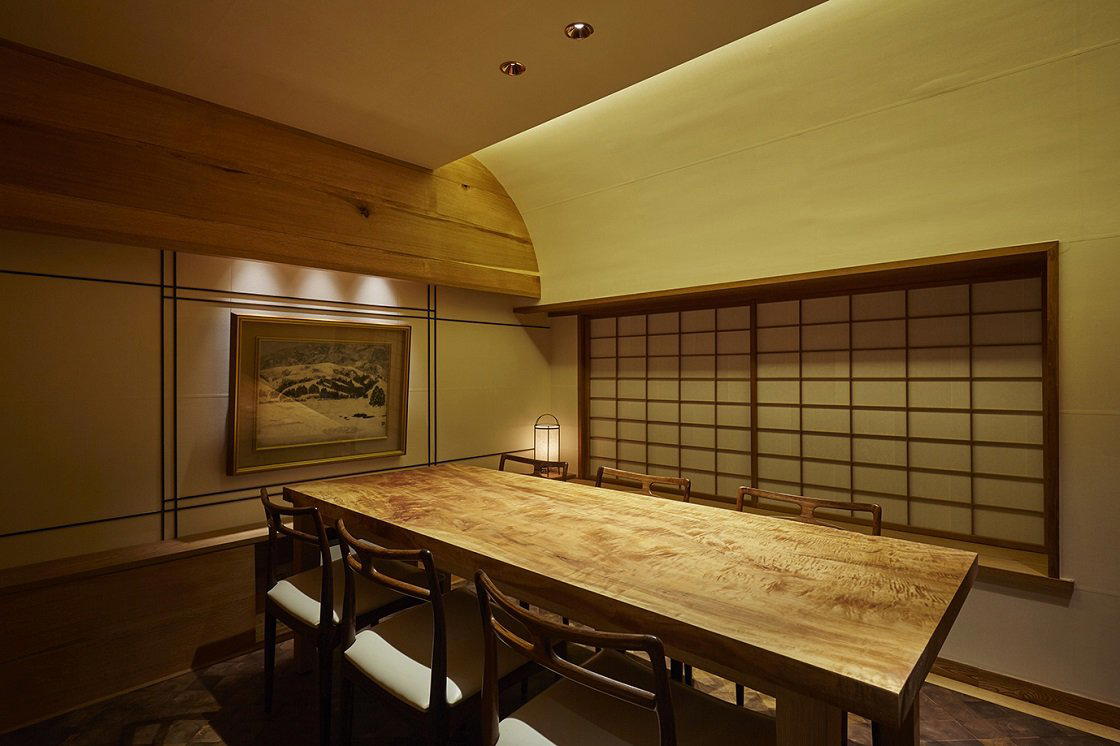
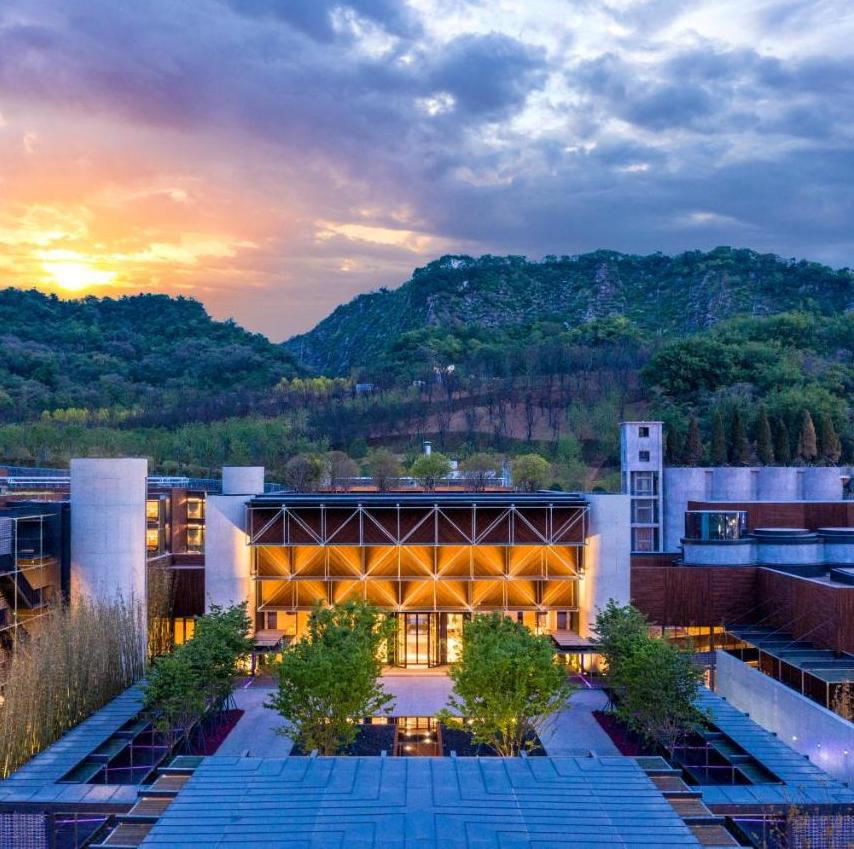
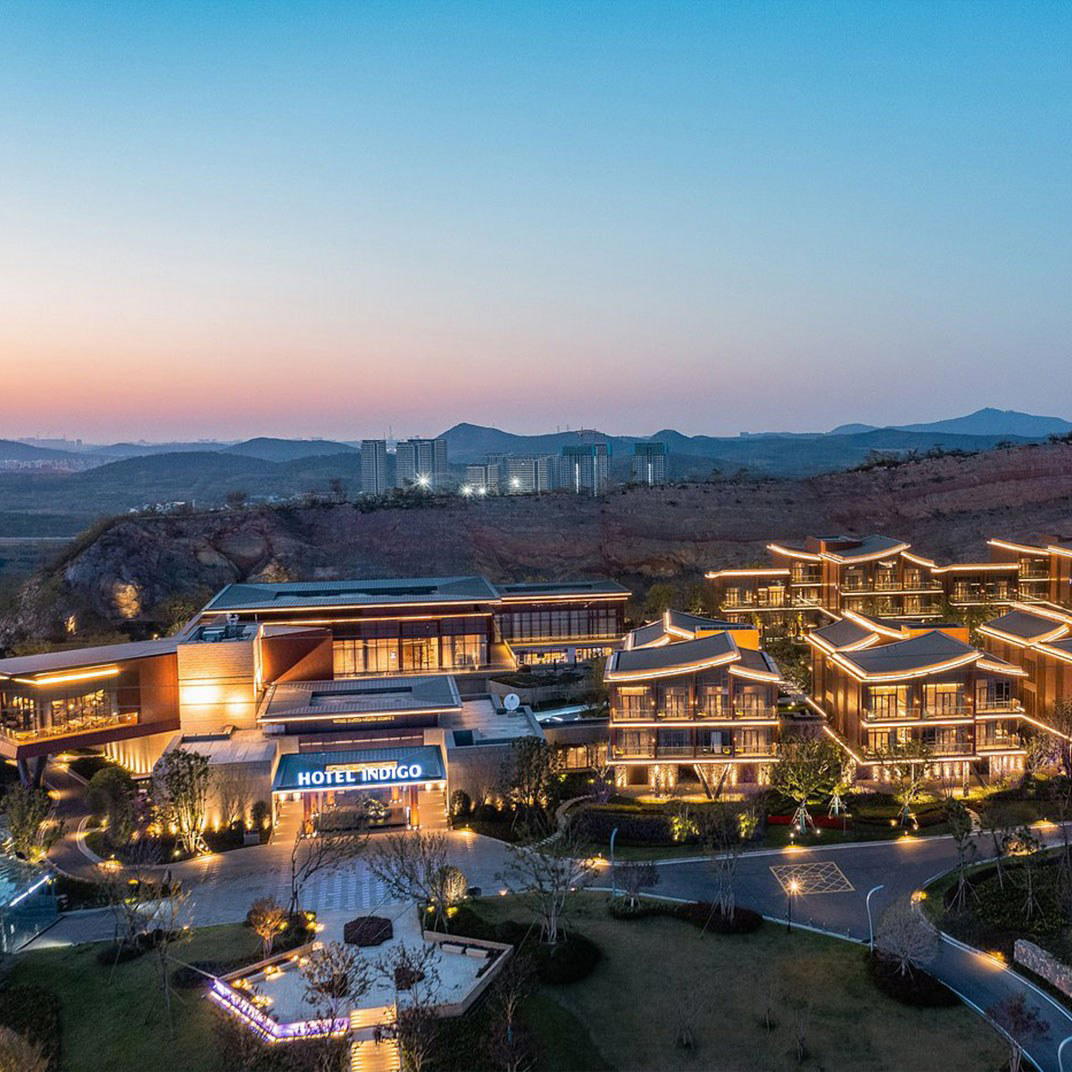
Elegant, traditional Chinese fine-dining atmosphere with refined decor.