





2 Michelin Stars · La Liste Top Restaurants · Relais Chateaux Award
Our verdict
King's Joy holds two Michelin stars and a Green Star in Beijing's Dongcheng district, placing it among China's most decorated plant-based restaurants. Operating from a bamboo-shaded hutong courtyard near the Imperial Academy, it works entirely within a vegetarian format, with mushrooms carrying particular weight across a seasonally driven menu. At the ¥¥¥¥ price tier, it sits alongside Beijing's most serious fine-dining addresses.

Pearl is the En Primeur Club membership app, where members save venues, book tables and use the concierge.
A Hutong Courtyard and the Case for Vegetarian Fine Dining in Beijing
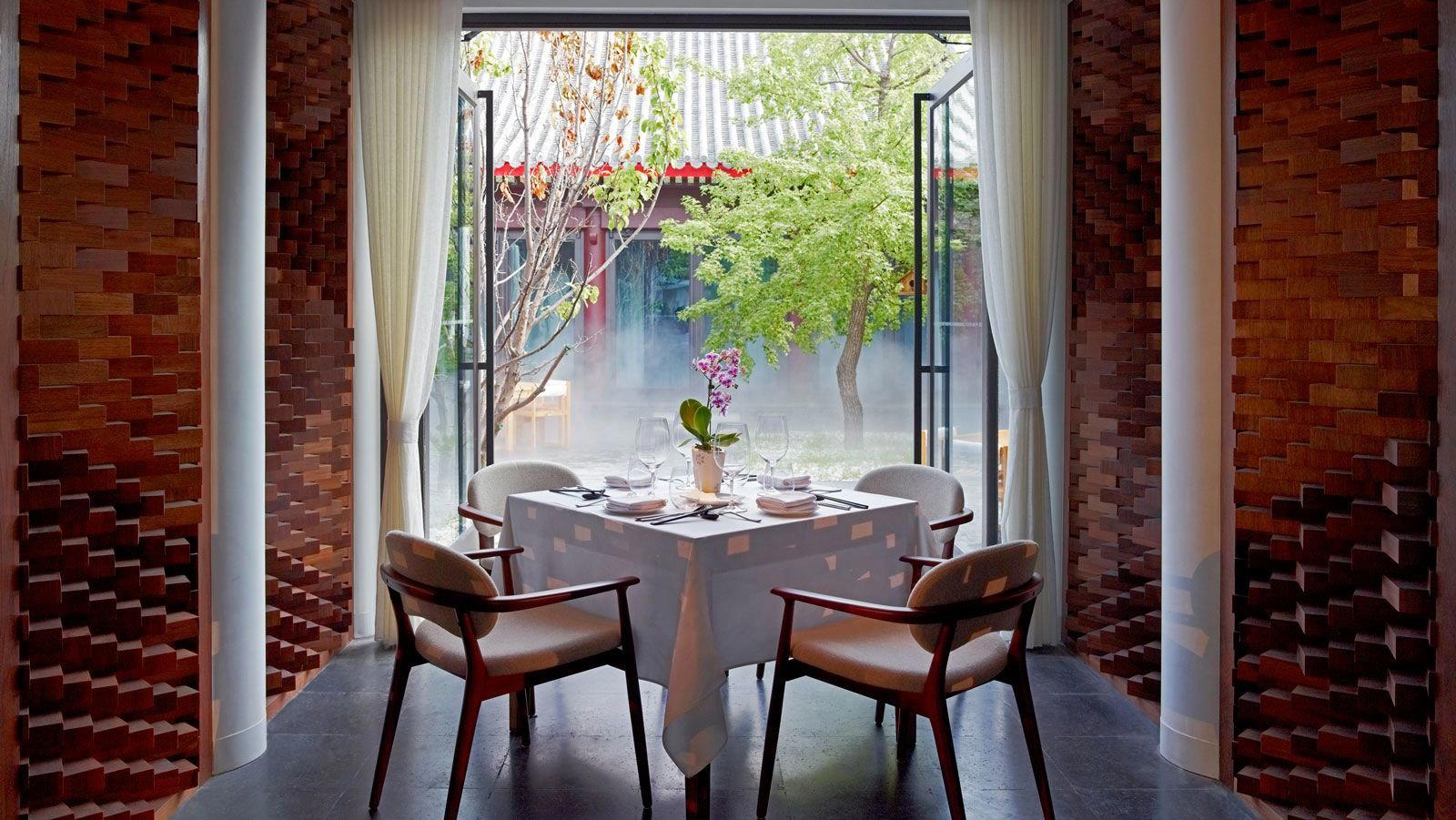
The approach to King's Joy along Wudaoying Hutong sets a particular register before you reach the door. This stretch of Dongcheng, running near the old Imperial Academy (Guozijian), is among Beijing's more composed hutong corridors, lower foot traffic than the tourist-facing lanes further south, older residential fabric, the kind of street where the architecture still reads as something other than a backdrop. Arriving here for a serious meal feels less like a restaurant visit and more like being admitted to a private quarter of the city that most visitors pass without noticing.
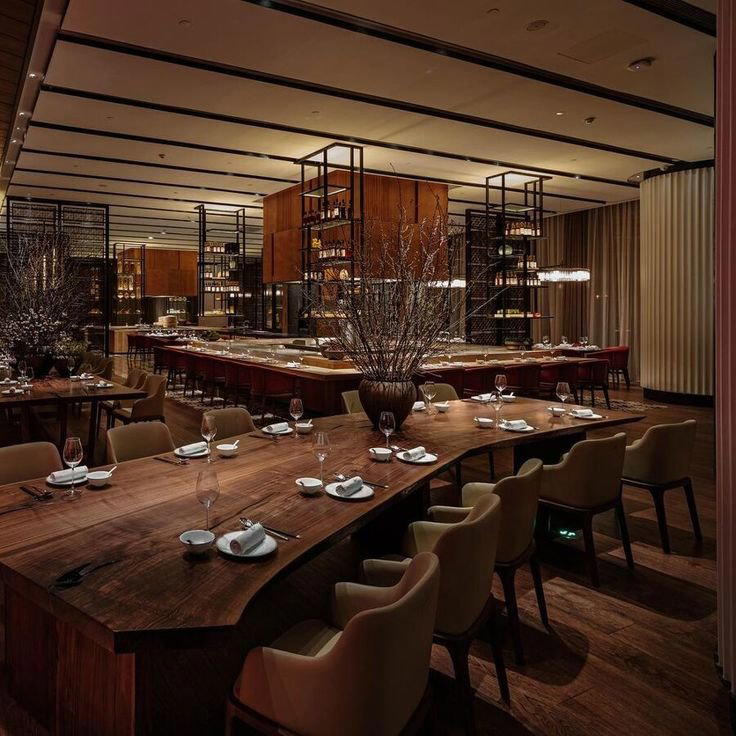
Inside, the bamboo-shaded courtyard continues that logic. The space signals restraint before the food arrives: natural materials, considered proportions, none of the maximalist interior design that defines a certain tier of Chinese fine dining. That physical environment is not incidental. In a city where premium restaurant spaces tend toward either dynastic grandeur or sleek modernity, King's Joy occupies a more considered middle position, one that aligns closely with what the kitchen is doing.
Where King's Joy Sits in Beijing's Fine-Dining Tier
Beijing's top-end restaurant scene has consolidated around a recognisable cohort: two and three Michelin-starred addresses spread across Dongcheng and Chaoyang, the majority working in Chinese regional formats or international contemporary idioms. Within that group, plant-based restaurants operating at the ¥¥¥¥ price tier represent a smaller, more specific subset. King's Joy holds two Michelin stars and a Michelin Green Star (2025), alongside inclusion in Les Grandes Tables du Monde and 77 points in the 2026 La Liste rankings (76 points in 2025). The Opinionated About Dining ranking placed it 194th in Asia in 2025.
The comparison with Lamdre is the most direct: both operate in the vegetarian ¥¥¥¥ bracket in Beijing, but King's Joy's double-star standing and its specific technical emphasis on mushrooms creates a distinct point of differentiation within that narrow category. For context beyond Beijing, the plant-based fine-dining trajectory King's Joy represents has parallels at addresses like Ru Yuan in Hangzhou and 102 House in Shanghai, though the Beijing approach here is rooted specifically in northern Chinese culinary heritage rather than in either the Chan Buddhist or contemporary fusion frameworks those restaurants work within.
The Lunch and Dinner Divide
Across Beijing's fine-dining tier, lunch and dinner at the same address can function as meaningfully different experiences, different pacing, different guest profiles, sometimes different menus or value structures. At King's Joy, that divide carries its own character. Lunch service draws a more local, often repeat-visitor clientele: the Dongcheng setting and proximity to cultural institutions in the area attracts guests who treat the meal as part of a longer day in this part of the city rather than as an evening destination in its own right. The courtyard reads differently under afternoon light filtering through bamboo, quieter, more contemplative, easier to hold as a long meal without the ambient energy of a full evening room.
Evening service shifts the register. The dim of the courtyard and the more formal pacing of dinner tends to extend the meal's duration and its ceremonial quality. For first-time visitors, dinner is the natural format for a full engagement with the tasting structure. For those who have been before, or who are visiting as part of a day in Dongcheng that already includes the Lama Temple or the old Guozijian street, lunch offers a different and arguably more embedded version of the same kitchen. Neither is a lesser option, they are separate arguments for the same place.
At ¥¥¥¥ pricing, King's Joy occupies the same bracket as Lu Shang Lu and the other serious addresses in the city. Lunch at this tier often represents a better value-to-experience ratio than the equivalent dinner, and that logic applies here: the kitchen's full range is accessible at both services, and the courtyard at noon is worth experiencing on its own terms.
The Kitchen's Logic: Mushrooms as a Technical Argument
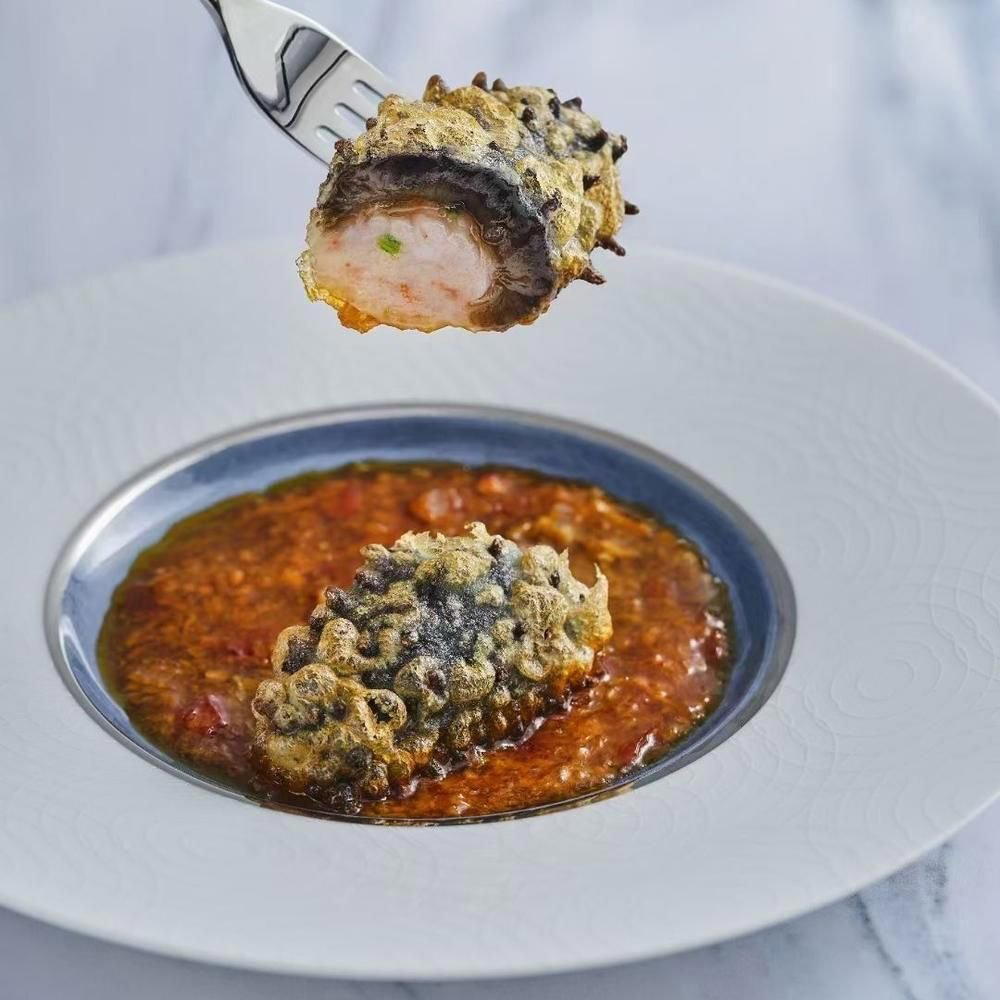
The plant-based format at King's Joy is not primarily a dietary position, it is a technical one. The kitchen's use of mushrooms across a range of preparations functions as an argument about what is achievable within vegetable-only cooking: that range and depth of flavour, variation in texture, and a sense of structural progression through a meal do not require animal protein as a scaffold. La Liste's notes on the kitchen describe a program in which all possible culinary techniques are brought to bear on seasonal vegetable ingredients, with mushrooms carrying a central role and variety in taste and mouthfeel as explicit objectives.
This is a specific claim to take seriously. Chinese vegetarian cooking has a long history, particularly in Buddhist temple cuisine, where the aim has traditionally been to simulate meat dishes using tofu and wheat gluten. King's Joy operates in a different register: the ambition is not simulation but substitution through complexity, using the full range of mushroom varieties available in Chinese cooking, and the spectrum of techniques applicable to them, to build dishes that do not need to reference meat as a reference point. That is a harder technical brief, and the Michelin committee's two-star assessment, sustained across 2024 and 2025, reflects a judgment that the kitchen is delivering on it consistently.
Gary Yin, a third-generation chef, brings family lineage to the program. In the context of Chinese fine dining, generational continuity matters not as biography but as culinary credibility: it implies an accumulated knowledge of classical technique that informs how contemporary the kitchen can afford to be without losing its grounding. The equivalent dynamic operates at addresses like Chef Tam's Seasons in Macau and Imperial Treasure Fine Chinese Cuisine in Guangzhou, where deep technical lineage underwrites a more contemporary presentation style.
How King's Joy Reads Against International Plant-Based Fine Dining
The two Michelin stars at King's Joy place it in a small global cohort of plant-based restaurants operating at that level. The comparison set at this tier is limited: internationally, vegetarian fine dining at two-star standard appears at addresses across Europe and North America, but the specifically Chinese technical framework here, the reliance on Chinese mushroom varieties, the seasonal structure derived from the Chinese culinary calendar, the courtyard format, creates a version of this category that does not map directly onto any Western equivalent. Addresses like Le Bernardin in New York City or Atomix in New York City represent comparable levels of technical ambition and award recognition in their respective categories, but the cultural and ingredient frameworks are entirely distinct. The point is not that King's Joy is better or worse, it is that it occupies a category with very few direct peers at this level of recognition.
For readers coming to Beijing from other parts of China, the regional contrast is worth noting. The Cantonese fine-dining tradition, well represented at Dai Yuet Heen in Nanjing and at Xin Rong Ji in Chengdu, operates with a different set of seasonal and technical priorities. King's Joy's northern Chinese setting shapes its ingredient sourcing and its sense of occasion in ways that distinguish it clearly from southern Chinese fine dining in the same award tier.
Planning a Visit
King's Joy is located at 2 Wudaoying Hutong in Dongcheng, accessible from Beijing Capital International Airport (PEK) via airport express to Dongzhimen and then a short taxi or rideshare to the hutong entrance. GPS coordinates 39.9482, 116.4161 place it accurately on mapping applications, which is useful given that hutong addresses can be difficult to locate without a precise pin. Advance booking is advisable at this level: the courtyard format implies limited covers, and the restaurant's sustained Michelin standing means demand runs ahead of availability, particularly for weekend dinner slots. For broader context on where King's Joy sits within Beijing's dining scene, see our full Beijing restaurants guide, as well as our full Beijing hotels guide, our full Beijing bars guide, our full Beijing wineries guide, and our full Beijing experiences guide.
Frequently asked questions
Is King's Joy expensive?
Pricing at King's Joy is listed as ¥¥¥¥.
Who's behind the kitchen at King's Joy?
The chef associated with King's Joy is Gary Yin.
What do regulars order at King's Joy?
King's Joy does not publish a fixed à la carte menu in the conventional sense, so regulars typically follow the seasonal tasting format. La Liste's 2026 entry specifically singles out the mushroom preparations as the kitchen's defining strength, noting that mushrooms are given a structurally significant role across courses and treated with the full range of available culinary techniques. Seasonal vegetable ingredients rotate the offering, so repeat visits across different months yield meaningfully different menus.
What cuisine category does King's Joy fall under?
What's King's Joy's location?
King's Joy is located at 2 Wudaoying Hu Tong, 国子监 Dongcheng, Beijing, China, 100027, Beijing.
Is King's Joy award-winning?
King's Joy has received recognition including: La Liste Top Restaurants (2026): 77pts; King's Joy has built a strong reputation around its plant-based offerings. The secret weapon here is mushrooms, which are given an important role in the creations. All possible culinary techniques are….
Do they take walk-ins at King's Joy?
King's Joy operates at the 2-Michelin-Star level in one of Beijing's most-visited hutong stretches, which means walk-in availability is limited in practice. Advance reservations are the standard approach at this price tier (¥¥¥¥). No phone number or online booking link is currently listed in public records, so contacting the restaurant directly at 2 Wudaoying Hutong, Dongcheng is the recommended first step.
A Lean Comparison
| Venue | Cuisine | Price | Awards | Notes |
|---|---|---|---|---|
| King's JoyThis venue (the venue you are viewing) | Modern Vegetarian Chinese Fine Dining | $200–300 | 2 Michelin Stars · La Liste Top Restaurants | Not listed |
| Jing | Modern French with Asian Influences | $300–500 | 1 Michelin Star · Black Pearl 1 Diamond | French Contemporary |
| Xin Rong Ji (Xinyuan South Road) | Taizhou Chinese Fine Dining | $300–500 | 3 Michelin Stars · World's 50 Best #84 | Taizhou |
| Chao Shang Chao (Chaoyang) | Modern Chaoshan (Teochew) Fine Dining | $300–500 | Michelin Plate · La Liste Top Restaurants | Chao Zhou |
| Lamdre | Modern Plant-Based Chinese Vegetarian | Not listed | 2 Michelin Stars · World's 50 Best #17 | Vegetarian |
| Jingji | Imperial Beijing Royal Cuisine | $200–300 | 2 Michelin Stars · La Liste Top Restaurants | Beijing Cuisine |
Recognition history
Dated appearances from independent guides and award organizations, with the underlying list record or original source where available.
Michelin 2 Stars
Michelin
La Liste Top Restaurants
La Liste
Les Grandes Tables du Monde Member
Les Grandes Tables du Monde
Opinionated About Dining Top Restaurants in Asia Highly Recommended
Opinionated About Dining
Relais Chateaux Award
Relais Chateaux
Full recognition history (11 entries)
La Liste Top Restaurants
La Liste
Opinionated About Dining Top Restaurants in Asia Ranked #194
Opinionated About Dining
The Best Chef Three Knives
The Best Chef
We're Smart World 4 Radishes
We're Smart World
World's Best Wine Lists Awards WBWL 2-Star
World's Best Wine Lists Awards
Michelin 2 Stars
Michelin