Our verdict
Dining on Jianguo Road: What the Setting Signals Jianguo Road cuts through Chaoyang, one of Beijing's most commercially active districts, threading past embassy compounds, international hotels, and the kind of mid-block addresses that require a...

Pearl is the En Primeur Club membership app — saves, bookings, and concierge access live there. Same editors, same standards.
- Address
- ç²83 Jianguo Rd, åéå ¡ Chaoyang, Beijing, China, 100026
- Phone
- +861059088888
- Website
- ritzcarlton.com
- Directions
- Get directions
Dining on Jianguo Road: What the Setting Signals
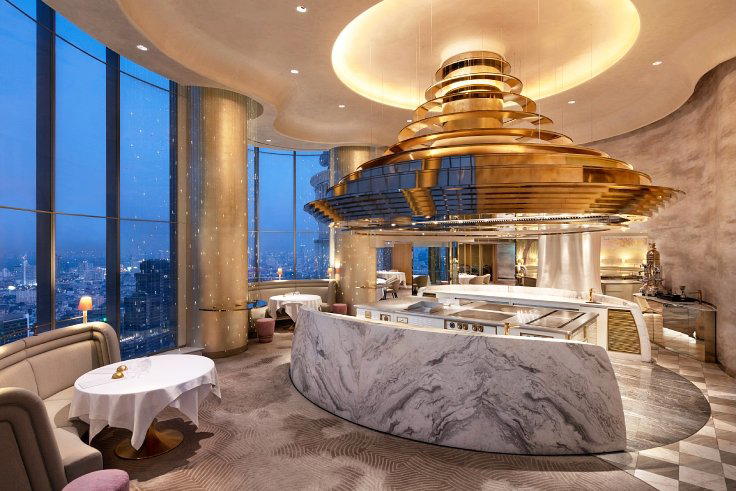
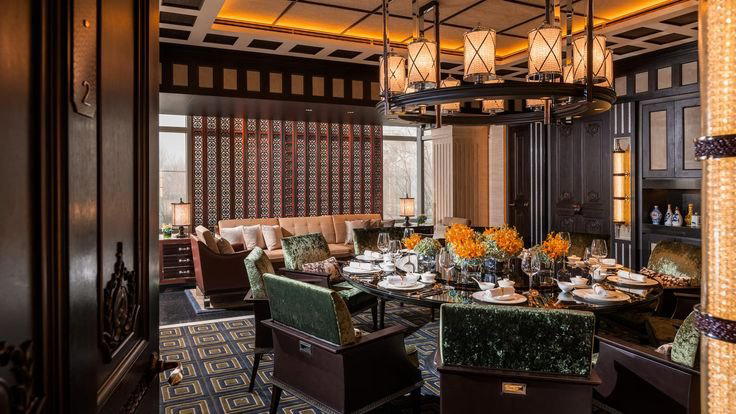
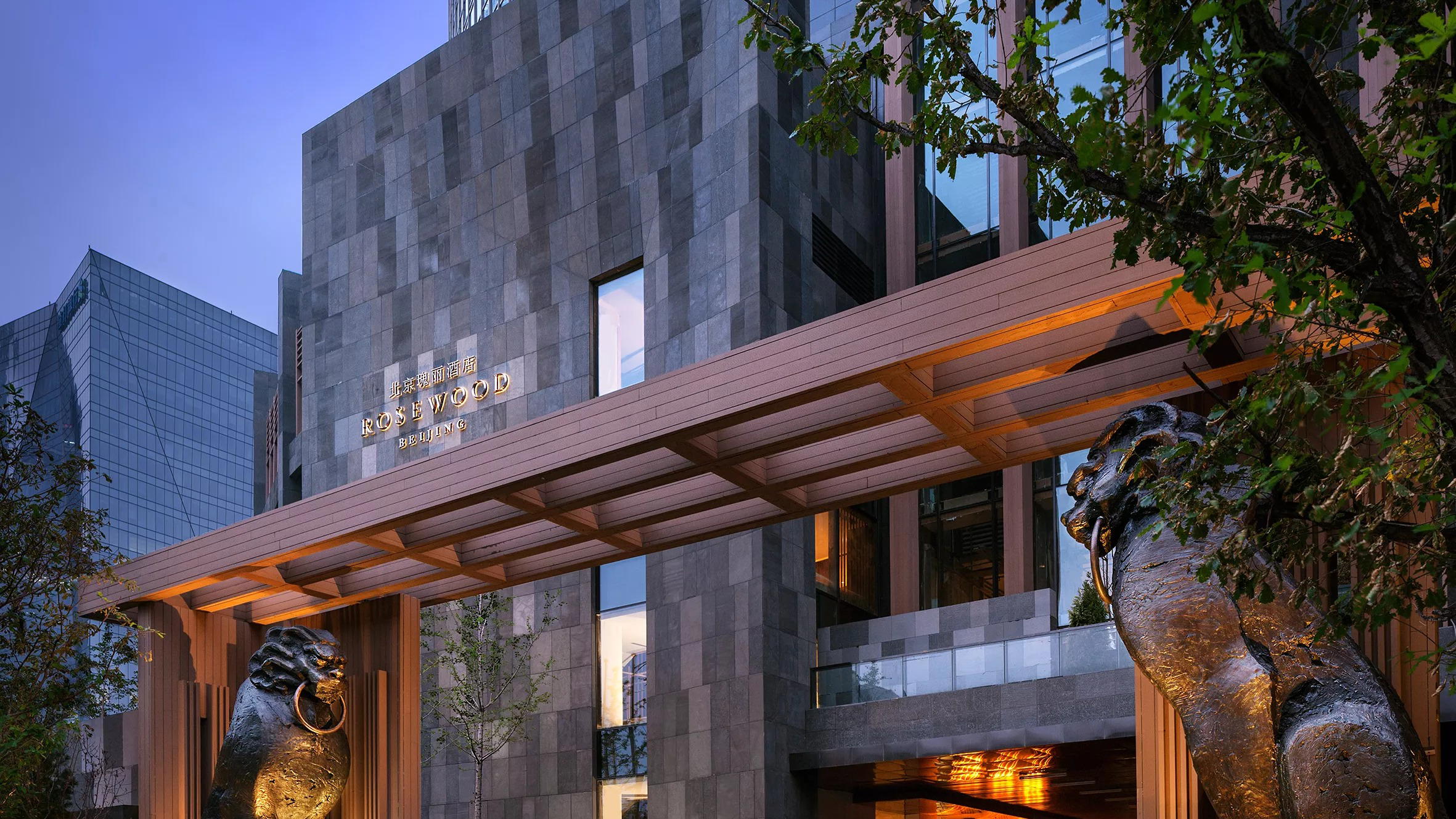
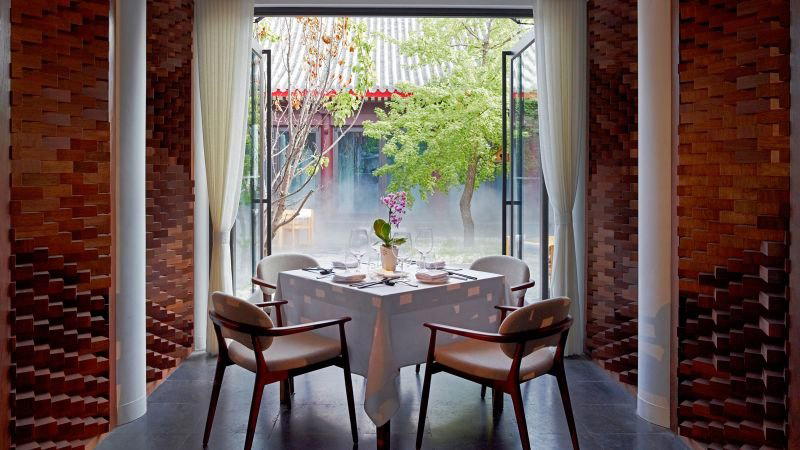
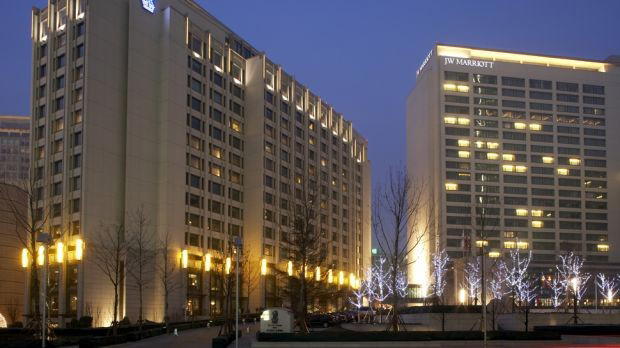
Jianguo Road cuts through Chaoyang, one of Beijing's most commercially active districts, threading past embassy compounds, international hotels, and the kind of mid-block addresses that require a second look to find. The restaurant at number 83 occupies a building whose exterior gives little away — a pattern common to formal Chinese dining rooms that reserve their presence for the interior. In Beijing's premium dining tier, this is almost a convention: the ceremony begins at the door, not on the street.
That orientation toward ritual and interior experience places this address within a recognisable category of Beijing formal dining — venues where the room, the sequence of service, and the pacing of dishes carry as much meaning as the food itself. Chaoyang's dining identity has shifted considerably over the past decade, and today the district holds some of the city's most serious Chinese restaurants alongside international fine dining. Within that mix, addresses emphasising traditional dining customs occupy a smaller, more deliberate niche.
The Ritual Structure of a Formal Chinese Meal
Across Chinese fine dining, the meal is not a single event but a sequenced progression, cold preparations first, then hot dishes arriving in a prescribed order, soup often appearing mid-meal rather than at the opening, and the whole structure governed by an implicit understanding between kitchen and table about pacing. This is not incidental to the experience; it is the experience. The guest who approaches such a meal expecting a Western tasting-menu logic, escalating courses building to a climax, will misread what is happening at the table.
In Beijing specifically, the formal dining ritual draws on a long tradition of banquet culture, where the table is a site of social and professional life, and where the host's command of ordering protocol signals as much as the food itself. Dishes ordered communally and shared, rather than plated individually, maintain that social architecture. For visitors less familiar with this structure, the rhythm can feel unhurried almost to the point of stillness, which is precisely the point. This kind of dining is not about throughput.
Restaurants in this register typically operate across longer meal durations than Western fine dining counterparts. A table for four at a serious Beijing dining room might be expected to occupy its seats for two to three hours without any sense of pressure from the room. That expectation of time is built into the format, and the service cadence is calibrated accordingly. Comparable formal dining rooms in other Chinese cities, Xin Rong Ji in Chengdu or Ru Yuan in Hangzhou, operate within the same general architecture, though regional inflection shifts the substance of what arrives at the table.
Chaoyang's Position in Beijing's Premium Dining Tier
Beijing's formal Chinese dining market is distributed unevenly across districts. Chaoyang holds a concentration of high-end addresses partly because of its hotel density and international business traffic, and partly because its commercial zoning supports large-footprint restaurant spaces that older hutong districts cannot. The comparison set for a Chaoyang formal dining room includes venues with established credentials: Xin Rong Ji on Xinyuan South Road, operating in the ¥¥¥¥ price tier with a Taizhou cuisine focus, and Chao Shang Chao in Chaoyang, also at ¥¥¥¥, representing the Chaozhou tradition. Both sit in a premium bracket where per-person spend at dinner typically runs well above 500 RMB before beverages.
Some of the district's more considered dining rooms have maintained local clientele precisely by not orienting toward international review culture. Lamdre, at the ¥¥¥¥ tier with a vegetarian focus, and Jingji, representing Beijing cuisine at the same price point, both demonstrate that serious formal dining in the capital is not a single-cuisine proposition.
For context on how Beijing's formal dining sits within broader Chinese fine dining, it is worth noting the range across the country: Imperial Treasure Fine Chinese Cuisine in Guangzhou and Dai Yuet Heen in Nanjing each approach the formal Chinese meal from distinct regional traditions, while venues like Chef Tam's Seasons in Macau and 102 House in Shanghai represent the contemporary direction of Chinese haute cuisine. The Beijing dining room, by contrast, often positions itself within continuity rather than rupture.
What to Eat: Reading the Menu at a Formal Beijing Table
What can be said with confidence is that formal Beijing dining rooms in Chaoyang tend to draw from a repertoire shaped by northern Chinese tradition, preparations that emphasise texture and temperature contrast, the use of vinegar and fermented condiments as flavour anchors, and a preference for technique-intensive cold dishes that function as an opening statement. Braised and slow-cooked proteins, Beijing-style roasted preparations, and seasonal vegetable treatments following the northern agricultural calendar are the grammar of this kind of room.
Ordering strategy matters at a table of this type. A group of four should typically anchor the meal around two or three substantial dishes, supplement with two or three lighter preparations, and resist the tendency to over-order, a mistake that compresses the pacing that makes the format work. Asking the service team to guide the sequence, rather than ordering everything simultaneously, is consistent with how these rooms are designed to operate.
For dining rooms that have developed a following for vegetarian preparations within the formal Chinese context, King's Joy in Beijing and Lamdre offer points of comparison. Across the region, Dingshan·Jiangyan in Suzhou, Fleurs Et Festin in Xiamen, Jiangnan Wok·Rong in Fuzhou, and Shang Palace in Yangzhou each offer distinct regional takes on formal Chinese dining ritual. Internationally, formal tasting menus at venues like Atomix in New York City and Le Bernardin in New York City share the emphasis on service pacing and sequencing, even when the cuisine and cultural context differ substantially.
Planning a Visit
The address at 83 Jianguo Road, Chaoyang, is accessible from multiple metro lines serving the eastern business corridor. Reservations for formal Chinese dining in Chaoyang are generally advisable for weekday dinners and close to essential on weekend evenings, when the district's business dining traffic peaks. Dress expectations at rooms of this category tend toward smart casual at minimum; formal business attire is common among the local clientele.
For a broader view of where this address fits within Beijing's dining options, the full Beijing restaurants guide maps the city's major dining districts and formats in more detail.
Frequently asked questions
What's 丽æå¡å°é¡¿é åºçé¤å's location?
丽æå¡å°é¡¿é åºçé¤å is located at ç²83 Jianguo Rd, åéå ¡ Chaoyang, Beijing, China, 100026, Beijing.
What kind of setting is 丽枫酒店顿顿有东北菜?
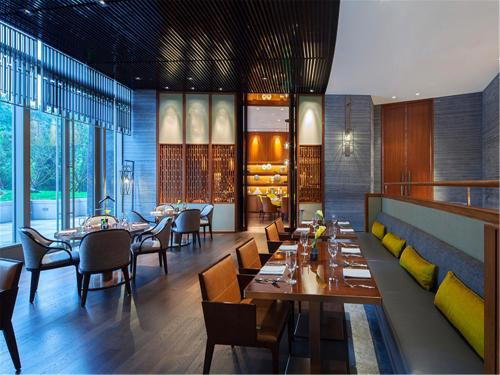
The restaurant sits within a hotel property at 83 Jianguo Road, Chaoyang — a corridor that runs through Beijing's eastern business district alongside embassy compounds and international hotel addresses. That positioning shapes the room: expect a formal dining environment oriented toward business meals and structured group dining rather than casual drop-in service. Chaoyang's concentration of premium dining addresses sets a baseline expectation for presentation and service formality.
What should I eat at 丽枫酒店顿顿有东北菜?
The venue name references dongbei — Northeast Chinese — cooking, a tradition built around hearty preparations: slow-braised meats, fermented vegetables, and wheat-based staples such as hand-rolled noodles and dumplings. A formal Chinese meal at an address of this type typically follows a sequenced structure: cold dishes arrive first, followed by hot preparations in a prescribed order, with soup positioned late in the progression.
Is 丽枫酒店顿顿有东北菜 suitable for a business dinner in Beijing?
The address at 83 Jianguo Road places it directly within Chaoyang's commercial core, where much of Beijing's corporate hospitality is concentrated. Hotel-based restaurants in this corridor are structured to accommodate private dining rooms and group bookings, which are standard requirements for business entertainment in China.
Category Peers
Comparable venues nearby, for context on price, style, and recognition.
| Venue | Cuisine | Price | Awards | Notes |
|---|---|---|---|---|
| 丽æå¡å°é¡¿é åºçé¤åThis venue — the venue you are viewing | chinese | Not listed | Not listed | Not listed |
| XINCHANGFU | Modern Hunan Cuisine | $50–100 | Black Pearl 1 Diamond | Beixiaguan |
| Tongheju | Traditional Shandong Fushan Cuisine | $50–100 | Michelin Bib Gourmand | Yuetan |
| Shanghai | Beijing Cuisine | Not listed | Not listed | Gongrentiyuchang |
| Siji Minfu Beijing | Traditional Peking Duck | $20–30 | Not listed | Dongcheng |
| 采逸轩 | chinese | Not listed | Not listed | Sanlitun |