



1 Michelin Key · La Liste Top Hotels · Forbes 4-Star
At the intersection of Jinyu Hutong and Dongcheng District, Waldorf Astoria Beijing occupies a copper-and-bronze latticework tower designed to weather beautifully over time. The 176-room property, part of the Hilton Worldwide portfolio, earned China's Leading Luxury Hotel at the 2025 World Travel Awards and 90.5 points on the 2026 La Liste Top Hotels ranking. Interiors by Yabu Pushelberg, a Peacock Alley bar lounge, and a private hutong suite compound set it apart from the capital's other five-star addresses.

Pearl is the En Primeur Club membership app — saves, bookings, and concierge access live there. Same editors, same standards.
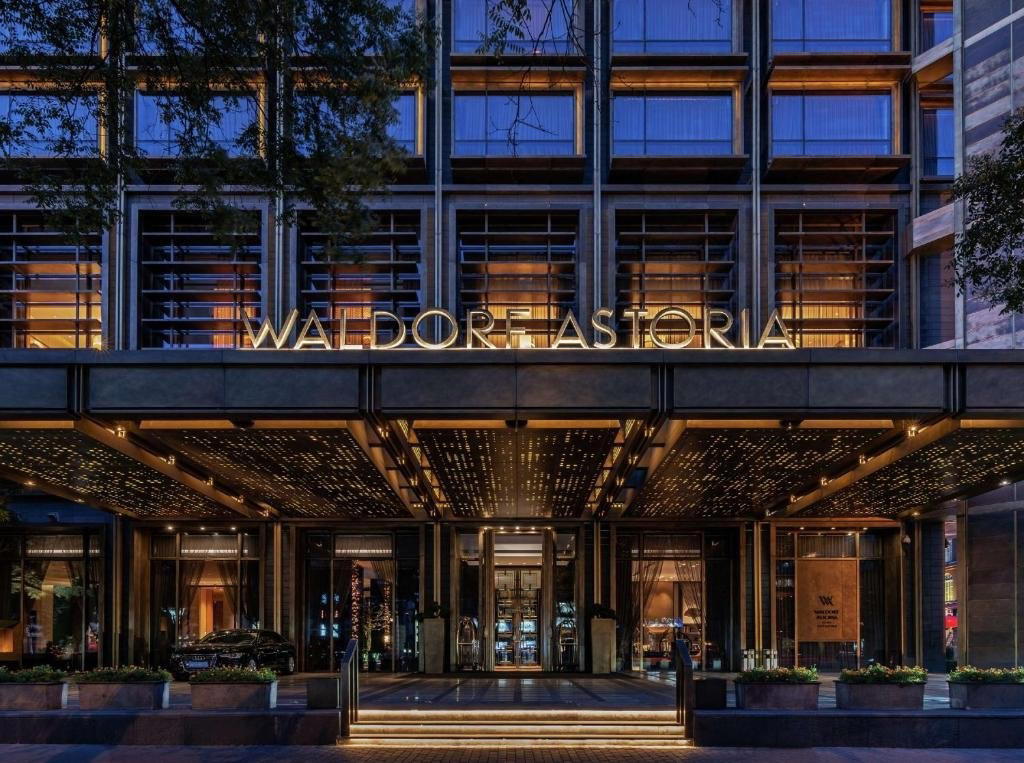
Where Beijing's Old City Meets a New Idea of Luxury
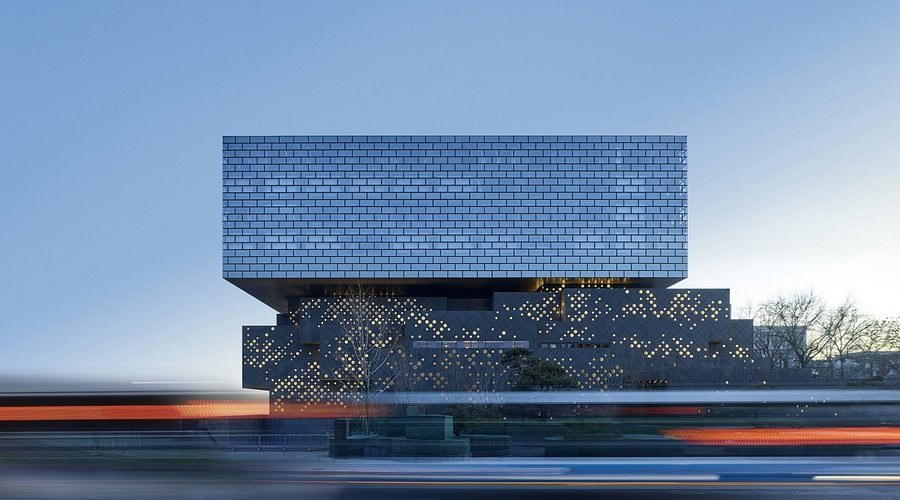
Approaching from Jinyu Hutong, the building announces itself before you reach the entrance. The facade, designed by the Chicago and Beijing-based practice Adrian Smith + Gordon Gill, is a lattice of copper and bronze panels engineered to oxidize gradually, shifting tone as the years pass. It is a knowing architectural gesture in a district where the Forbidden City's terracotta walls are visible just a few blocks to the west. Beijing's top-tier hotel market contains a handful of properties that have genuinely resolved the tension between international luxury conventions and the city's own monumental character. This is one of the few that does so with something close to architectural conviction rather than decorative compromise.
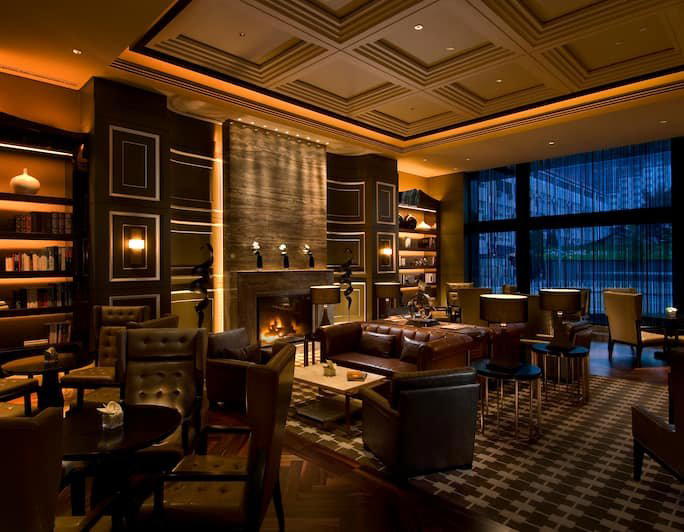
The Waldorf Astoria brand carries a specific historical weight: the original New York property on Fifth Avenue set the template for American grand-hotel luxury across much of the twentieth century. That lineage shows up at the Beijing address not through imitation but through translated reference. Where the New York hotel had Peacock Alley, the ground-floor concourse where guests and socialites circled one another, Beijing has its own Peacock Alley bar lounge, an art deco space that functions as the social hinge of the ground floor, serving signature cocktails and afternoon tea. The tiered trays and unhurried tempo attract a particular kind of repeat visitor: guests who treat the lounge as a fixed point in their Beijing itinerary rather than a hotel amenity they sample once.
The Interior Logic of the Regulars
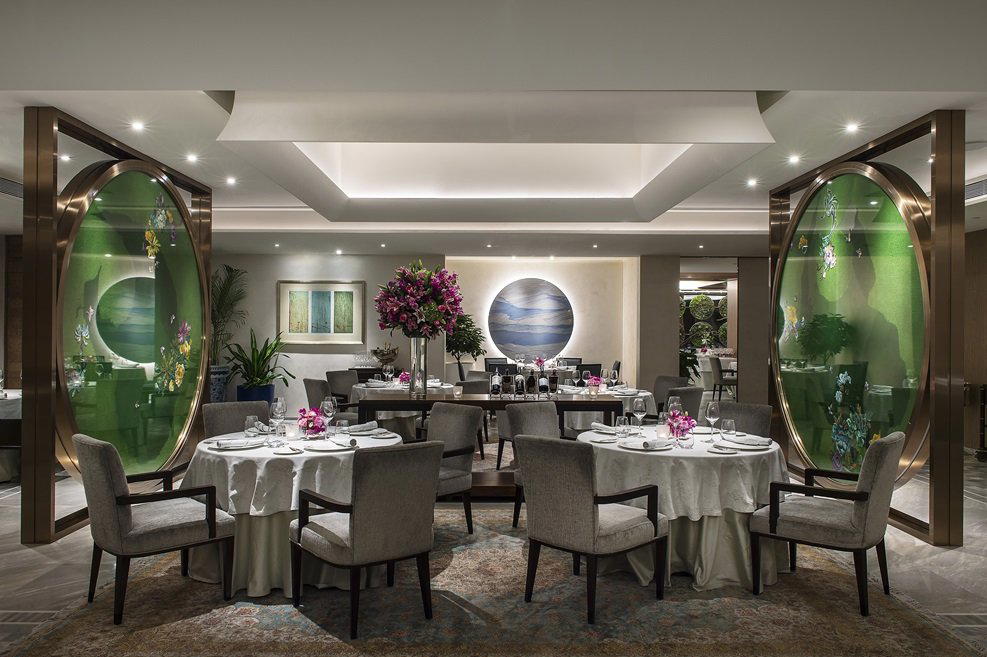
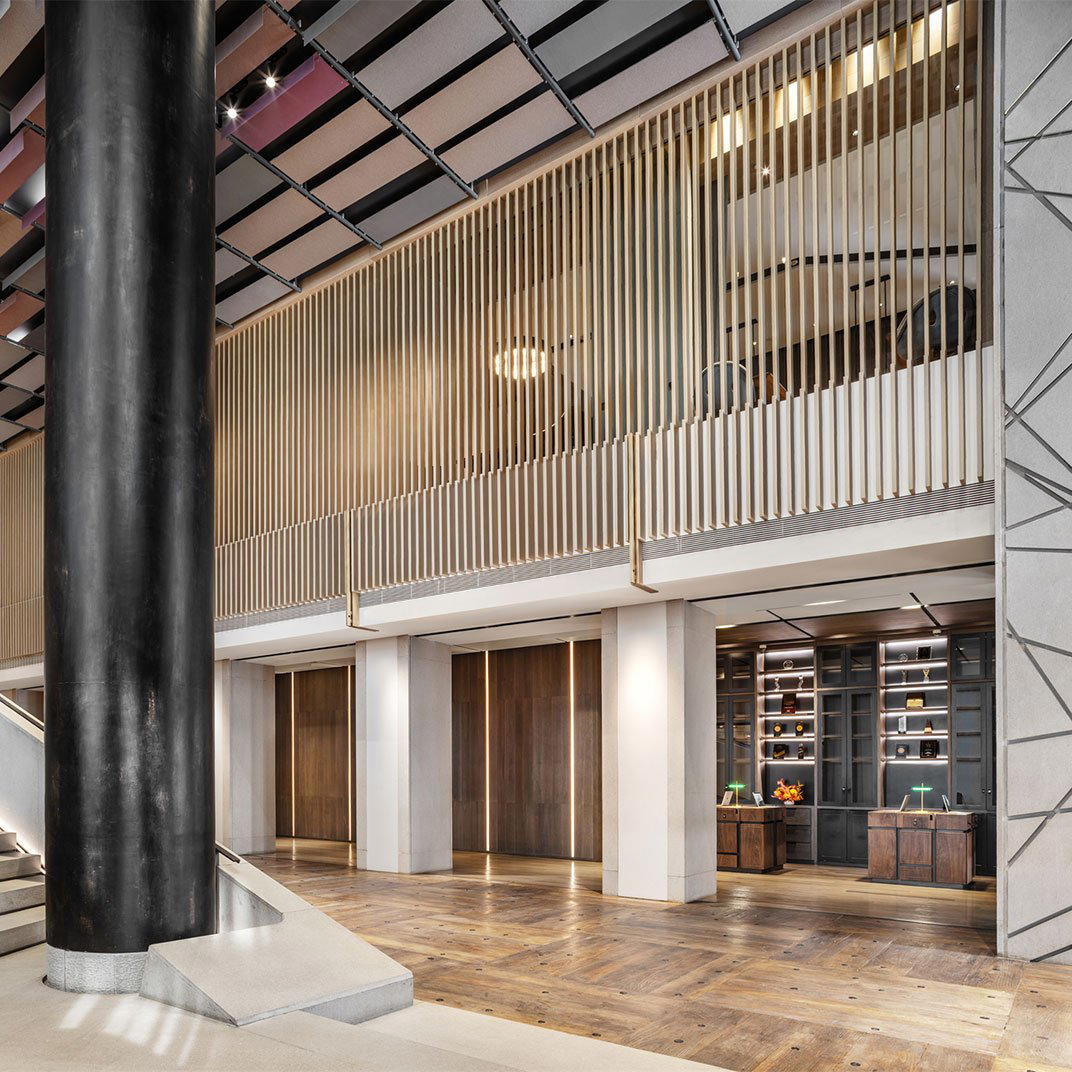
What brings guests back to Waldorf Astoria Beijing, rather than redirecting to a competitor such as the Bvlgari Hotel Beijing or the Aman Summer Palace, is partly the consistency of a property that rewards familiarity. The interiors by Yabu Pushelberg, the Toronto-based firm responsible for some of the most durable luxury hotel rooms of the past two decades, deploy silk-lined corridors and tall-ceilinged chambers that read as genuinely quiet rather than performatively minimal. There is no ostentatious lobby; the check-in area is flanked by a large circular oil painting by Shandong painter Ling Jian, an androgynous face rendered with enough scale and confidence to stop guests mid-stride. Nearby, a modern deconstructed version of the Waldorf Astoria New York's grandfather clock, conceived and fabricated by Chinese artisans, presents as a six-and-a-half-foot transparent clockwork mechanism that appears to float in the air. These are not decorative gestures made for photographs. They are the kind of objects that reveal more detail over repeated exposure.
Contemporary Chinese art threads through all the public areas, lending the property a curatorial coherence that differentiates it from international luxury hotels that treat art as an amenity rather than an argument. For guests who stay multiple times a year, this becomes part of the familiarity contract: the works are known quantities, and the hotel's investment in them signals a particular seriousness about place.
Room Configuration and the Hutong Compound
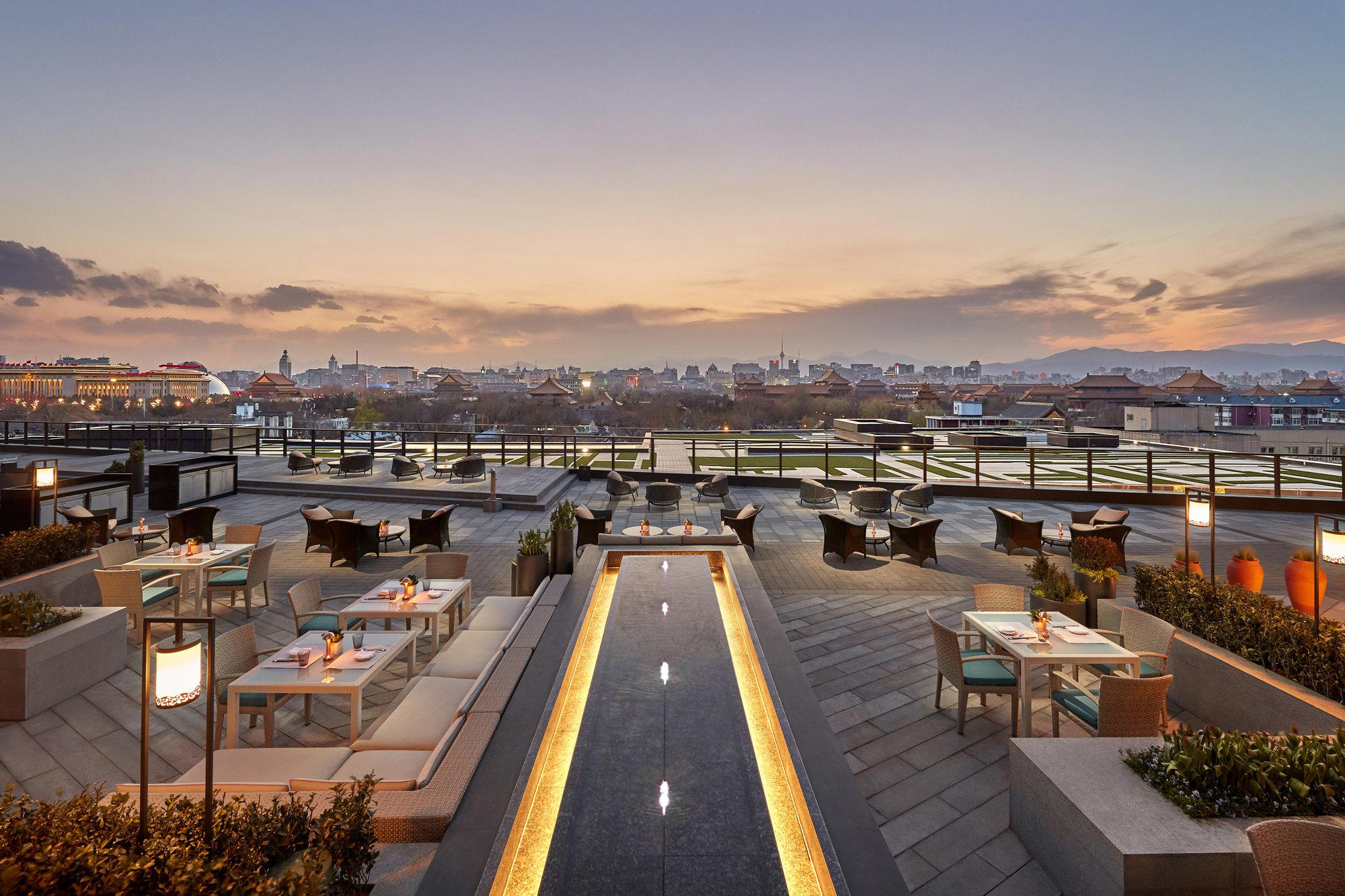
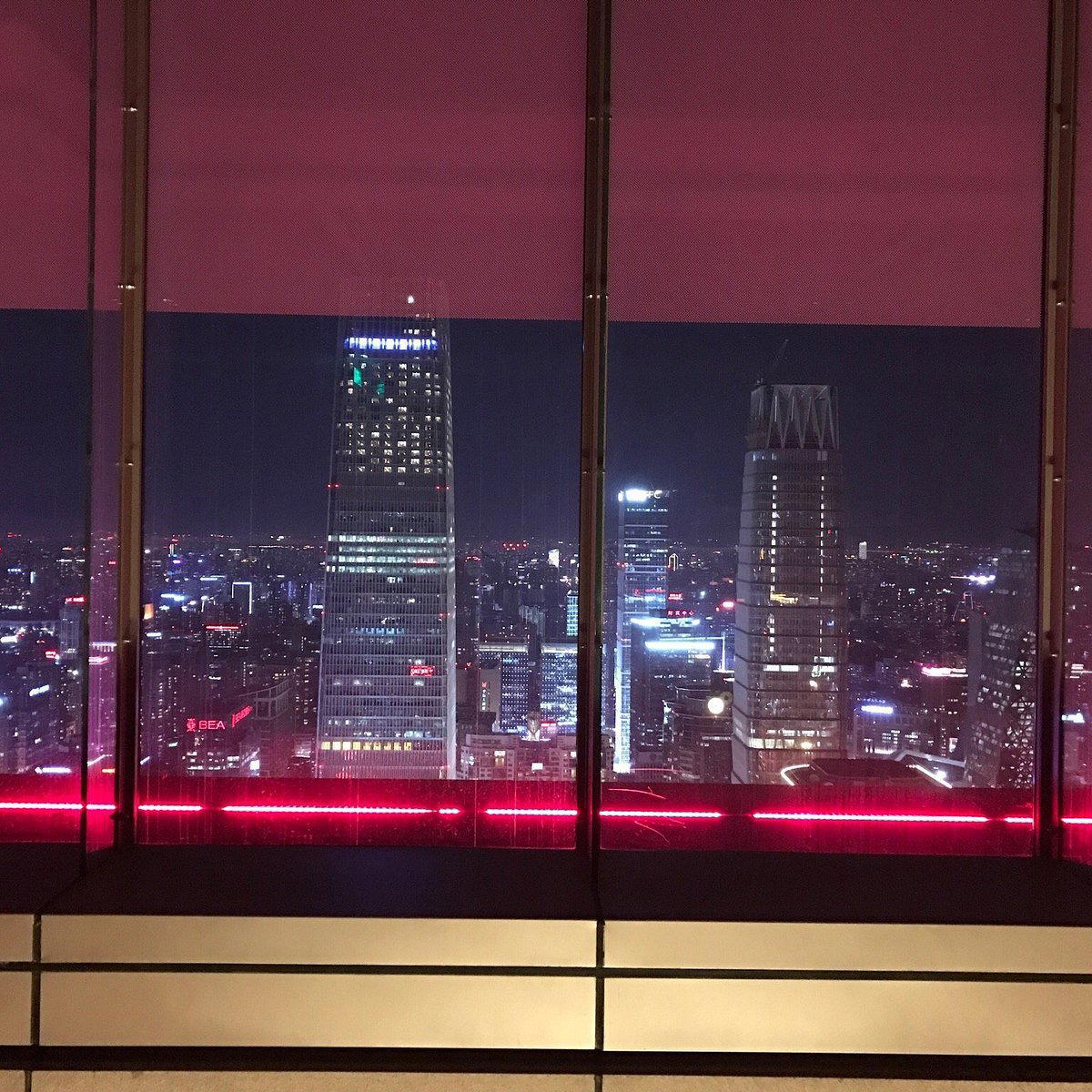
The property holds 176 rooms across the main tower. Guest rooms are furnished in Yabu Pushelberg's characteristic palette of considered color: eggshell blue silk on some walls, amber or purple accents in others. Art deco structural details, including cubist dividers that separate work and rest zones, keep the rooms from feeling generic despite the international brand context. Tablet-controlled room technology and Ferragamo bathroom amenities mark the expected tier. The practical recommendation for repeat visitors is a west-facing room on the upper floors, where on clear days the white dagoba of Beihai Park is visible, with the arched eaves of the Forbidden City palaces appearing beyond it. This is a view that earns its place in the rationale for returning.
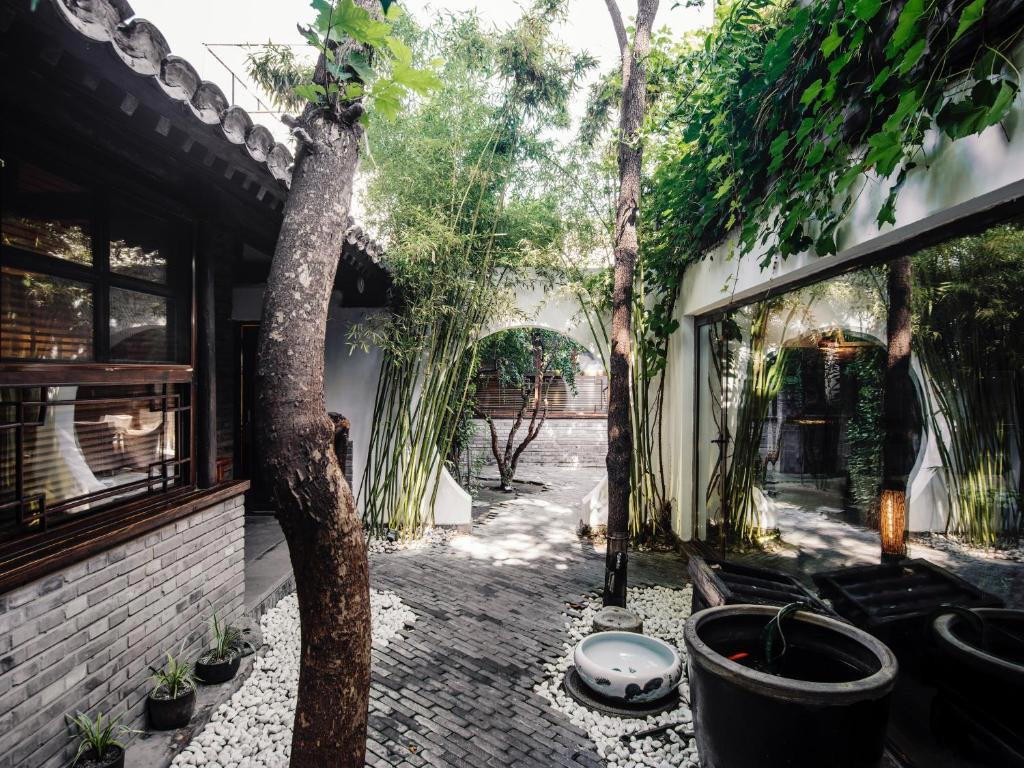
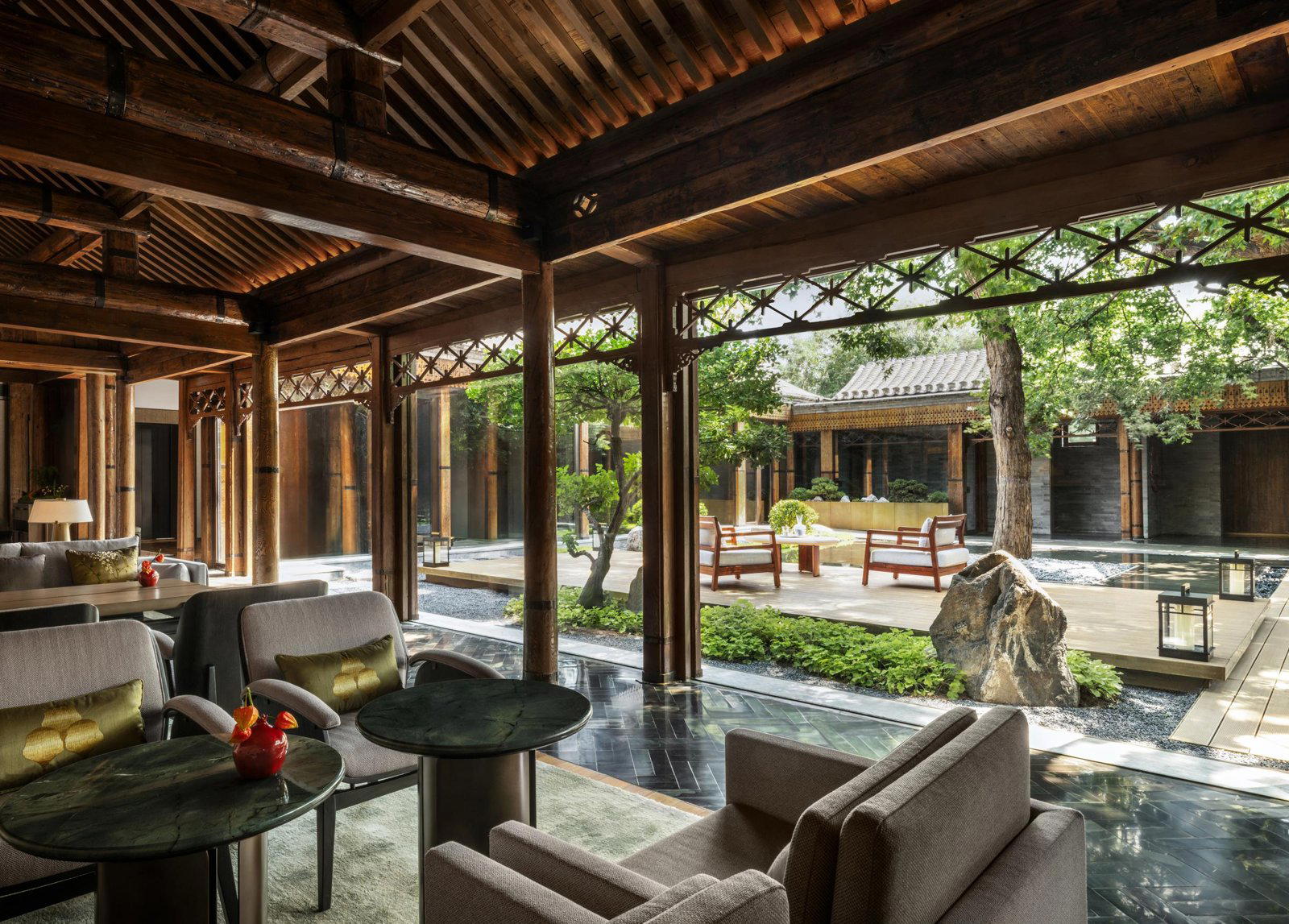
Behind the main tower, Waldorf Astoria Beijing operates a separate cluster of hutong guest suites arranged around a traditional Chinese courtyard. Connected to the main building by a private underground passage, these suites are furnished in Qing dynasty style. The compound includes an underground swimming pool, a private restaurant, and a private villa of more than 6,000 square feet with its own garden. This configuration places the hutong suites in a narrow category within Beijing's luxury accommodation: properties that offer full international hotel infrastructure alongside a genuinely traditional courtyard living format. The Aman Summer Palace and the Mandarin Oriental Qianmen operate in adjacent territory, but the scale and privacy of the hutong villa here occupy a different price and format tier.
Awards and Peer Position
The property's standing in the current ranking cycle is specific. The 2026 La Liste Leading Hotels assessment awarded 90.5 points, placing it within the upper cohort of recognized Chinese luxury hotels. The 2025 World Travel Awards named it China's Leading Luxury Hotel. These are meaningful signals within the competitive set: Beijing operates alongside Shanghai, Hong Kong, and a handful of resort destinations as China's most scrutinized luxury hotel market. Comparable addresses in Beijing, including the China World Summit Wing, the Eclat Beijing, and the Fairmont Beijing Hotel, each occupy different points on the design-versus-service spectrum. The Waldorf Astoria's position is most naturally defined by its combination of a major international brand framework, an architecturally distinctive building, and a private hutong compound that has no direct equivalent in the city's central districts. For a broader orientation to where the property sits relative to dining and neighborhood context, the full Beijing guide provides useful comparative framing.
Across China, the properties that attract repeat guests at this tier tend to share a specific quality: they give people reasons to notice things they missed the previous time. The Waldorf Astoria Beijing is structured, both architecturally and curatorially, to reward that kind of attention. Other luxury properties across the country worth placing in context include Amanfayun in Hangzhou, Amandayan in Lijiang, and the coastal positioning of 1 Hotel Haitang Bay in Sanya. For those contextualizing Beijing against China's broader high-end hotel offer, properties such as the Altira Macau and Andaz Shenzhen Bay represent different regional approaches to the same ambitions.
Planning Your Stay
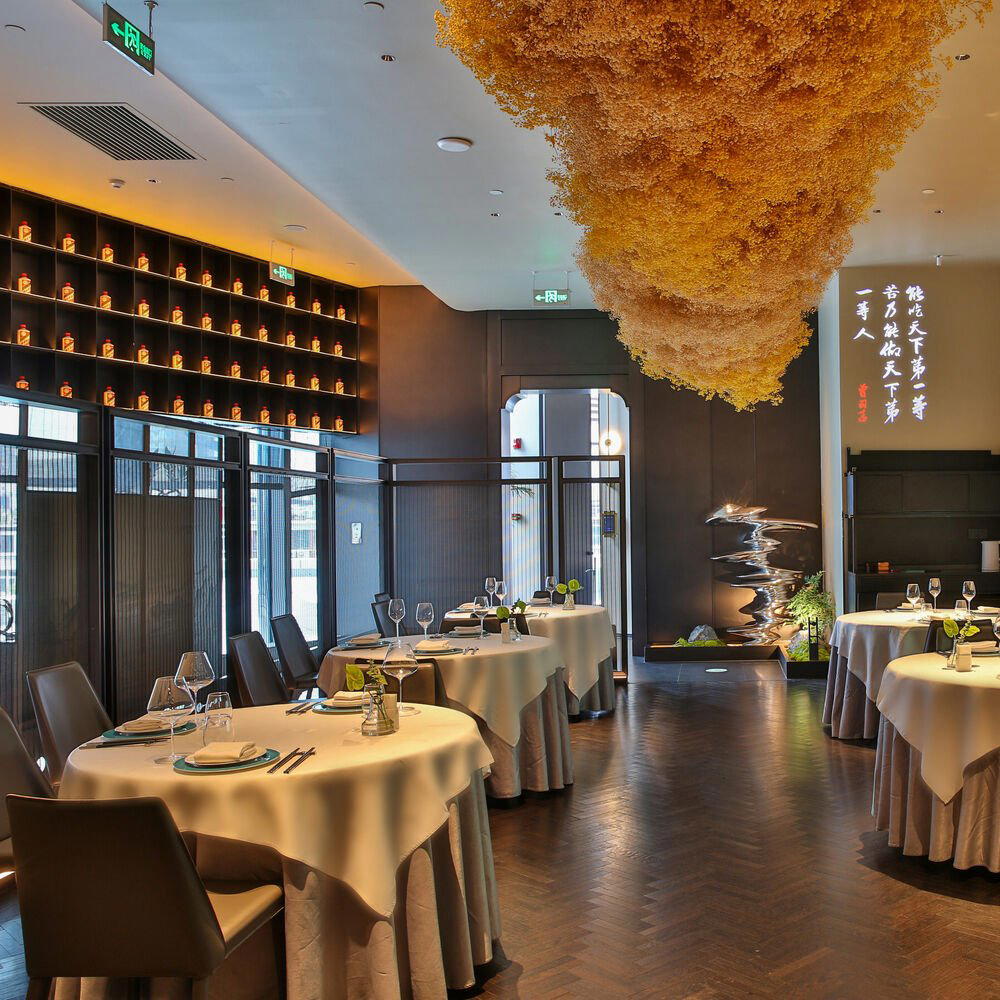
The hotel sits at 5-15 Jinyu Hutong in Dongcheng District, within walking distance of Wangfujing and a short taxi or metro ride from the Forbidden City's east entrance. Three restaurants operate within the property alongside a full-service spa and a heated pool. The staff-to-guest ratio runs close to one-to-one in practice, which means requests are handled quickly and without the queuing that affects larger convention-oriented hotels in the city. For guests considering the hutong suites, the underground pool and private restaurant mean that a stay can be conducted almost entirely within the compound, which suits certain travel profiles well. The Waldorf Astoria brand sits within the Hilton Worldwide portfolio, meaning Hilton Honors status applies. Guests familiar with the original New York property will find the brand lineage legible without the Beijing address feeling derivative; the Fifth Avenue Hotel and Aman New York sit at a different point in the Manhattan market, and Beijing's Waldorf has developed an identity that is specific to its own district and its own city.
Comparable Venues
Comparable venues nearby, for context on price, style, and recognition.
| Venue | Cuisine | Price | Awards | Notes |
|---|---|---|---|---|
| Waldorf Astoria BeijingThis venue — the venue you are viewing | Luxury heritage hotel inspired by traditional Hutong courtyards in a modern setting. | $300–500 | 1 Michelin Key · La Liste Top Hotels | Not listed |
| Aman Summer Palace | Heritage luxury resort housed in restored imperial-era dwellings with contemporary underground facilities; blends 200-year-old architecture with modern five-star amenities. | $1,000–1,500 | Forbes 4-Star | Jiaodaokou |
| Mandarin Oriental Wangfujing, Beijing | Contemporary residential luxury with classic Chinese elements | Not listed | 1 Michelin Key · La Liste Top Hotels | Wangfujing |
| The PuXuan Hotel and Spa | Contemporary luxury urban retreat blending modern design with historical proximity | $300–500 | 1 Michelin Key · La Liste Top Hotels | Zhengyilu |
| Eclat Beijing | All-suite boutique hotel in a striking glass pyramid structure within Parkview Green development. | $100–200 | 1 Michelin Key · La Liste Top Hotels | Chaowai |
| Regent Beijing | Classic yet contemporary luxury hotel blending imperial grandeur with modern refinement. | Not listed | Michelin Selected · La Liste Top Hotels | Chaoyangmen |
Recognition history
Dated appearances from independent guides and award organizations, with the underlying list record or original source where available.
Michelin 1 Key
Michelin
La Liste Top Hotels
La Liste
Forbes 4-Star
Forbes
World Travel Awards
World Travel Awards
Full recognition history (6 entries)
Forbes 4-Star
Forbes
Michelin 1 Key
Michelin
Continue exploring
More in Beijing
Hotels in Beijing
All hotels in Beijing →
Bars in Beijing
All bars in Beijing →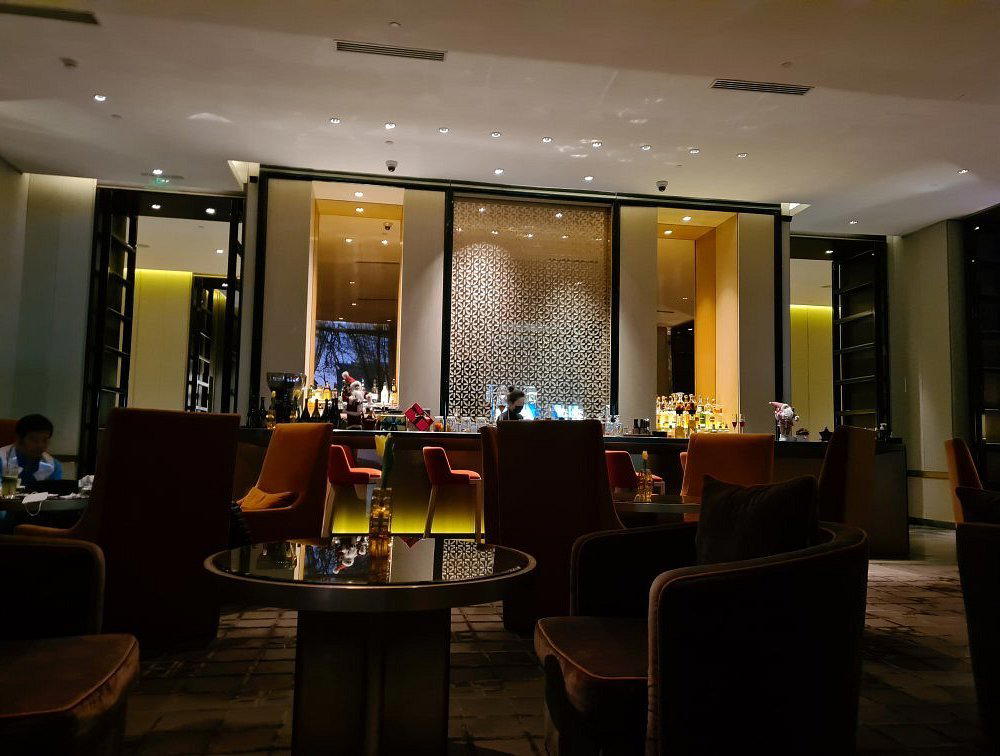
Details
- Elegant
- Sophisticated
- Ornate
- Classic
- Well Known
- Business Trip
- Romantic Getaway
- Anniversary
- Historic Building
- Panoramic View
- Wi Fi
- Pool
- Spa
- Fitness Center
- Room Service
- Concierge
- Business Center
- Indoor Pool
- Street Scene
- Wheelchair Accessible
- Step Free Entrance
Elegant and tranquil with sophisticated lighting, high-end finishes, and a serene atmosphere praised in guest reviews.