Michelin Plate
Our verdict
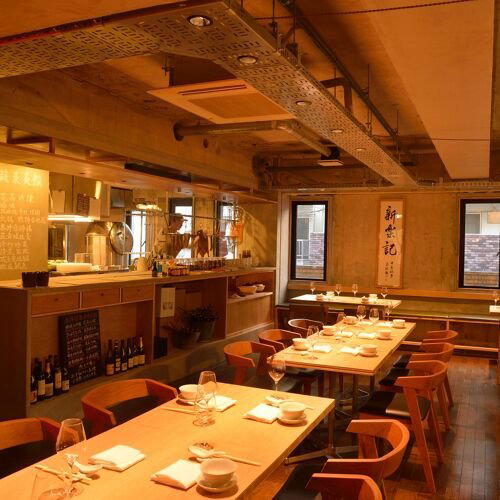
A Michelin Plate-recognised Chinese restaurant in Meguro, Chugokusai Kan operates at a mid-range price point where classical technique and hotel-kitchen discipline meet the precision demands of Tokyo's Chinese dining scene. Chef Fujii's background in hotel kitchens informs a menu built around flame-broiled preparations finished in a large oven, earning consecutive Michelin Plate recognition in 2024 and 2025.

Pearl is the En Primeur Club membership app, where members save venues, book tables and use the concierge.
The menu
What to order
- Oven-roasted dishes
- Chashu with golden hornet honey and walnut-flavored tantan noodles
- Cantonese roasted items
Chinese Cooking in Tokyo's Meguro: Where Hotel Craft Meets Neighbourhood Scale
Tokyo's Chinese restaurant scene divides along sharper lines than most cities. At the upper end, Michelin-starred houses like Chugoku Hanten Fureika and Chugoku Hanten Kohakukyu (Amber Palace) command premium prices and formal formats. Below them sits a tier that is technically serious but accessible in price, restaurants that carry genuine kitchen credentials without the ceremony or cost of the starred bracket.
That position is not accidental. The Michelin Plate designation, awarded to restaurants the Guide considers worth seeking out, places Chugokusai Kan in a clearly defined quality tier without conferring star status. It signals a kitchen operating with consistency and intent, the kind of restaurant that earns repeat local custom rather than destination tourism. For the reader planning a Tokyo itinerary that reaches beyond the obvious, this is the category that often yields the most satisfying meals per yen spent.
The Kitchen's Lineage: Hotel Training and the Logic of Fire
Chinese cooking in Japan has long carried a specific meaning distinct from the mainland tradition. What the Japanese call chuka ryori is a form refined through decades of local interpretation, one that prizes technical control and clean presentation alongside the wok heat and bold seasoning of its origins. The leading practitioners in Tokyo bring formal training to that synthesis, and the Michelin Guide's recognition of Chugokusai Kan points to exactly that kind of background.
Chef Fujii's years as a hotel chef are visible in the kitchen's approach. Hotel kitchens are production environments that enforce discipline at scale: consistency across multiple covers, timing precision, and the management of equipment that home or small-restaurant cooks rarely encounter. The flame-broiled preparations finished in a large oven that define part of this restaurant's menu are characteristic of that training. Oven work at this level, holding and finishing proteins or whole preparations with controlled dry heat, requires an understanding of carryover cooking and timing that takes years to calibrate. The result is a style of Chinese cooking grounded in fire and technique rather than tableside spectacle.
That background places Chugokusai Kan in an interesting comparative position within Meguro's dining scene. The neighbourhood, which also hosts itsuka and Koshikiryori Koki, runs to residential character rather than tourist circuit, and the restaurants that thrive here tend to be ones locals return to rather than places that depend on passing trade.
Situating the Food: Chinese Cuisine Through a Japanese Lens
Chinese cooking interpreted through Japanese sensibility has its own canon, one that shapes expectations for both chef and diner. Chuka establishments in Tokyo typically show restraint in seasoning by mainland standards, apply meticulous knife work, and source local Japanese ingredients alongside Chinese pantry staples. The result is a cuisine that reads simultaneously as Chinese in structure and Japanese in execution, a tradition that restaurants like Ippei Hanten also inhabit.
Chugokusai Kan's emphasis on flame-broiled and oven-finished preparations sits within a broader Japanese-Chinese cooking tradition that prizes texture and the aromatic properties of high-heat cooking: the char, the crust, the rendered fat. These techniques demand equipment and time, which is partly why hotel-trained chefs carry an advantage in this area.
Internationally, the conversation around Chinese cooking outside China has shifted considerably. Restaurants like Mister Jiu's in San Francisco and Restaurant Tim Raue in Berlin have demonstrated what serious Chinese-rooted cooking can achieve when a trained chef engages with the tradition on their own terms. Tokyo's version of that conversation is older and quieter, built over decades of hotel dining rooms and family-run specialists. Chugokusai Kan fits that lineage: a chef who came to cooking through conviction, sharpened technique in institutional kitchens, and now operates at neighbourhood scale with Michelin recognition as an external marker of that quality.
Where This Fits in Tokyo's Wider Dining Picture
Tokyo's Michelin ecosystem is vast. Three-star sushi at Harutaka or multi-course kaiseki at RyuGin represent one end of the market. Innovative two-star formats like Den occupy a middle ground of creative Japanese cooking. Chinese at Michelin Plate level, serious, consistent, and priced for regular dining, represents a different part of the market altogether, one that rewards readers who look past the starred headline count when planning their meals.
For those building a broader Japan itinerary, the regional comparison is instructive. The ambition of HAJIME in Osaka, the seasonal kaiseki depth of Gion Sasaki in Kyoto, and the locavore character of Goh in Fukuoka each reflect a regional scene. Tokyo's Chinese Plate-level restaurants represent the city's institutional confidence in a cuisine that has been practiced here long enough to develop its own local standards. You can find further context across our full Tokyo restaurants guide, hotels guide, bars guide, wineries guide, and experiences guide.
For completeness, the EP Club editorial network also covers akordu in Nara, 1000 in Yokohama, and 6 in Okinawa for readers extending their Japan circuit beyond the major cities.
Know Before You Go
Address: Oriental Higashiyama Building 1F, 2-1-1 Higashiyama, Meguro City, Tokyo 〒153-0043
Price range: ¥¥ (mid-range)
Recognition:
Cuisine: Chinese (chuka ryori tradition)
Phone / Website / Hours: Not publicly listed in, confirm directly before visiting
Booking: See FAQ below
Frequently asked questions
Is Chugokusai Kan focused on a specific cuisine style?
Is Chugokusai Kan award-winning?
Chugokusai Kan has received recognition including: Owner-chef, a Keio University graduate, became a chef from his dreams of being an artisan; a person who can accomplish one thing can do anything. Flame-broiled items finished in the massive oven are a gift acquired through many labours as a….
What's the signature dish at Chugokusai Kan?
Michelin's documentation of Chugokusai Kan points specifically to flame-broiled preparations finished in a large oven, technique Chef Fujii developed across years in hotel kitchens. No individual dish names appear in current published records, but the oven work is the most consistently cited technical credential.
How much does it cost to eat at Chugokusai Kan?
Pricing at Chugokusai Kan is listed as ¥¥.
What's the address for Chugokusai Kan?
Chugokusai Kan is located at Japan, 〒153-0043 Tokyo, Meguro City, Higashiyama, 2-chōme−1−1 オリエンタル東山 第5 1階, Tokyo.
Should I book Chugokusai Kan in advance?
Consecutive Michelin Plate recognition in 2024 and 2025 at a ¥¥ price point in a residential Meguro neighbourhood tends to build a committed local following with limited walk-in capacity. Booking ahead is the sensible approach, particularly for evenings and weekends.
What is Chugokusai Kan known for?
Chugokusai Kan holds Michelin Plate recognition for 2024 and 2025, placing it in a specific tier of Tokyo's Chinese dining scene: credentialed but accessible, priced at ¥¥ rather than the high-spend end occupied by houses like Chugoku Hanten Fureika. Chef Fujii's background as a hotel kitchen professional underpins a technically grounded approach to chuka ryori, particularly in fire and oven cookery.
A Pricing-First Comparison
| Venue | Cuisine | Price | Awards | Notes |
|---|---|---|---|---|
| Chugokusai KanThis venue (the venue you are viewing) | Modern Chinese with Cantonese Roasted Specialties | $30–50 | Michelin Plate | Not listed |
| Harutaka | Edo-Style Omakase Sushi | $200–300 | 3 Michelin Stars · World's 50 Best #76 | Sushi |
| RyuGin | Modern Kaiseki | $500+ | 3 Michelin Stars · World's 50 Best #41 | Kaiseki, Japanese |
| L'Effervescence | Modern French with Japanese Influences | $200–300 | 3 Michelin Stars · World's 50 Best #69 | French |
| HOMMAGE | Modern French with Japanese Influences | $150–200 | 2 Michelin Stars · World's 50 Best #78 | Innovtive French, French |
| MAZ | Innovative Peruvian-Japanese Fusion | $150–200 | 2 Michelin Stars · World's 50 Best #28 | Innovative |
Recognition history
Dated appearances from independent guides and award organizations, with the underlying list record or original source where available.
Michelin Plate
Michelin
Full recognition history (3 entries)
Michelin Plate
Michelin
Michelin Plate
Michelin