


A Michelin-starred address in Motoazabu where Japanese culinary discipline meets Cantonese tradition. Ippei Hanten's prix fixe format moves through congee, dim sum, and hot pot with an emphasis on fresh, fragrant, and precisely portioned courses. Ranked 605th in Opinionated About Dining's 2025 Japan list, it occupies a serious position among Tokyo's small cohort of high-end Chinese restaurants.
Pearl is the En Primeur Club membership app — saves, bookings, and concierge access live there. Same editors, same standards.
- Address
- 3 Chome-12-41 Motoazabu, Minato City, Tokyo 106-0046, Japan
- Phone
- +81 50-3033-3946
- Website
- ippei-hanten.com
- Directions
- Get directions
 Saves & bookings on Pearl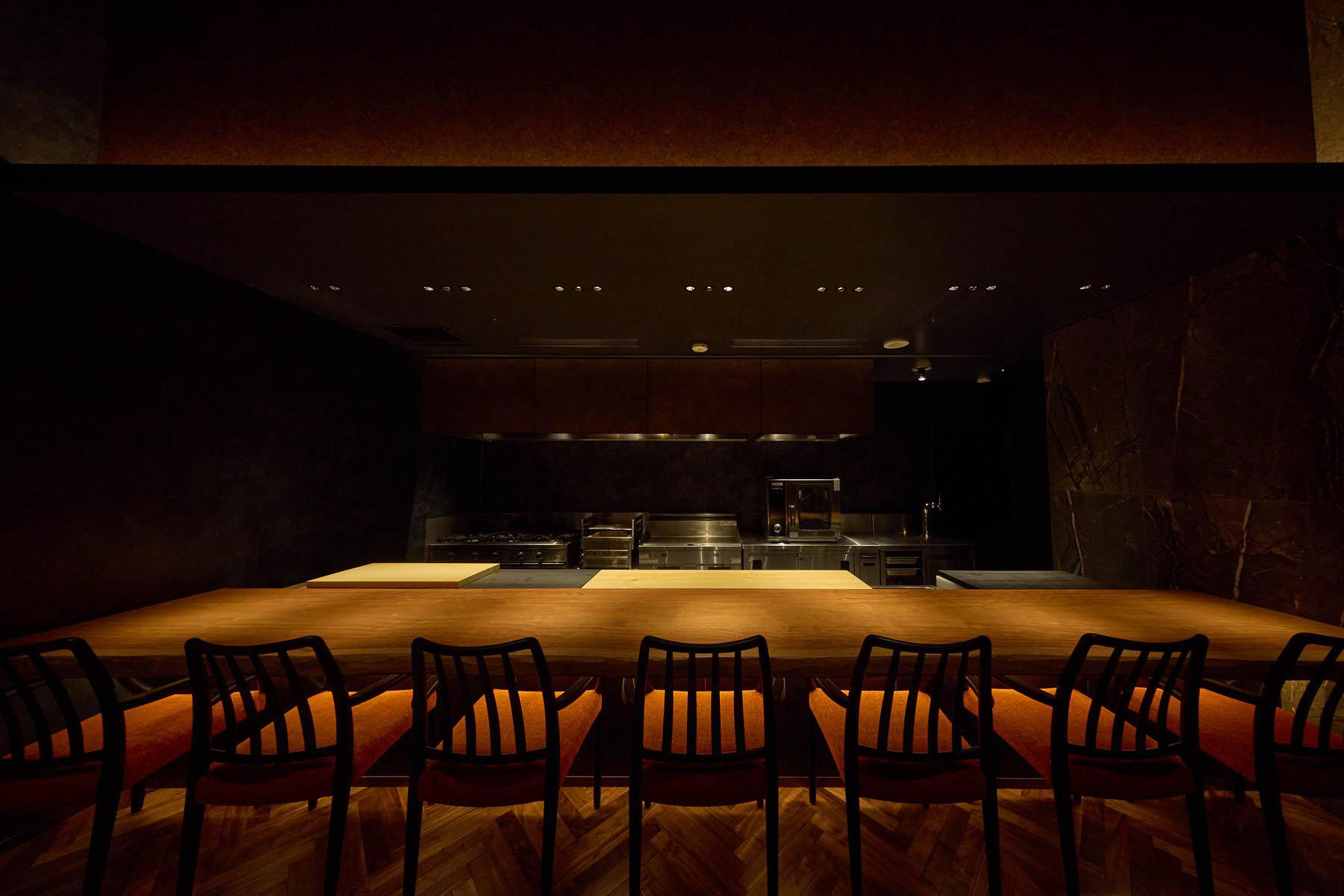
Where Two Chinese Traditions Converge in Tokyo
Motoazabu sits at the quieter end of Minato's residential hinterland, a neighbourhood more associated with embassies and long-established family addresses than with dining spectacle. That setting is appropriate context for what Ippei Hanten represents: a restaurant that reads less like a statement and more like a sustained, considered argument about what Chinese cooking can become when shaped by Japan's culinary discipline and Hong Kong's Cantonese inheritance. The approach here is not fusion in the loosely assembled sense, it is a deliberate interweaving of two distinct Chinese-food traditions, one cultivated over decades in Japan, the other absorbed through direct Cantonese experience in Hong Kong.
Tokyo's high-end Chinese restaurant tier is smaller and more internally differentiated than its Japanese-cuisine counterpart. Where the city can point to dozens of sushi and kaiseki addresses at the ¥¥¥¥ level, serious Chinese cooking at comparable price and ambition is a shorter list. Ippei Hanten, holding a Michelin star since 2024 and ranked 605th on Opinionated About Dining's 2025 Japan ranking, occupies that narrower bracket alongside a comparable set that includes Chugoku Hanten Fureika, Chugoku Hanten Kohakukyu (Amber Palace), and Piao-Xiang. Each of these addresses takes a distinct position on what refined Chinese cuisine looks like in a Japanese context; Ippei Hanten's answer centres on the relationship between Hong Kong's daily food culture and the technical rigour associated with Japanese fine dining.
The Logic of the Prix Fixe Format
The prix fixe structure here is not simply a matter of kitchen convenience. It reflects a specific editorial stance on Chinese cooking, one that resists the large, communal, choose-your-own model that dominates Chinese restaurant culture globally and instead treats each course as a discrete, carefully portioned statement. The stated philosophy emphasises freshness, heat, and fragrance as the three governing sensory principles, which positions this menu squarely within a Cantonese framework where timing matters enormously. A dish that arrives even minutes past its moment loses something that cannot be recovered.
By limiting quantity per course, the kitchen can move through a wider range of items without any single preparation overwhelming the sequence. This is a structural choice with real culinary consequences: it allows the menu to function more like a kaiseki progression than a conventional Chinese banquet, building through contrasts of texture, temperature, and flavour register rather than through accumulation. For diners more accustomed to the latter, the adjustment in expectation is worth making in advance.
Noodle Traditions and the Broader Chinese Repertoire
The editorial angle here requires attention to how noodle and grain preparations function within this kind of crossover Chinese menu. Congee appears explicitly in the kitchen's framework, described as an expression of Hong Kong's daily rhythms, a framing that positions it not as a secondary comfort dish but as a culturally freighted centrepiece. In Cantonese cooking, congee carries the accumulated logic of centuries of regional technique: the degree of grain breakdown, the temperature at which it is served, the garnish decisions that finish each bowl. These are not minor variables. At this price point, congee's presence signals that the kitchen is making a statement about the full register of Chinese cuisine, not merely its most elaborate preparations.
Dim sum within the prix fixe follows a similar logic. Shrimp wrapped in rice flour and tofu skin points to a style that prioritises the interplay of translucent wrapper and fresh filling over the more immediately showy preparations that tend to anchor dim sum in high-visibility restaurant formats. Rice flour's particular resistance and weight differs from wheat-based wrappers, and working with it at a single-portion, course-integrated level requires precision that a traditional trolley-service format does not demand. That technical specificity aligns this kitchen with the broader tendency among Tokyo's serious Chinese restaurants to treat dim sum as a refined form rather than a casual one.
Hot pot preparations featuring longtooth grouper and boar extend the menu's range into territory where the kitchen's sauce and seasoning work becomes most visible. Striving for harmony among the five flavours, sweet, sour, salty, bitter, and umami, through fermented foods, layered sauces, and precise seasoning is a classical Chinese culinary framework that requires deep product knowledge. Longtooth grouper is a high-grade fish with firm, clean flesh that responds poorly to anything less than careful timing; its appearance in a hot pot format at this level suggests kitchen confidence in managing the precise window between raw and overcooked.
Tokyo's Chinese Restaurant Scene in 2025
Tokyo's Chinese fine-dining tier has evolved considerably over the past decade. The city's capacity to absorb and refine foreign culinary traditions within its own technical frameworks is well-documented across cuisines, French, Italian, and Spanish cooking have all undergone significant transformation through Japanese ingredient discipline and service culture. Chinese cuisine's evolution in Tokyo follows a related but distinct trajectory, shaped partly by the large and long-established Chinese community, partly by culinary exchange with Hong Kong and mainland China, and partly by the influence of kaiseki's structural logic on how multi-course menus are designed and paced.
Ippei Hanten sits within that lineage, alongside addresses like itsuka and Koshikiryori Koki, which approach different culinary traditions with comparable structural seriousness. The Michelin recognition places Chef Ippei Adachi's kitchen in a tier where ingredient sourcing, course architecture, and execution consistency are evaluated against particularly demanding benchmarks operating in the city. Internationally, the challenge of recontextualising Chinese cuisine within a fine-dining framework appears at addresses like Restaurant Tim Raue in Berlin and Mister Jiu's in San Francisco, each taking a different cultural vantage point; the restaurant's vantage is specifically Japanese-inflected, with Hong Kong as its culinary reference rather than any mainland regional tradition.
For context on what this Michelin star bracket looks like across Tokyo's broader restaurant spectrum, other ¥¥¥¥ addresses in the city range from three-star kaiseki operations like RyuGin to three-star French kitchens like L'Effervescence. The one-star positioning at the restaurant does not imply a lesser ambition, it reflects where Michelin's evaluation sits at a particular moment. Japan's broader fine-dining geography extends well beyond Tokyo, with addresses like HAJIME in Osaka, Gion Sasaki in Kyoto, akordu in Nara, Goh in Fukuoka, 1000 in Yokohama, and 6 in Okinawa representing the national range. Within that geography, Tokyo's Chinese tier remains a specialist proposition, concentrated, credentialled, and worth specific attention for anyone tracking where the city's culinary ambition extends beyond its Japanese-cuisine heartland.
Planning Your Visit
The restaurant is located at 3 Chome-12-41 Motoazabu, Minato City, Tokyo 106-0046. The Motoazabu address places it in a quiet residential pocket of Minato Ward, away from the more trafficked dining clusters of Roppongi and Hiroo. Given the Michelin recognition and the limited-quantity prix fixe format, booking well in advance is advisable. Budget: ¥¥¥¥, consistent with Tokyo's upper tier of Chinese fine dining. Reservations: Essential. Getting there: Motoazabu is most easily reached from Azabu-Juban Station (Namboku and Oedo lines) or by taxi from central Minato.
In Context: Similar Options
Comparable venues nearby, for context on price, style, and recognition.
| Venue | Cuisine | Price | Awards | Notes |
|---|---|---|---|---|
| Ippei HantenThis venue — the venue you are viewing | Modern Cantonese Omakase | $$$$ | Michelin 1 Star | Not listed |
| Series | Modern Chinese Fine Dining | $$$$ | Michelin 1 Star | Minato |
| itsuka | Modern Sichuan-Japanese Fusion | $$$$ | Michelin 1 Star | Minato |
| Primo Passo | Modern Italian with Japanese Ingredients | $$$$ | Michelin 1 Star | Chūō |
| Nishiazabutaku | Modern Japanese Omakase | $$$$ | Michelin 1 Star | Minato |
| TEN-MASA | Tempura Kaiseki | $$$$ | Michelin 1 Star | Meguro |
Recognition history
Dated appearances from independent guides and award organizations, with the underlying list record or original source where available.
Michelin 1 Star
Michelin
Opinionated About Dining Top Restaurants in Japan Recommended
Opinionated About Dining
Tabelog 100 #48 · No. 48
Tabelog · Tabelog 100 - Chinese cuisine - TOKYO - 2026
Opinionated About Dining Top Restaurants in Japan Ranked #605
Opinionated About Dining
Michelin 1 Star
Michelin











At a Glance
- Elegant
- Intimate
- Sophisticated
- Minimalist
- Cozy
- Special Occasion
- Date Night
- Business Dinner
- Chefs Counter
- Private Dining
- Extensive Wine List
- Sake Program
- Sommelier Led
- Local Sourcing
Current opening hours
- Monday
- 5–11 PM
- Tuesday
- 5–11 PM
- Wednesday
- 5–11 PM
- Thursday
- 5–11 PM
- Friday
- 5–11 PM
- Saturday
- 5–11 PM
- Sunday
- Closed
Hours can change for holidays and private events. Last verified .
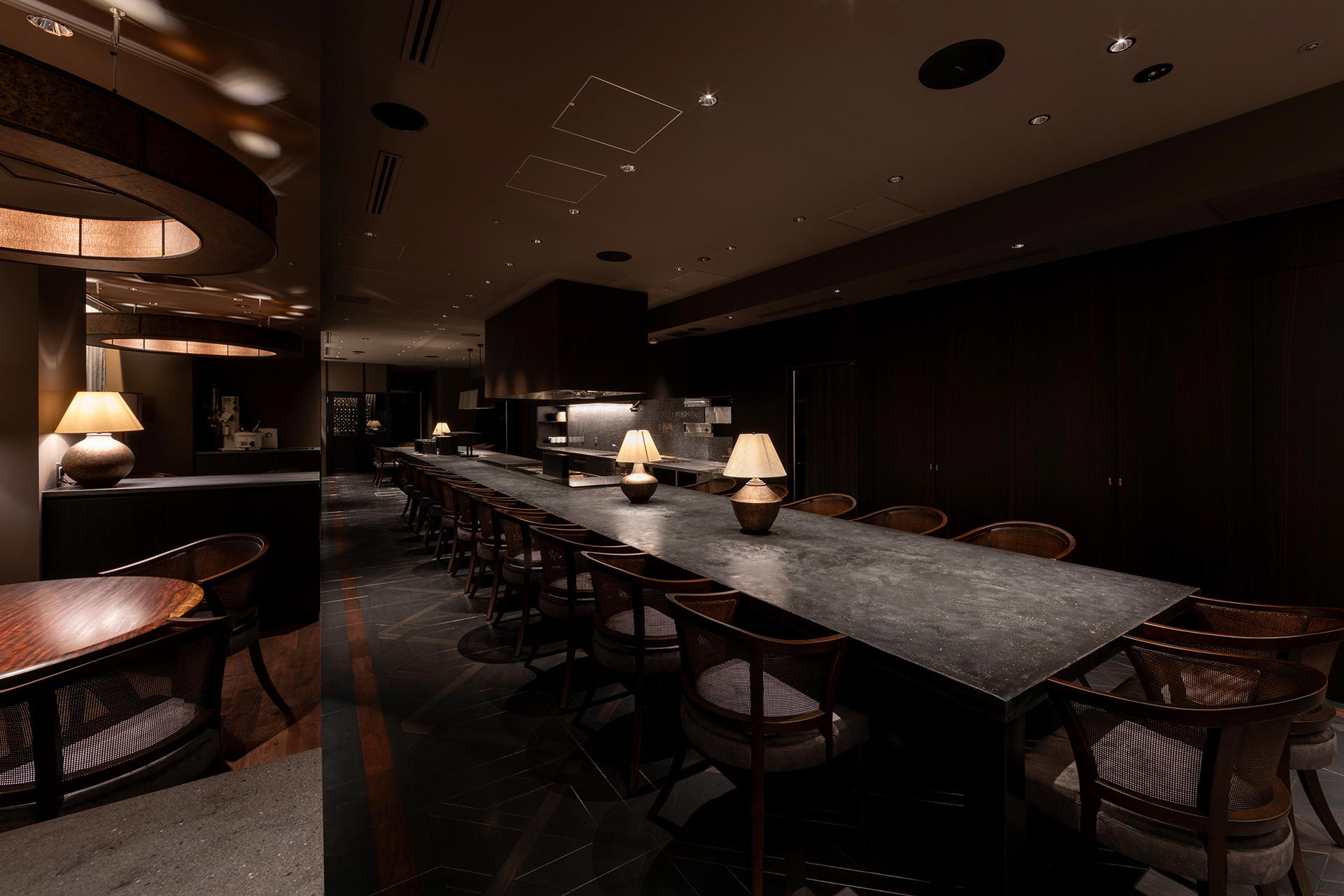
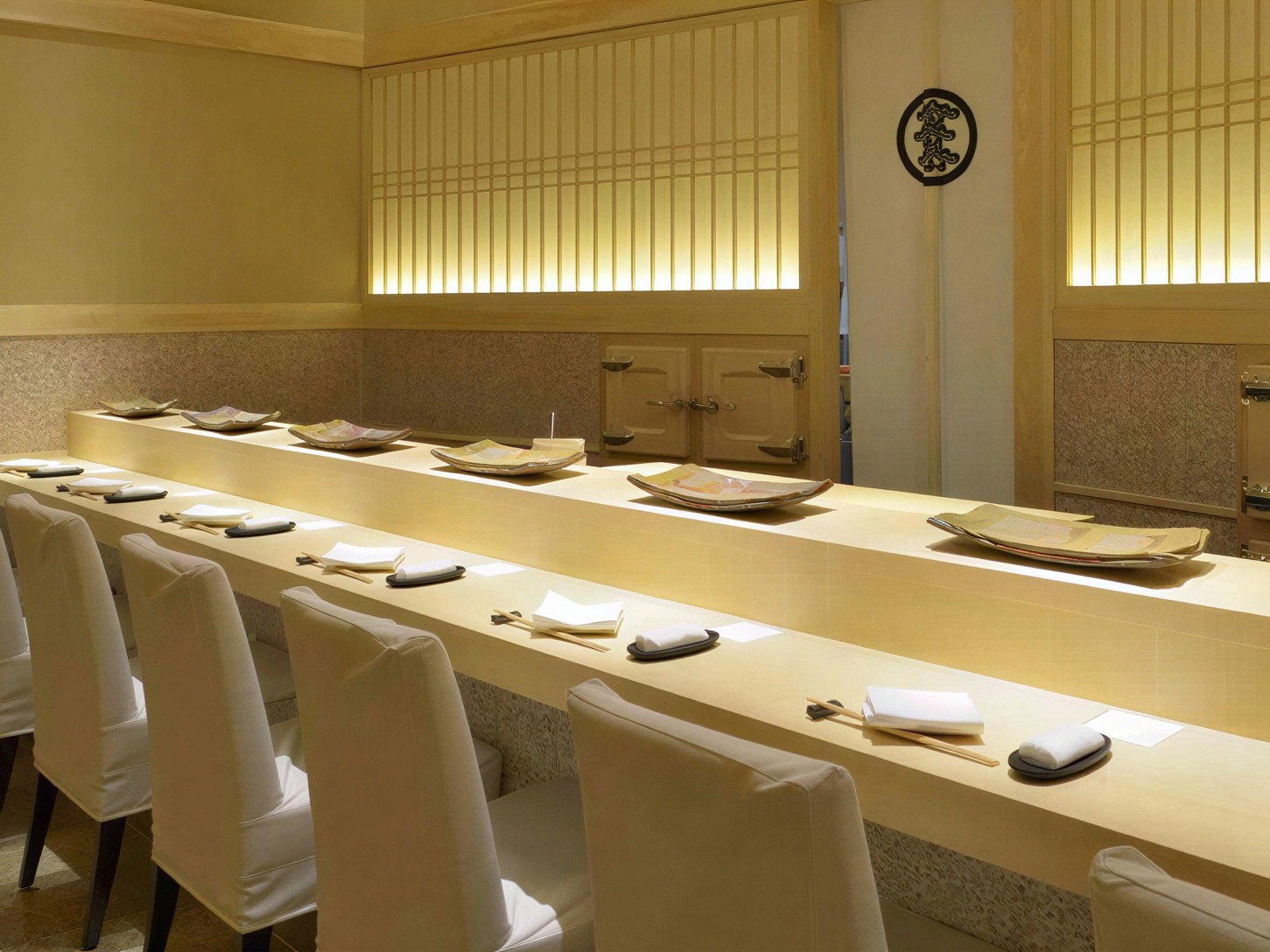
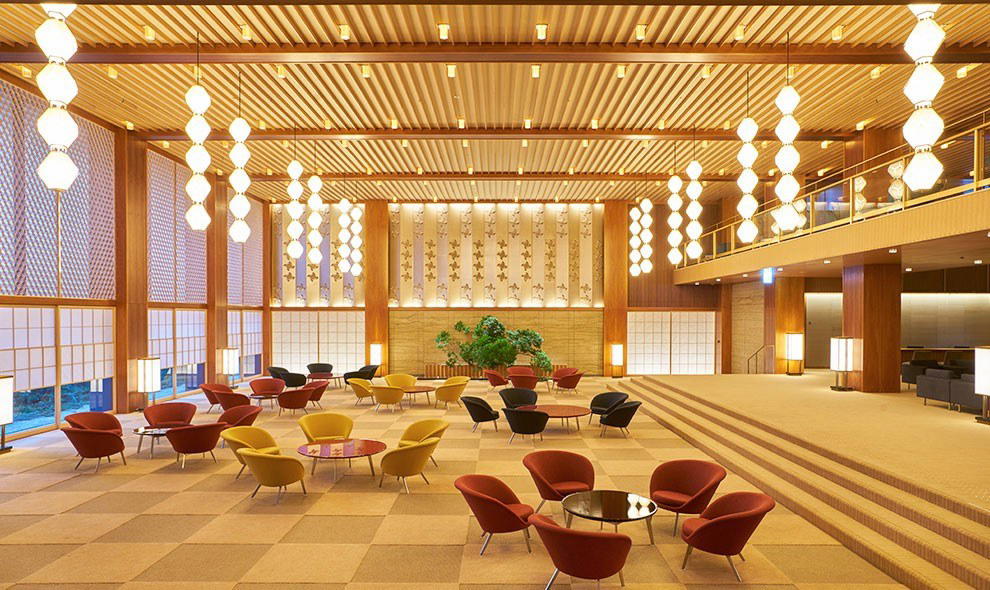
Warm ambiance with mud walls, soft lighting reminiscent of Hong Kong streets, and refined decor featuring contemporary artist crockery.