









2 Michelin Stars · World's 50 Best #58 · La Liste Top Restaurants
Our verdict
Berlin's most decorated Asian-inspired restaurant, Restaurant Tim Raue has held two Michelin stars since 2010 and ranked in the World's 50 Best every year from 2016 through 2025, reaching as high as #26. Drawing on Japanese, Thai, and Chinese traditions while eliminating white sugar, gluten, and lactose, the kitchen produces food that reads as rigorous European fine dining through an Asian lens.

Pearl is the En Primeur Club membership app, where members save venues, book tables and use the concierge.
The menu
What to order
- Wasabi Langoustine
- Peking Duck
- Königsberger Klops
Asian Reinterpretation at the top of Berlin's Fine Dining Tier
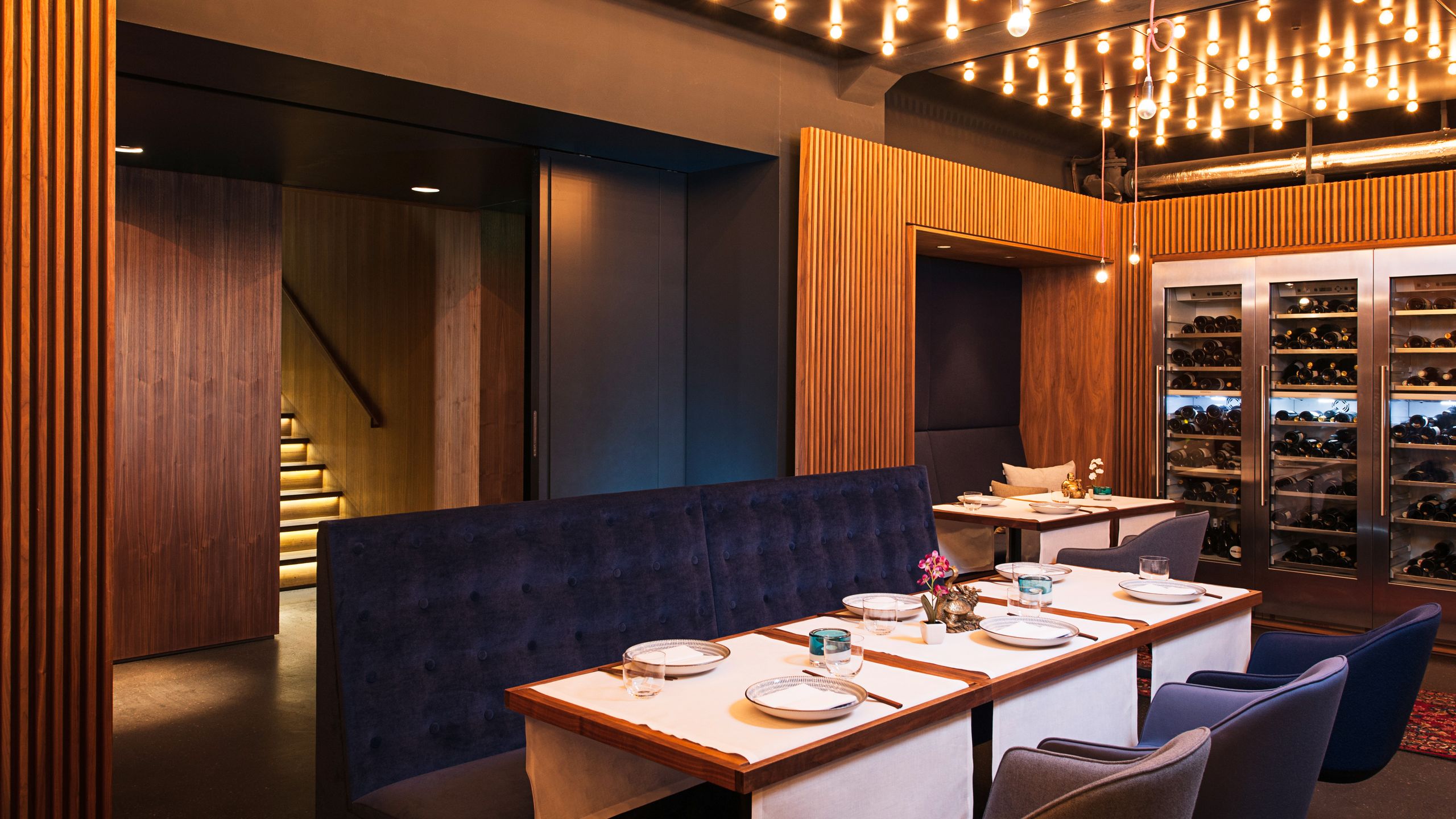
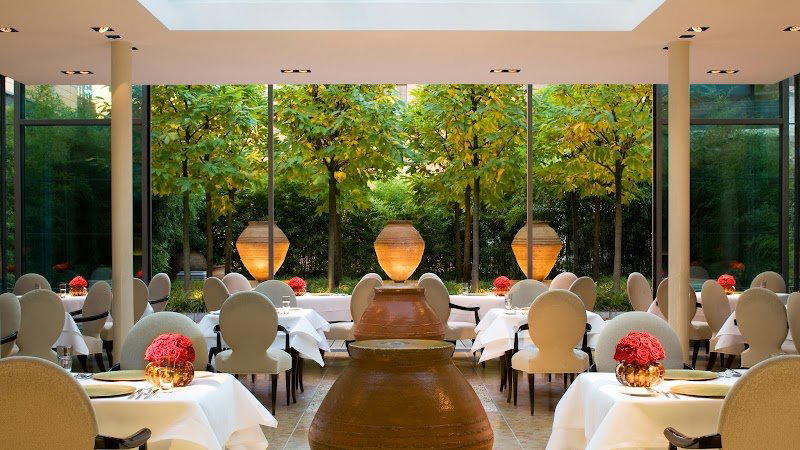
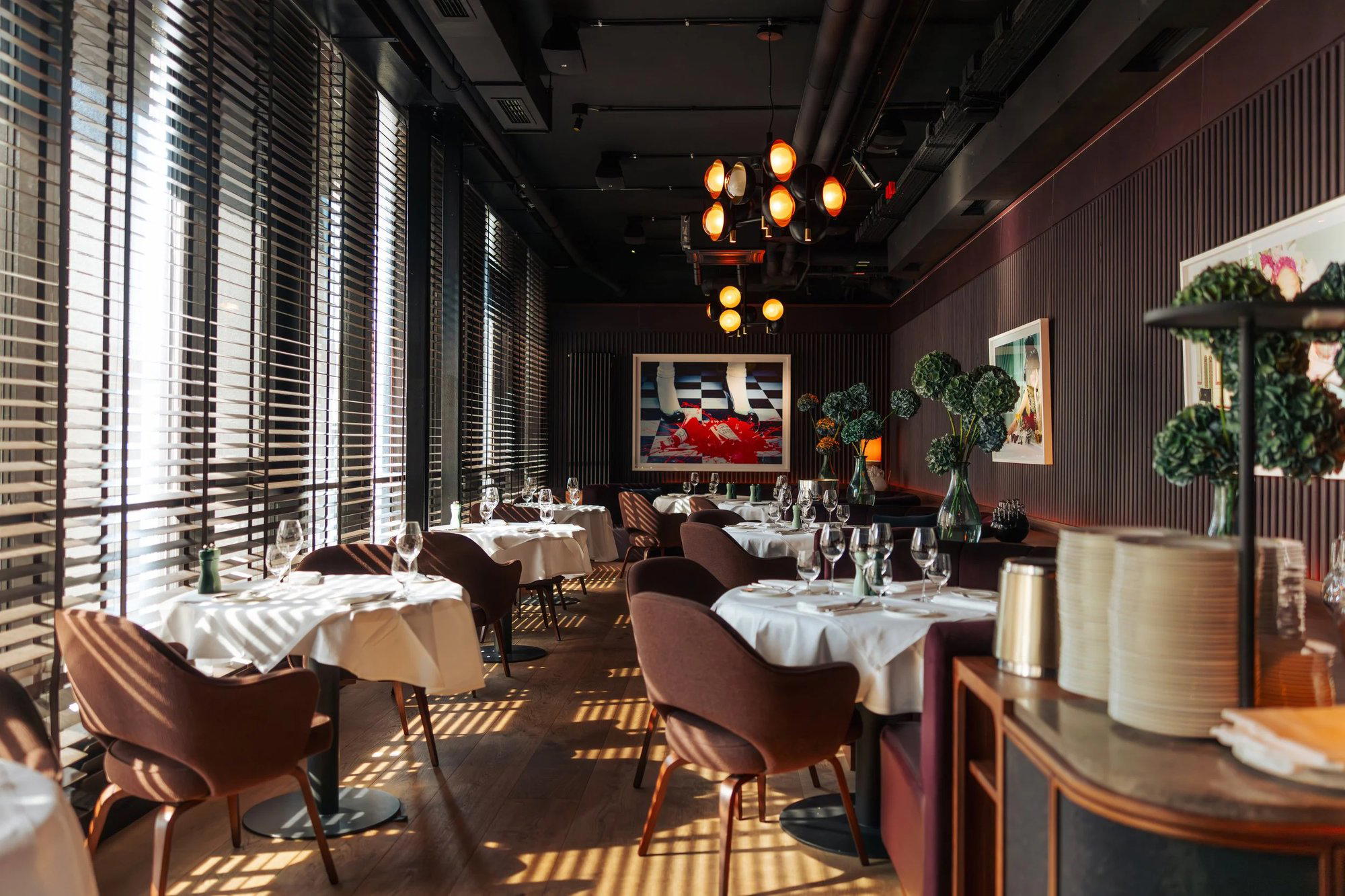
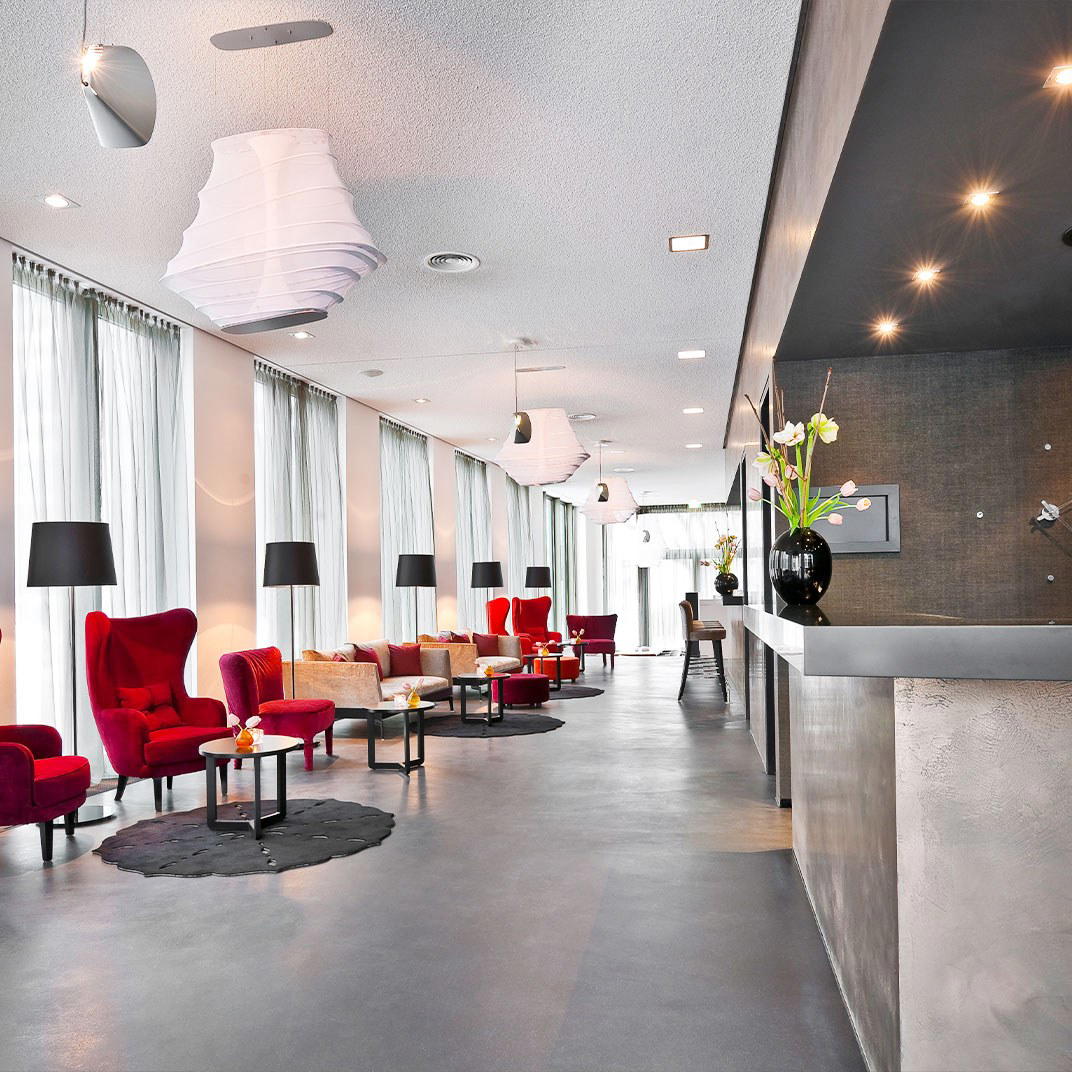
Rudi-Dutschke-Straße sits in Kreuzberg's northern edge, a few blocks from where Checkpoint Charlie drew one of the sharpest borders in twentieth-century Europe. The neighbourhood has since accumulated galleries, architecture firms, and a small cluster of serious restaurants. Restaurant Tim Raue occupies that stretch with the weight of an institution, a space that reads less as theatrical than as precise, a room calibrated for the kind of cooking that demands full attention.
That cooking sits at a specific and relatively rare address in European fine dining: formally structured, technically demanding cuisine built around East and Southeast Asian traditions rather than French or Central European ones. Berlin's €€€€ fine dining tier is populated largely by restaurants working within or adjacent to the European canon Rutz, Nobelhart & Schmutzig, and CODA Dessert Dining each occupy distinct creative positions, but all orbit recognisably European reference points. Restaurant Tim Raue does not. Its competitive set is closer to the restaurants reshaping Chinese, Japanese, and Thai traditions at fine dining level globally than it is to its Berlin neighbours.
Contemporary Chinese Technique in a European Fine Dining Frame
The modern reinterpretation of Chinese cooking at high level has accelerated over the past decade. Across San Francisco, Kyoto, and now Berlin, chefs trained inside European fine dining structures have turned that rigour toward Chinese and pan-Asian ingredients, sauces, and preparation methods, sometimes reinforcing the original tradition, sometimes dismantling it. Mister Jiu's in San Francisco works the Cantonese end of that argument. VELROSIER in Kyoto approaches it from a Japanese-Chinese axis. Restaurant Tim Raue, operating since 2010, was among the earlier kitchens to apply this model at Michelin two-star level in a major European city.
The kitchen draws on Japanese, Thai, and Chinese culinary traditions, not as a fusion exercise but as a discipline of flavour architecture. Sweetness, acidity, and spiciness operate as structural elements rather than embellishments. The menu excludes white sugar, gluten, and lactose, which is not a dietary concession but a compositional choice: removing those three inputs forces the kitchen to build intensity and satisfaction through other means, through umami, fermentation, heat calibration, and the interplay of aromatic compounds. The result is food described consistently as both stimulating and light, an unusual combination at this price level, where richness typically signals value.
That formal structure connects to a broader shift in how Chinese technique is being received at fine dining tier. The classical Chinese kitchen has long handled flavour complexity through layered saucing, careful heat control, and the use of preserved and fermented ingredients, skills that translate readily into a tasting menu format when the kitchen is serious enough to apply them without simplification. At Restaurant Tim Raue, those techniques are treated as the primary grammar, not as exotic colour applied over a European base.
Award Record and Peer Position
The restaurant's standing is well-documented and consistent over a long period. Two Michelin stars have been in place since the restaurant opened in 2010. The World's 50 Best Restaurants list has carried Restaurant Tim Raue every year from 2016 through 2025, with rankings ranging from #26 in 2022 to #58 in 2025. La Liste awarded 93 points in 2026. The Opinionated About Dining guide placed the restaurant at #115 in Europe in 2024 and #186 in 2025. Les Grandes Tables du Monde membership followed in 2025.
That trajectory, high rankings in the early-to-mid 2020s and a modest slide in 2024-2025, mirrors a pattern visible across some long-established fine dining restaurants globally: critical lists refresh toward newer openings while the kitchen maintains both its Michelin standing and a consistent guest experience. The two-star retention and La Liste score of 93 points suggest the cooking has not drifted; the 50 Best movement reflects list composition as much as any decline in kitchen quality.
For context within the German fine dining scene, the restaurant sits in a peer group that includes Aqua in Wolfsburg, Schwarzwaldstube in Baiersbronn, Vendôme in Bergisch Gladbach, JAN in Munich, ES:SENZ in Grassau, and Restaurant Haerlin in Hamburg. Among that group, Restaurant Tim Raue is the outlier by cuisine type, the only one working at this level through an Asian rather than European lens, which also means it has no direct domestic comparator.
The Wider Berlin Context
Berlin has not historically been Germany's fine dining centre, that role has been distributed between Munich and the smaller destination restaurants of Baden-Württemberg. But the city has developed a credible top tier over the past fifteen years, and Restaurant Tim Raue has been part of that formation from the beginning. The restaurant opened in 2010, the same period during which Berlin was establishing itself as a destination for serious food rather than purely for nightlife and countercultural credibility.
The broader Chinese dining scene in Berlin operates at multiple levels below this one. Golden Phoenix and Long March Canteen represent different registers of Asian cooking in the city, neither operates in the tasting menu tier. Restaurant Tim Raue has no direct peer in Berlin for this particular combination of Asian culinary tradition and European fine dining format. For a visitor arriving specifically to understand where contemporary Chinese technique sits in a European fine dining context, there is no comparable local alternative.
Chef Tim Raue's profile extended beyond Berlin when the Netflix series Chef's Table featured the restaurant in Volume 3, Episode 5. That exposure brought international attention to a kitchen that had been building its award record steadily since 2010. The programme's reach means the restaurant is known to a global audience of food-interested travellers in a way that few Berlin restaurants are. General Manager and Owner Marie Anne Wild runs the front-of-house operation; Wine Director Raphael Reichardt oversees a list of approximately 1,000 selections and 25,000 bottles, weighted toward Burgundy, Champagne, Bordeaux, and the Rhône, with Germany also well represented. Wine pricing sits at the higher end of the Berlin fine dining range, with many bottles above the €100 mark.
Planning a Visit
Restaurant Tim Raue is at Rudi-Dutschke-Straße 26, 10969 Berlin, a short walk from the Kochstraße U-Bahn station and within easy reach of Checkpoint Charlie. The price range is €€€€, consistent with the two-Michelin-star tier in Berlin. Lunch and dinner services are both available. For the wine program, expect to engage with a serious list built primarily around French regions, the pairing path through Burgundy and Champagne is well-supported by the 25,000-bottle inventory. Booking for a restaurant at this award level in Berlin warrants planning several weeks in advance, particularly for dinner. The full range of Berlin's dining options, from this tier down to neighbourhood-level, is covered in our full Berlin restaurants guide. For accommodation context, see our full Berlin hotels guide. Bars and nightlife are covered in our full Berlin bars guide, with wineries in our full Berlin wineries guide and activities in our full Berlin experiences guide.
Frequently asked questions
What should I order at Restaurant Tim Raue?
The kitchen does not publish a fixed à la carte list in the conventional sense, at this award level and format, the menu is tasting-led and changes with the season and sourcing. The clearest directive the venue's own data provides is structural: the menu is built around Japanese, Thai, and Chinese culinary traditions, calibrated around the interplay of sweetness, acidity, and spiciness, and free of white sugar, gluten, and lactose. That means dishes tend toward intensity without heaviness, a different satisfaction register from the butter- and cream-led finishes common elsewhere in the €€€€ tier. On the wine side, Raphael Reichardt's list leans toward Burgundy and Champagne; if you are pairing, those are the two regions with the deepest inventory and, by extension, the most considered pairing options. The two Michelin stars and consistent 50 Best presence from 2016 to 2025 indicate a kitchen operating at a level where the tasting menu, in whatever form it takes on the night, is the intended way to eat here.
The Minimal Set
| Venue | Cuisine | Price | Awards | Notes |
|---|---|---|---|---|
| Restaurant Tim RaueThis venue (the venue you are viewing) | Asian-German Fine Dining | $150–200 | 2 Michelin Stars · World's 50 Best #58 | Not listed |
| CODA Dessert Dining | Dessert-Inspired Fine Dining | $200–300 | 2 Michelin Stars · World's 50 Best #79 | Creative |
| Rutz | Modern German Fine Dining | $200–300 | 3 Michelin Stars · La Liste Top Restaurants | Modern European, Modern Cuisine |
| Nobelhart & Schmutzig | Hyper-Local Modern German Fine Dining | $100–150 | 1 Michelin Star · World's 50 Best #59 | Modern German, Creative |
| FACIL | Modern Fusion Fine Dining | $200–300 | 2 Michelin Stars · La Liste Top Restaurants | Contemporary European, Creative |
| Horváth | Modern Austrian Vegetable Cuisine | $200–300 | 2 Michelin Stars · La Liste Top Restaurants | Modern Austrian, Creative |
Recognition history
Dated appearances from independent guides and award organizations, with the underlying list record or original source where available.
Michelin 2 Stars
Michelin
World's 50 Best Restaurants #58
World's 50 Best
La Liste Top Restaurants
La Liste
Star Wine List
Star Wine List
Falstaff Restaurant - 97 Falstaff Points
Falstaff
Full recognition history (24 entries)
Les Grandes Tables du Monde Member
Les Grandes Tables du Monde
Opinionated About Dining Top Restaurants in Europe Ranked #91
Opinionated About Dining
Wine Spectator Best of Award of Excellence
Wine Spectator
Chef's Table Featured on Chef's Table
Chef's Table
Michelin 2 Stars
Michelin
Opinionated About Dining Top Restaurants in Europe Ranked #186
Opinionated About Dining
The Best Chef Two Knives
The Best Chef
Wine Spectator Best of Award of Excellence
Wine Spectator
Opinionated About Dining Top Restaurants in Europe Ranked #115
Opinionated About Dining
World's 50 Best Restaurants #30
World's 50 Best
Opinionated About Dining Top New Restaurants in Europe Ranked #84
Opinionated About Dining
World's 50 Best Restaurants #40
World's 50 Best
World's 50 Best Restaurants #26
World's 50 Best
World's Best Wine Lists Awards WBWL 2-Star
World's Best Wine Lists Awards
World's 50 Best Restaurants #31
World's 50 Best
World's 50 Best Restaurants #40
World's 50 Best
World's 50 Best Restaurants #37
World's 50 Best
World's 50 Best Restaurants #48
World's 50 Best
World's 50 Best Restaurants #34
World's 50 Best
Continue exploring
More in Berlin
Restaurants in Berlin
All restaurants in Berlin →
Bars in Berlin
All bars in Berlin →

Restaurant Tim Raue
The wine
Restaurant Tim Raue holds the Wine Spectator Best of Award of Excellence, which Wine Spectator gives to lists of usually 350 or more selections.
- Wine program
- Deep wine list
- Wine Spectator
- Wine Spectator Best of Award of Excellence
- Selections
- 1,000
- Bottles in cellar
- 25,000
- List strengths
- Burgundy, Champagne, Bordeaux, Rhône, France, Germany
- Wine director
- Raphael Reichardt
- Extensive wine list
- Sommelier-led
Details
- Sophisticated
- Elegant
- Modern
- Special Occasion
- Date Night
- Business Dinner
- Private Dining
- Extensive Wine List
- Sommelier Led
Current opening hours
- Monday
- Closed
- Tuesday
- 6 PM–12 AM
- Wednesday
- 6 PM–12 AM
- Thursday
- 6 PM–12 AM
- Friday
- 6 PM–12 AM
- Saturday
- 6 PM–12 AM
- Sunday
- Closed
Hours can change for holidays and private events. Hours as of .
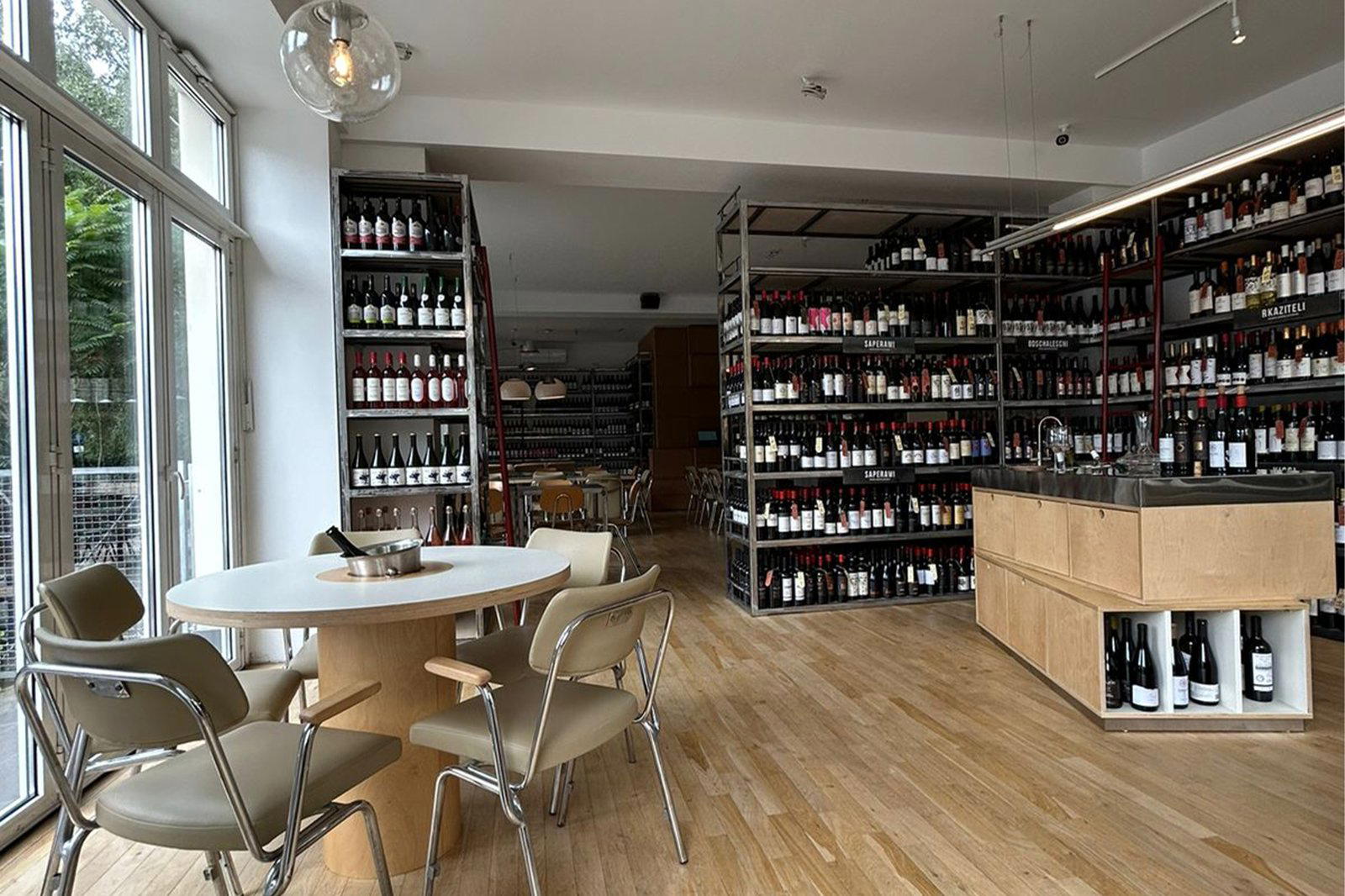
Relaxed yet elegant atmosphere with eclectic decor, attentive service, and creative presentations evoking a modern fine dining experience.