
In Higashiyama Ward, a short walk from Sennyuji Temple, Aoikonshin Yamada holds a 2025 Michelin Plate for kaiseki that reads as a direct translation of the surrounding landscape. The hassun-led menu tracks the seasons with precision, and the celebrated rock garden platter in sweetfish season is among the more discussed presentations in Kyoto's mid-tier kaiseki circuit.
Pearl is the En Primeur Club membership app — saves, bookings, and concierge access live there. Same editors, same standards.
- Address
- 14-5 Sennyuji Goyonotsujicho, Higashiyama Ward, Kyoto, 605-0974, Japan
- Phone
- +81 75-606-5729
- Website
- aoikonshinyamada.com
- Directions
- Get directions
 Saves & bookings on Pearl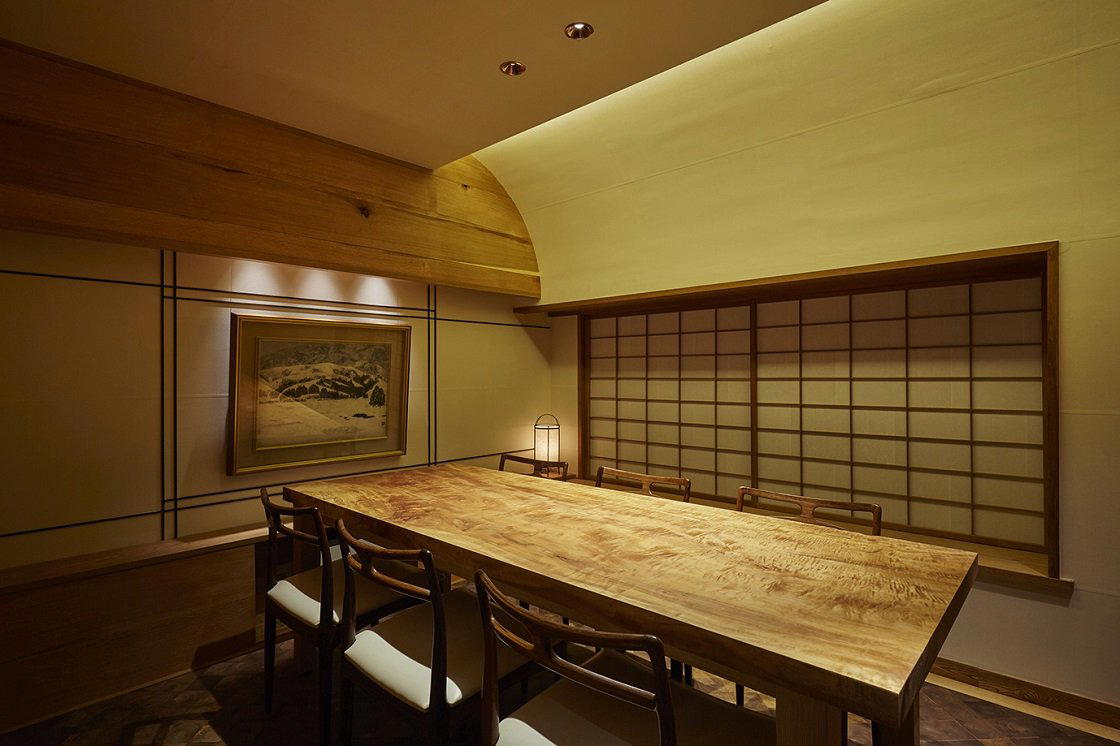
Where the Streets of Higashiyama End and the Table Begins
The approach to Aoikonshin Yamada sets the terms of the meal before you sit down. Higashiyama Ward, at its southern reaches near Sennyuji Temple, is a quieter Kyoto than the postcard version. The tourist circuits that pack Ninenzaka and Gion thin out here, replaced by narrow residential lanes, stone walls, and the particular stillness that accumulates around the city's older temple districts. The address at 14-5 Sennyuji Goyonotsujicho places the restaurant in an area defined less by foot traffic than by proximity to sacred ground, and that relationship between place and cooking turns out to be the restaurant's organising principle.
In a city where kaiseki is both a culinary tradition and a competitive industry, this kind of hyper-local grounding matters. Kyoto's kaiseki spectrum runs from three-Michelin-star institutions like Isshisoden Nakamura and two-star houses like Ifuki down to the Michelin Plate tier, where the recognition signals quality cooking without the price premium that star designation typically commands. At the ¥¥¥ price point, Aoikonshin Yamada occupies the same mid-range bracket as Kenninji Gion Maruyama rather than the ¥¥¥¥ tier held by venues like Kikunoi Roan or Gion Matayoshi. That positioning matters for the traveller planning a Kyoto dining itinerary across multiple nights.
A Menu Built Around the Hassun Logic
Traditional kaiseki structure begins with the hassun, the second course that sets the season's theme and signals the chef's editorial intent for the meal ahead. At Aoikonshin Yamada, the menu opens with this course, which is less a procedural choice than a philosophical one. The hassun functions as a seasonal declaration: the ingredients, the arrangement, the vessel all announce where the calendar stands. From that opening, the courses that follow operate as elaborations of the same theme rather than independent statements.
Kaiseki in Kyoto has always drawn on the natural environment of the surrounding valleys and mountains, but the treatment at Aoikonshin Yamada extends that relationship into the visual architecture of presentation. The Michelin Plate recognition specifically cites the owner's effort in offering elaborate, considered plating, and the seasonal alignment of the menu as evidence of the restaurant's love for the seasons. That phrase captures something real about the cooking's character: this is not austere, correction-focused cuisine but something warmer and more expressive in its relationship to seasonal ingredients.
The Rock Garden Platter and What It Represents
The discussed single presentation at the restaurant is the sweetfish platter served during ayu season, typically from late spring through summer. The construction is specific and deliberate: a clear stream and waterfall rendered in salt on a black lacquer panel, with the sweetfish arranged as if swimming upstream while mist rises from the waterfall's spray. The visual reference is to the natural valleys surrounding Kyoto, where the Kamo and Oi rivers carry ayu from the mountains toward the city.
The Michelin citation describes how the scene imparts cooling thoughts during dining, which points toward something worth understanding about kaiseki's aesthetic ambitions. The presentation is not decorative supplementation to the food; it is part of the food's meaning. The cook at this level is asking the diner to inhabit a specific landscape, to feel the temperature of a mountain stream while eating a fish pulled from one. That the restaurant achieves this inside a residential ward near a Buddhist temple complex, with Kyoto's summer heat pressing in from outside, is precisely the point.
In this regard, the restaurant sits within a long Kyoto tradition of using food presentation as a form of environmental evocation, a tradition shared by kaiseki restaurants across the city but expressed here through a particular sensitivity to the immediate geography of Higashiyama. Nearby, Kodaiji Jugyuan draws on a similar neighbourhood depth in its approach. Across the broader Kansai region, HAJIME in Osaka works the same intersection of landscape and plating at an entirely different price and recognition tier, which illustrates how the tradition scales across formats.
Higashiyama as Context, Not Backdrop
The neighbourhood does specific work for this restaurant beyond aesthetics. Southern Higashiyama carries a different culinary character than Gion or Pontocho. The visitor density is lower, the establishment age is higher, and the restaurants that survive here tend to do so through repeat local custom rather than tourist traffic alone..
That relatively low review count is itself a data point worth reading carefully. It suggests a dining room that is not optimised for throughput, that relies on a specific, informed clientele, and that sits outside the main tourist circuits running through central Gion and around Nishiki Market. Visitors who find their way to Sennyuji Goyonotsujicho have generally come with purpose. The same pattern holds for a handful of Kyoto addresses that operate at the intersection of local knowledge and serious cooking, separated from the city's better-known kaiseki institutions by geography and volume rather than ambition.
For travellers building a wider itinerary around Japanese culinary traditions, the comparison set extends well beyond Kyoto. Harutaka in Tokyo and Myojaku in Tokyo represent how the same seasonal-ingredient discipline operates in an entirely different urban register, while akordu in Nara shows what happens when European technique meets Kansai produce thirty minutes down the Kintetsu line. Goh in Fukuoka, 1000 in Yokohama, and 6 in Okinawa extend that geographic range further, and Azabu Kadowaki in Tokyo benchmarks the kaiseki-adjacent format at the capital's highest level. All of which contextualises what a Michelin Plate recognition in southern Higashiyama means: it marks a kitchen operating at a credible level within one of the world's most demanding culinary traditions.
Planning a Visit
The restaurant sits at 14-5 Sennyuji Goyonotsujicho, Higashiyama Ward, the southern end of the Higashiyama district near Sennyuji Temple. The area is accessible by bus from central Kyoto, and the walk from the nearest bus stop through the temple district takes roughly ten minutes. Advance booking is recommended through a Kyoto dining concierge service or a hotel concierge with established local contacts. Given the restaurant's small profile and the seasonal specificity of its standout courses, timing around ayu season and confirming availability in advance will determine the quality of the experience considerably. The ¥¥¥ price tier positions the meal as a serious dining investment without reaching the higher thresholds of the city's star-rated kaiseki houses.
A Minimal comparable set
Comparable venues nearby, for context on price, style, and recognition.
| Venue | Cuisine | Price | Notes |
|---|---|---|---|
| Aoikonshin YamadaThis venue — the venue you are viewing | Higashiyama, Seasonal Kaiseki | $$$ | Not listed |
| Ryo Kawashima | Nakagyō, Modern Kyoto Kaiseki Omakase | $$$ | Not listed |
| Pontocho Masuda | Nakagyō, Kyoto-style Obanzai | $$$ | Not listed |
| Berangkat | Not listed | $$$ | Nakagyō, Modern Japanese with Southeast Asian influences |
| Torisho sai | Nakagyō, Premium Yakitori Omakase | $$$ | Not listed |
| Nawaya | Not listed | $$$ | Kyotango, Wood-Fired Seasonal Kaiseki Omakase |
Recognition history
Dated appearances from independent guides and award organizations, with the underlying list record or original source where available.
Michelin Plate
Michelin
Michelin Plate
Michelin
Michelin Plate
Michelin
Continue exploring
More in Kyoto
Restaurants in Kyoto
Browse all →
Bars in Kyoto
Browse all →
Hotels in Kyoto
Browse all →
Wineries in Kyoto
Browse all →
At a Glance
- Intimate
- Elegant
- Quiet
- Sophisticated
- Special Occasion
- Date Night
- Standalone
- Open Kitchen
- Local Sourcing
Current opening hours
- Monday
- 10 AM–3 PM
- Tuesday
- 10 AM–3 PM
- Wednesday
- 10 AM–3 PM
- Thursday
- 10 AM–3 PM
- Friday
- 10 AM–3 PM
- Saturday
- 10 AM–3 PM
- Sunday
- 10 AM–3 PM
Hours can change for holidays and private events. Last verified .
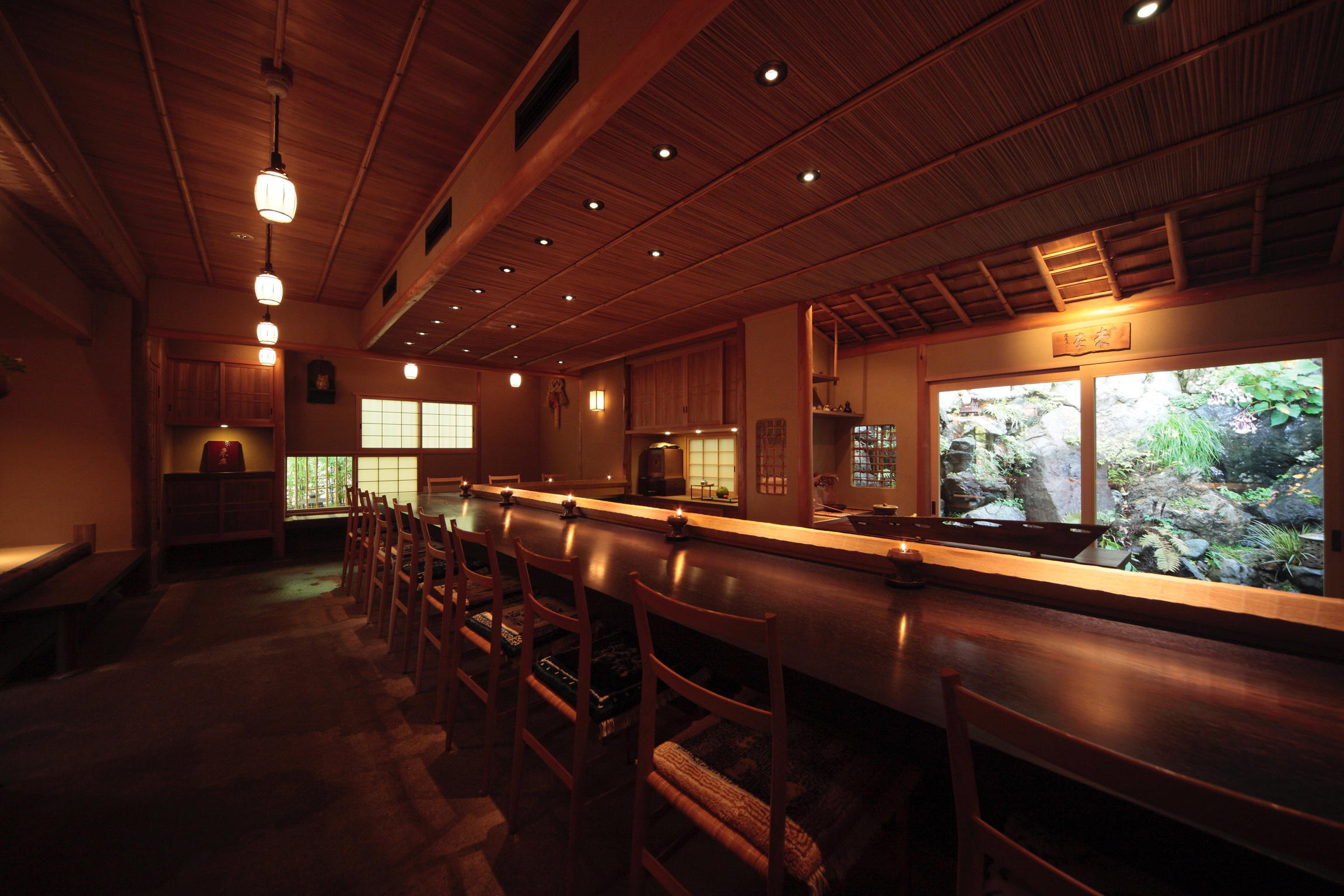
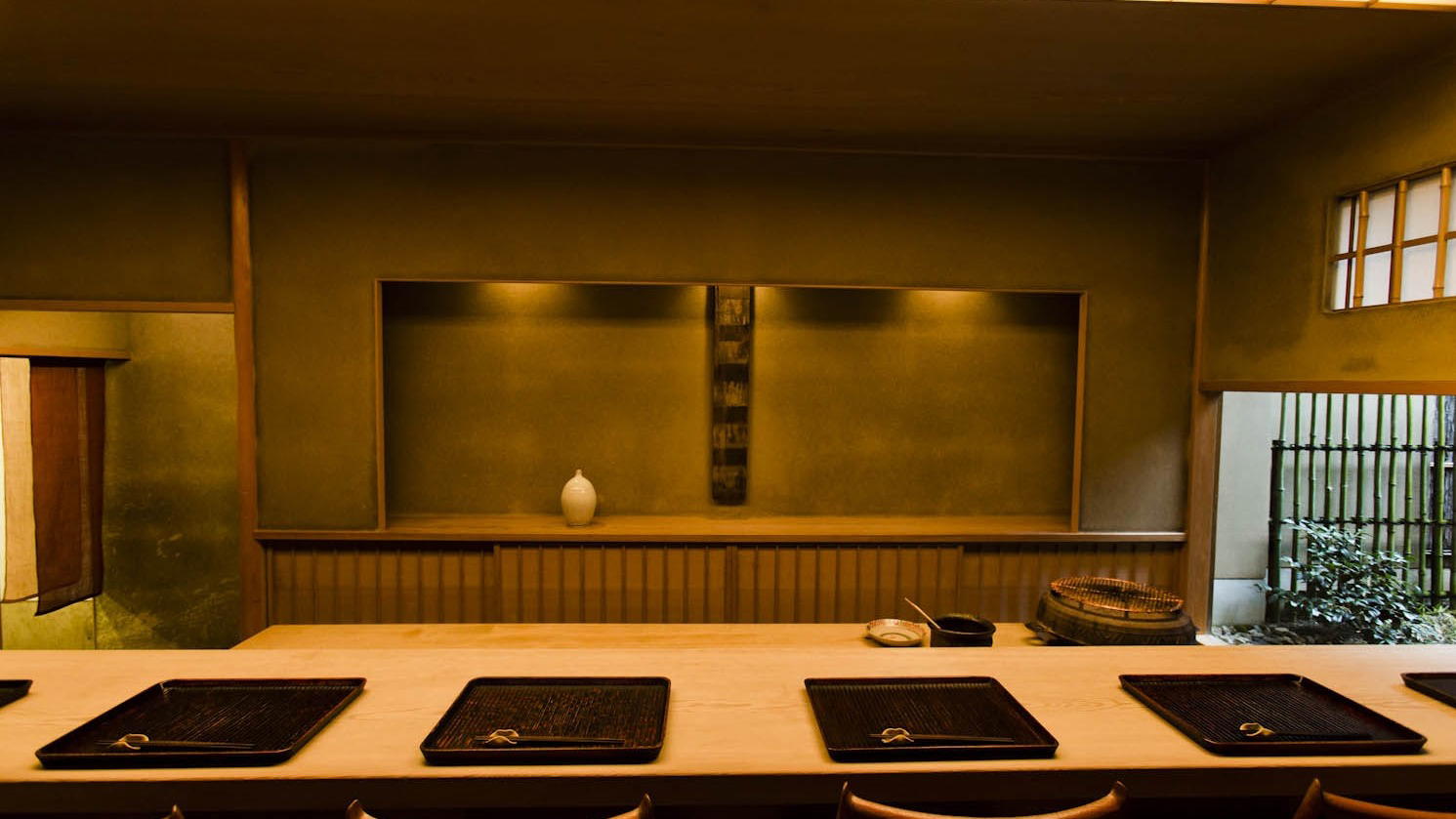
Refined and contemplative with meticulous attention to detail: lacquer surfaces that catch light like still water, carefully selected ceramics, and a service cadence that creates ceremony around each course.