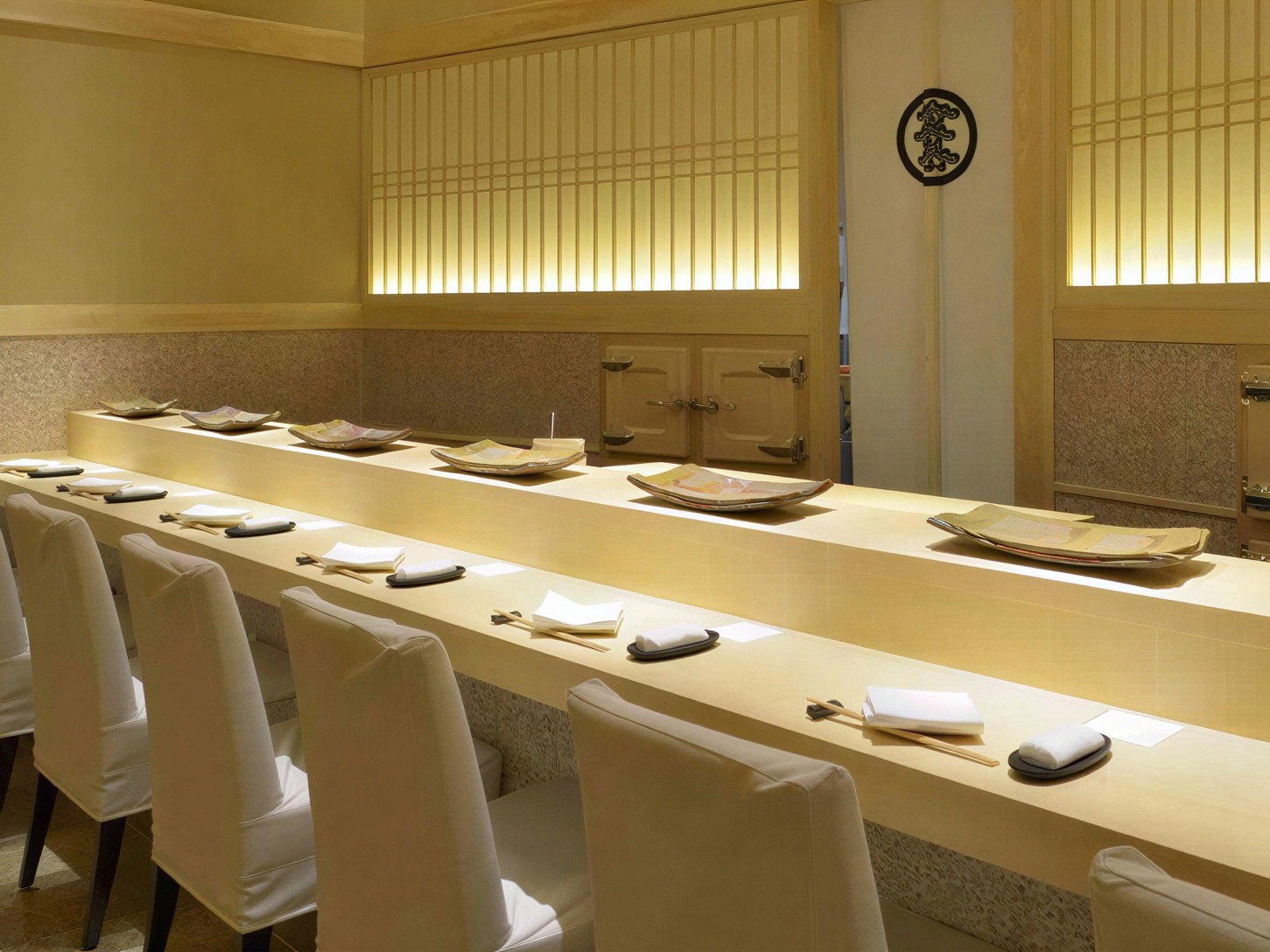
Tabelog Bronze #213
Our verdict
くろ﨑 operates from a basement address in Minami-Aoyama, one of Tokyo's most concentrated corridors for serious counter dining. Where comparable ¥¥¥¥ restaurants in the neighbourhood compete on Michelin recognition and reservation scarcity, くろ﨑 draws attention through its deliberate approach to multi-course sequencing.

Pearl is the En Primeur Club membership app — saves, bookings, and concierge access live there. Same editors, same standards.
- Address
- Japan, 〒107-0062 Tokyo, Minato City, Minamiaoyama, 4 Chome−16−15 FPG links MINAMIAOYAMA B2F
- Phone
- +81364554596
- Website
- kurosaki-sushi.com
- Directions
- Get directions
Minami-Aoyama and the Counter-Dining Tier It Anchors
Basement addresses in Tokyo's premium dining districts are rarely coincidental. In Minami-Aoyama, the descent below street level has become something of a signal: the absence of foot traffic is the point. The neighbourhood, which stretches across Minato City's southern flank, holds one of the higher concentrations of serious counter-format restaurants in the city, a belt where reservation windows routinely extend weeks or months ahead and where the ¥¥¥¥ tier is the operative baseline rather than the ceiling. くろ﨑, located in the basement of FPG links MINAMIAOYAMA on 4-chome, sits inside that tier — not as an outlier, but as a participant in a well-established competitive set.
To understand where くろ﨑 positions itself, it helps to map the broader pattern. Minami-Aoyama and its immediate neighbours have seen a sustained concentration of chef-led, counter-format rooms over the past decade, a trend that accelerated as Michelin coverage deepened in Tokyo and as international dining tourism increased demand for reservation-scarce experiences. Venues like Harutaka and RyuGin have anchored the upper bracket of this map, while a second cohort — less decorated but equally serious in format, has grown steadily around them. くろ﨑 belongs to that second cohort, which is not a diminishment but a description of where the competitive pressure actually sits.
The Arc of the Meal: How Progression Defines the Experience
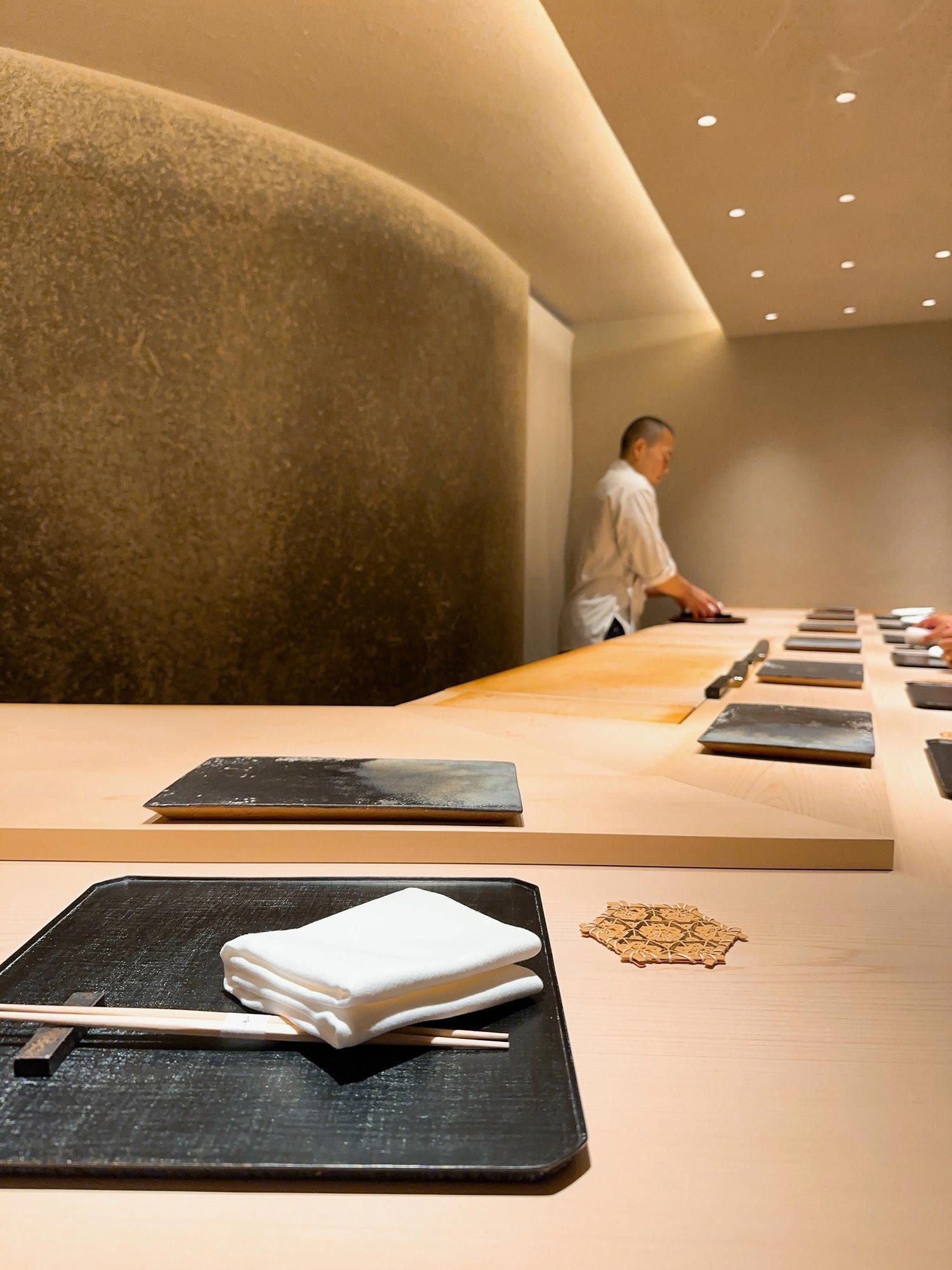
In Tokyo's multi-course counter rooms, the sequencing of a meal is rarely incidental. The order in which dishes arrive, the pacing between courses, and the transition from raw to cooked, light to rich, delicate to assertive, these are as deliberate as the ingredients themselves. This is especially pronounced in rooms where the counter format removes the buffer of a dining room floor, placing the guest in direct proximity to preparation. At that distance, the narrative arc of the meal becomes legible in real time.
The tasting progression format, which dominates the upper tier of Tokyo counter dining, has its roots in kaiseki's structural logic, a clear opening, a middle that builds in intensity, and a close that returns to simplicity. Kaiseki counters like RyuGin have codified this into internationally recognised form. French-inflected rooms like L'Effervescence and Sézanne import a similar arc but route it through European technique. Crony represents a more hybrid approach, where the progression carries creative risk at each stage. What varies across these rooms is the vocabulary, not the underlying commitment to sequence as meaning.
くろ﨑 operates within this tradition. The basement setting reinforces an insular atmosphere that suits the format: no passing street noise, no ambient distraction, a physical envelope designed to keep attention on what is placed in front of you. In Tokyo's counter dining culture, this kind of environmental control is a deliberate choice, and regulars of the format recognise it as such.
Placing くろ﨑 in Tokyo's Wider Dining Map
Tokyo's dining circuit at the ¥¥¥¥ tier is expansive enough that no single neighbourhood holds a monopoly. Minami-Aoyama competes with Ginza, Azabu, and Nishi-Azabu for the density of high-commitment counter rooms. Nationally, the same conversation extends to HAJIME in Osaka, Gion Sasaki in Kyoto, and Goh in Fukuoka, rooms that have established regional identities while competing for the same informed international audience. Even smaller cities have produced serious counter-format destinations: akordu in Nara and 一本木 石川製 in Nanao demonstrate that the format has spread well beyond the major metropolitan corridors.
Within Tokyo specifically, the traveller choosing between venues in this tier is making decisions based on format, cuisine type, and reservation access rather than on quality differentials alone. The rooms that consistently fill months ahead, whether sushi counters, kaiseki progressions, or French-Japanese hybrid formats, share a common operating logic: limited seats, no walk-in culture, and a meal structure that presupposes the guest's engagement. くろ﨑 fits that profile. For a fuller orientation to where it sits within the city's options, the EP Club Tokyo restaurants guide maps the broader field.
For comparative context outside Japan's major cities, it is worth noting how counter-format restaurants in smaller markets operate: 夕佳亭山乃 in Sapporo, 湖畔荘 in Takashima, and 庄内屋 in Nishikawa Machi each demonstrate how the multi-course progression adapts to regional ingredient availability and local pacing expectations. The structure remains consistent; the content shifts with geography.
For readers calibrating against international reference points, Le Bernardin in New York City and Atomix represent how the tasting-progression format and counter discipline translate into American fine dining contexts, while venues like Birdland in Sakai and Bistro Ange in Toyohashi illustrate the range of formats operating at different price points within Japan itself.
Know Before You Go
| Address | 4 Chome-16-15 FPG links MINAMIAOYAMA B2F, Minami-Aoyama, Minato City, Tokyo 〒107-0062 |
|---|---|
| Access | Minami-Aoyama is served by Omotesando Station (Ginza, Chiyoda, and Hanzomon lines), a short walk from the venue. |
| Booking | Contact information not currently listed. Check EP Club or third-party reservation platforms for current availability. |
| Format | Counter dining, multi-course progression format standard for this tier and neighbourhood. |
| Pricing | Comparable Minami-Aoyama counter rooms operate at ¥¥¥¥ tier. |
| Hours | Not listed. Verify directly before visiting. |
Frequently asked questions
What's くろ﨑's location?
くろ﨑 is located at Japan, 〒107-0062 Tokyo, Minato City, Minamiaoyama, 4 Chome−16−15 FPG links MINAMIAOYAMA B2F, Tokyo.
Is くろ﨑 in Minami-Aoyama worth visiting for a special occasion dinner in Tokyo?
くろ﨑 occupies a basement counter at FPG links MINAMIAOYAMA in Minami-Aoyama, a district where special-occasion counter dining is taken seriously across a concentrated cluster of rooms. The B2F address and the counter-progression format signal a meal structured around deliberate sequencing rather than à la carte flexibility, which suits occasions where full commitment to the kitchen's direction is appropriate.
What do regulars order at くろ﨑?
Regulars at comparable B2F counter rooms in the area typically commit to the full progression rather than requesting individual dishes. Arriving with specific expectations about particular courses is likely to work against the format here.
Can I walk in to くろ﨑?
Walk-ins are not the norm for basement counter rooms at くろ﨑's address tier in Minami-Aoyama, Tokyo. Counter seating in this format is allocated in advance, and the B2F location at FPG links MINAMIAOYAMA is not configured for passing foot traffic. Reservations should be secured well ahead, particularly for weekend sittings. No phone number or booking portal is currently listed in the venue's public record.
What is くろ﨑 known for?
くろ﨑 holds a basement counter address in Minami-Aoyama, one of Tokyo's most closely watched dining corridors, where it operates at the ¥¥¥¥ tier alongside a dense concentration of high-commitment counter rooms. The venue is positioned within a neighbourhood that has made the B2F counter format a recognisable architectural and culinary convention. Its placement in FPG links MINAMIAOYAMA places it in direct proximity to comparable rooms that define the area's counter-dining reputation.
Can くろ﨑 adjust for dietary needs?
At counter rooms operating within a fixed-progression format in Tokyo's Minato City dining tier, dietary requests are typically handled at the time of reservation rather than on the night. Guests with specific requirements should communicate these when booking, since the kitchen sequences courses in advance and late changes are rarely absorbed without disruption to the full sitting.
At a Glance
| Venue | Cuisine | Price | Awards | Notes |
|---|---|---|---|---|
| くろ﨑This venue — the venue you are viewing | Modern Edomae Sushi Omakase | $500+ | Tabelog Bronze #213 | Not listed |
| Harutaka | Edo-Style Omakase Sushi | $200–300 | 3 Michelin Stars · World's 50 Best #76 | Sushi |
| L'Effervescence | Modern French with Japanese Influences | $200–300 | 3 Michelin Stars · World's 50 Best #69 | French |
| RyuGin | Modern Kaiseki | $500+ | 3 Michelin Stars · World's 50 Best #41 | Kaiseki, Japanese |
| Crony | Modern French with Japanese Influences | $150–200 | 2 Michelin Stars · World's 50 Best #34 | Innovative, French |
| Florilège | Modern French-Japanese Plant-Based Fine Dining | $50–100 | 2 Michelin Stars · World's 50 Best #31 | French |
Recognition history
Dated appearances from independent guides and award organizations, with the underlying list record or original source where available.
Opinionated About Dining Top Restaurants in Japan Recommended
Opinionated About Dining
Tabelog Bronze #213
Tabelog
Full recognition history (6 entries)
Opinionated About Dining Top Restaurants in Japan Ranked #119
Opinionated About Dining
Opinionated About Dining Top Restaurants in Japan Ranked #469
Opinionated About Dining
Tabelog Bronze
Tabelog
Tabelog 100 #75 · No. 75
Tabelog · Tabelog 100 - Sushi - TOKYO - 2025