
1 Michelin Key
Set on the volcanic slopes of Mount Unzen near Nagasaki, Ryotei Hanzuiryo is a 14-villa ryokan where Sukiya-zukuri architecture, historic onsen, and ancient forest gardens define the stay. At around $1,985 per night, it occupies the upper tier of Japan's private-villa ryokan category — a property where the physical environment and traditional craft do most of the talking.

Pearl is the En Primeur Club membership app — saves, bookings, and concierge access live there. Same editors, same standards.
- Address
- 380-1 Obamachō Unzen, Unzen, Nagasaki 854-0621
- Phone
- +81 957-73-2111
- Website
- hanzuiryo-unzen.jp
- Directions
- Get directions
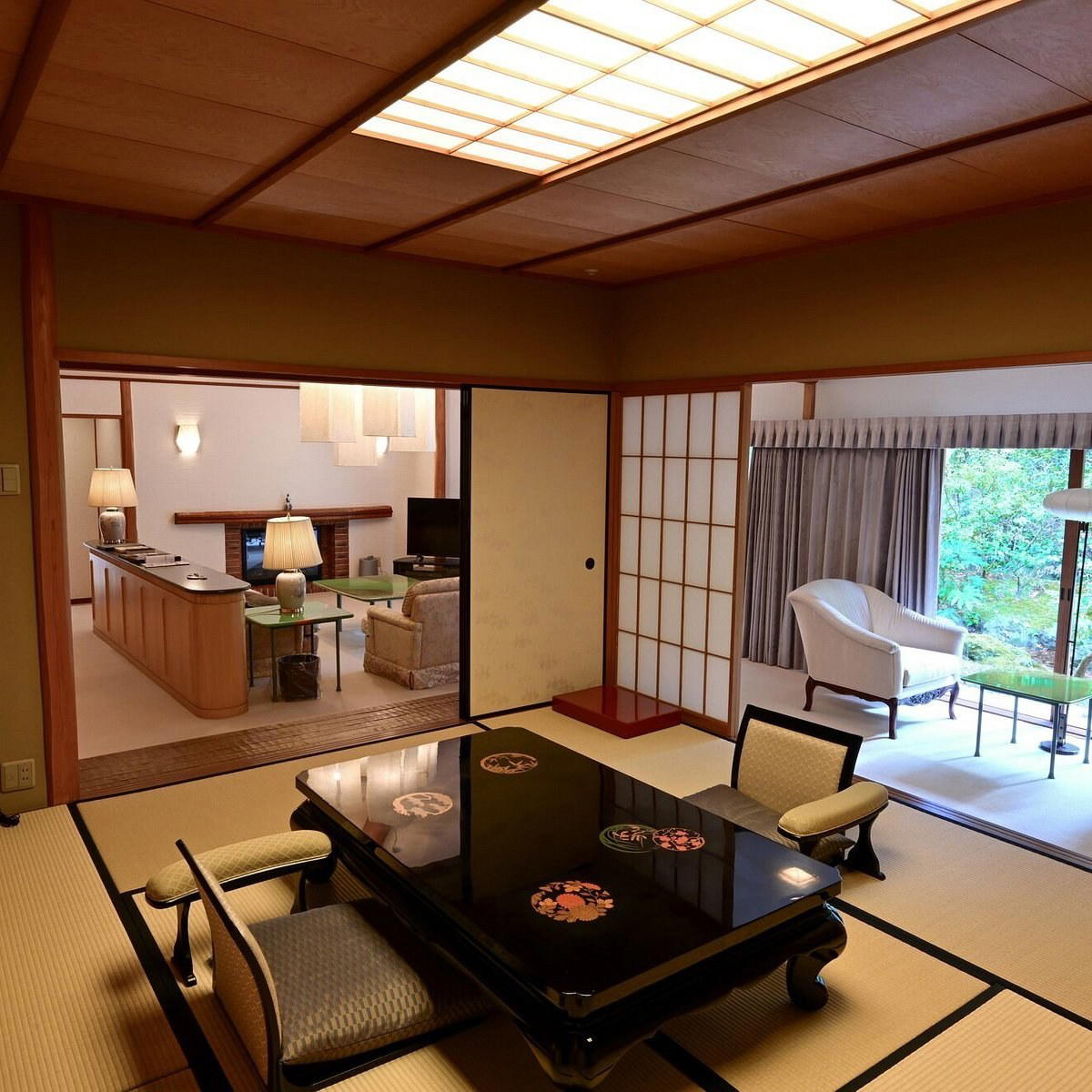
Volcanic Ground, Ancient Timber: The Architecture of Hanzuiryo
Japan's premium ryokan market has sorted itself into a recognisable hierarchy over the past decade. At one end sit the large, multi-floor traditional inns that serve hundreds of guests with choreographed efficiency. At the other, a smaller cohort of villa-format properties where the architecture itself becomes the primary offering — where the framing of a garden view or the grain of a tatami mat carries as much weight as the meal or the bath. Ryotei Hanzuiryo, on the forested slopes of Mount Unzen in Nagasaki Prefecture, belongs to that second group, and it makes a particularly strong case for it. With just 14 freestanding villas, it operates at a scale where every structural decision registers.
The architectural vocabulary here is Sukiya-zukuri, the refined residential style that emerged from Japan's tea ceremony tradition and reached its fullest expression in the 17th and 18th centuries. Where samurai architecture emphasised mass and permanence, Sukiya-zukuri prized subtlety: asymmetrical plans, natural materials left close to their raw state, and an orchestrated relationship between interior and exterior that made the garden an extension of the room rather than a view from it. At Hanzuiryo, that tradition is applied to freestanding villas rather than a single interconnected structure, which means each unit occupies its own position within the ancient forest and garden grounds — a deliberate compositional choice that maximises the sense of seclusion without resorting to high walls or heavy screening.
Inside the villas, the material palette reads as a lesson in restraint. Tatami flooring sets the sensory baseline, the faint, grassy scent and the slight give underfoot that no synthetic surface has ever convincingly replicated. Paper screens (shoji) frame the windows, diffusing natural light into something softer and more directional than glass alone would permit, and simultaneously connecting the interior to the garden beyond without fully exposing it. Lacquerware, the other defining decorative element, brings depth and craft to surfaces that might otherwise read as simply spare. These are not incidental choices; they are the material language of a hospitality tradition that understands atmosphere as architecture.
Mount Unzen as Context, Not Backdrop
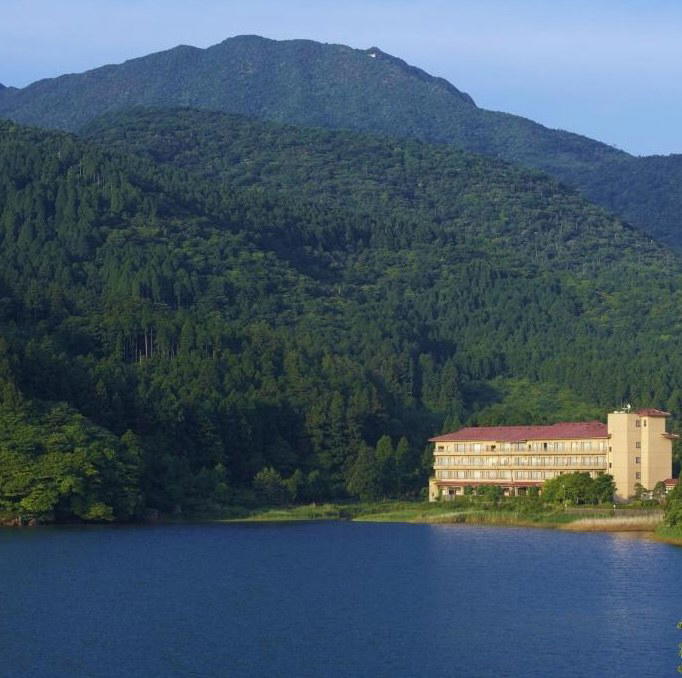
The location does considerable work here. Mount Unzen is one of Kyushu's most geologically active sites, a range of steaming fumaroles, thermal springs, and forest that has been regenerating since a major eruption in the early 1990s. The onsen tradition in this area predates the modern resort industry by several centuries, foreign residents in the Meiji era made Unzen a summer retreat precisely because of its cooler altitude and thermal waters, and the town retains an atmosphere that sits apart from the more packaged hot-spring circuits of places like Beppu or Hakone.
For Hanzuiryo, the geothermal inheritance is not decorative. The property's historic onsen are fed by the same volcanic system that defines the mountain, and in the context of Japanese spa culture, where the provenance and mineral composition of thermal water matters considerably, that lineage carries weight. Properties with their own source waters, rather than piped supply, sit in a different category within the ryokan ranking system, and Hanzuiryo's position on the mountain's actual slopes makes that claim direct. Guests exploring further afield might consider the broader Kyushu onsen circuit: ANA InterContinental Beppu Resort & Spa in Beppu and ENOWA Yufu in Yufu represent the region's contrasting approaches to thermal hospitality, from large-resort infrastructure to contemporary design-led formats.
Where Hanzuiryo Sits in the Wider Ryokan Field
Japan's premium ryokan category has attracted significant international attention over the past few years, with properties in Hakone, the Izu Peninsula, and the Kaga region of Ishikawa drawing most of the coverage. In that context, Unzen operates slightly outside the established luxury circuit, which is both a practical consideration and a meaningful part of the property's appeal. The area receives a fraction of the international visitor traffic that reaches Gora Kadan in Hakone or Asaba in Izu, which means the surrounding landscape and the onsen town itself retain a character that heavily touristed areas often lose.
At approximately $1,985 per night, Hanzuiryo prices in the upper tier of the Japanese villa-ryokan category. For comparison, the cohort of 14-or-fewer-villa ryokan with private onsen access and historic architecture, properties like Araya Totoan in Kaga or Zaborin in Hokkaido, typically occupies a similar price band, where the per-night rate reflects not just accommodation but an entire curated environment. Those considering the broader Japan luxury hotel market might also look at HOTEL THE MITSUI KYOTO or Amanemu in Mie, which offer different takes on traditional Japanese hospitality at a comparable investment level. For island and coastal alternatives, Jusandi in Ishigaki and Halekulani Okinawa occupy related positions in the southern Japan market. Further afield across the ryokan spectrum, Nishimuraya Honkan in Kinosaki-cho, Sekitei in Hatsukaichi-shi, Atami Izusan Karaku, Beniya Kofuyuden in Awara, Bettei Otozure in Nagato, Bettei Senjuan in Minakami, and Fufu Kawaguchiko and Fufu Nikko each represent distinct regional interpretations of the same underlying ryokan tradition.
Planning a Stay
Unzen sits in Nagasaki Prefecture on the Shimabara Peninsula, accessible from Nagasaki city by a combination of road and, depending on the route, ferry. The journey is not instant, and that is somewhat by design: properties at this price point and this level of seclusion tend to attract guests who have already decided that the travel itself is part of the transition. Advance booking is advisable, particularly for autumn, when Unzen's forested slopes shift colour in a way that drives domestic demand for the area's onsen accommodations. The 14-villa format means availability is genuinely constrained, this is not a property where last-minute options are a reliable fall-back. For those assembling a broader Japan itinerary, Bvlgari Hotel Tokyo and Benesse House in Naoshima offer two contrasting entry points into Japanese luxury that pair well with a property like Hanzuiryo for guests moving between urban, art-focused, and rural formats. See our full Unzen restaurants and experiences guide for further orientation on what the area offers beyond the property itself.
In Context: Similar Options
Comparable venues nearby, for context on price, style, and recognition.
| Venue | Cuisine | Price | Awards | Notes |
|---|---|---|---|---|
| RYOTEI HANZUIRYOThis venue — the venue you are viewing | Traditional Japanese ryokan with detached villas and expansive gardens | Not listed | 1 Michelin Key | Not listed |
| Azumaen | Authentic Japanese ryokan with spacious tatami rooms and private dining. | Not listed | Michelin Selected | Unzen |
| Hanzuiryo (半水盧) | Luxury heritage ryokan with contemporary service standards, positioned as a upper-tier wellness and culinary destination within a protected national park. | Not listed | 1 Michelin Key | Unzen |
| SETOUCHI RETREAT by Onko Chishin | Small luxury all-suite hotel designed by Tadao Ando | Not listed | 1 Michelin Key · Design Hotels Member | Yanaidanimachi |
| Azumi Setoda | Restored traditional Japanese ryokan in a 140-year-old merchant estate | $750–1,000 | 1 Michelin Key · Mr & Mrs Smith Seal of Approval | Setoda |
| Benesse House | Contemporary art museum-hotel complex by Tadao Ando across four distinctive buildings | $750–1,000 | 2 Michelin Keys | Gotanji |
Recognition history
Dated appearances from independent guides and award organizations, with the underlying list record or original source where available.
Michelin 1 Key
Michelin
Full recognition history (2 entries)
Michelin 1 Key
Michelin

Details
- Quiet
- Elegant
- Scenic
- Intimate
- Sophisticated
- Honeymoon
- Romantic Getaway
- Anniversary
- Wellness Retreat
- Garden
- Historic Building
- Wi Fi
- Sauna
- Restaurant
- Room Service
- Garden
- Spa
- Garden
- Mountain
- Step Free Entrance
Tranquil and relaxing atmosphere with elegant tea ceremony-inspired furnishings, tatami flooring, garden views through paper screens, and soothing hot spring scents.