

1 Michelin Key · Relais Chateaux Award
Bettei Senjuan is a contemporary ryokan in Minakami, Gunma, earning a Michelin One Key in 2024 and rated 4.5 across nearly 500 reviews. Eighteen rooms blend traditional tatami formats with modern architectural gestures, including a double-height corridor window that frames the surrounding forest. Private onsen baths open to the greenery, and Mount Tanigawa sits within reach for hiking, rafting, and skiing. Rates start from US$659 per night.

Pearl is the En Primeur Club membership app, where members save venues, book tables and use the concierge.
Where Contemporary Design Meets the Ryokan Tradition
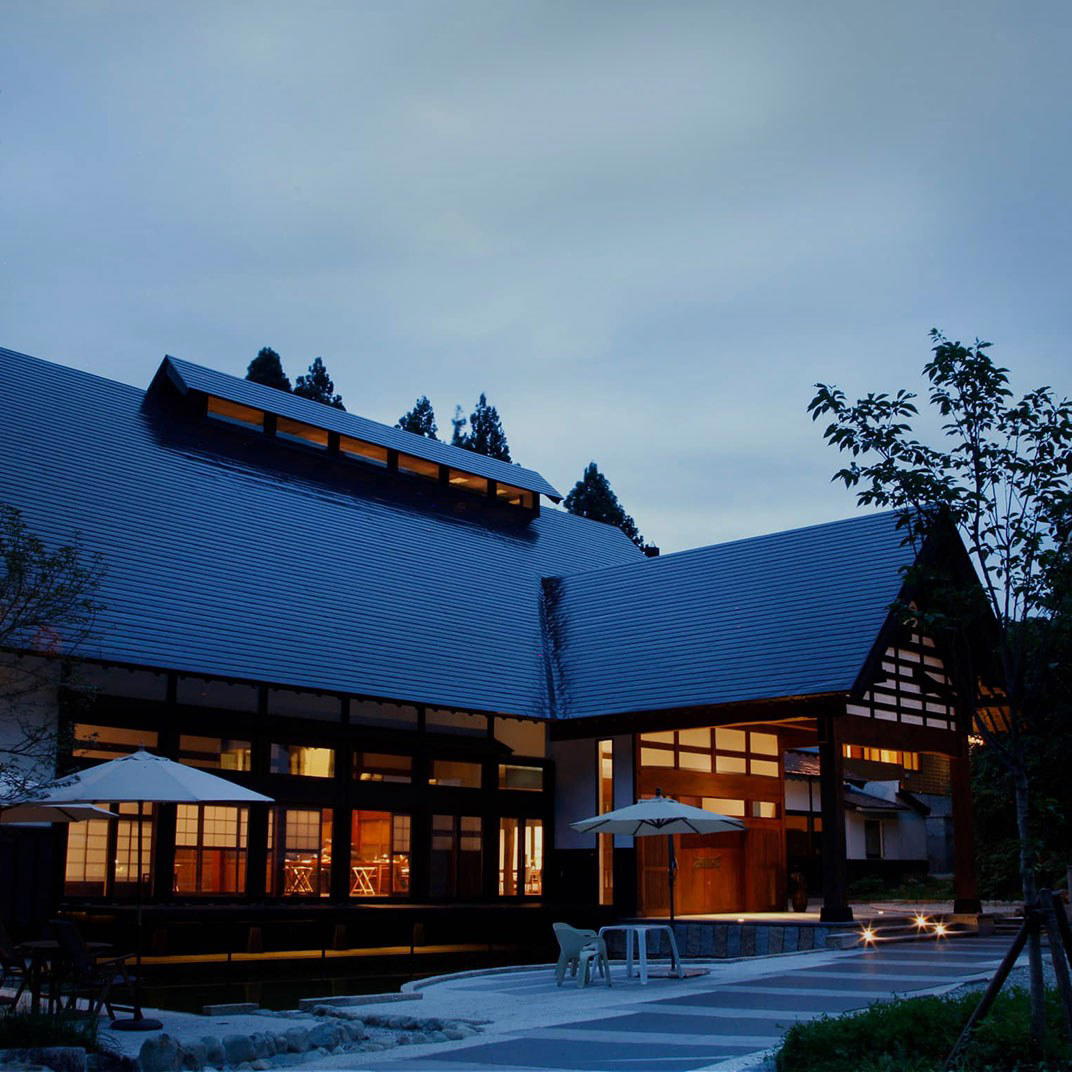
The modern ryokan occupies a contested space in Japanese hospitality. For most of the format's history, the ryokan's design language was inseparable from its era, low furniture, sliding shoji screens, tatami underfoot, and a building vocabulary that changed little across centuries. That alignment of tradition and material was not a weakness but a definition. The question that a newer generation of properties has had to answer is whether contemporary architecture can participate in that definition, or whether it simply imposes itself on top of it. 別邸仙寿庵 in Minakami, Gunma Prefecture, represents one of the more considered answers to that question.
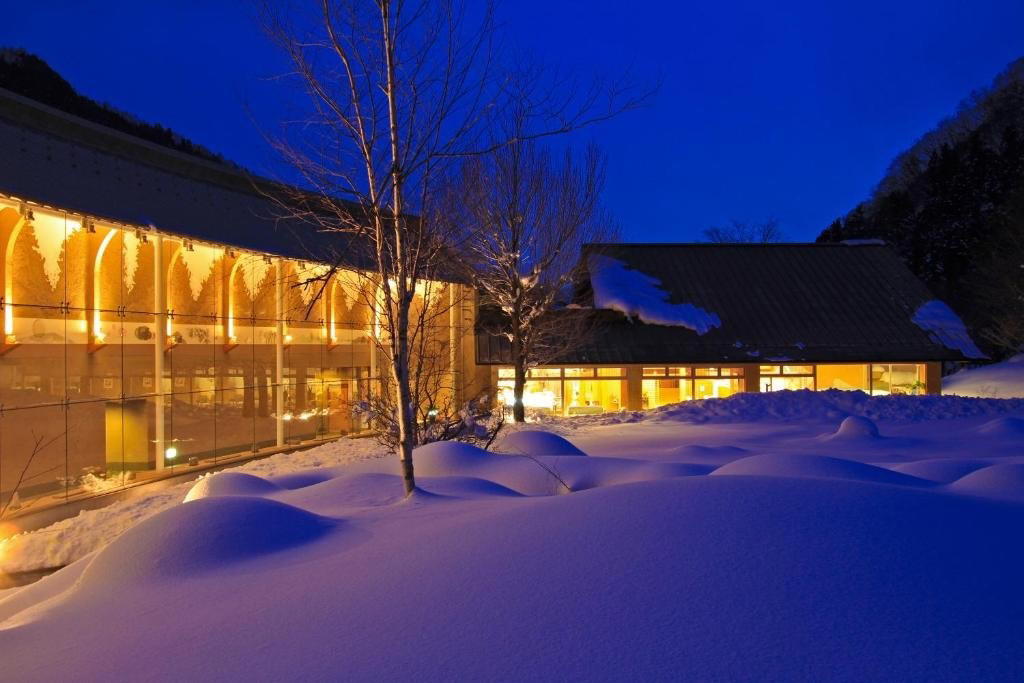
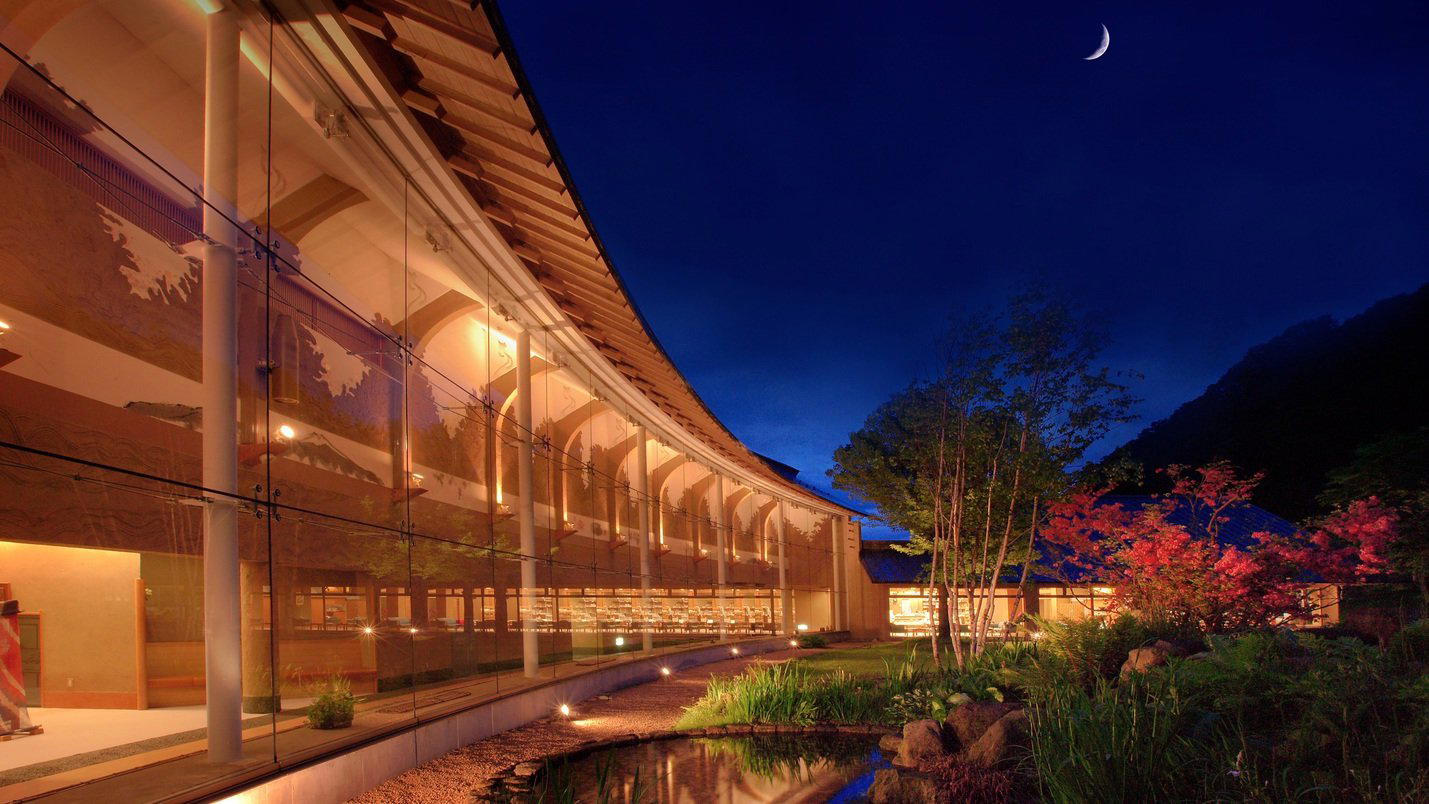
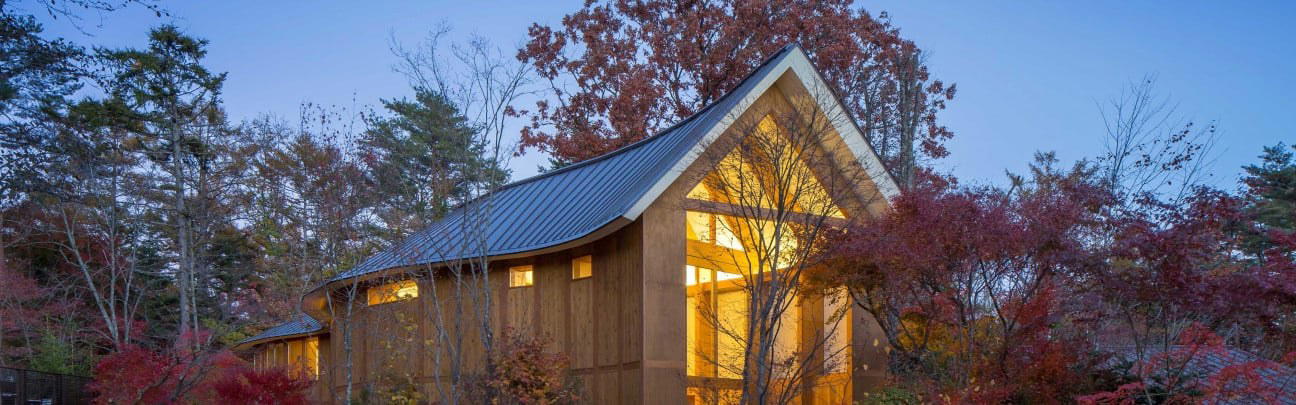
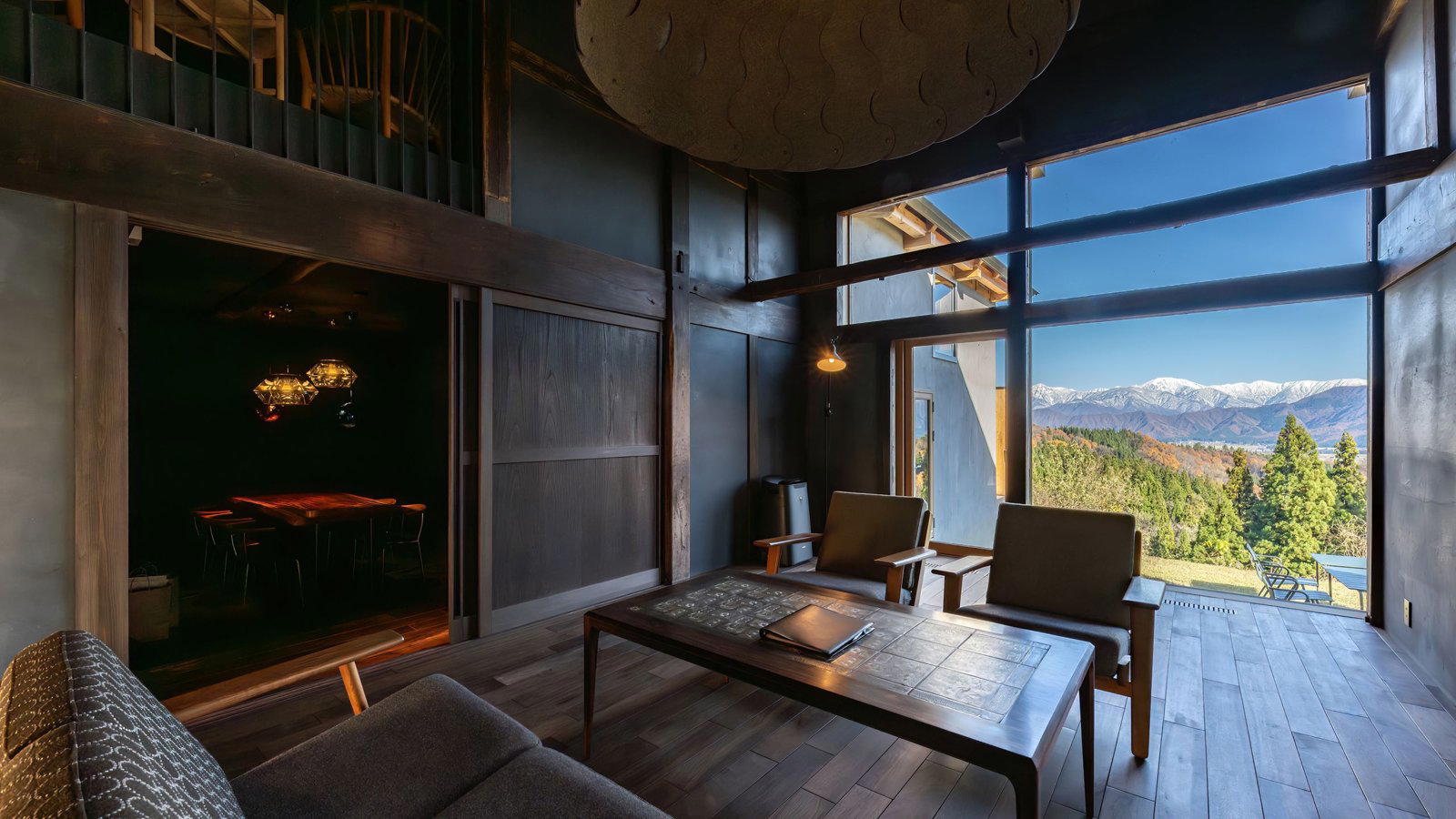
The property's most architecturally declarative gesture is the long, arcing main corridor connecting the 18 rooms. One side opens to the guest accommodation; the other is given entirely to a continuous, double-height window that runs the length of the passage. The effect is closer to an immersive viewing structure than a hallway, the surrounding forest is not glimpsed through porthole openings but absorbed as a full surround. It is the kind of spatial move that works precisely because it does not compete with traditional ryokan sensibility; it amplifies the relationship to nature that has always been central to the format. Among contemporary ryokan, this corridor alone places Bettei Senjuan in a different register from properties that apply modern interiors as a surface treatment rather than a structural intent.
Room Formats and the Architecture of Restraint
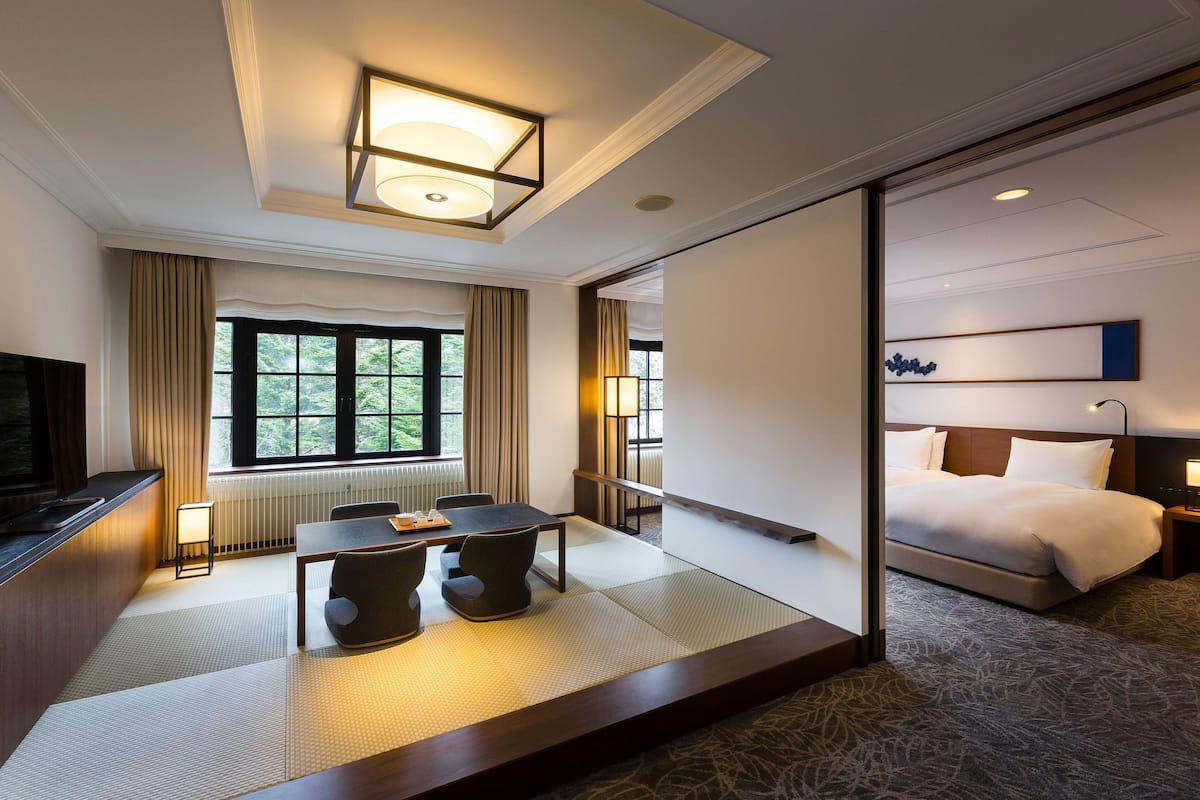
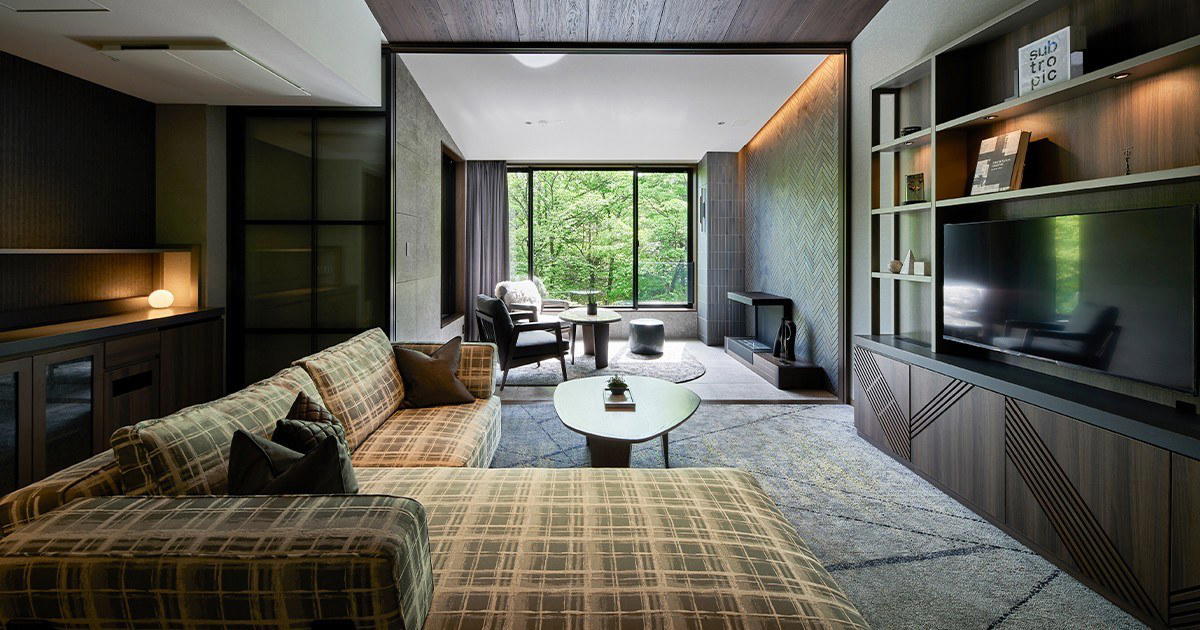
Inside the rooms themselves, the design register shifts. The tatami-style Japanese rooms do not attempt to innovate. Floor-level furniture, the measured proportions of a traditional tatami layout, and an absence of superfluous gesture characterise the format, which is exactly as it should be. The tatami room works because its logic has been refined over centuries, and the decision to leave it largely intact reflects a design literacy that many contemporary properties miss when they try to modernise the format into irrelevance.
Western-style rooms carry the aesthetic cues of the tatami configuration but reorient the spatial experience vertically, accommodating guests who prefer conventional bed heights without abandoning the property's material sensibility. The Japanese-Western hybrid rooms sit between these two formats. For visitors on their first ryokan stay, the hybrid option eases the transition; for those already familiar with tatami living, the pure Japanese rooms are the more coherent choice. The Michelin Guide's 2024 recognition of Bettei Senjuan with One Key, an award that specifically evaluates the quality of the hospitality experience rather than the restaurant alone, signals that the property performs consistently across all three formats.
Minakami's Onsen Context and What It Means for the Baths
Minakami is not a generic onsen destination. The town sits at the southern edge of the Joshinetsu Kogen National Park in Gunma Prefecture, and its thermal waters have been drawing visitors for centuries. Within that established onsen culture, Bettei Senjuan's bath facilities are calibrated to the setting rather than designed as standalone spectacle. Multiple baths feature at least two open walls facing the surrounding forest, which means the greenery that frames the corridor experience continues into the bathing ritual. When snow caps Mount Tanigawa-dake, visible from the property and the area's dominant topographic reference, the contrast between thermal warmth and alpine cold becomes the defining sensory register of a stay.
Private onsen access is available, which matters in practical terms: the semi-public bath culture of traditional ryokan is a genuine part of the experience, but guests who prefer to take the forest-framed soak on their own terms have that option. For a property priced from US$659 per night across 18 rooms, private onsen access positions Bettei Senjuan in the upper tier of the Minakami market, though it remains accessible relative to peers at comparable design and award levels elsewhere in Japan. Properties such as Gora Kadan in Hakone or Asaba in Izu operate in a similar bracket of Michelin-recognised traditional properties with serious bathing infrastructure, and the Minakami setting offers a different mountain character from either.
The Mountain Setting Beyond the Property
Bettei Senjuan's location in the Tanigawa-dake area gives it access to one of the Kanto region's more varied outdoor itineraries. The mountain is a serious hiking destination in warmer months, with trails ranging from accessible ridge walks to technical ascents that require preparation. The Tone River valley below the property supports white-water rafting, with Minakami long established as one of the closer adventure-sports destinations to Tokyo. In winter, ski terrain becomes the dominant draw, with several ski areas within reasonable reach of the town. The mountain is snow-capped year-round at its upper elevations, which means even summer stays carry a visual reference to the alpine scale of the place.
For a Tokyo-based traveller, the logistics support a weekend stay without difficult logistics. By Shinkansen, Jomo-Kogen station is approximately 90 minutes from central Tokyo, followed by a 20-minute taxi transfer to the property. The alternative is a roughly two-hour drive, which may suit guests who want the flexibility of a car for exploring the surrounding area. The access profile places Bettei Senjuan in the same practical bracket as Hakone, Nikko, or the Izu Peninsula for Tokyo weekenders, but with meaningfully less visitor density. Fufu Nikko and Fufu Kawaguchiko serve comparable proximity and design-led positioning from Tokyo; Minakami's particular advantage is the combination of serious mountain topography and genuine onsen town character.
For those comparing across a wider range of premium ryokan in Japan, the contemporary design cohort is worth mapping carefully. Properties like Zaborin in Kutchan, ENOWA Yufu in Yufu, and Benesse House in Naoshima each represent a different expression of the modern Japanese hospitality sensibility; Bettei Senjuan's particular version is defined by its architectural corridor gesture, its integration into an established onsen town, and its mountain outlook. Amanemu in Mie and Bettei Otozure in Nagato operate comparable premium positioning within their own regional onsen contexts for further comparison.
For broader context on what Minakami's hospitality scene offers beyond the property itself, our full Minakami restaurants guide maps the town's dining options and seasonal considerations.
Planning a Stay
Rates begin at US$659 per night, and the 18-room scale means the property books ahead during peak seasons, particularly autumn foliage months (late October to mid-November) and ski season (December through February). The Shinkansen connection from Tokyo keeps Bettei Senjuan accessible for a two-night minimum stay, which is the realistic minimum to absorb both the onsen culture and at least one outdoor activity. Guests arriving via Jomo-Kogen station should arrange the taxi transfer in advance given the limited transport options at that station.
A Quick Peer Check
Comparable venues nearby, for context on price, style, and recognition.
| Venue | Cuisine | Price | Awards | Notes |
|---|---|---|---|---|
| Bettei SenjuanThis venue (the venue you are viewing) | Modern luxury ryokan with traditional Japanese elements and contemporary design. | $200–300 | 1 Michelin Key · Relais Chateaux Award | Not listed |
| 別邸仙寿庵 | Modern luxury ryokan fusing contemporary architecture with traditional Japanese hospitality | Not listed | Not listed | Tanigawa |
| Takaragawa Onsen Osenkaku (宝川温泉 汪泉閣) | Traditional Japanese ryokan with historic charm since 1923 | Not listed | Not listed | Takaragawa Onsen |
| Shoraiso | Traditional Japanese ryokan with modern reconstruction | Not listed | 1 Michelin Key | Yamanouchi-machi |
| InterContinental Yokohama Pier 8 | Nautical-inspired luxury hotel blending maritime heritage with modern Japanese serenity | Not listed | 1 Michelin Key | Naka |
| TRUNK (HOTEL) YOYOGI PARK | Boutique urban recharge hotel blending Japanese craftsmanship with Scandinavian design. | $300–500 | 1 Michelin Key · Tatler Listed in Best Hotels Asia-Pacific | Shibuya |
Recognition history
Dated appearances from independent guides and award organizations, with the underlying list record or original source where available.
Michelin 1 Key
Michelin
Relais Chateaux Award
Relais Chateaux
Full recognition history (5 entries)
Michelin 1 Key
Michelin
Relais Chateaux Award
Relais Chateaux
Michelin 1 Key
Michelin
Continue exploring
More in Minakami
Details
- Elegant
- Scenic
- Quiet
- Intimate
- Sophisticated
- Honeymoon
- Romantic Getaway
- Wellness Retreat
- Anniversary
- Panoramic View
- Destination Spa
- Wi Fi
- Spa
- Room Service
- Concierge
- Sauna
- Mountain
- Garden
- Wheelchair Accessible
- Elevator
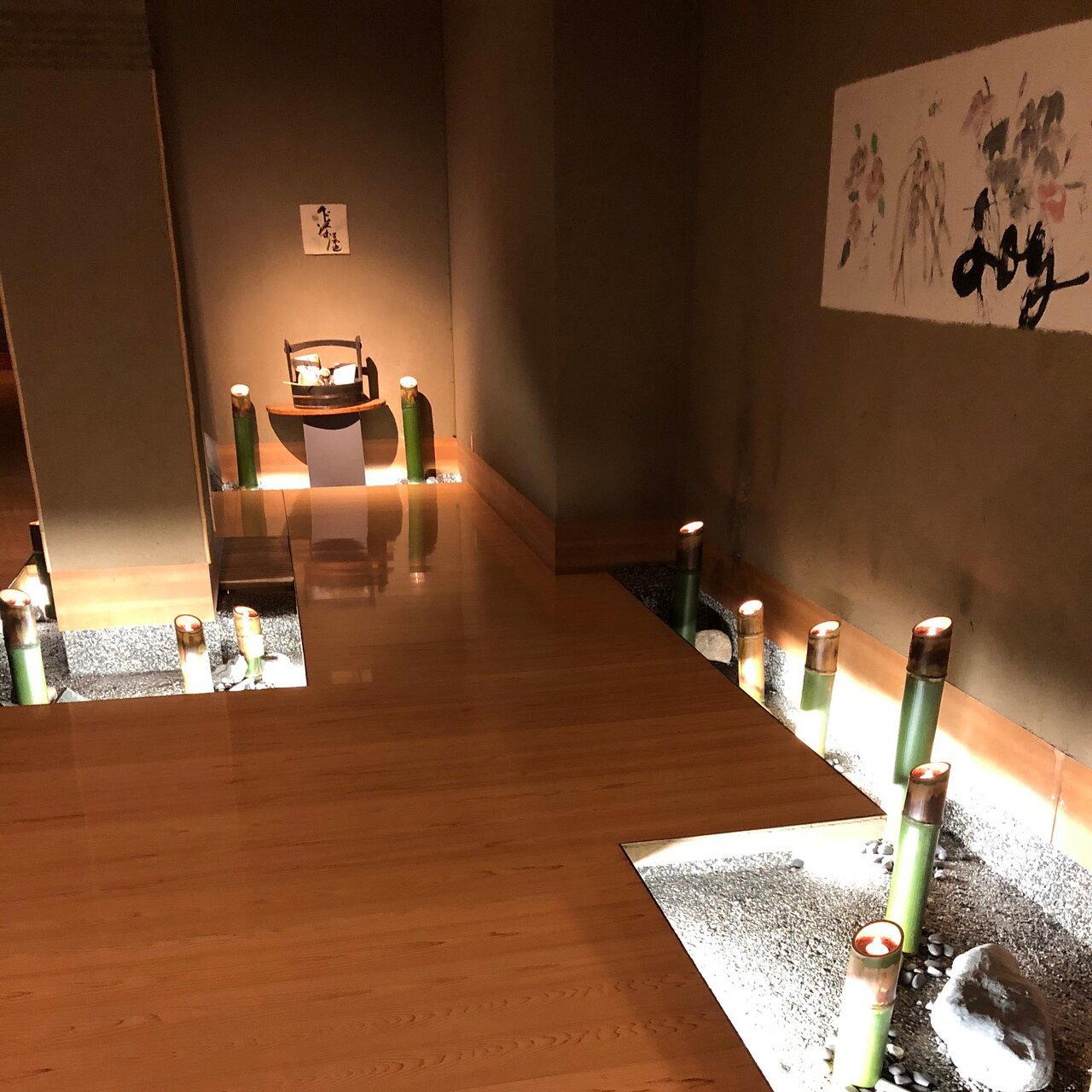
Tranquil and elegant with natural light through floor-to-ceiling windows framing forest and mountain scenery, zen-inspired interiors, and soothing hot spring atmosphere.