
1 Michelin Key
A Michelin-recognised ryokan-style hotel in Atami where the arrival sequence is deliberately inverted: reception occupies the eighth-floor penthouse position, opening directly onto Sagami Bay through floor-to-ceiling glass. Fifty-seven rooms each carry a private terrace onsen, and a kaiseki seafood restaurant anchors the dining program. Rates from $617 per night.

Pearl is the En Primeur Club membership app, where members save venues, book tables and use the concierge.
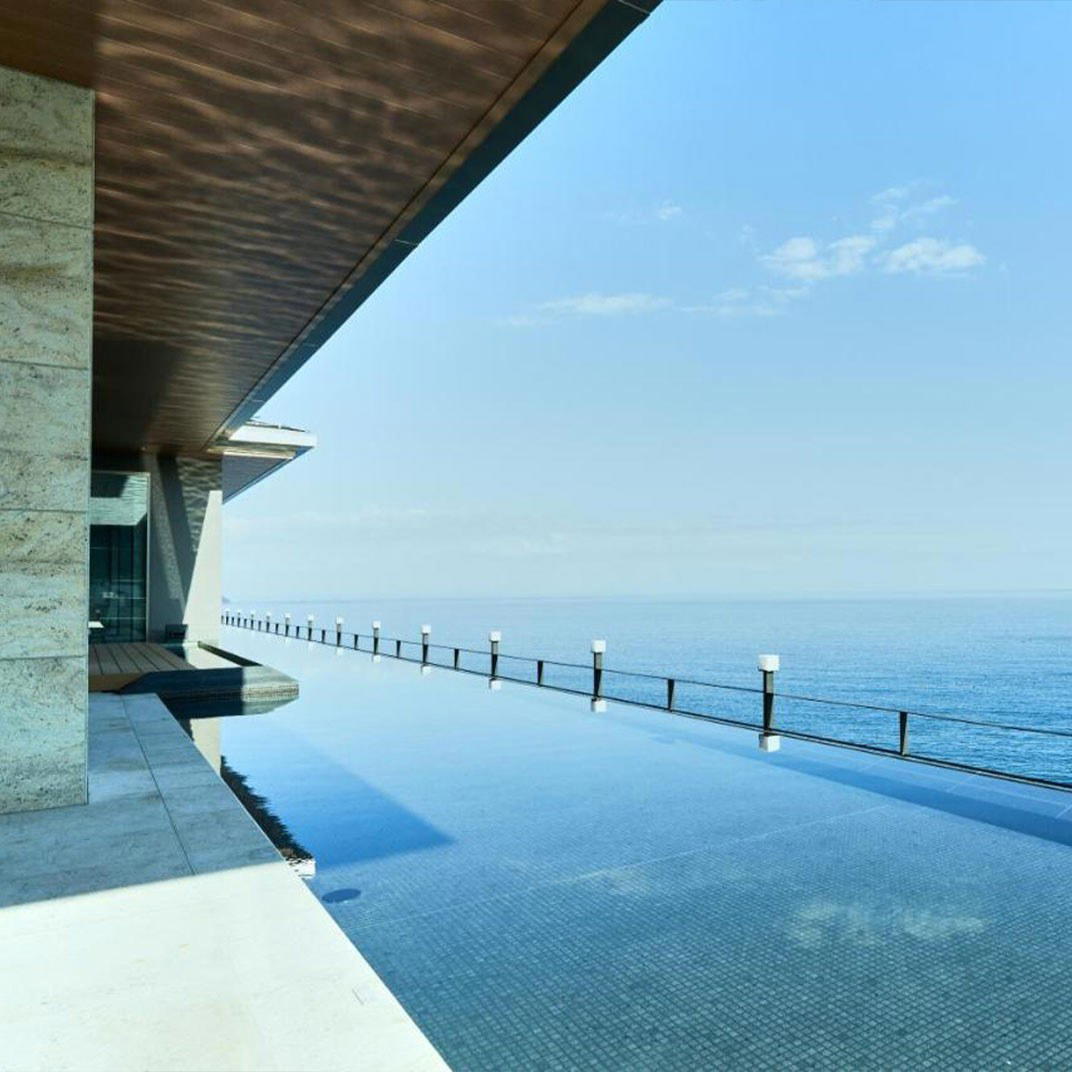
A Lobby at the top of the Building
Most hotels treat the uppermost floor as a reward withheld from all but the highest-paying guests. Atami Izusan Karaku reverses that logic entirely. The reception area occupies the eighth and leading floor, where floor-to-ceiling windows frame an unbroken panorama of Sagami Bay and a reflecting pool mirrors the shifting light of the sky above. Guests arrive at the summit and descend into the property from there, which means the first impression of the hotel is also its broadest and most open. This is not incidental, it is the structuring idea around which the entire property was designed.
This kind of spatial inversion is rare in Japanese hospitality, where convention tends toward discretion and gradual revelation. Atami Izusan Karaku takes a different position: it places the view front and centre on arrival, then builds the rest of the experience downward and inward. The effect is something closer to a viewpoint observatory than a conventional lobby, and it sets the register for everything that follows. For context on how this compares to the broader spectrum of Japanese ryokan design, properties like Gora Kadan in Hakone and Zaborin in Kutchan represent the more enclosed, forest-oriented approach, Karaku's sea-facing, glass-forward architecture reads as a deliberate counterpoint to that tradition.
The Architecture of the Rooms
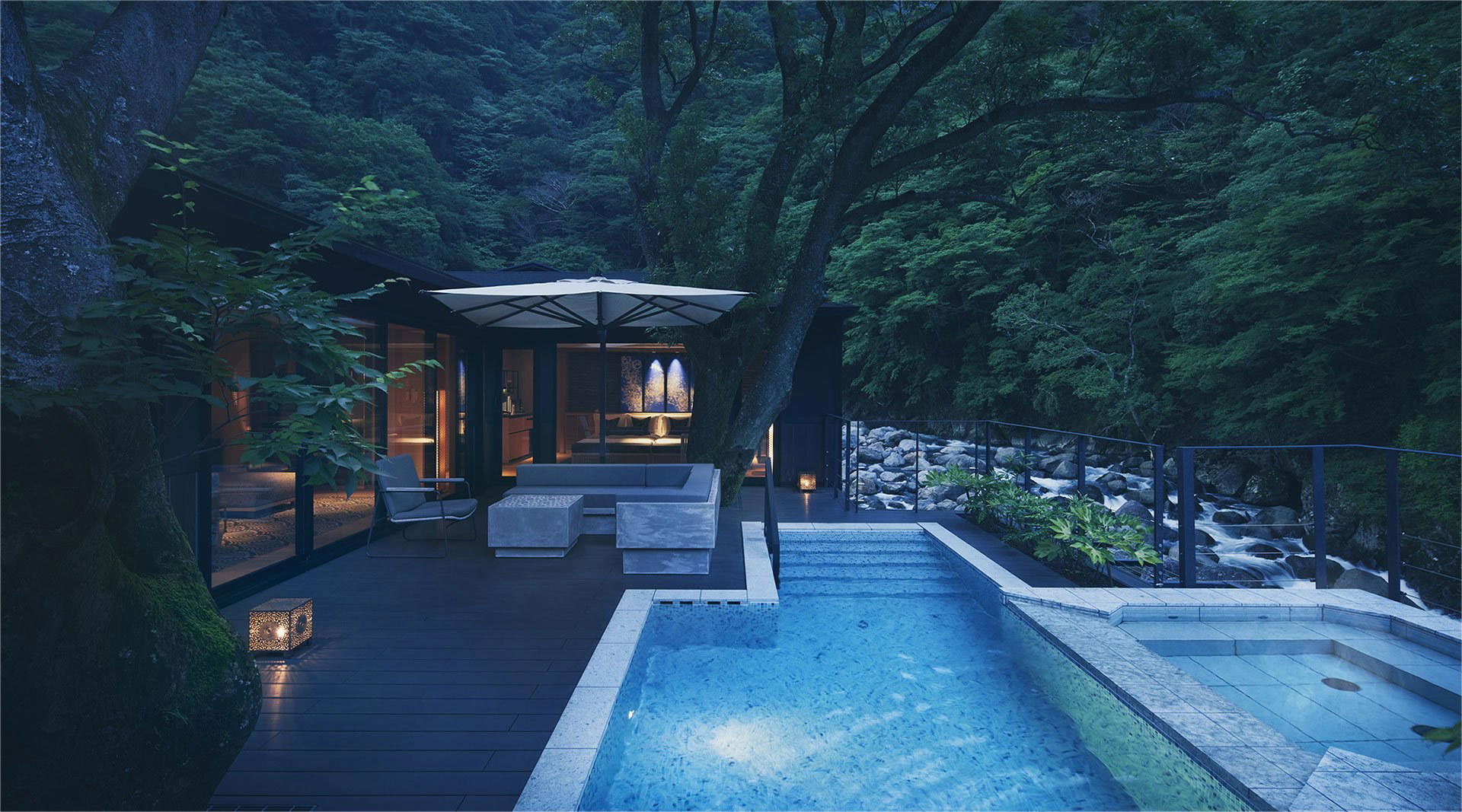
One floor below the reception, a pair of large open-air soaking pools are positioned to exploit the same bay views. Each of the hotel's 57 rooms includes a private terrace fitted with an onsen bath, all oriented toward Sagami Bay. In the context of Japanese luxury ryokan, this is a meaningful design choice: the private onsen terrace has become the reference point against which premium properties are evaluated, and Karaku delivers it at scale without sacrificing the orientation that makes it worthwhile. There is little point in a private onsen bath that faces a car park or a corridor wall. Here, the water and the view are inseparable.
The wider property includes an indoor circuit of baths and saunas alongside two minimalist indoor-outdoor lounges. The architecture of this circuit follows a logic familiar from high-end Japanese spa design: movement between wet and dry environments, between inside and outside, is itself the therapeutic activity rather than simply a prelude to it. Properties such as Amanemu in Mie and ENOWA Yufu in Yufu have built their reputations on similarly considered onsen circuits, and Karaku operates in that same design tier.
Dining: Kaiseki and the Sushi Bar
Atami's relationship with seafood is structural rather than incidental. The city sits at the western edge of Sagami Bay, with access to the fishing grounds that supply both Tokyo's high-end sushi counters and the local restaurants along the Izu Peninsula coast. Karaku's dining program engages that geography directly: the main restaurant serves seafood prepared in kaiseki format, the multi-course structure that remains the dominant framework for serious Japanese dining.
A separate sushi bar operates within the property, which places Karaku in a cohort of ryokan that run multiple dining formats rather than a single dining room. This matters for guests who want the kaiseki experience across multiple meals without eating the same format twice. The sushi bar also functions as a more informal alternative for evenings when a full multi-course sequence is not the objective. Among comparable properties, Asaba in Izu and Nishimuraya Honkan in Kinosaki-cho represent the tradition of multi-format dining within a single ryokan envelope; Karaku follows that pattern with a seafood-specific emphasis appropriate to its coastal position.
Where Atami Sits in the Premium Onsen Hotel Map
Atami occupies a specific position in the geography of Japanese hot spring travel. It is the closest major onsen town to Tokyo, roughly 50 minutes by Shinkansen from Tokyo Station, which historically made it the default weekend destination for the capital's leisure market. That proximity is a double-edged characteristic: it brings consistent demand but it also means the market is crowded and quality varies considerably across price points. At the premium end, properties like Karaku compete not only with each other but with the broader pull of destinations like Hakone, the Izu Peninsula, and, for longer stays, Kyushu's onsen towns.
What distinguishes Atami's upper-tier accommodation from those alternatives is partly the directness of the transport link and partly the bay-facing geography that properties in landlocked hot spring towns cannot replicate. Karaku's architectural decision to orient every significant space toward Sagami Bay is, in this context, a competitive argument as much as a design preference. For comparison, Fufu Kawaguchiko and Fufu Nikko represent the mountain-view equivalent of this orientation strategy; each property builds its identity around a specific landscape, and the quality of access to that landscape determines most of the guest experience.
For those comparing ryokan-style properties across Japan more broadly, Araya Totoan in Kaga, Beniya Kofuyuden in Awara, Sekitei in Hatsukaichi-shi, Bettei Otozure in Nagato, Bettei Senjuan in Minakami, and BYAKU Narai in Narai each represent different regional expressions of the format. The Atami offer is defined by scale, 57 rooms is large for a property competing at this level, and by the sea-facing design logic that makes its size feel less institutional than it might otherwise.
Recognition and What It Signals
Karaku holds a Michelin One Key designation from the 2024 edition of the Michelin guide's hotel selections. The Key designation, distinct from Michelin's restaurant stars, evaluates the hotel experience as a whole rather than the dining program alone. A single Key in Michelin's framework indicates a property where the stay is considered noteworthy, though not yet at the level of the two- or three-Key tier occupied by a smaller number of Japanese properties. In the Atami market, this recognition places Karaku clearly within the top tier of local options and provides an external reference point independent of the property's own positioning.
For guests comparing Karaku against other Michelin-recognised Japanese properties, whether urban hotels like Bvlgari Hotel Tokyo or destination ryokan like Hotel The Mitsui Kyoto, the One Key designation provides a consistent basis for comparison, even across very different formats and price points.
Planning the Stay
Rates begin at approximately $617 per night, which positions Karaku at the upper end of the Atami market without reaching the absolute ceiling of Japanese luxury ryokan pricing. The Shinkansen connection from Tokyo makes it viable as a two-night stay without the planning overhead of a longer domestic trip. A stay of at least two nights allows time to work through the onsen circuit properly, eat across both dining formats, and spend time on the terrace without rushing either arrival or departure. Guests interested in the broader regional offer can reference our full Atami restaurants guide for dining context beyond the hotel. For a different style of Japanese coastal or island hospitality, Jusandi in Ishigaki, Halekulani Okinawa, and Azumi Setoda in Onomichi represent the range of sea-adjacent formats available across Japan. For those extending a trip internationally, Benesse House in Naoshima offers a comparable integration of architecture, landscape, and considered hospitality within Japan, while Aman Venice, Aman New York, and The Fifth Avenue Hotel in New York City represent the international tier for guests building a wider itinerary around design-led properties with strong landscape or urban orientation.
Quick Comparison
Comparable venues nearby, for context on price, style, and recognition.
| Venue | Cuisine | Price | Awards | Notes |
|---|---|---|---|---|
| Atami Izusan KarakuThis venue (the venue you are viewing) | Luxury onsen resort fusing local tradition with modern luxury | $500–750 | 1 Michelin Key | Not listed |
| Pearl Star Hotel Atami | Luxury resort hotel blending modern design with traditional Japanese elements. | Not listed | Michelin Selected | Higashikaigancho |
| The Hiramatsu Hotels & Resorts Atami | Traditional Sukiya-zukuri ryokan converted into a gourmet auberge | Not listed | 1 Michelin Key | Atami |
| 俵屋旅館 | Traditional Japanese ryokan with modern comforts and historical integrity. | Not listed | 5-Star | Nakagyo-ku |
| Hyatt Regency Hakone Resort and Spa | modern mountain lodge with Japanese ambience | $300–500 | Michelin Selected | Gora |
| Fufu Hakone | Small luxury hot spring resort set in Hakone mountains with distinctive room designs inspired by Japanese nature. | Not listed | 1 Michelin Key | Gora |
Recognition history
Dated appearances from independent guides and award organizations, with the underlying list record or original source where available.
Michelin 1 Key
Michelin
Full recognition history (3 entries)
Michelin 1 Key
Michelin
Michelin 1 Key
Michelin
Continue exploring
More in Atami
Hotels in Atami
All hotels in Atami →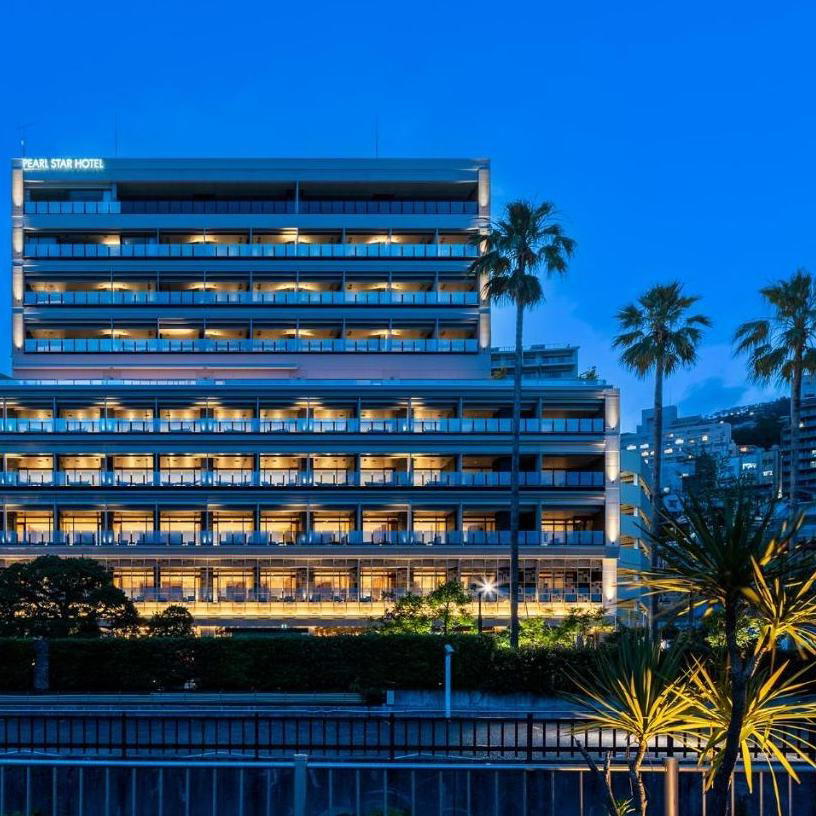
Bars in Atami
All bars in Atami →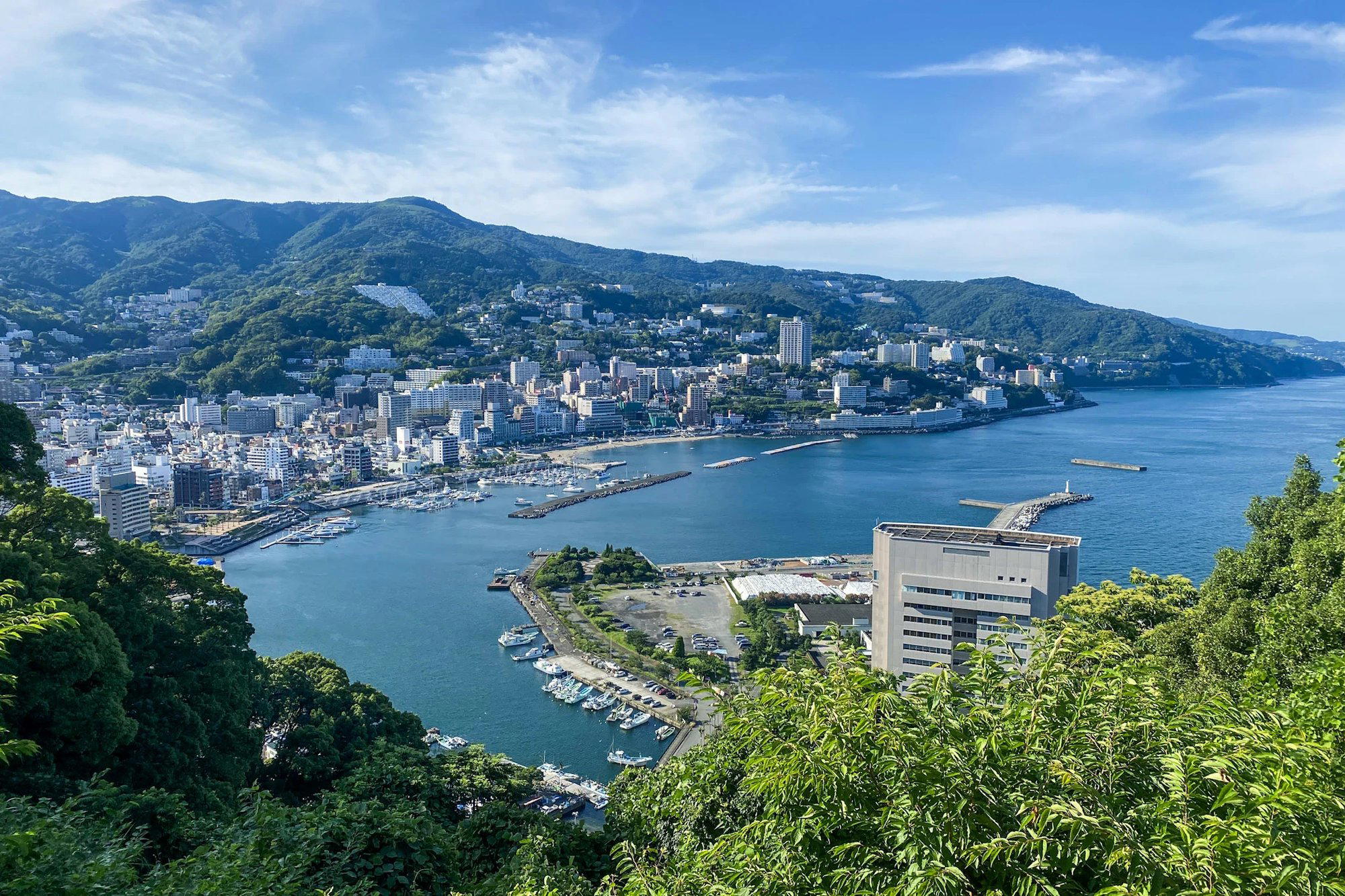
Details
- Quiet
- Scenic
- Elegant
- Romantic
- Sophisticated
- Romantic Getaway
- Wellness Retreat
- Anniversary
- Weekend Escape
- Waterfront
- Destination Spa
- Panoramic View
- Terrace
- Wi Fi
- Restaurant
- Bar
- Spa
- Sauna
- Public Bath
- Fitness Center
- Free Parking
- Elevator
- Waterfront
- Mountain
- Wheelchair Accessible
- Elevator
Quiet, refined, and scenic, with a contemporary-classic ryokan feel centered on Sagami Bay views, open-air baths, and a serene hillside setting.