
1 Michelin Key
In the mountains of Ishikawa Prefecture, Araya Totoan is a 17-room ryokan where centuries of refinement show in the smallest details: shadow lines cast by a flowering plant, cypress baths fed by private hot springs, and seasonal kaiseki cuisine that mirrors the coastal and mountain ingredients of the region. Awarded a Michelin Key in 2024, it operates at the upper tier of Japan's traditional inn category, with rates from JPY 107,800 per night.

Pearl is the En Primeur Club membership app, where members save venues, book tables and use the concierge.
Where Shadow and Light Are Designed, Not Incidental
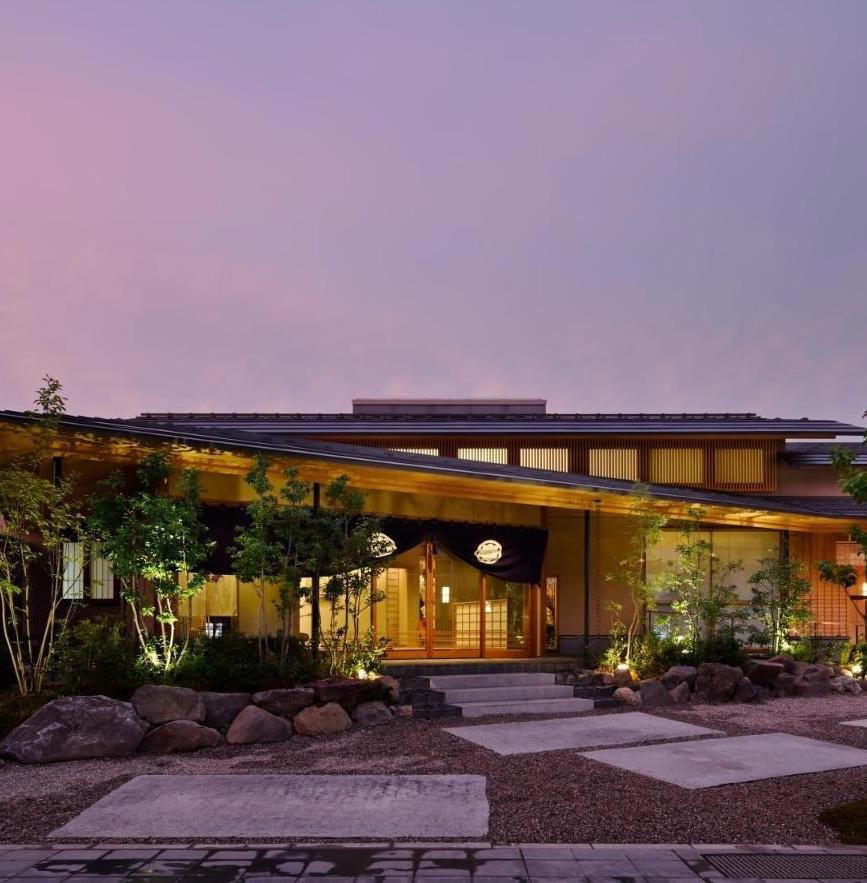
The ryokan tradition in Japan is not a hospitality category in the way that a hotel category is. It is a cultural practice that stretches back centuries, one in which the built environment, the food, the ritual of bathing, and the pace of a stay are understood as a single integrated experience. Within that tradition, ambition tends to express itself not through scale or spectacle but through the precision of accumulated small decisions. At Araya Totoan, in the mountain onsen town of Yamashiro in Ishikawa Prefecture, that precision is the defining quality of the property.
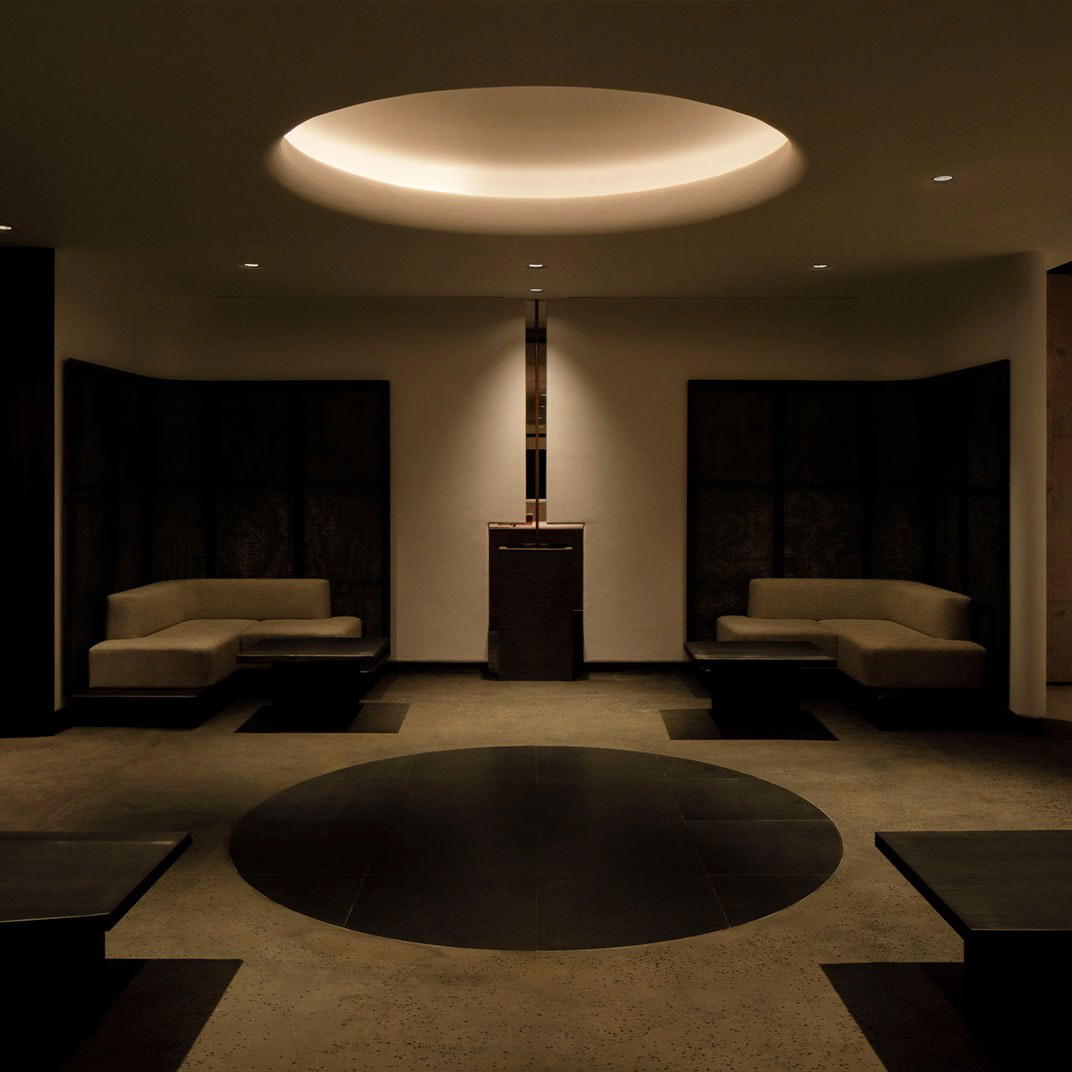
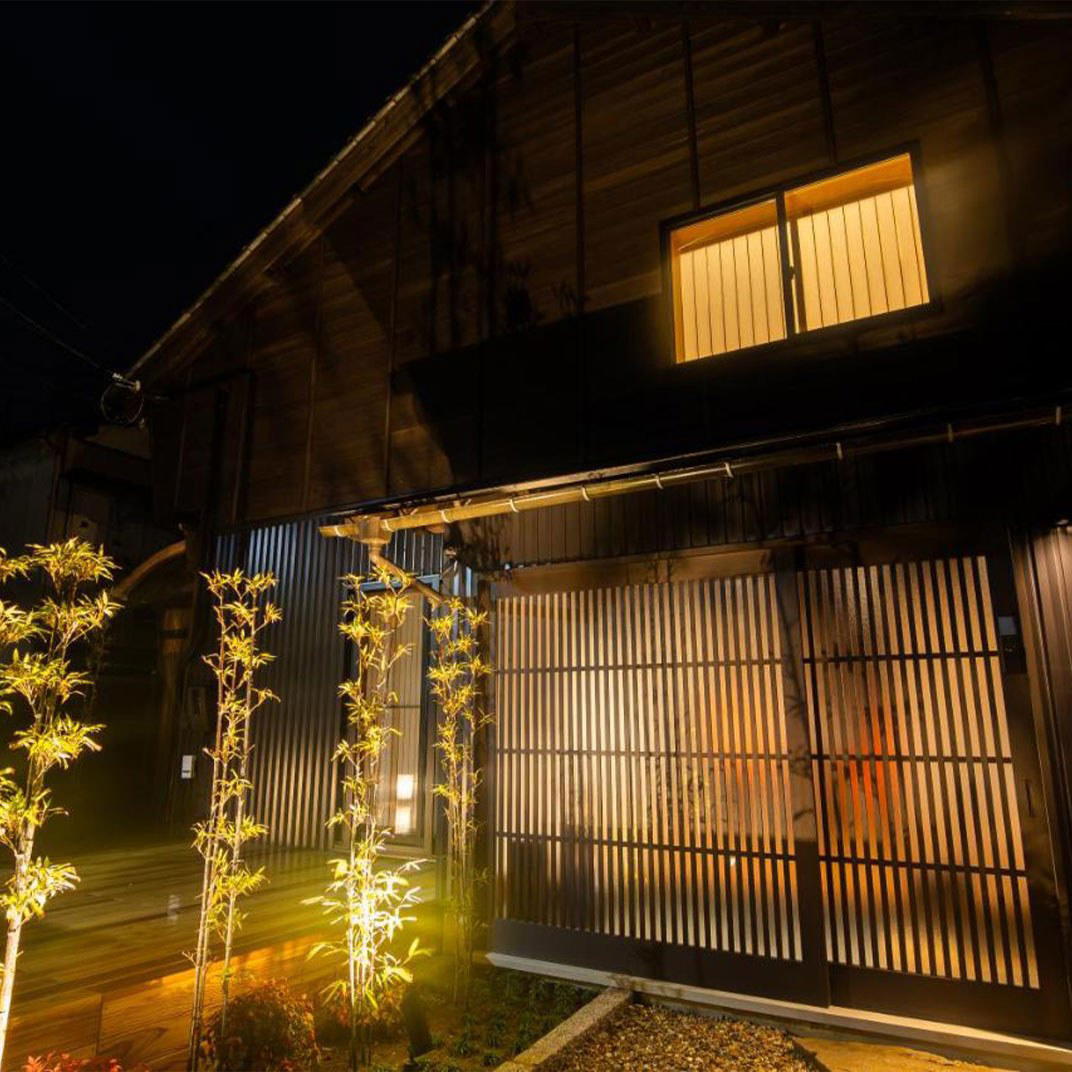
The design language here works through careful orchestration of natural elements rather than decoration. A spindly flowering plant positioned so its shadow falls at a particular angle onto a wall behind it. A puddle-shaped glass table in a darkened room calculated to catch and reflect the colours of the forest outside. Bamboo screen slats aligned so that light arrives as narrow, specific lines rather than general illumination. These are not accidents of good taste. They are the result of a design approach in which every element earns its place by contributing to a precisely considered whole. That level of intentionality places Araya Totoan in a peer group with properties like Beniya Mukayu, also in Kaga, where the relationship between interior space and the natural world is similarly treated as a primary design problem rather than an amenity.
The Rooms: Restraint as a Design Principle
All 17 rooms at Araya Totoan share a structural grammar: a tatami-style living room in neutral tones, windows that frame specific views of the surrounding woodland, and a sleeping area with futon-height beds. Sparse contemporary Japanese art and sculptural paper lampshades are placed with the deliberateness of gallery curation rather than the density of decoration. The restraint is the point. By keeping the palette and the object count low, each element carries more weight.
Within the property's broader design logic, two rooms occupy a distinct position. The Sukiya room incorporates works by the calligrapher Rosanjin, who spent a year at Araya Totoan in the early twentieth century, a detail that grounds the property in documented cultural history rather than invented heritage. The Maeda-han Stateroom, where Rosanjin actually lived, features lacquered columns and vermillion-coloured walls, both characteristic of regional Ishikawa aesthetics. At the premium end of the ryokan tier, rates begin at JPY 107,800 per night, these rooms function as historical objects as much as guest accommodation, a distinction that separates them from the period-referencing interiors common to many high-end onsen properties.
Each room includes a private terrace and a cypress bath fed directly by the hot springs. The aromatic quality of hinoki cypress, combined with the mineral character of onsen water, produces a bathing experience that is specific to the region and cannot be reproduced elsewhere. This is the kind of logistical and sensory specificity that separates a property like Araya Totoan from design-led hotels that treat the onsen as an amenity rather than as a foundation. For a broader sense of how Ishikawa's onsen properties position themselves against one another, see our full Kaga restaurants guide.
The Bathing Architecture: Three Public Baths, Seventeen Rooms
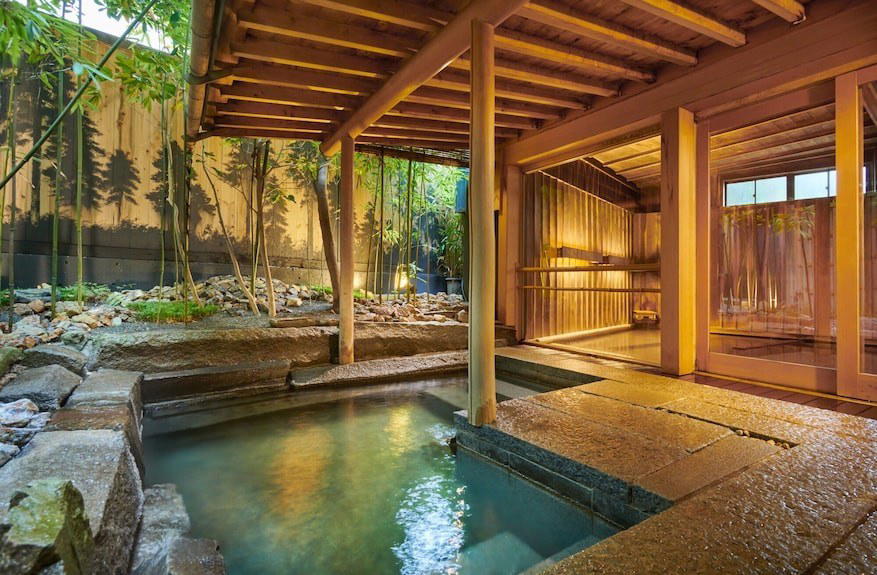
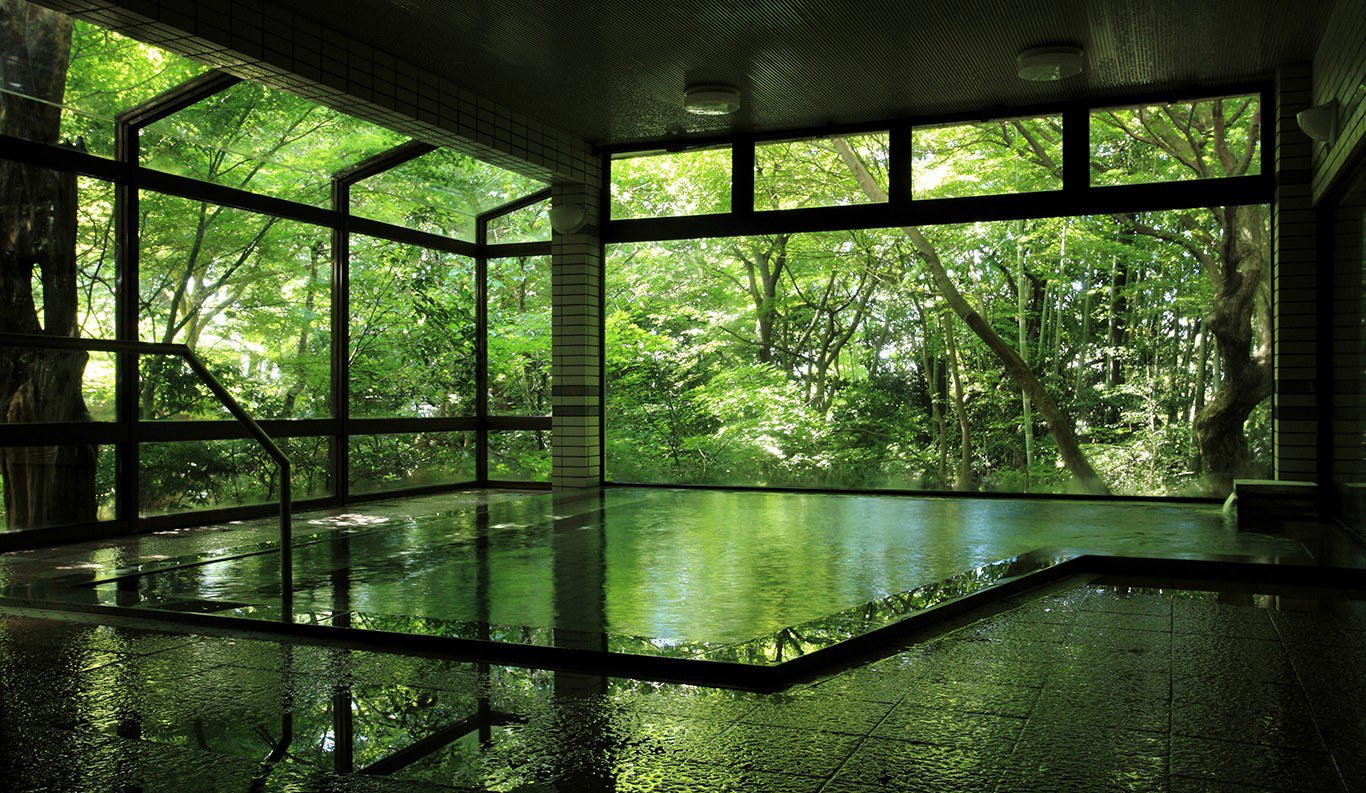
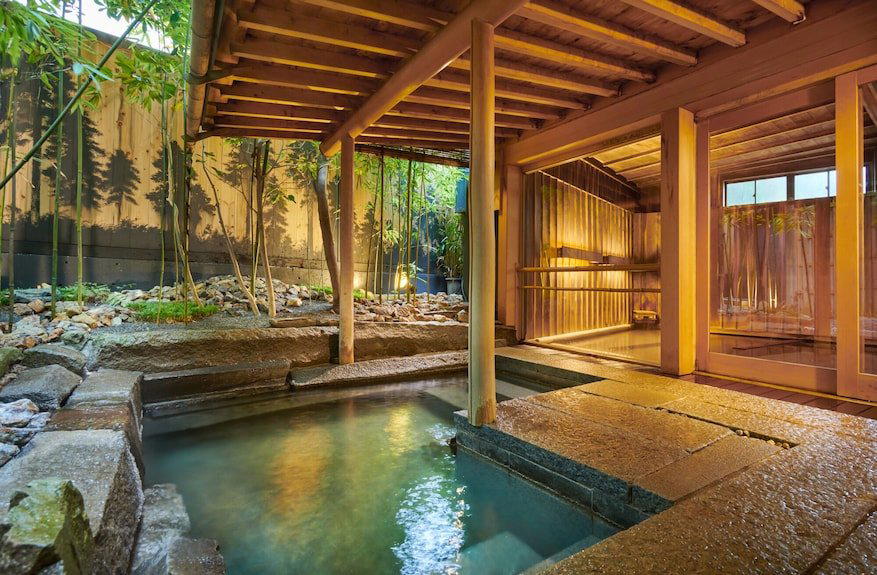
The ratio of communal bathing spaces to guest rooms at Araya Totoan, three public baths for seventeen rooms, reflects a philosophy about the status of bathing within the overall experience. It is not supplementary. Each of the three public baths is architecturally distinct. One uses particularly fragrant timber construction and opens onto a small Japanese garden. A second sits over a spring-fed pond where water rises from below through the floor, with mossy boulders visible at the edge of the space. The third is a dim, cave-like room with black walls and minimal natural light, a deliberately atmospheric contrast to the others.
The variation is not arbitrary. It maps to different conditions of bathing, morning light, evening mist, the contemplative dark, and signals a property that understands the onsen as an experience designed over time rather than a single moment of architecture. Properties that manage this level of differentiation within a single small footprint tend to appear consistently in the upper tier of Japan's traditional accommodation rankings. Araya Totoan's Michelin Key recognition in 2024 reflects that positioning.
The Seasonal Table
Ishikawa Prefecture sits between the mountains of Noto and the Sea of Japan coast, and that dual geography shapes the kitchen at Araya Totoan in direct, seasonal terms. The menu changes across the year to reflect what both environments are producing: red sea bream and chrysanthemums in spring, abalone and eggplant in summer, violet shrimp aligned with the autumn foliage, snow crabs and daikon as winter deepens. These pairings are not decorative, chrysanthemums are edible in Japanese cuisine, violet shrimp (botan ebi) from the Sea of Japan coast are among the most prized of the cold-water species, and the timing of snow crab season in Ishikawa is a significant annual culinary event for the region.
The food operates within the kaiseki tradition, in which seasonal availability, visual presentation, and the sequence of courses are treated as a single compositional problem. At Araya Totoan, the ingredient sourcing from both coastal and mountain suppliers means the menu reflects Ishikawa's full geographic range rather than defaulting to a single product category. Among the ryokan properties that make comparable claims, including Asaba in Izu, Gora Kadan in Hakone, and Nishimuraya Honkan in Kinosaki-cho, the ability to draw on both coastal and mountain supply chains within a single prefecture is relatively uncommon.
Placing Araya Totoan in Japan's Premium Ryokan Tier
Japan's high-end ryokan market has developed a recognisable stratification over the past decade. At the upper end sit properties with documented historical pedigree, design that treats natural materials as primary rather than decorative, and food programs anchored in verifiable regional sourcing. Araya Totoan occupies that tier, alongside properties like Zaborin in Kutchan, ENOWA Yufu in Yufu, and Amanemu in Mie, each of which positions the onsen, the local landscape, and seasonal food as structurally central to the experience rather than contextual backdrop.
What distinguishes Araya Totoan within that group is the depth of its design intentionality and its documented cultural history. Many premium ryokan properties draw on regional aesthetic traditions in a general sense. Araya Totoan applies that tradition at the level of shadow angles and screen-slit light. That level of specificity is what the Michelin Key designation in 2024, recognition for the overall hospitality experience rather than food alone, is measuring.
For travellers considering this tier more broadly, Beniya Kofuyuden in Awara, Bettei Otozure in Nagato, and Bettei Senjuan in Minakami each represent variations on the same design-led, onsen-centred model. The choice between them often comes down to regional food culture, geographic setting, and the particular character of the onsen water itself, factors that are place-specific and not interchangeable. Properties outside the ryokan format that serve a comparable traveller at the luxury end include HOTEL THE MITSUI KYOTO in Kyoto, Bvlgari Hotel Tokyo in Tokyo, and Benesse House in Naoshima, though each operates from a fundamentally different hospitality logic.
Arrival and Planning
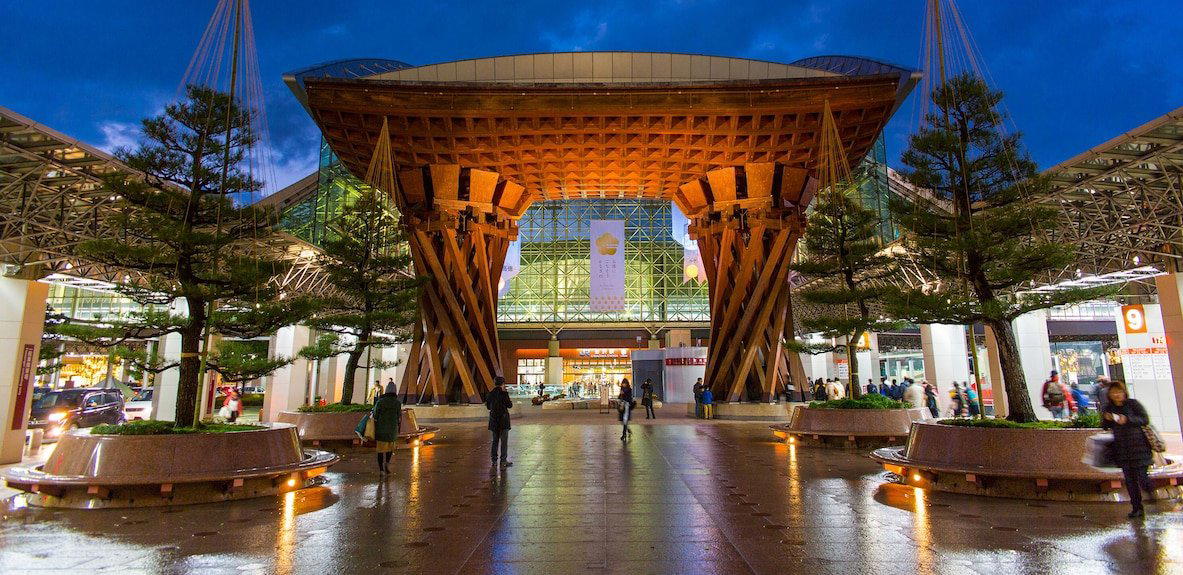
Araya Totoan offers a complimentary transfer from JR Kaga Onsen Station, a ten-minute drive, which must be arranged in advance. Komatsu Airport is approximately 25 minutes by taxi, making the property accessible from both the Hokuriku Shinkansen line and direct flights into Komatsu. Reservations require direct communication with the property rather than online booking, a function of the additional guest information Araya Totoan requests to personalise each stay. EP Club's customer service team handles this process. Rates begin at JPY 107,800 per night, which positions Araya Totoan firmly in the premium tier of Japan's ryokan category and should be compared against properties with comparable room counts, onsen infrastructure, and kaiseki programs rather than against resort hotels or urban luxury properties.
Side-by-Side Snapshot
Comparable venues nearby, for context on price, style, and recognition.
| Venue | Cuisine | Price | Awards | Notes |
|---|---|---|---|---|
| Araya TotoanThis venue (the venue you are viewing) | Traditional Japanese ryokan with meticulous attention to historical detail and contemporary art curation, positioned as a luxury heritage property. | $500–750 | 1 Michelin Key | Not listed |
| Beniya Mukayu | Contemporary ryokan perched on a sacred hill, harmonizing minimal architecture with wild forest garden. | Not listed | 1 Michelin Key · Relais Chateaux Award | Yamashiro Onsen |
| Hanamurasaki | Contemporary Japanese ryokan | $500–750 | Michelin Selected | Yamanaka Onsen |
| Genji Kyoto | Contemporary Japanese sanctuary inspired by the Tale of Genji | $500–750 | 1 Michelin Key · Design Hotels Member | Shimogyō |
| Shoraiso | Traditional Japanese ryokan with modern reconstruction | Not listed | 1 Michelin Key | Yamanouchi-machi |
| The Tower Hotel Nagoya | Historic tower blended with contemporary Japanese elegance | $200–300 | 1 Michelin Key · Small Luxury Hotels of the World Member | Naka |
Recognition history
Dated appearances from independent guides and award organizations, with the underlying list record or original source where available.
Michelin 1 Key
Michelin
Full recognition history (3 entries)
Michelin 1 Key
Michelin
Michelin 1 Key
Michelin
Continue exploring
More in Kaga
Details
- Romantic
- Quiet
- Elegant
- Classic
- Sophisticated
- Scenic
- Romantic Getaway
- Wellness Retreat
- Anniversary
- Historic Building
- Garden
- Private Villa
- Destination Spa
- Panoramic View
- Restaurant
- Wi Fi
- Valet Parking
- Concierge
- Room Service
- Bar
- Garden
- Spa
- Garden
- Mountain
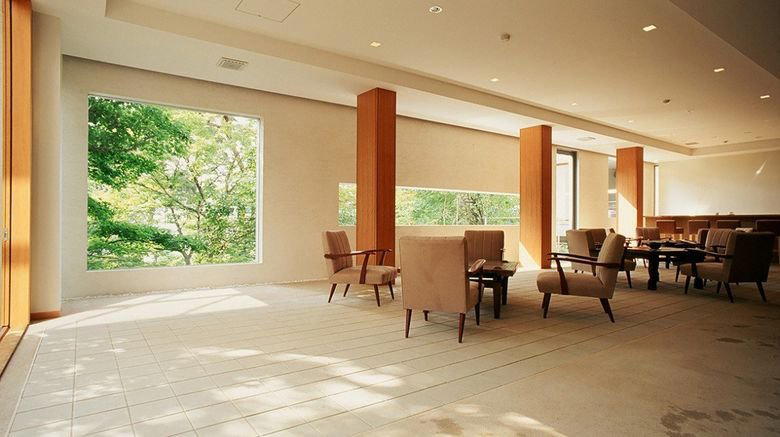
Serene and contemplative with traditional Japanese aesthetics, featuring tatami flooring, soft sculptural paper lampshades, and contemporary art throughout. Guests describe a peaceful mountain retreat atmosphere despite central location.