
Michelin Selected
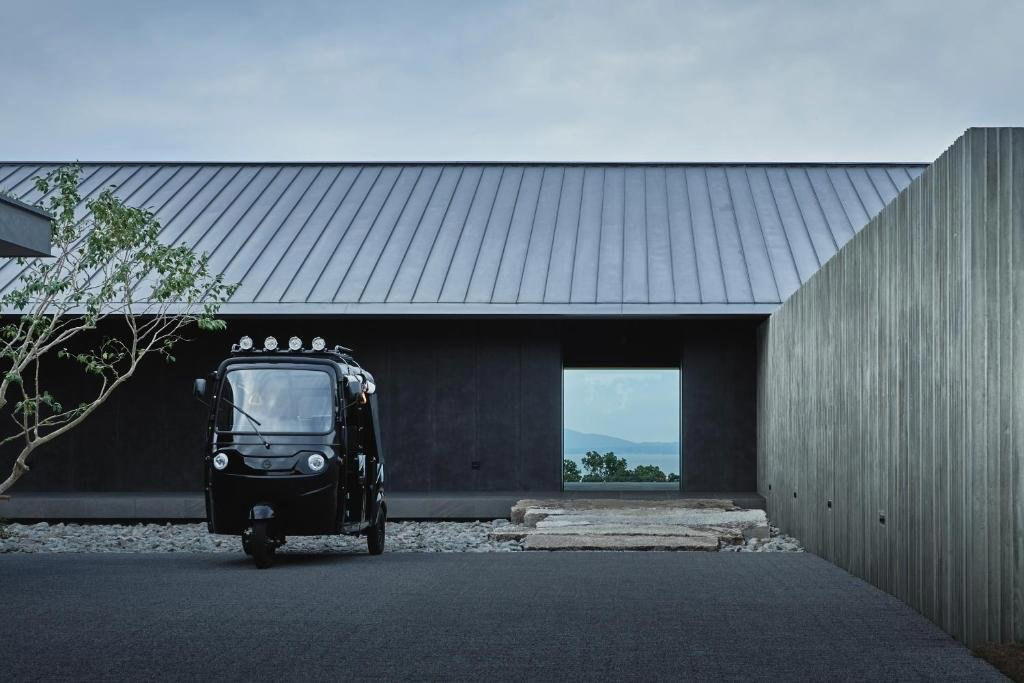
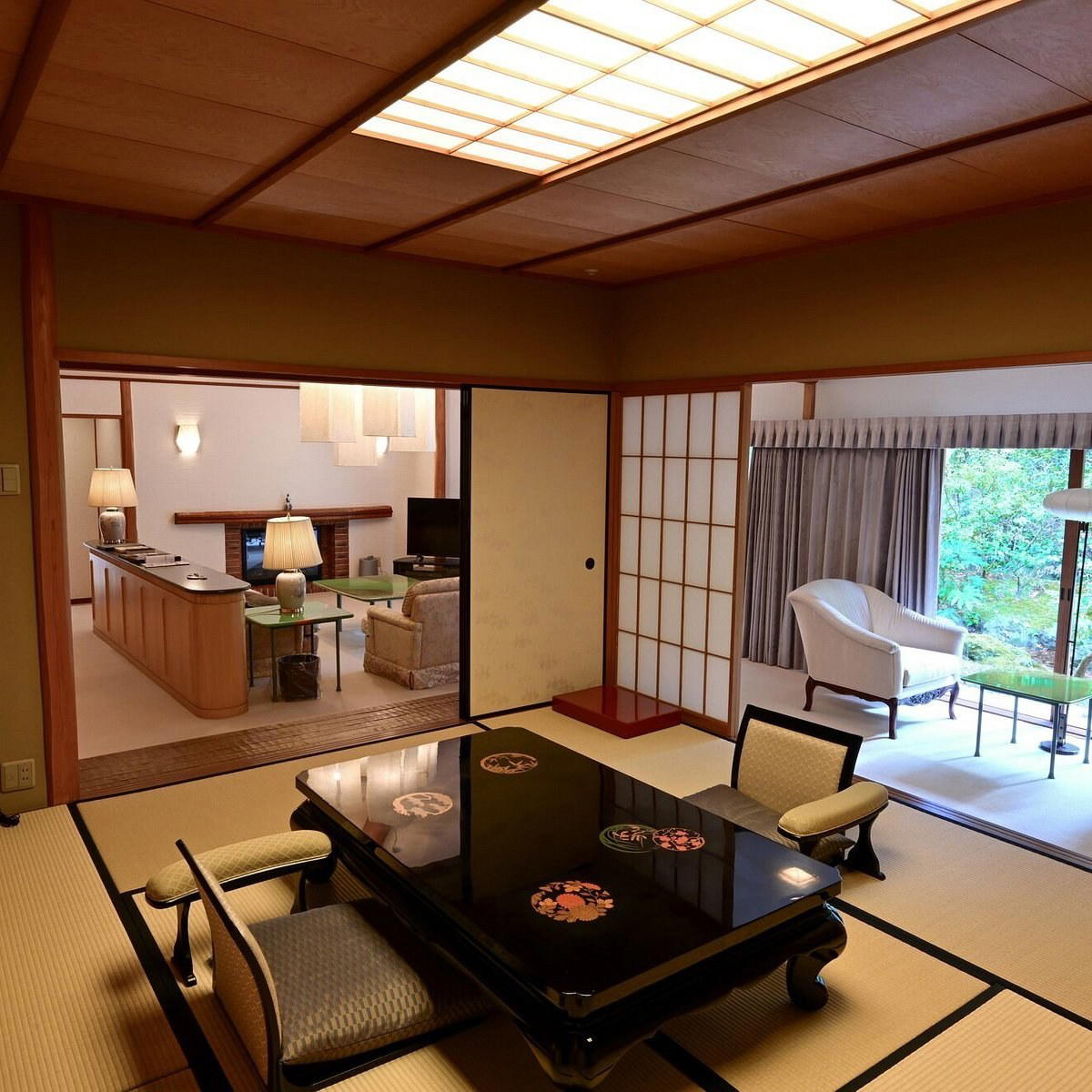
Set amid the islands of Unzen-Amakusa National Park is L’isola THE BIRD, a small wellness-oriented resort whose unusual name is part of an unusual approach to Japanese seaside hospitality. Here the architecture is unapologetically modern, from the lodge with its recessed balconies to the staggered row of freestanding cottages with their sawtooth pitched roofs. What’s inside, however, is a perfectly timeless seaside escape, however novel its style. Modernist furniture and warm, richly textured materials lend the rooms and cottages plenty of visual appeal, and all of them are oriented to look out over the volcanic Mount Unzen and the Ariake Sea, while the birds that inspired the hotel’s name crisscross the skies overhead. A sauna complex is complemented by an outdoor Jacuzzi and an infinity pool, while the restaurant serves dishes crafed from Amakusa and Kumamoto ingredients.

Pearl is the En Primeur Club membership app — saves, bookings, and concierge access live there. Same editors, same standards.
- Address
- 5252-44 Oyanomachikami, Kamiamakusa, Kumamoto 869-3602, Japan
- Phone
- +81 964-27-5757
- Website
- lisolathebird.com
- Directions
- Get directions
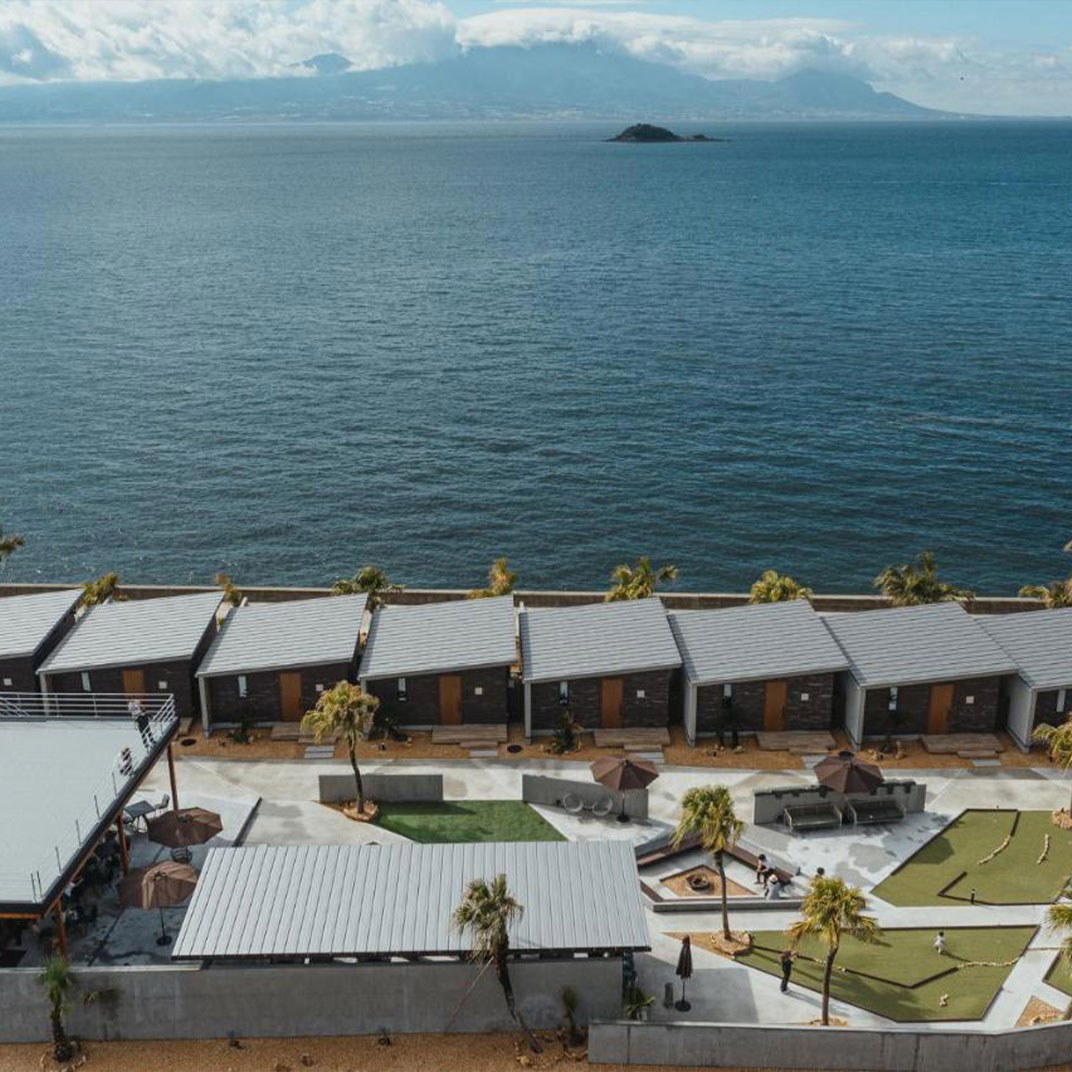
Where the Amakusa Archipelago Becomes the Architecture
The approach to Amakusa already conditions you for a certain kind of encounter. Kumamoto Prefecture's island chain, connected to Kyushu by a series of five bridges across the Yatsushiro Sea, sits at a geographic and cultural remove from Japan's high-density travel circuits. The coastline is irregular, the light shifts quickly off the water, and the scale of everything — the hills, the fishing settlements, the stretches of empty road — runs counter to the compressed urban rhythms most international visitors associate with Japanese travel. L'isola THE BIRD arrives in this context not as a destination that domesticates the landscape but as one that formalises a relationship with it.
The property's address in Oyanomachi Kami places it within the broader Amakusa city designation, a municipality assembled in 2006 from several smaller towns across Shimoshima and surrounding islands. That administrative consolidation obscures how distinctly local different corners of Amakusa feel. The area around L'isola operates at the quieter, more considered end of that spectrum, a setting where architecture carries weight precisely because competing visual noise is minimal.
Design as Dialogue with the Sea
Among Michelin Selected hotels in Japan's remote island category, the design conversation tends to split between ryokan vernacular (tatami, timber, shoji screens calibrated to garden views) and a more contemporary minimalism that treats the natural surroundings as the primary material. L'isola THE BIRD sits firmly in the latter group. The name itself signals orientation: the Italian word for island, paired with an English noun that evokes altitude and vantage. Together they describe something built to look outward and upward, rather than inward toward the courtyard or garden centre that defines so much traditional Japanese inn architecture.
Properties that earn Michelin Selected recognition in 2025, as L'isola THE BIRD has, are assessed across accommodation quality, welcome, and overall experience, criteria that reward coherence as much as individual components. In a location where the sea and sky generate the dominant visual register, that coherence demands architecture that knows what to keep out as much as what to let in. The discipline involved in designing for an island setting without overwhelming the landscape or retreating from it entirely is one of the harder balancing acts in contemporary hospitality design, and the Michelin selection signals that L'isola achieves it at a level that holds up against peer properties across Japan.
For comparison, properties like Benesse House in Naoshima have built international reputations by treating art and architecture as genuinely integrated, not as amenity, but as the central premise of the stay. Jusandi in Ishigaki operates on a similar principle within Okinawa's southern island arc. L'isola's Michelin recognition places it in that conversation: small-footprint island properties where the physical design and the surrounding geography are inseparable from what you're paying for.
Amakusa's Position in Japan's Luxury Small-Property Circuit
Japan's premium small-hotel category has matured considerably. The ryokan tradition offers one framework; design-led boutique properties operating outside that tradition offer another. What both share, at their stronger end, is a refusal to treat remote location as a limitation to be overcome with imported amenities. Instead, they treat place as the product. Amakusa's position in this circuit is still developing relative to more established destinations, Hakone, the Izu Peninsula, Kyushu's onsen belts around Yufuin, but that relative obscurity is partly the point.
Properties like Gora Kadan in Hakone or Asaba in Izu operate in areas where the premium accommodation market is well-established and guest expectations are calibrated accordingly. Kamenoi Besso in Yufu and Zaborin in Kutchan anchor their respective regional circuits in Kyushu and Hokkaido. Amakusa sits at an earlier point in that arc: the infrastructure around it, the international awareness, the density of premium options, all are thinner. L'isola THE BIRD, as the most externally validated property in the area, consequently carries a different weight. It is not one of several strong options; for guests seeking Michelin-recognised quality specifically in Amakusa, it is the reference point, alongside Gosoku no Kutsu, the other locally recognised property in our Amakusa coverage.
For broader context on what the area offers across food, accommodation, and local experience, our full Amakusa guide covers the city's character in detail. The Kyushu island chain also connects to wider premium routing, the GOTO RETREAT by Onko Chishin in Goto and Halekulani Okinawa both work as companion stops for travellers building itineraries around Japan's western and southern island arcs.
Planning the Stay
Amakusa is most practically reached via Kumamoto city, which sits on the mainland roughly 90 minutes by road before crossing the Amakusa Go-kyo bridges. Kumamoto is accessible by Shinkansen from both Hakata (Fukuoka) and Shin-Osaka, making it a plausible addition to a longer Japan itinerary rather than a standalone fly-in. The bridges themselves, completed in stages between 1966 and 1976, have become part of the Amakusa experience in their own right, the transition from mainland to island across five separate water crossings is a slow, deliberate arrival that few other Japanese destinations replicate.
Given that L'isola THE BIRD is Michelin Selected and operates in a location with limited competing inventory at its tier, advance planning is advisable. The property does not publish a booking portal in the venue data available to us, so direct outreach or a dedicated travel specialist is the recommended approach, particularly for peak periods: late spring cherry blossom season, summer, and the autumn colour weeks in October and November. Guests building a Japan itinerary around properties with similar recognition levels might consider pairing this stay with HOTEL THE MITSUI KYOTO or Amanemu in Mie for a western Japan circuit that spans urban, coastal, and island registers. For those building eastward itineraries from Tokyo, Fufu Nikko, Nishimuraya Honkan in Kinosaki-cho, and Satoyama-Jujo in Niigata represent the same design-led, place-rooted tier in very different geographic contexts.
Quick Comparison
Comparable venues nearby, for context on price, style, and recognition.
| Venue | Cuisine | Price | Awards | Notes |
|---|---|---|---|---|
| L'isola THE BIRDThis venue — the venue you are viewing | Contemporary wellness resort with modernist design principles and natural materials emphasizing relaxation and connection to landscape. | Not listed | Michelin Selected | Not listed |
| Gosoku no Kutsu | Traditional Japanese ryokan with detached villas | $200–300 | Michelin Selected | Asakusa-machi |
| SUNRISE SUITES KYOTO | Boutique Japanese-style suites with modern amenities in a historic-inspired setting | Not listed | Michelin Selected | Minami-ku |
| Wanoi Kakunodate | Luxury heritage conversion of three distinct historic kura storehouses scattered throughout a preserved samurai town, developed by JR East to preserve traditional architecture. | $200–300 | Michelin Selected | Kakunodate |
| 四季亭 | 純和風旅館 | Not listed | 3-Star | つなぎ温泉 |
| Rakuro Kyoto by THE SHARE HOTELS | Contemporary lifestyle hotel sharing with locals | $200–300 | Michelin Selected | Nakagyo-ku |
Recognition history
Dated appearances from independent guides and award organizations, with the underlying list record or original source where available.
Michelin Selected
Michelin

Details
- Scenic
- Modern
- Elegant
- Quiet
- Wellness Retreat
- Romantic Getaway
- Weekend Escape
- Infinity Pool
- Waterfront
- Panoramic View
- Private Villa
- Garden
- Destination Spa
- Wi Fi
- Pool
- Sauna
- Parking
- Air Conditioning
- Restaurant
- Concierge
- Spa
- Waterfront
- Mountain
Timeless seaside escape with warm, richly textured materials and modernist furnishings creating a serene, contemporary atmosphere.