


1 Michelin Key · Mr & Mrs Smith Seal of Approval
On the Inland Sea island of Ikuchijima, Azumi Setoda occupies a restored 140-year-old merchant estate with 22 rooms, a Michelin Key, and rates from $647 per night. Kyoto-based architect Shiro Miura's renovation balances minimalist Japanese interiors with communal dining and a traditional bathhouse shared with locals, a format that places this property firmly outside the mainstream ryokan circuit.

Pearl is the En Primeur Club membership app, where members save venues, book tables and use the concierge.
An Island Estate, Restored Rather Than Replaced
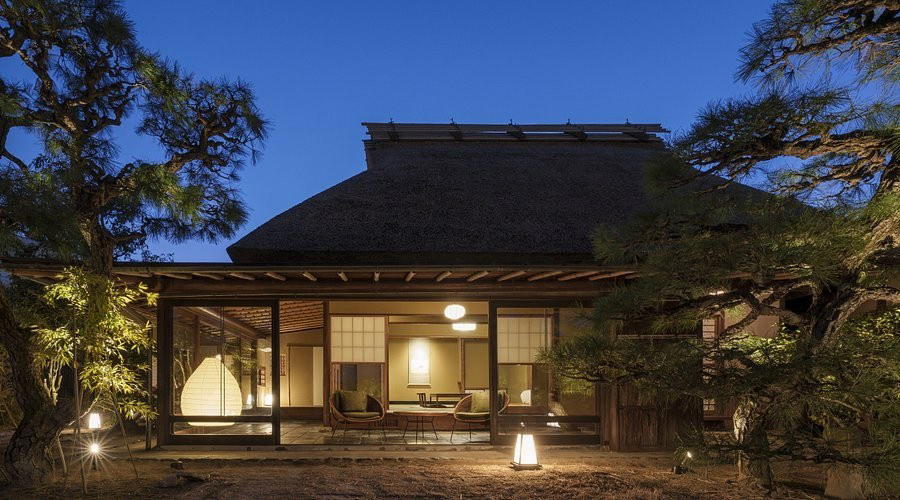
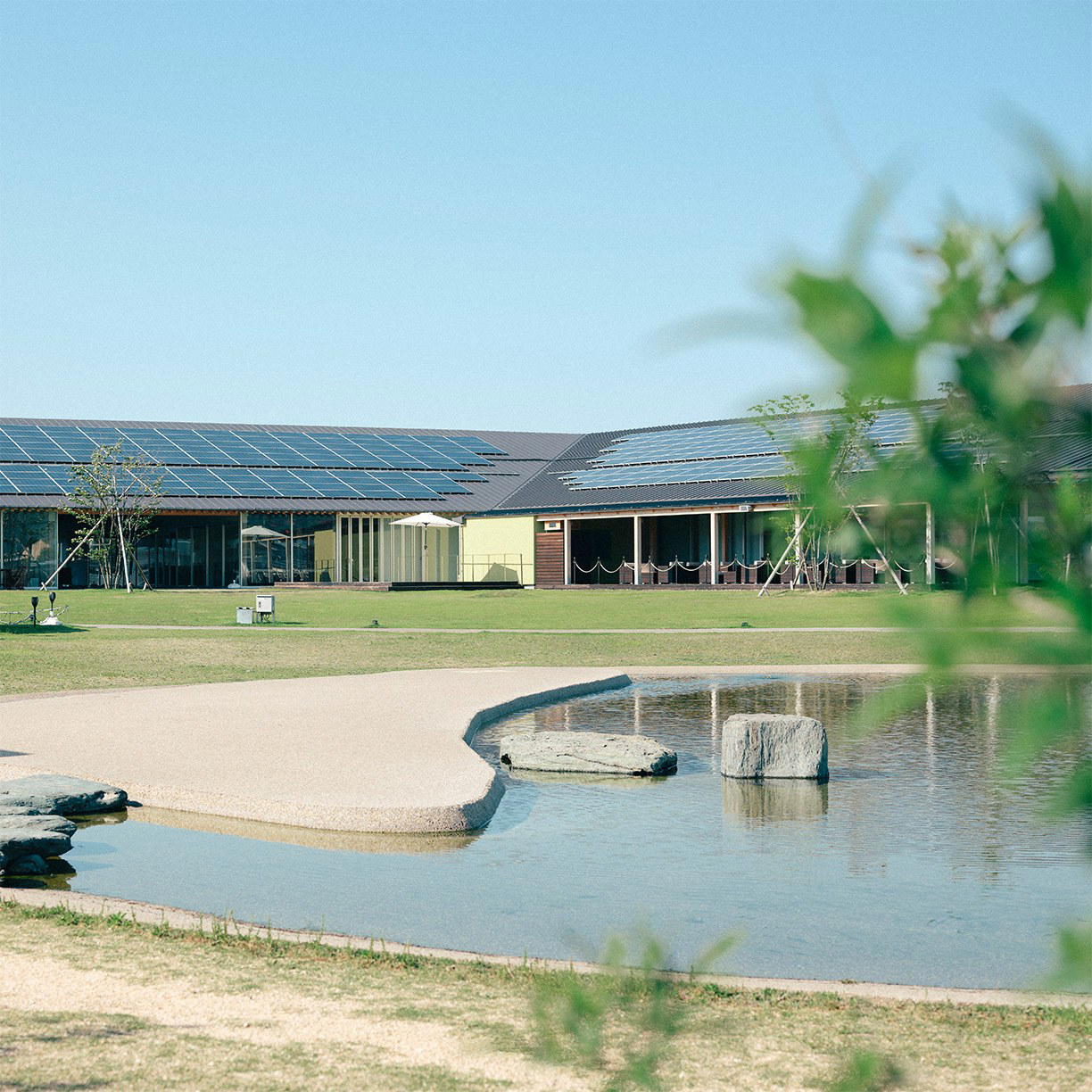
The Hiroshima Prefecture stretch of the Seto Inland Sea has long attracted a particular kind of traveller: one willing to board a ferry or cross a bridge to reach somewhere that doesn't announce itself loudly. Ikuchijima, the island where Azumi Setoda sits, is known in the region for its citrus cultivation and its position along the historic Onomichi shipping lanes. The estate that now houses the property was once owned by a prominent merchant family and spent 140 years accumulating the quiet authority that comes with that kind of provenance. Rather than clearing the site, the developers chose restoration, a decision that shapes everything about the property's architectural character.
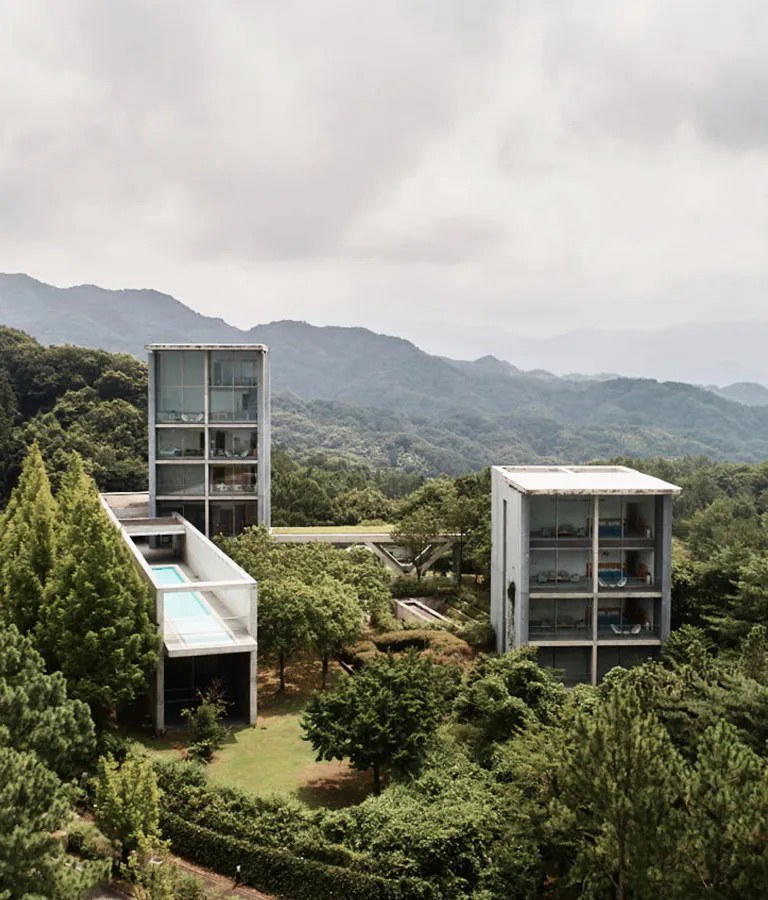
That restoration was handled by Kyoto-based architect Shiro Miura, whose brief extended beyond surface renovation to encompass the spatial logic of the entire estate. The approach Miura took is legible throughout: exposed timber beams left visible rather than plastered over, guest rooms designed around the quality of incoming light rather than room dimensions, and shared spaces that encourage movement through the property rather than retreat to private quarters. The result sits in a specific tier of Japanese accommodation where design literacy matters more than amenity lists.
The Azumi Line and What It Signals About This Property
Japan's premium ryokan circuit covers a wide range. Properties like Gora Kadan in Hakone, Asaba in Izu, and Nishimuraya Honkan in Kinosaki represent decades-long family custodianship of traditional formats. Azumi Setoda enters the conversation from a different direction: it is the first property in the Azumi line, developed under the direction of Adrian Zecha, who spent years in Tokyo and founded Aman Resorts before pursuing this newer brand. The Aman lineage carries real weight in the luxury accommodation world, properties like Amanemu in Mie and Aman New York set a high threshold for spatial restraint and site specificity. Azumi Setoda inherits that sensibility while operating as its own distinct proposition: smaller in scale, more locally embedded, and built around an existing structure rather than conceived from scratch.
At 22 rooms and rates from $647 per night, the property occupies a mid-to-upper tier within the Japanese boutique hotel market, positioned above entry-level ryokan but below the multi-night minimums and higher per-room pricing demanded by Japan's most exclusive inn formats. The 2024 Michelin Key award, part of the guide's hotel recognition program, separate from its restaurant stars, places Azumi Setoda within a peer group defined by design, service quality, and overall experience rather than purely by dining program.
Inside the Architecture: Materiality and Light
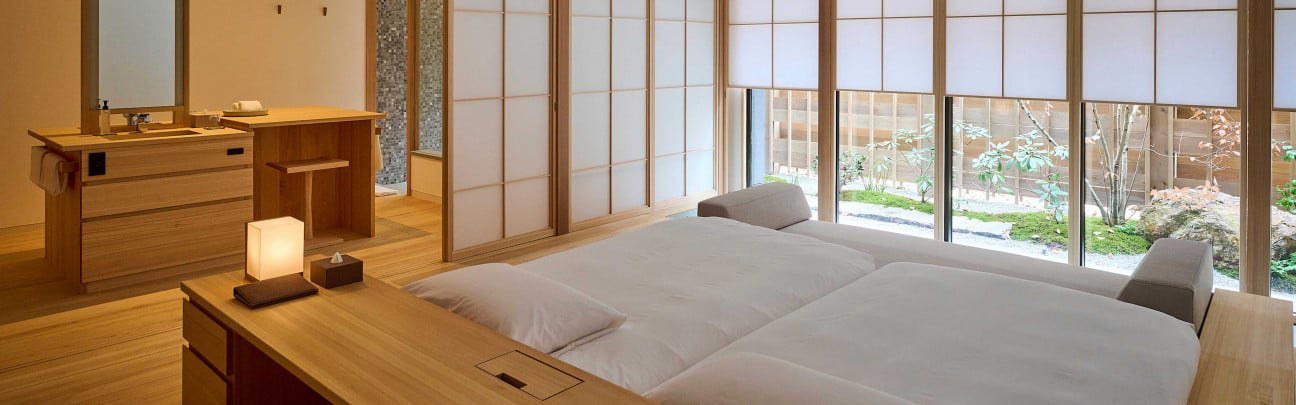
The interiors follow a material vocabulary consistent with the estate's origins: pale wood, washi paper panels, low-profile furnishings, and granite floors. These are not merely aesthetic choices, they reflect an understanding that traditional Japanese spatial design organises rooms around sensory restraint rather than visual density. The large glass panes Miura incorporated do specific work here, framing views of the courtyard garden and maintaining the sense of an interior that breathes outward rather than closing in on itself.
Guest rooms carry this logic individually. Each comes with a cypress soaking tub, hinoki, if following typical high-specification Japanese inn practice, and sliding screens that open to private stone-lined gardens. Some rooms extend to two floors, incorporating tatami areas and private patios with daybeds, a configuration that suits longer stays and guests who want the full range of traditional spatial registers without sacrificing contemporary comfort. The bespoke blonde-wood furnishings are made to the property rather than sourced from catalogue, which is the kind of detail that distinguishes restorations with genuine commitment from those that apply a surface aesthetic over generic hotel infrastructure.
For travellers comparing design-led properties across western Japan, Benesse House on Naoshima represents a different model entirely, art-driven, internationally curated, and embedded in a contemporary institution, while Sekitei in Hatsukaichi and Bettei Otozure in Nagato lean more heavily into classical ryokan formats. Azumi Setoda occupies a particular position between these poles: architecturally deliberate and historically grounded, but socially organised in ways that depart from the most traditional inn formats.
Communal Structure and the Dining Room
Japanese boutique hotels have increasingly split between deeply private formats, where meals arrive at the room and guest corridors stay silent, and properties that encourage a degree of social contact among guests. Azumi Setoda belongs to the latter category by design. Unless guests request otherwise, meals are served communally in the open-plan restaurant, a format borrowed more from European house-party hospitality than from conventional ryokan practice. The kitchen works with local and seasonal ingredients from Ikuchijima and the surrounding Inland Sea region, prepared with French techniques, a combination that has become a recognisable signature for certain high-design Japanese properties seeking to position their dining as contemporary rather than traditionally categorical.
The traditional bathhouse across the street operates as a public facility shared between hotel guests and local residents of Setoda, an arrangement that grounds the property in its community in a way that most boutique hotels, however sincerely they invoke local character, don't actually achieve. This is worth noting because it affects the experience materially: guests who use the communal bath encounter the island's permanent population rather than a curated version of local life.
Getting There and Planning the Stay
Ikuchijima sits within the Shimanami Kaidō corridor, the island-hopping route that connects Onomichi on the Hiroshima side to Imabari in Ehime Prefecture via a series of bridges and shorter ferry crossings. Reaching Setoda from Onomichi takes under an hour by ferry, or slightly longer by road and bridge if arriving by car or bicycle, the route is popular with cyclists travelling the full Shimanami Kaidō. For travellers arriving in the region via Shinkansen, Fukuyama station on the Sanyo line is the closest major stop, with onward connections to Onomichi by local train before the ferry crossing to Ikuchijima.
The remoteness of the location is part of the proposition. Travellers planning a broader Hiroshima Prefecture itinerary might also consider Ryokan Onomichi Nishiyama as a mainland counterpart, while the full range of dining options in the area is covered in our full Onomichi restaurants guide. For those building a longer western Japan itinerary that includes Kyoto, HOTEL THE MITSUI KYOTO operates in a comparable design-led register, while Araya Totoan in Kaga represents the more classical end of Japan's premium inn tradition.
At 22 rooms, Azumi Setoda does not have the inventory to accommodate last-minute planning, particularly in the warmer months when the Shimanami Kaidō draws cyclists and the Inland Sea is at its most photogenic. Advance booking is advised, and the communal dining format means arrival time and meal scheduling carry more weight here than at properties where in-room dining is the default.
Fast Comparison
| Venue | Price | Awards |
|---|---|---|
| Azumi SetodaThis venue (the venue you are viewing) | $750–1,000 | 1 Michelin Key · Mr & Mrs Smith Seal of Approval |
| Bvlgari Hotel Tokyo | Not listed | 3 Michelin Keys · World's 50 Best #24 |
| Aman Kyoto | Not listed | 2 Michelin Keys · World's 50 Best #74 |
| Aman Tokyo | Not listed | 2 Michelin Keys · World's 50 Best #11 |
| Amanemu | Not listed | 3 Michelin Keys · La Liste Top Hotels |
| Four Seasons Hotel Tokyo at Otemachi | Not listed | 3 Michelin Keys · La Liste Top Hotels |
Recognition history
Dated appearances from independent guides and award organizations, with the underlying list record or original source where available.
Michelin 1 Key
Michelin
Mr & Mrs Smith Seal of Approval
Mr & Mrs Smith
World Spa Awards Japan's Best Wellness Retreat 2026 Nominee
World Spa Awards
Full recognition history (6 entries)
Michelin 1 Key
Michelin
World Spa Awards Japan's Best Wellness Retreat 2025 Nominee
World Spa Awards
Michelin 1 Key
Michelin
Continue exploring
More in Onomichi
Hotels in Onomichi
All hotels in Onomichi →
Details
- Quiet
- Elegant
- Scenic
- Intimate
- Minimalist
- Sophisticated
- Romantic Getaway
- Weekend Escape
- Wellness Retreat
- Historic Building
- Panoramic View
- Garden
- Wi Fi
- Sauna
- Massage
- Bicycle Rental
- Public Bath
- Garden
Calm, light-filled spaces with minimalist interiors, exposed beams, pale wood, washi paper, and serene courtyard gardens creating a Zen-like peaceful retreat.