
A Michelin-keyed resort where the thermal waters of Kannawa meet the kind of structured, undemonstrative luxury that ANA-brand properties have long delivered. Eighty-nine rooms and suites sit above a HARNN Heritage Spa drawing directly from Beppu's famed hot springs, and a French restaurant anchors an unusually strong food-and-drink program for a Japanese onsen destination.
Pearl is the En Primeur Club membership app — saves, bookings, and concierge access live there. Same editors, same standards.
- Address
- Oaza, 499-18 Kannawa, Beppu, Oita 874-0000
- Phone
- +81 977-66-1000
- Website
- ihg.com
- Directions
- Get directions
 Saves & bookings on Pearl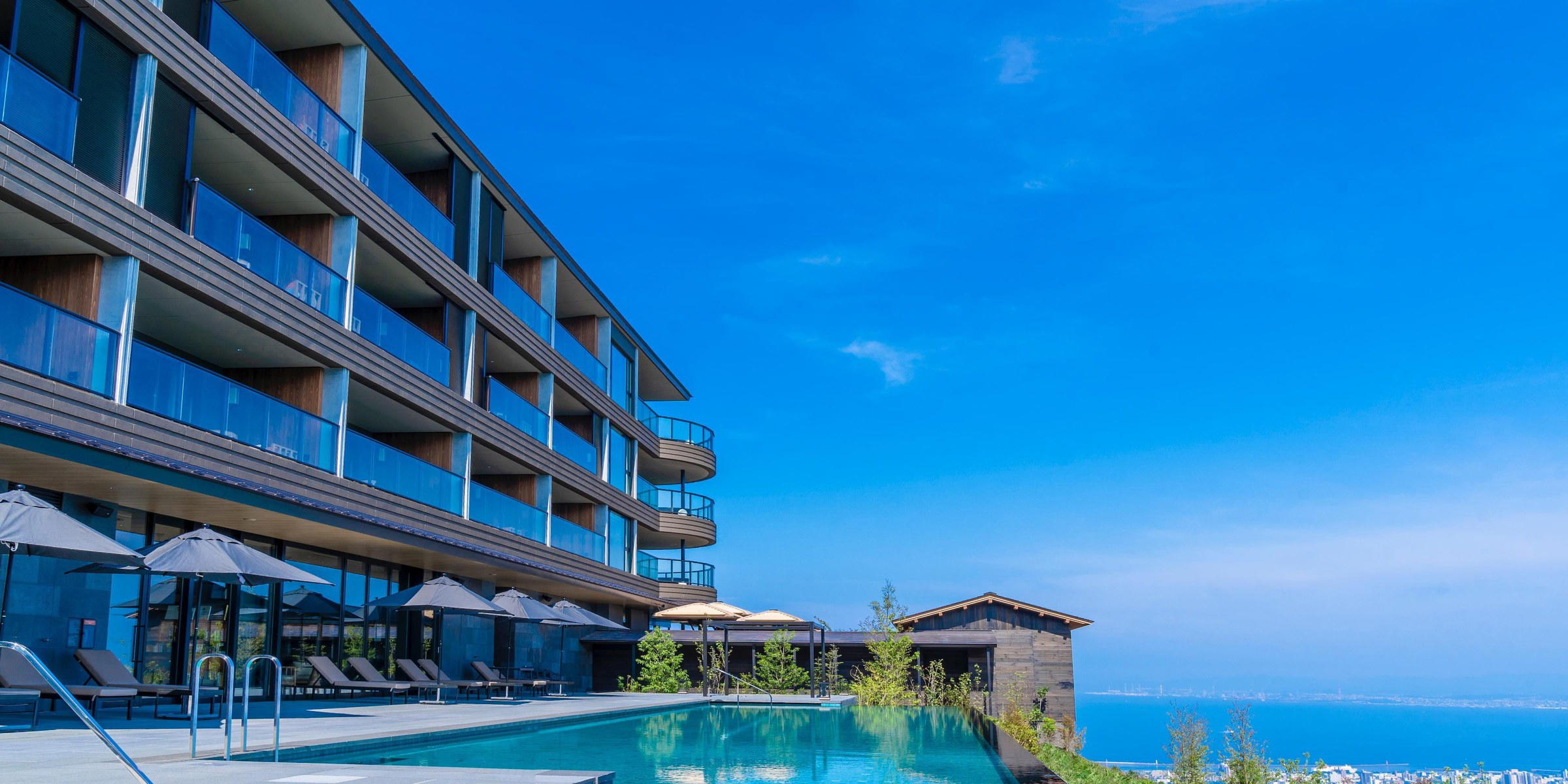
ANA InterContinental Beppu Resort & Spa is a 5-star hotel in Beppu's Kannawa district, recognized with 1 Michelin Key in 2024 and averaging about $350 per night. Where Gora Kadan in Hakone and Asaba in Izu draw a clientele anchored to Tokyo's weekend-escape circuit, Beppu operates as a destination in its own right: a city of extraordinary geothermal output on the northeastern coast of Kyushu, where steam vents rise from the ground in nearly every neighbourhood and the hot-spring culture runs deeper than at most Japanese spa towns. The Kannawa district, where the ANA InterContinental Beppu Resort & Spa sits, is one dramatically thermal part of a dramatically thermal city. Approaching the property, the landscape carries the faint mineral scent of sulphur and the visible vapour of underground springs. The resort is built to work with all of that, not to paper over it with generic luxury finishes.
A Resort Designed Around the Water Beneath It
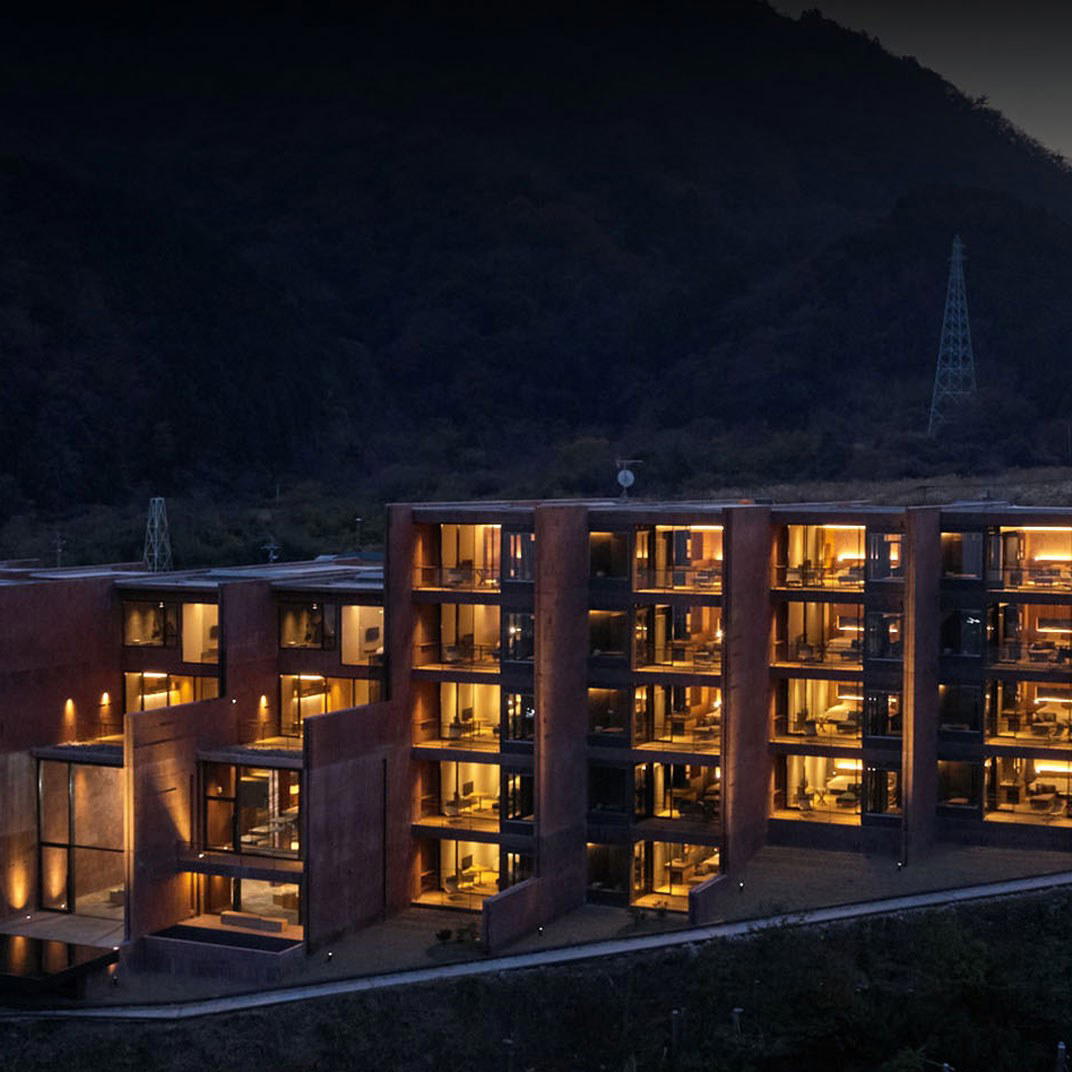
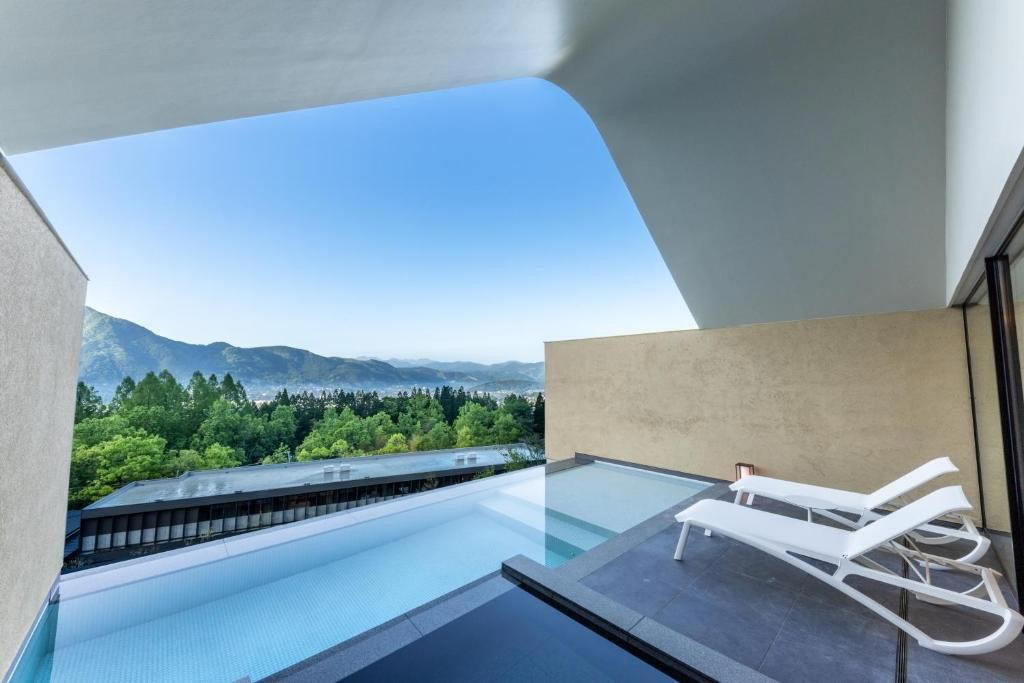
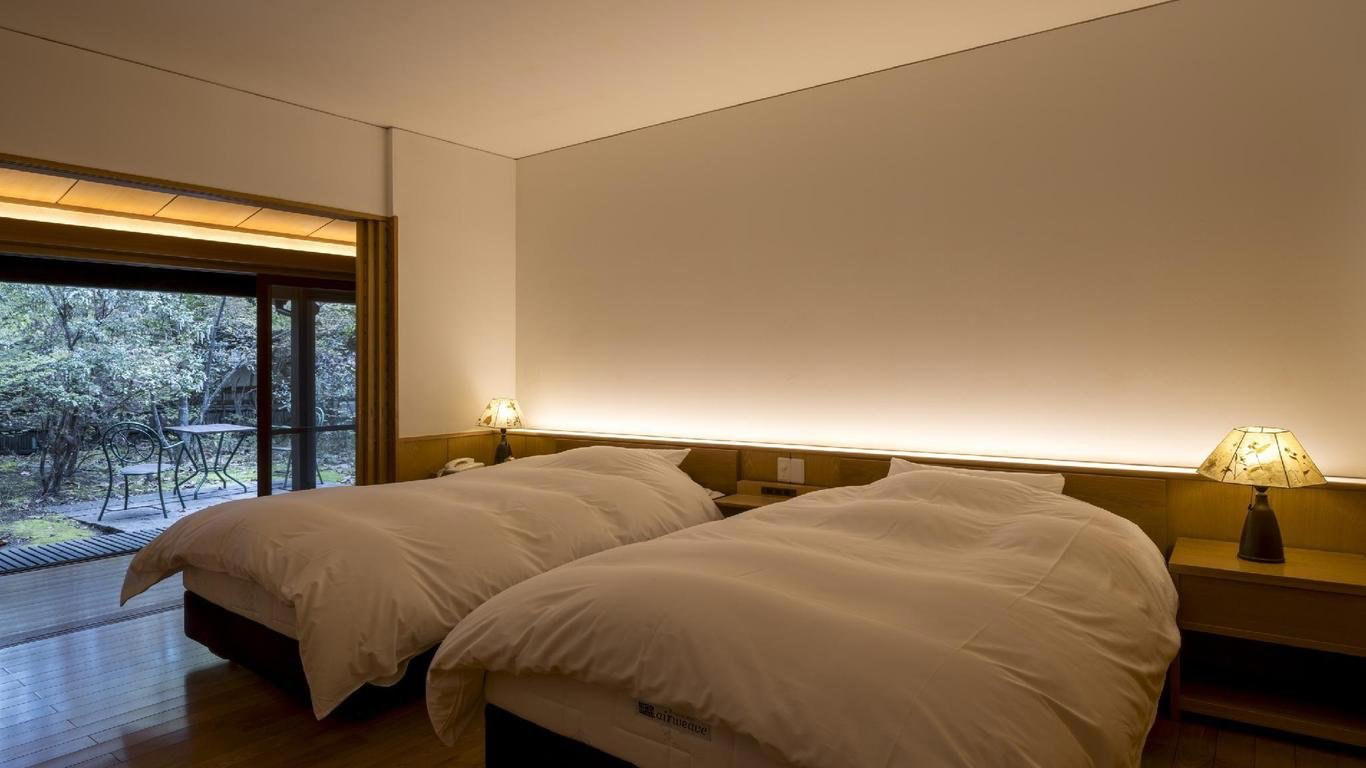
The architecture and spatial logic of the ANA InterContinental Beppu follow a principle common to the upper tier of Japanese onsen resorts: the building frames the environment rather than competes with it. Across 89 rooms and suites, the design language leans into materials and proportions that read as grounded rather than ornate. Rooms are spacious by Japanese resort standards, with furnishings that prioritise comfort without visual noise. Every room comes with a private terrace, and the views across the surrounding terrain are a consistent element of the spatial experience, not an upgrade reserved for a handful of categories.
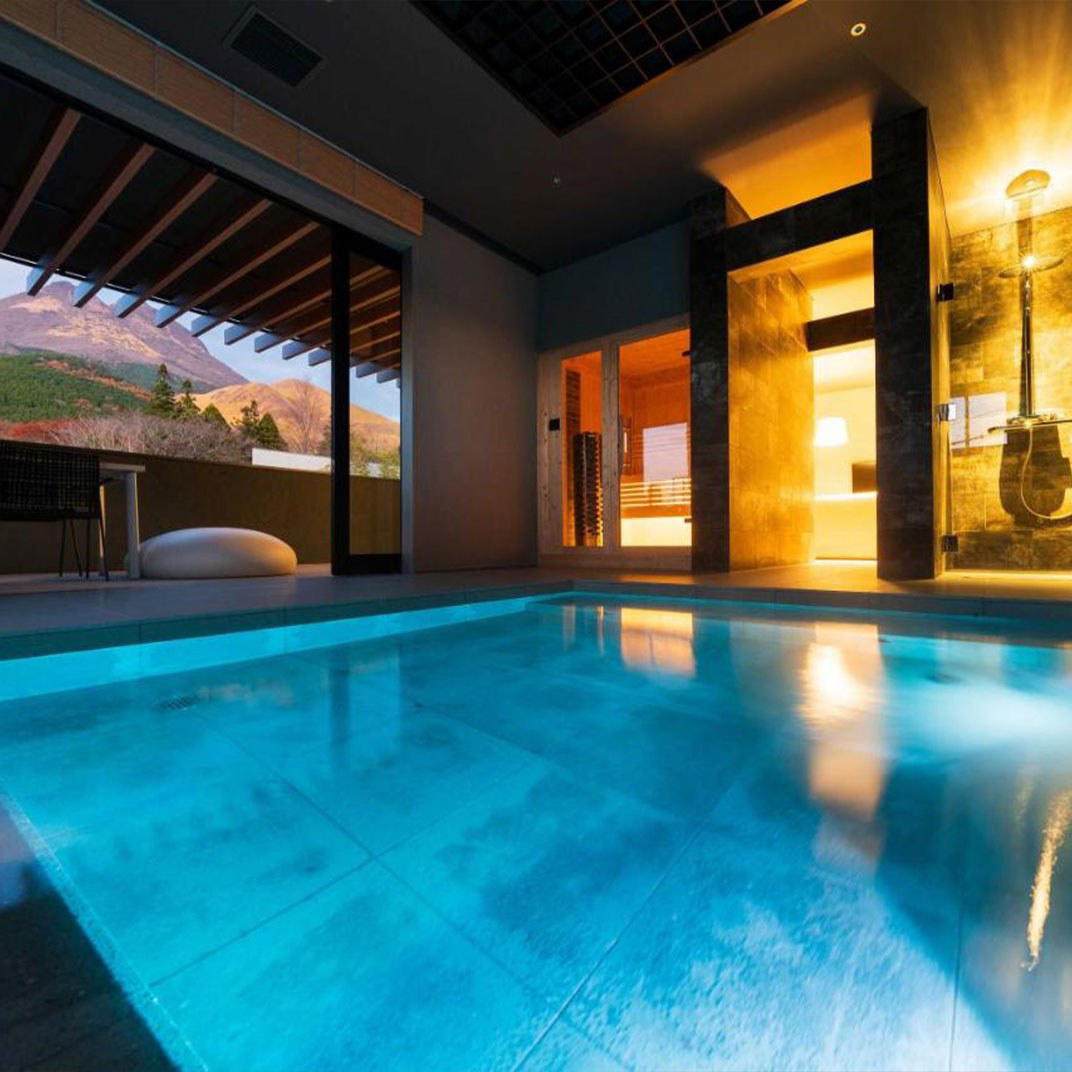
The room-tier structure follows a pattern recognisable across premium Japanese resort hotels: select suites feature their own private onsen baths, fed by the same spring-source waters that supply the property's communal facilities. This is the detail that separates the leading room categories from the entry-level, and in Beppu it carries more weight than the equivalent upgrade at a city hotel. A private onsen bath, in a town defined by geothermal water, is not an amenity add-on; it is the point. For comparable treatments of private onsen access within Japanese luxury accommodation, the approach resembles what ENOWA Yufu in Yufu, a geothermally-oriented property in the same Oita Prefecture, has built its guest experience around. The ANA InterContinental version operates at larger scale and with the logistical infrastructure of an IHG-group international hotel, which affects the feel in both directions: more consistent service systems, somewhat less idiosyncratic atmosphere.
The HARNN Heritage Spa and the Logic of Communal Bathing
Japanese onsen culture does not treat bathing as a solitary luxury enhancement. The communal bath is the social and physical centre of the traditional spa town experience, and the HARNN Heritage Spa at the ANA InterContinental Beppu is structured accordingly. Two public onsen baths anchor the facility, drawing from the property's geothermal source. A single private onsen bath serves guests who prefer a less communal format. The full complement of treatments and services extends beyond bathing into the broader therapeutic range typical of a full-service resort spa. HARNN as a brand originates in Thailand and operates across Asia's premium hotel market, bringing a Southeast Asian treatment framework into dialogue with Japanese bathing traditions. That juxtaposition is not uncommon at internationally-branded resort properties in Japan, and at the ANA InterContinental it seems to function practically rather than awkwardly. For those comparing spa-focused onsen properties across Kyushu and beyond, Amanemu in Mie represents one architecturally integrated approach to onsen-spa design in this part of Japan, though it operates at a considerably different price point and scale.
Dining: A French Kitchen in a Hot-Spring Town
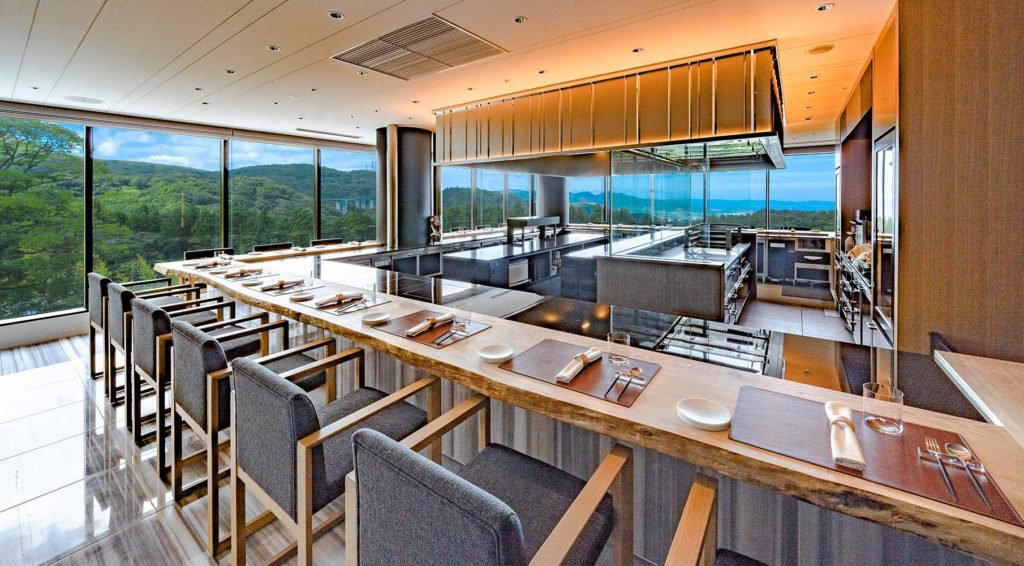
The dining program at the ANA InterContinental Beppu is more ambitious than what most international-brand resort hotels in provincial Japanese cities attempt. The main restaurant, Atelier, operates as a French kitchen and has earned Michelin recognition at the one-Key level in the 2024 Guide. The Michelin Key designation, introduced as a separate category from the star system, signals a hotel restaurant of quality worth seeking out, positioned below the starred tier but above the functional. For a resort property in Beppu, which is not a city with deep French-dining traditions, this is a meaningful credential. The broader pattern across premium Japanese resort hotels is for the restaurant to be either kaiseki-focused or Japanese-French fusion; a dedicated French program is a deliberate positioning choice.
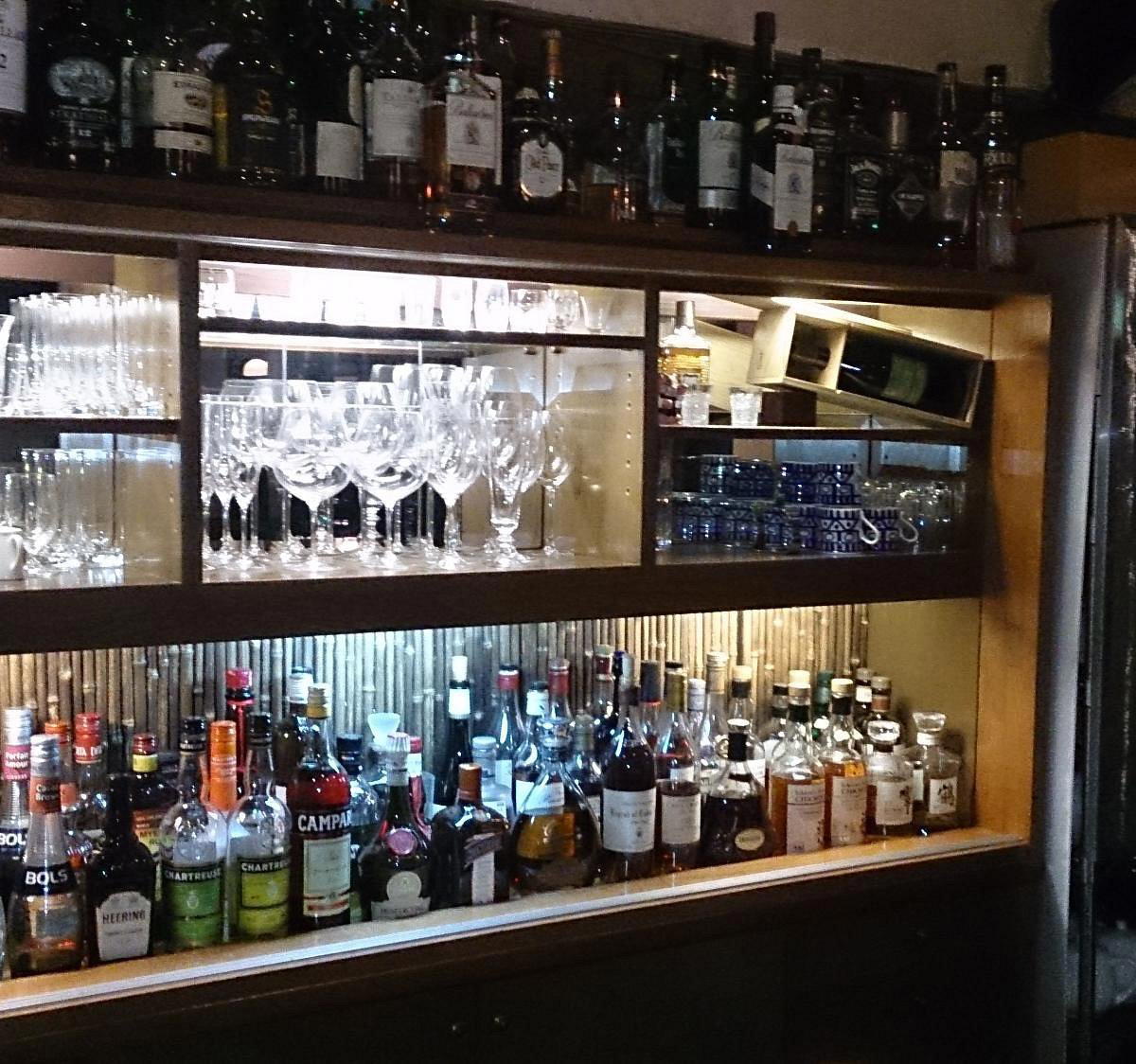
Atelier is supplemented by Elements, a more casual operation that provides the everyday flexibility guests want at a resort without reverting to buffet-format institutional food. The bar is the third element of the program and the one that the property's own materials describe in particularly specific architectural terms: wood-panelled, with a direct sightline to the mountain. In resort hotel bars that serve as standalone destinations rather than just waiting rooms for dinner, the physical design is usually doing significant work, and the panelling-and-view combination here appears to be the primary design gesture. For a comparison of how other high-end Japanese hotel bars handle the architecture-as-destination approach, the wood-and-view formula has precedents at properties like HOTEL THE MITSUI KYOTO and the bar at Bvlgari Hotel Tokyo, though in both cases the urban context changes the frame considerably.
Brand Logic and Competitive Positioning
The ANA brand has a specific identity in Japan's premium hospitality market. Founded by All Nippon Airways, the ANA-branded hotels carried an airline's aspiration for professional, unshowy luxury: high operational standards, limited personality cult around individual properties, a guest experience designed around reliability rather than surprise. The transition into the IHG group brought international scale and distribution without visibly dismantling the brand's approach. The ANA InterContinental Beppu is not trying to be a ryokan, and it is not pretending to be a design-led boutique. It sits in the bracket of premium international resort hotels that take the underlying destination seriously and build infrastructure to match it.
At approximately $350 per night, the property occupies a position in the premium resort bracket. The review volume for a property in Beppu is substantial, suggesting consistent occupancy from a mix of domestic and international travellers. That review base and the Michelin Key together form the trust architecture of the property's market position. For other onsen-focused properties at different points of the quality spectrum and in different regions, the EP Club has coverage of Nishimuraya Honkan in Kinosaki-cho, Zaborin in Hokkaido, Araya Totoan in Kaga, and Beniya Kofuyuden in Awara, each of which approaches the onsen-resort format from a different design and cultural angle. Further afield, Halekulani Okinawa and Jusandi in Ishigaki represent the premium resort category in Japan's southernmost islands, where the geothermal element drops out entirely and the focus shifts to marine environment.
Planning a Stay
The ANA InterContinental Beppu Resort & Spa sits in the Kannawa district at 499-18 Oaza, Kannawa, Beppu, Oita 874-0000. Beppu is accessible from Fukuoka by limited-express train in approximately two hours, placing it within day-trip or short-break range of Kyushu's main transport hub. The nightly rate from approximately $390 positions the property clearly in the premium resort bracket, above the mid-range onsen hotels that Beppu offers in quantity but below the ultra-luxury ryokan tier. The 89-room scale means availability is more constrained than at a large city hotel;
Further Comparisons
For travellers building a broader Japan itinerary, the EP Club covers the full range of premium accommodation types: design-led island experiences at Benesse House in Naoshima and Azumi Setoda in Onomichi; heritage-forward ryokan at Sekitei in Hatsukaichi-shi and Bettei Otozure in Nagato; mountain-adjacent retreats at Bettei Senjuan in Minakami; and preserved post-town accommodation at BYAKU Narai in Narai. International comparisons for resort spa programming can be drawn to Fufu Kawaguchiko and Fufu Nikko, both of which operate within the same onsen-plus-French-dining template that the ANA InterContinental Beppu has developed at larger scale. Outside Japan, Aman New York, The Fifth Avenue Hotel, and Aman Venice represent how the same spa-integrated resort logic translates across different urban and cultural contexts. Atami Izusan Karaku in Atami is a useful Japanese onsen comparison in the luxury-traditional bracket for those building a comparative itinerary.
At-a-Glance Comparison
Comparable venues nearby, for context on price, style, and recognition.
| Venue | Cuisine | Price | Awards | Notes |
|---|---|---|---|---|
| ANA InterContinental Beppu Resort & SpaThis venue — the venue you are viewing | Contemporary luxury hot spring resort blending modern design with authentic Japanese craftsmanship and natural elements. | $$$$ | Michelin 1 Key | Not listed |
| Galleria Midobaru | Contemporary art and architecture-integrated hot spring resort | $$$$ | 4-Star | Hotta |
| Terrace Midoubaru | Modern ryokan with Japanese hospitality and panoramic views. | $$$ | Not listed | Hotta |
| SETOUCHI RETREAT by Onko Chishin | Small luxury all-suite hotel designed by Tadao Ando | $$$$ | Michelin 1 Key | Yanaidanimachi |
| GOTO RETREAT by Onko Chishin | Luxury oceanfront retreat harmonizing modern design with Goto's natural and spiritual heritage. | $$$$ | Michelin 1 Key | Kamisakiyamacho |
| RYOTEI HANZUIRYO | Traditional Japanese ryokan with detached villas and expansive gardens | $$$$ | Michelin 1 Key | Unzen |
Recognition history
Dated appearances from independent guides and award organizations, with the underlying list record or original source where available.
Michelin 1 Key
Michelin
Michelin 1 Key
Michelin
At a Glance
- Elegant
- Scenic
- Quiet
- Sophisticated
- Wellness Retreat
- Romantic Getaway
- Anniversary
- Family Vacation
- Destination Spa
- Infinity Pool
- Panoramic View
- Private Dining
- Terrace
- Garden
- Spa
- Pool
- Fitness Center
- Wi Fi
- Restaurant
- Bar
- Room Service
- Concierge
- Valet Parking
- Sauna
- Mountain
- Waterfront
- Spa
- Pool
- Fitness Center
- Wi Fi
- Restaurant
- Bar
- Room Service
- Concierge
- Valet Parking
- Sauna
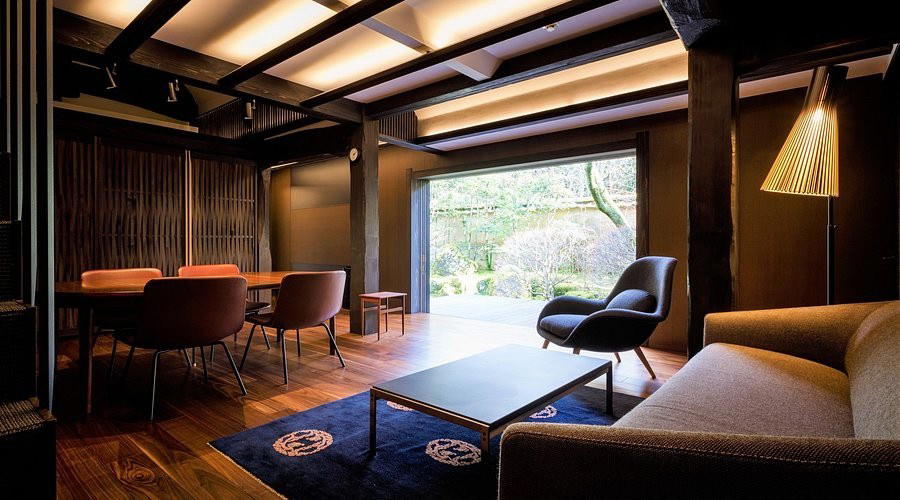
Serene and contemporary with warm earth tones, natural elements including Japanese cypress, and floor-to-ceiling windows framing mountain and bay views; designed for relaxation and rejuvenation.