Residential Hotel Hare Shin-Osaka occupies Higashiyodogawa Ward, positioning guests within reach of Shin-Osaka Station and the broader Kansai rail network. The property sits in the residential-style tier of Osaka accommodation, suited to travellers who prefer a lower-key base over the lobby theatre of larger city-centre hotels. It functions as a practical entry point into one of Japan's most food-dense cities.

Pearl is the En Primeur Club membership app — saves, bookings, and concierge access live there. Same editors, same standards.
- Address
- 1 Chome-21-29 Higashinakajima, Higashiyodogawa Ward, Osaka, 533-0033, Japan
- Phone
- +81 6 6476 7580
- Directions
- Get directions
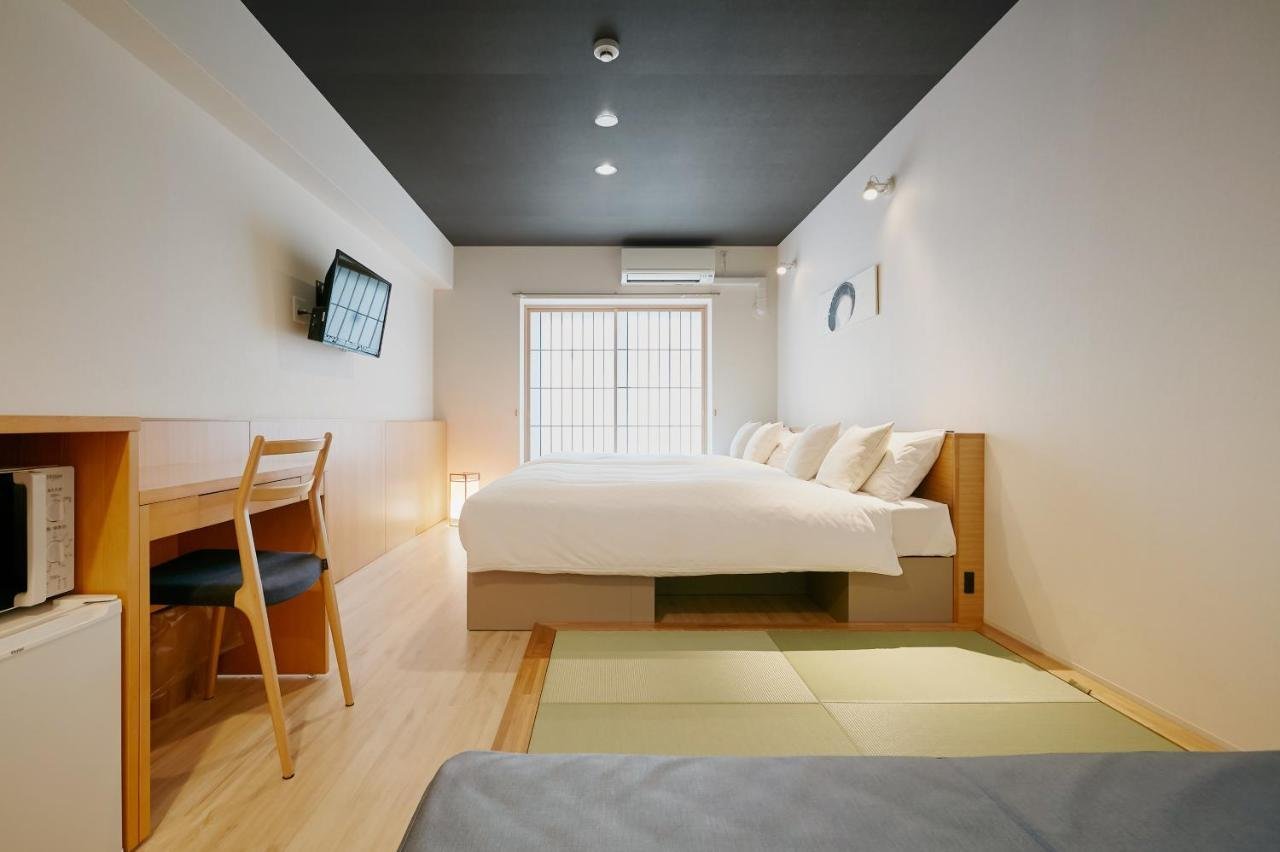
A Residential Approach to Osaka's Urban Hotel Scene
The stretch of Higashiyodogawa Ward that surrounds Shin-Osaka Station has never been mistaken for a leisure district. It is transit infrastructure writ large: shinkansen platforms, expressway on-ramps, business hotels calibrated to the overnight layover rather than the considered stay. Against that backdrop, the residential hotel format represents a deliberate counterpoint. Where the area's standard accommodation stock offers standardised rooms and checkout-by-ten efficiency, a residential model assumes the guest wants to arrive somewhere rather than simply pass through. Residential Hotel Hare Shin-Osaka, addressed at 1 Chome-21-29 Higashinakajima, sits inside that shift in guest expectation.
The Residential Model in Japanese Urban Hospitality
Japan's metropolitan hotel market has in recent years bifurcated sharply. On one side sit the internationally branded flagships, which have expanded aggressively into Tokyo and Osaka: properties like Bvlgari Hotel Tokyo in Tokyo anchor the ultra-luxury tier with trophy architecture and branded F&B programmes. On the other side, a quieter category has grown around the idea of extended-stay comfort without the formality of full-service luxury. The residential hotel in Japan draws from ryokan sensibility, specifically the sense that space and quiet matter more than spectacle, and translates it into an urban apartment-adjacent format. Guests in this tier are typically not seeking concierge theatre; they want good beds, functional kitchenettes or living areas, and a neighbourhood that repays some exploration.
Shin-Osaka functions as Osaka's main shinkansen hub, which makes the surrounding ward useful in ways that the city's more celebrated districts, Namba, Shinsaibashi, or the canal-cut streets of Dotonbori, are not. The commute south into central Osaka takes around ten minutes by metro, putting the Midosuji line's full range within easy reach. For travellers arriving from Tokyo or Kyoto and planning to use Osaka as a base rather than a destination in itself, proximity to Shin-Osaka Station is a genuine logistical argument. HOTEL THE MITSUI KYOTO in Kyoto and Amanemu in Mie both serve guests who prioritise environment over transit access; Shin-Osaka inverts that calculus.
Service Philosophy: Quiet Attentiveness Over Choreographed Formality
The residential hotel format in Japan tends to produce a particular service register. Because the model assumes longer stays or repeat visits, staff interactions are calibrated toward familiarity rather than ceremony. This contrasts with the structured choreography of full-service ryokan properties such as Gora Kadan in Hakone or Asaba in Izu, where the guest experience is architected from arrival ritual to kaiseki service. The residential approach trades that scripted warmth for something closer to anticipatory discretion: assistance when sought, presence when needed, but no pressure toward performative hospitality.
In Osaka specifically, this lands differently than it might in Tokyo or Kyoto. The city's commercial culture has historically prized directness and informal generosity over hierarchical service codes. An Osaka hotel operating in the residential register benefits from that ambient cultural permission. Staff competence in this format tends to manifest as local knowledge, the ability to direct guests toward neighbourhood eating rather than tourist-tier restaurant lists, and flexibility around arrival and departure logistics that suit the transit-heavy character of the Shin-Osaka district.
Where Residential Hotels Sit in Osaka's Accommodation Tier
Osaka's hotel market rewards specificity about what you are actually buying. The premium end of the city's central hotel stock is well represented in the EP Club guide, and our full Osaka Shi restaurants guide places dining venues against their neighbourhood context with the same granularity. Residential formats occupy a middle register: above the business hotel chains clustered around Shin-Osaka and Namba stations, but below the full-service luxury tier. Properties like 3-chōme-6-12 Honmachi and HOTEL RESOL TRINITY OSAKA share some of this territory, each with a distinct positioning relative to neighbourhood and format.
For travellers who have benchmarked against Japan's resort-anchored properties, the residential urban model requires a different lens. Benesse House in Naoshima, Zaborin in Kutchan, or Halekulani Okinawa in Okinawa are properties where environment is the product. Urban residential properties offer something different: density, transit, and the texture of a working city neighbourhood, which is its own kind of value proposition for the right traveller.
The Higashiyodogawa Ward Setting
Higashiyodogawa is not a district that attracts much travel editorial attention, which is itself informative. The ward is industrial-residential in character, with the Shin-Osaka Station complex as its dominant infrastructure and a street-level fabric of ramen counters, supermarkets, and neighbourhood izakayas rather than destination dining. For travellers who want to eat well at ground level rather than in hotel restaurants or tourist-coded venues, this is an advantage: the local eating around Shin-Osaka rewards some basic Japanese-language capability or a willingness to point at plastic food models.
The broader Japan hotel circuit is well documented in the EP Club portfolio. For those planning multi-city itineraries, properties like Fufu Kawaguchiko in Fujikawaguchiko, Fufu Nikko in Nikko, Nishimuraya Honkan in Kinosaki-cho, Araya Totoan in Kaga, Atami Izusan Karaku in Atami, Azumi Setoda in Onomichi, Beniya Kofuyuden in Awara, Sekitei in Hatsukaichi-shi, ENOWA Yufu in Yufu, ANA InterContinental Beppu Resort & Spa in Beppu, Jusandi in Ishigaki, and Araya Totoan in Kaga represent the breadth of what Japan's hospitality geography offers beyond the metropolitan core.
Planning Your Stay
Residential Hotel Hare Shin-Osaka is located at 1 Chome-21-29 Higashinakajima, Higashiyodogawa Ward, Osaka 533-0033. The Shin-Osaka shinkansen station is the natural arrival point for travellers coming from Tokyo, Kyoto, or Hiroshima, placing the property squarely in the transit logic of the Kansai region. Booking is leading handled through the hotel directly or via the major Japanese OTA platforms where residential properties of this type typically list, as direct booking often carries the most flexibility around check-in timing.
Travellers comparing international reference points may find the EP Club's coverage of Aman New York in New York City, The Fifth Avenue Hotel in New York City, and Aman Venice in Venice useful for calibrating what different residential and boutique hotel formats deliver at comparable or higher price points globally.
Category Peers
| Venue | Cuisine | Price | Awards |
|---|---|---|---|
| Residential Hotel Hare Shin-OsakaThis venue — the venue you are viewing | This venue | $1–100 | Not listed |
| Bvlgari Hotel Tokyo | Michelin 3 Key, World's 50 Best | Not listed | 3 Michelin Keys · World's 50 Best #24 |
| Aman Kyoto | Michelin 2 Key, World's 50 Best | Not listed | 2 Michelin Keys · World's 50 Best #74 |
| Aman Tokyo | Michelin 2 Key, World's 50 Best | Not listed | 2 Michelin Keys · World's 50 Best #11 |
| Amanemu | Michelin 3 Key | Not listed | 3 Michelin Keys · La Liste Top Hotels |
| Four Seasons Hotel Tokyo at Otemachi | Michelin 3 Key | Not listed | 3 Michelin Keys · La Liste Top Hotels |
Continue exploring
More in Osaka
Hotels in Osaka
Browse all →




Bars in Osaka
Browse all →




Restaurants in Osaka
Browse all →




Wineries in Osaka
Browse all →
Details
- Modern
- Minimalist
- Business Trip
- Weekend Escape
- Wi Fi
Contemporary Japanese style rooms offering a quiet, comfortable atmosphere with sound-proofed windows and cultural immersion.