




3 Michelin Stars · La Liste Top Restaurants · Relais Chateaux Award
Our verdict
Kashiwaya Osaka Senriyama places Osaka’s formal Japanese dining tradition outside the city-centre circuit, in a house-style setting in Suita rather than a hotel tower or nightlife district. Its repeated Tabelog Bronze recognition and selection for Tabelog Japanese cuisine WEST “Tabelog 100” put it in the serious Kansai washoku conversation, with a format built around reservation-only preparation, private rooms and seasonal Japanese cuisine.

Pearl is the En Primeur Club membership app, where members save venues, book tables and use the concierge.
The menu
What to order
- Amadai
- Hamo (sea eel)
- Kae with tilefish, chestnut, ginkgo, and chrysanthemum
- Seasonal sashimi
Approaching the Senriyama address, Osaka’s commercial tempo yields to Suita’s residential calm, showing that Kansai high-end Japanese cuisine need not rely on city-centre theatre. The house-restaurant format matters: it brings the meal closer to sukiya-zukuri hospitality and private-room dining than counter performance, distinguishing Kashiwaya Osaka Senriyama from compact washoku rooms in central Osaka.
That distinction is substantive. In Kansai, refinement often reads through spacing, pacing and seasonality rather than overt luxury. Kyoto offers kaiseki’s ceremonial grammar and tea-culture discipline; Osaka offers a mercantile, generous tradition of serious dining that does not always announce itself. Kashiwaya Osaka Senriyama sits between them: formal Japanese cuisine in a suburban house, sustained by third-party recognition rather than trend-cycle noise.
Why this Suita dining room belongs in the Kansai washoku conversation
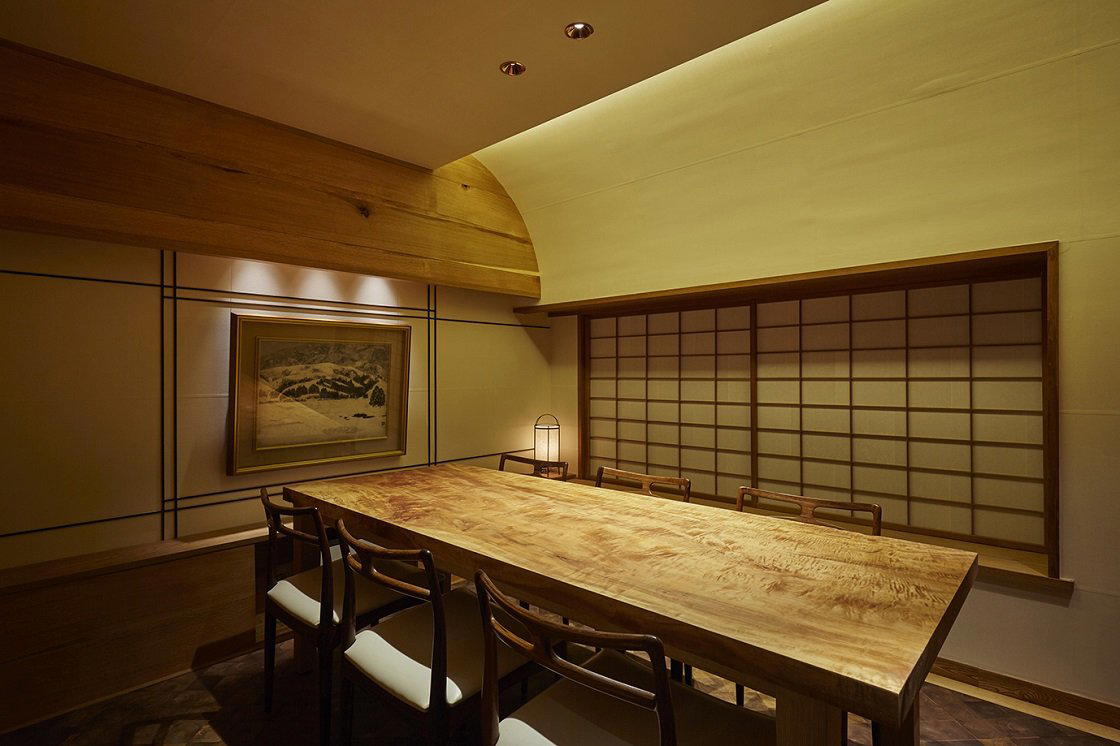
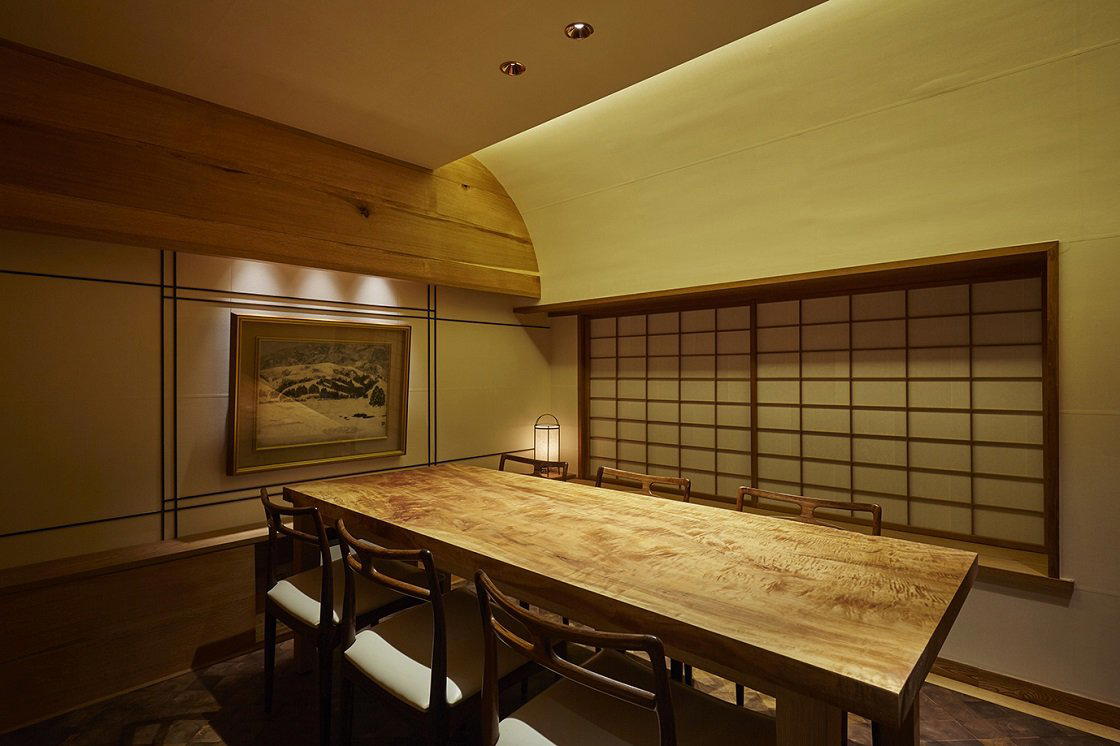
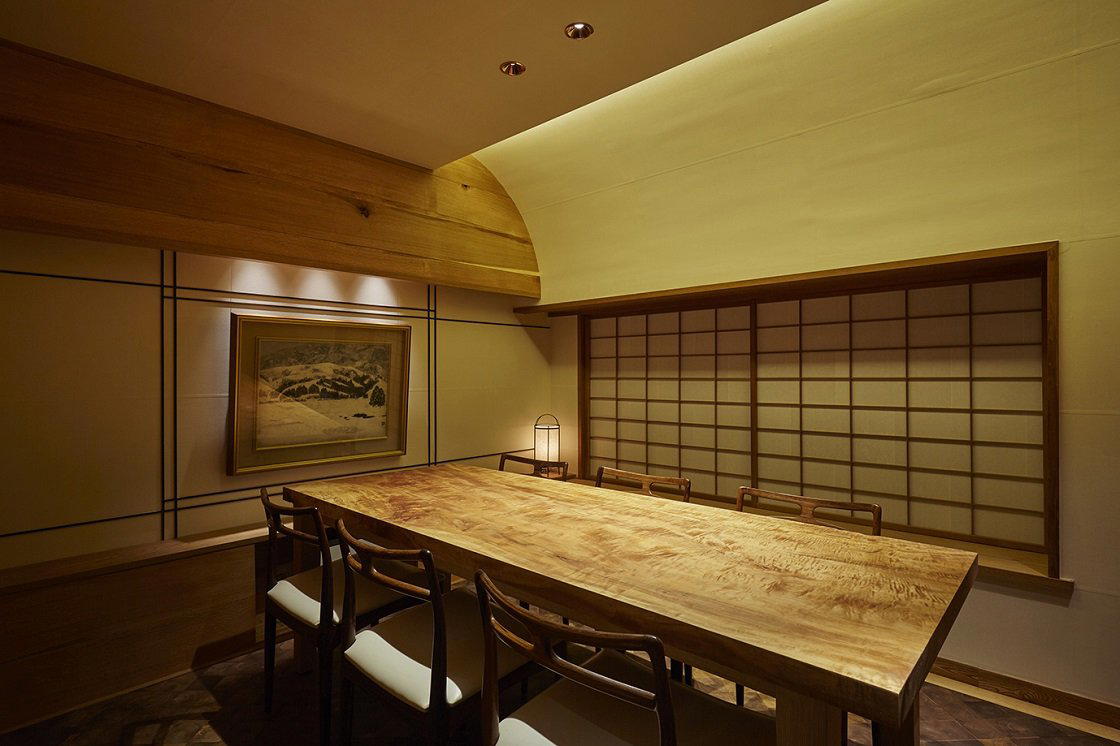
Read the restaurant through regional positioning. Tokyo’s high-end Japanese dining often compresses prestige into small counters, chef-facing choreography and hard-to-secure bookings. Kansai has a broader vocabulary: private rooms, tatami, sunken seating, seasonal progression and slower arrival. Kashiwaya Osaka Senriyama’s 40 seats and private rooms for parties from two through larger groups place it in that lineage, where discretion and room architecture matter as much as the plate sequence.
The award trail supports this. The restaurant has been a Tabelog Award Bronze winner across multiple years through 2026, and was selected for Tabelog Japanese cuisine WEST “Tabelog 100” in 2021, 2023 and 2025. Those signals place it within western Japan’s Japanese-cuisine field, not just an Osaka city list. La Liste has scored it in the low 90s, and Opinionated About Dining has included it in its Japan rankings, confirming that its reputation travels beyond local word of mouth.
Within Osaka, the comparison is useful. Doshincho Washoku Zui operates in a more modest price bracket, a sharper option for washoku precision without the same formal spend. Higashichaya Nakamura and Tenjimbashi Aoki sit in a higher-price conversation, while Kawahara and Kurubushi show that Osaka’s Japanese dining strength is distributed across neighbourhoods rather than concentrated in one luxury zone. For a broader map of serious tables, use Our full Osaka restaurants guide.
The meal is built around seasonality, privacy and formal pacing
The cuisine is listed simply as Japanese, often the right label at this tier: too much English-language specificity can flatten a tradition built on season, vessel, room and sequence. Available highlights point to a menu honoring Japan’s traditional 24 seasons, dividing the year more finely than the four-season shorthand familiar to many foreign diners. In Kansai, the calendar governs ingredients, temperature, serving order and the meal’s emotional register.
The service structure reinforces that logic. Reservations are required, and preparations begin after a booking is received. This is not casual à la carte cooking for walk-ins, but a prepared Japanese dining format, explaining the emphasis on advance requests and preferences at reservation. Private rooms, tatami and sunken seating signal a meal designed for conversation, business dining and controlled pacing rather than rapid table turnover.
Drinks program adds another layer. Sake, shochu and wine are treated seriously, and a sommelier is available. That combination is increasingly common at high-end Japanese restaurants in Osaka and Kyoto, where pairings are no longer limited to nihonshu orthodoxy. Wine can work with dashi, grilled courses and seasonal vegetables when handled with restraint; shochu offers structure without sake’s aromatic profile. The point is flexibility inside a classical meal, not novelty.
Price sets expectations. Published budgets place lunch at JPY 10,000 to JPY 14,999 and dinner at JPY 15,000 to JPY 19,999, with review-based spend appearing higher. That is below some trophy-counter omakase pricing in Tokyo, but firmly special-occasion territory for Osaka washoku. A 10% service charge applies, credit cards are accepted, and electronic money is not. These details shape whether the room fits a business dinner, family celebration or destination meal.
How to place it beside Osaka's other serious Japanese rooms
Kashiwaya Osaka Senriyama is not for diners seeking neon, counter intimacy or a night that spills into bar-hopping. Its appeal is opposite: a house restaurant outside the central grid, with reservation-only cadence and a format privileging privacy. It is especially relevant for travelers already eating widely in Kansai who want to understand how Osaka’s high-end Japanese dining differs from Kyoto formality and Tokyo compression.
For a two- or three-night Osaka itinerary, use contrast. Pair this style of room with a more central Japanese table such as Ajikitcho Bumbuan or Ajikitcho Horieten, then add a smaller contemporary washoku address such as Fushimimachi Kakoiyama. The point is not to rank them in one line, but to see how setting, price and service format change Japanese cuisine within one city.
Travel planning should account for the rest of the evening. Suita is not Namba or Kitashinchi, so the meal works better as the centre of the night than one stop among several. Readers building a wider trip can place dining alongside hotels, drinking and cultural time through Our full Osaka hotels guide, Our full Osaka bars guide, Our full Osaka wineries guide and Our full Osaka experiences guide. The city rewards that sequencing: formal lunch or dinner in the north, then a different Osaka after dark elsewhere.
For readers comparing Japanese cuisine beyond Kansai, the range is revealing. [ki:] in Kyoto makes the Kyoto comparison more direct, while -Grilled beef Sukiyaki- KAMAKURA TANUKIAN 鎌倉 たぬき庵 in Kamakura shows how a single-dish tradition can anchor another region’s meal. Tokyo and regional Japan pull differently again, from. 鮪と炭火焼き うお炭 秋葉原店 in Tokyo to.know in Kumamoto, (Shoku) Vietnam in Kawasaki and [Curry Senmon Ten] Maruyama Kyoju. in Sapporo. Outside Japan, 715, Japanese in Los Angeles and 99 sushi bar, Japanese in Alcobendas underline how much context changes when Japanese cuisine leaves its home regions.
The editorial case for Kashiwaya Osaka Senriyama is precise: a serious Kansai Japanese restaurant for diners who value seasonality, privacy and regional context over spectacle. Repeated Bronze recognition, WEST Japanese-cuisine selections, reservation-only preparation and the house-style setting all point the same way: Osaka washoku read through space and calendar, not performance alone.
Frequently asked questions
Is Kashiwaya Osaka Senriyama focused on a specific cuisine style?
Kashiwaya Osaka Senriyama serves Japanese cuisine.
Where exactly is Kashiwaya Osaka Senriyama?
Kashiwaya Osaka Senriyama is located in Osaka.
What's the pricing like at Kashiwaya Osaka Senriyama?
Pricing at Kashiwaya Osaka Senriyama is listed as ¥¥¥.
When can I go to Kashiwaya Osaka Senriyama?
Hours at Kashiwaya Osaka Senriyama: Hours: Monday 12–3:30 pm, 6–10 pm Tuesday 12–3:30 pm, 6–10 pm Wednesday 12–3:30 pm, 6–10 pm Thursday 12–3:30 pm, 6–10 pm Friday 12–3:30 pm, 6–10 pm Saturday 12–3:30 pm, 6–10 pm Sunday Closed.
Cuisine Context
Nearby venues at a similar price tier for orientation.
| Venue | Cuisine | Price | Awards | Notes |
|---|---|---|---|---|
| Kashiwaya Osaka SenriyamaThis venue (the venue you are viewing) | Seasonal Kaiseki Omakase | $200–300 | 3 Michelin Stars · La Liste Top Restaurants | Not listed |
| Taian | Traditional Japanese Kaiseki Omakase | $150–200 | 3 Michelin Stars · La Liste Top Restaurants | Chūō |
| HAJIME | Avant-Garde Japanese Fine Dining | $300–500 | 3 Michelin Stars · World's 50 Best #83 | Nishi |
| KAHALA | Creative Kaiseki Fusion | $300–500 | 2 Michelin Stars · Tabelog Bronze #152 | Kita |
| Koryu | Modern Japanese Omakase | $200–300 | 2 Michelin Stars · La Liste Top Restaurants | Chūō |
| Shunsaiten Tsuchiya | Tempura & Kaiseki | Not listed | 2 Michelin Stars · Tabelog Bronze #482 | Not listed |
Recognition history
Dated appearances from independent guides and award organizations, with the underlying list record or original source where available.
Michelin 3 Stars
Michelin
La Liste Top Restaurants
La Liste
Opinionated About Dining Top Restaurants in Japan Recommended
Opinionated About Dining
Relais Chateaux Award
Relais Chateaux
Tabelog Bronze #168
Tabelog
Full recognition history (14 entries)
La Liste Top Restaurants
La Liste
Michelin 3 Stars
Michelin
Opinionated About Dining Top Restaurants in Japan Ranked #155
Opinionated About Dining
Relais Chateaux Award
Relais Chateaux
Tabelog 100 #77 · No. 77
Tabelog · Tabelog 100 - Japanese cuisine - WEST - 2025
Tabelog Bronze
Tabelog
Michelin 3 Stars
Michelin
Opinionated About Dining Top Restaurants in Japan Ranked #166
Opinionated About Dining
Opinionated About Dining Top Restaurants in Japan Highly Recommended
Opinionated About Dining
Continue exploring
More in Osaka
Restaurants in Osaka
All restaurants in Osaka →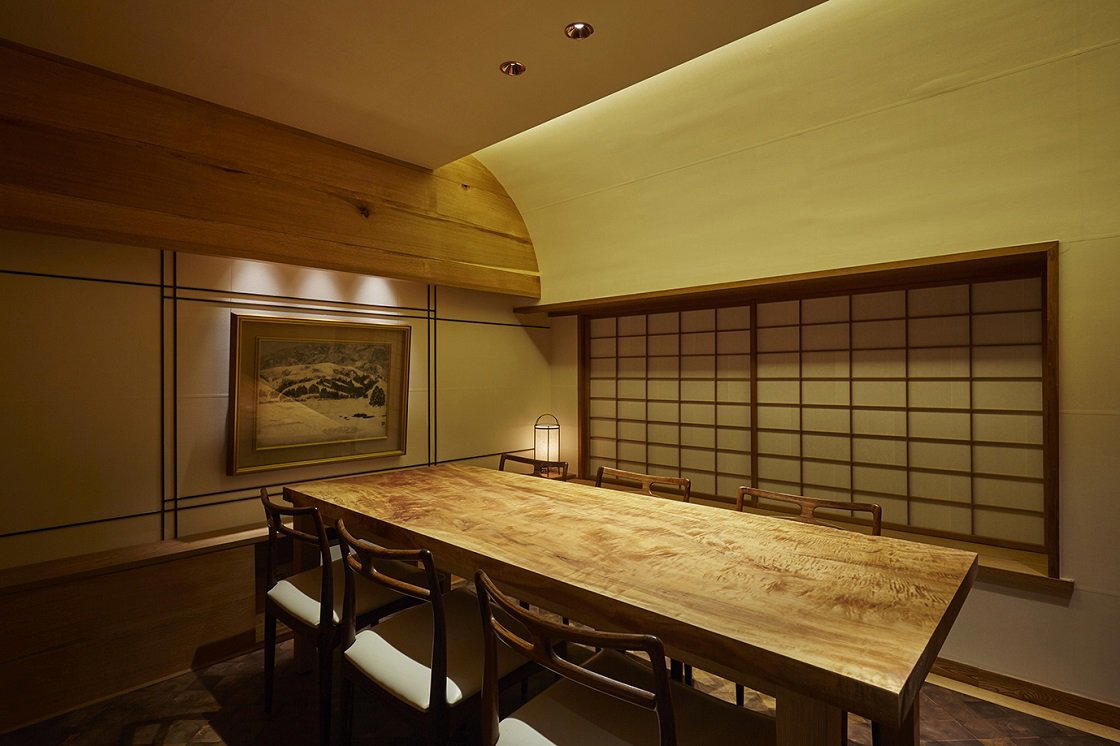


Bars in Osaka
All bars in Osaka →


Hotels in Osaka
All hotels in Osaka →



Wineries in Osaka
Browse all →
Details
- Elegant
- Quiet
- Intimate
- Sophisticated
- Classic
- Special Occasion
- Celebration
- Date Night
- Business Dinner
- Private Dining
- Garden
- Historic Building
- Design Destination
- Sake Program
- Sommelier Led
- Local Sourcing
- Garden
- Tasting Menu
- Set Menu
- Sake
- Wine
- Allergy Accommodating
Current opening hours
- Monday
- 12–3:30 PM, 6–10 PM
- Tuesday
- 12–3:30 PM, 6–10 PM
- Wednesday
- 12–3:30 PM, 6–10 PM
- Thursday
- 12–3:30 PM, 6–10 PM
- Friday
- 12–3:30 PM, 6–10 PM
- Saturday
- 12–3:30 PM, 6–10 PM
- Sunday
- Closed
Hours can change for holidays and private events. Hours as of .
Serene and minimalist Japanese villa setting with soft lantern lighting, incense, natural wood design by master craftsman Toshiyuki Nakamura, and views of a small garden with swaying pines.