Hotel Resol Trinity Osaka occupies a central position in Chuo Ward, placing guests within walking distance of Osaka's Honmachi business corridor and the merchant-quarter streets of Koraibashi. The property sits in the mid-market business hotel tier that defines much of central Osaka's accommodation offer, with practical room formats suited to both short business stays and multi-night leisure visits.

Pearl is the En Primeur Club membership app — saves, bookings, and concierge access live there. Same editors, same standards.
- Address
- 2 Chome-6-6 Koraibashi, Chuo Ward, Osaka, 541-0043, Japan
- Phone
- +81 6 6229 9269
- Website
- resol-hotel.jp
- Directions
- Get directions
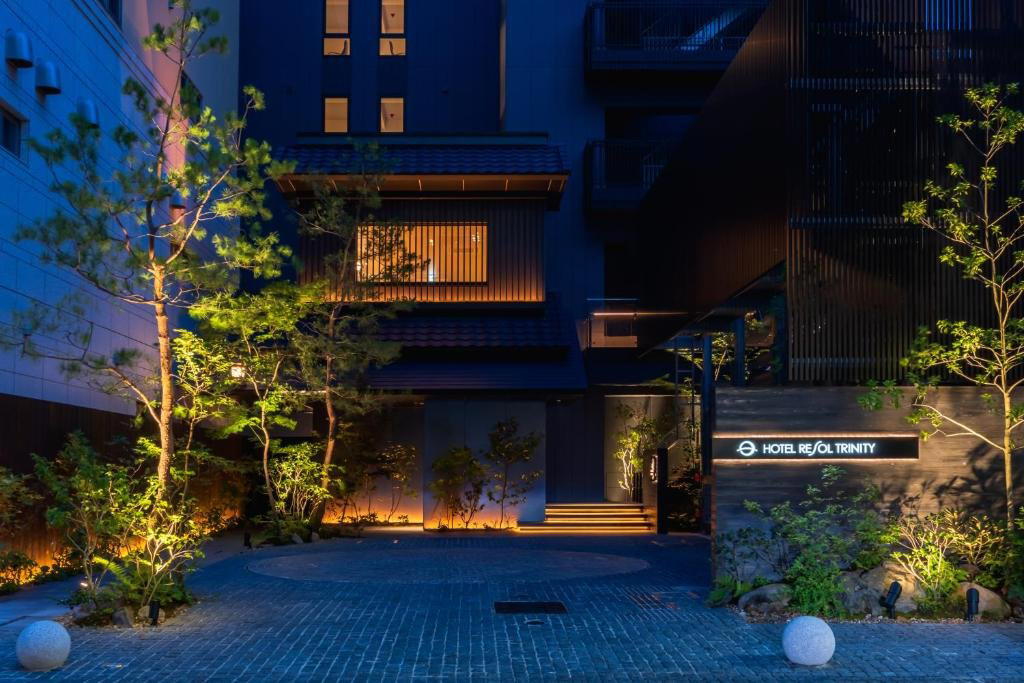
Koraibashi and the Business Hotel Tier in Central Osaka
Central Osaka's accommodation market has long been divided along clear lines: the high-design, high-spend properties clustered around Shinsaibashi and the Nakanoshima waterfront, and the functional mid-market tier that serves the city's dense business district. Chuo Ward, where Koraibashi runs through what was historically Osaka's merchant and financial heartland, sits squarely in that second category for most of its hotel stock. Hotel Resol Trinity Osaka, at 2 Chome-6-6 Koraibashi, is positioned inside this working commercial neighbourhood rather than in the more tourist-oriented corridors further south. That address matters: Koraibashi retains a street-level texture of small financial offices, older machiya-style shopfronts, and a handful of well-regarded restaurants that serve a local rather than visitor clientele. Guests who choose this location over the more obvious options near Namba or Umeda are typically trading tourist convenience for proximity to the Honmachi business core.
The Resol Trinity brand operates across multiple Japanese cities and belongs to the domestic business hotel segment, a category that Japanese hoteliers have refined over decades into something more precise than the equivalent tier in Europe or North America. Room sizes are compact by international standards, but the operational efficiency and cleanliness standards are consistent and reliable. For travellers moving between Osaka and other Japanese cities, this tier functions as a competent base rather than a destination in itself. Those seeking design-led properties or chef-driven food programmes in Osaka should look at a different cohort entirely, properties like those listed in our full Osaka Shi restaurants guide and the broader hospitality context it maps.
The Koraibashi Address and What It Means for Dining
The editorial angle that matters most for a hotel positioned at this address is not the property's own food and beverage offer, for which no verified programme detail is available, but the dining geography surrounding it. Koraibashi and the adjacent Honmachi streets form one of Osaka's more interesting zones for mid-lunch and early-evening eating precisely because the clientele is office workers rather than tourists. That tends to produce a different restaurant ecosystem: teishoku lunch counters, precise kappo rooms, and the kind of standing soba and ramen operations that calibrate their offer around a repeat local customer base rather than one-time visitors.
Osaka's reputation as a food city, captured in the local phrase kuidaore (eating until you drop), is most often associated with the Dotonbori strip and its theatrical food theatre. But the Honmachi and Koraibashi zones sit at a quieter frequency, where the cooking tends toward precision over spectacle. A guest staying in this neighbourhood and willing to explore a few streets in either direction will find a different register of Osaka eating than the one that appears in most international guides. The nearby 3-chōme-6-12 Honmachi property sits in the same immediate zone, which gives a sense of the accommodation density and competition in this block.
Positioning Against the Japanese Hotel Spectrum
Understanding Hotel Resol Trinity Osaka requires placing it inside a spectrum that runs from ultra-refined ryokan to international luxury flagships to the lean business hotel category. At the far end of that spectrum, Japan's most serious hospitality properties operate on entirely different terms: Gora Kadan in Hakone and Asaba in Izu represent the kaiseki-anchored ryokan tradition, where the food programme is inseparable from the stay and often the primary reason for booking. Amanemu in Mie and Zaborin in Kutchan occupy the international luxury end of the onsen-resort format. Benesse House in Naoshima turns its cultural programme into the main draw. None of these are comparable to a Chuo Ward business hotel in Osaka, and the comparison is useful precisely because it clarifies what each tier is actually selling.
The business hotel tier in Japan sells something specific: a clean, efficiently run room in a central location, at a price point that keeps the total trip cost manageable for both corporate and leisure travellers. It does not typically sell a dining programme worth planning around, a spa worth arriving early for, or a bar worth making a detour to reach. Knowing this going in is more useful than discovering it on arrival. For guests who want the Osaka-in-Chuo-Ward location but at a higher design and service specification, the Residential Hotel Hare Shin-Osaka represents a different format in the same broad city zone.
Japan's Broader Hotel Tier: Context for the Traveller
Japan's hospitality infrastructure is unusually stratified, with each tier delivering reliably against its own metrics. The international luxury properties in Tokyo, among them Bvlgari Hotel Tokyo, set one kind of benchmark. Historic ryokan in regional Japan, including Nishimuraya Honkan in Kinosaki-cho and Araya Totoan in Kaga, set an entirely different one, built around the omotenashi service tradition and multi-course kaiseki eating. At the resort scale, Halekulani Okinawa and ANA InterContinental Beppu Resort and Spa bring international brand infrastructure to regional Japanese destinations. And the business hotel tier, running from national brands like Resol Trinity down through dozens of regional operators, serves the majority of domestic and inbound travellers moving between Japanese cities on practical budgets.
What distinguishes the Japanese business hotel from its equivalents elsewhere is the operational standard. Rooms are smaller, but they are maintained with a consistency that the equivalent price tier rarely achieves in Western cities. Breakfast services, where offered, often include Japanese options alongside the standard Western spread. The neighbourhood surrounding the hotel, rather than the hotel itself, becomes the primary draw. In Koraibashi, that neighbourhood has enough culinary and cultural texture to reward a stay of several nights for a traveller prepared to walk its streets. For those planning multi-city Japan itineraries that also include properties like HOTEL THE MITSUI KYOTO or more remote stays at Fufu Kawaguchiko or Fufu Nikko, the Resol Trinity format functions as a sensible central-city anchor between those more destination-driven nights.
Planning Your Stay
The hotel's address at 2 Chome-6-6 Koraibashi, Chuo Ward, places it within direct reach of Honmachi Station on the Osaka Metro Midosuji and Chuo lines, making transit to other parts of the city accessible without surface-level navigation. Chuo Ward sits between the Nakanoshima cultural district to the north and the Namba entertainment zone to the south, with both reachable in under fifteen minutes by metro. Booking approaches for Resol Trinity properties in Japan typically run through major online travel platforms and the brand's own Japanese-language reservation system; lead times are shorter than for the ryokan or luxury tiers, where peak-season availability can close months in advance. Travellers comparing options in the same district should note the nearby 3-chōme-6-12 Honmachi property, which sits within a few blocks and offers a point of comparison for the same Chuo Ward location at potentially different price and format specifications.
Booking and Cost Snapshot
| Venue | Price | Awards |
|---|---|---|
| HOTEL RESOL TRINITY OSAKAThis venue — the venue you are viewing | $100–200 | Not listed |
| Bvlgari Hotel Tokyo | Not listed | 3 Michelin Keys · World's 50 Best #24 |
| Aman Kyoto | Not listed | 2 Michelin Keys · World's 50 Best #74 |
| Aman Tokyo | Not listed | 2 Michelin Keys · World's 50 Best #11 |
| Amanemu | Not listed | 3 Michelin Keys · La Liste Top Hotels |
| Four Seasons Hotel Tokyo at Otemachi | Not listed | 3 Michelin Keys · La Liste Top Hotels |
Continue exploring
More in Osaka
Hotels in Osaka
Browse all →




Bars in Osaka
Browse all →




Restaurants in Osaka
Browse all →




Wineries in Osaka
Browse all →
Details
- Modern
- Quiet
- Minimalist
- Business Trip
- Weekend Escape
- Wi Fi
- Public Bath
- Massage
- Spa
Modern Japanese design with contemporary décor, plush furnishings, wooden works, and a calming atmosphere enhanced by aromatherapy.