Tabelog 100 #11
Our verdict
T nakameguro pairs a modern Japanese wagyu T-bone focus with a chefs counter, open kitchen, sake program, and leisurely dinner pacing.

Pearl is the En Primeur Club membership app, where members save venues, book tables and use the concierge.
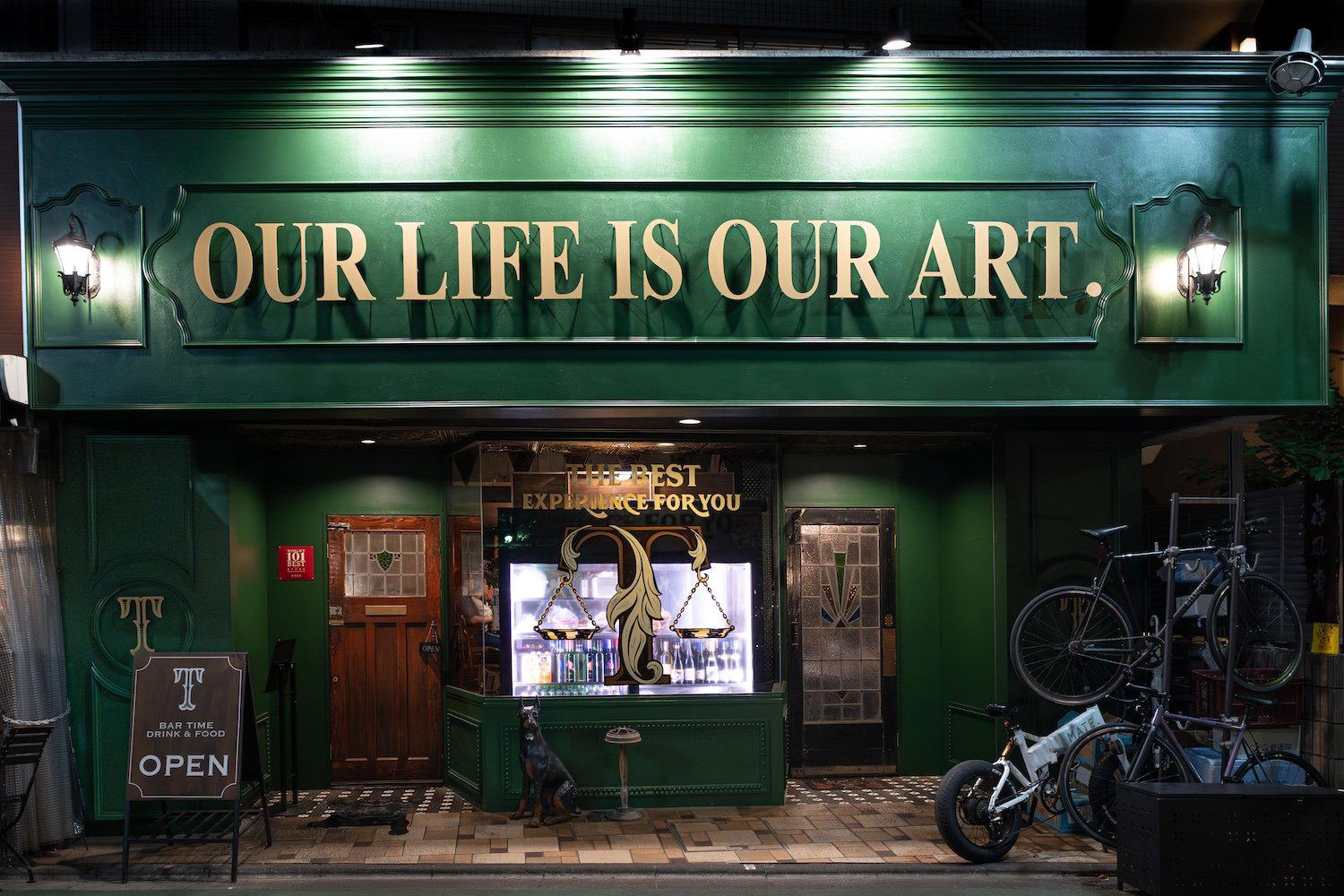
Nakameguro's Quiet Tier: Where the Neighbourhood Shapes the Room
Nakameguro occupies a particular register in Tokyo's dining geography. The canal-side streets around Kamimeguro attract a younger, design-aware crowd, and the restaurants that settle here tend to reflect that self-consciousness in their physical spaces: considered materials, restrained palettes, interiors that signal intention without announcing it. T nakameguro, located in the Comfort Nakameguro building on a residential stretch of 2-chome, sits within this neighbourhood logic. The address is not Ginza, not Roppongi, not Shinjuku. That choice of location already signals something about how the venue positions itself relative to Tokyo's more trophy-conscious dining corridors.
Nakameguro has absorbed several waves of restaurant culture over the past decade, moving from late-night izakaya density toward a more curated mix of small-format dining rooms where the physical container matters as much as what arrives on the plate. The area's compact footprint encourages a different kind of hospitality, one that depends less on spectacle and more on proximity between kitchen and guest. T nakameguro operates within this tradition.
The Address and What It Implies About Scale
The Comfort Nakameguro building on Kamimeguro 2-chome-37 places T nakameguro in one of Tokyo's more transitional micro-districts: residential enough to feel removed from tourist circuits, but close enough to Nakameguro station's dense commercial spine to draw a deliberate audience. Restaurants that choose buildings like this, rather than purpose-built ground-floor retail, typically do so for reasons of rent, intimacy, or both. In Tokyo's small-format dining scene, building-embedded rooms have become a distinct subtype, less visible from the street, more dependent on word-of-mouth and reservation depth to sustain occupancy.
This kind of spatial discretion is not incidental. Across Tokyo's premium and near-premium tiers, the shift from high-visibility storefronts to quieter, embedded addresses has accelerated as rents in Ginza and Minami-Aoyama have pushed ambitious smaller operators into neighbourhoods where overheads allow tighter, more focused menus. Nakameguro has absorbed several of these operators over recent years, becoming a reliable address for the sort of cooking that prioritises craft over profile. In that context, T nakameguro shares a spatial logic with a number of its peers, even if its specific format and cuisine differ from Crony, which brought its innovative French program to a similarly deliberate Tokyo address.
Tokyo's Small-Room Dining Tradition and Where T Nakameguro Sits
Tokyo's restaurant culture has long granted serious status to small rooms. The counter-format omakase, the eight-seat tasting menu, the chef's table that is simply the only table, these formats carry weight precisely because they enforce a particular relationship between the person cooking and the person eating. Harutaka in Ginza works this way at the highest sushi tier. RyuGin does the same for kaiseki. Even French-influenced rooms like L'Effervescence and Sézanne operate with seat counts calibrated to ensure that service remains personal rather than mechanical.
T nakameguro's Kamimeguro address places it within walking distance of Nakameguro station, which sits on both the Tokyu Toyoko Line and the Tokyo Metro Hibiya Line, a connection point that makes the neighbourhood genuinely accessible from Shibuya, Shinjuku, Ebisu, and central Tokyo within 15 to 25 minutes. For a small-format room, that transit accessibility is meaningful: it means the venue's potential audience is not limited to immediate residents but draws from across the city's dining-active population without requiring the kind of destination-effort that more peripheral addresses demand.
Design Registers in Nakameguro's Dining Rooms
The neighbourhood's design sensibility has been shaped by years of proximity to the fashion and creative industries concentrated along the Meguro River. Small architectural firms, independent furniture makers, and material-driven interiors have become part of Nakameguro's visual identity, and that aesthetic has migrated into its restaurant spaces. Rooms in this part of Tokyo tend toward natural materials, wood, stone, textured plaster, and away from the high-polish finishes associated with Ginza's luxury dining floors. The physical language is one of crafted restraint rather than formal grandeur.
For a venue in the Comfort Nakameguro building, this neighbourhood context suggests a spatial register that is unlikely to be ostentatious. Embedded building addresses in residential Nakameguro typically yield smaller footprints with considered lighting and a deliberate lack of street-level theater. This positions T nakameguro within the subset of Tokyo dining rooms where the architecture enforces intimacy as a structural feature, not a marketing claim. The design, whatever its specific details, would need to answer to this neighbourhood's established visual logic or risk feeling incongruous with its surroundings.
For comparison, venues operating at similar geographic and tonal registers elsewhere in Japan include Gion Sasaki in Kyoto, where the machiya format creates a similar sense of spatial intention, and akordu in Nara, which uses its heritage building to frame a European-influenced menu within a distinctly local container. In Tokyo itself, the spatial logic connecting neighbourhood character to room design also governs venues well beyond Nakameguro, from HAJIME in Osaka to the Fukuoka context of Goh, each of which uses its physical environment as part of the statement it makes to guests.
The Broader Tokyo Frame: Peer Context and Positioning
Tokyo's restaurant taxonomy is unusually complex. The city supports more Michelin-starred restaurants than any other in the world, but the starred tier represents only a fraction of the serious dining available. Below and alongside that formal recognition sits a dense field of technically accomplished, highly intentional rooms operating without awards infrastructure but with loyal, informed audiences. Nakameguro contains a concentration of these, alongside design-led wine bars and contemporary Japanese rooms that do not fit neatly into traditional genre categories.
What the address and building context suggest is a venue that has made deliberate choices about where and how to operate, choices that align with Nakameguro's established identity as a neighbourhood for considered, lower-profile dining. For readers building a Tokyo itinerary that moves across formats and geographies, our full Tokyo restaurants guide maps the field more comprehensively.
Venues across Japan that reward similar levels of spatial and contextual attention include 一本杉 川嶋 in Nanao, 夕方山乃 in Sapporo, 湖畔荘 in Takashima, 羽根屋 in Nishikawa Machi, Birdland in Sakai, and Bistro Ange in Toyohashi. For international comparison, the counter-format discipline of Atomix in New York City and the technical precision of Le Bernardin represent the kind of deliberate, room-specific hospitality that Tokyo's smaller-format venues parallel in their own register.
Planning a Visit
T nakameguro is located at Kamimeguro 2-37-12, Comfort Nakameguro 1F, Meguro City, Tokyo 153-0051. Nakameguro station is the nearest access point, served by the Tokyu Toyoko and Tokyo Metro Hibiya lines, connecting directly to Shibuya and Ebisu. Given the limited data available on booking method, hours, and pricing, prospective visitors should confirm details directly through current reservation platforms or by visiting the building address in person. Given the small-scale, building-embedded format typical of this type of Nakameguro address, walk-in availability is likely limited; advance contact is advisable.
Quick reference: Kamimeguro 2-37-12 Comfort Nakameguro, Meguro City, Tokyo. Nearest station: Nakameguro (Tokyu Toyoko / Hibiya Line).
Frequently asked questions
Where do I go for T nakameguro?
T nakameguro is located at Japan, 〒153-0051 Tokyo, Meguro City, Kamimeguro, 2 Chome−37−12 Comfort Nakameguro, 1階, Tokyo.
How does T nakameguro's location in Meguro City affect the dining experience compared to central Tokyo?
Kamimeguro 2-chome sits several stops from the Ginza or Marunouchi restaurant corridors, which shifts the context considerably. Nakameguro draws a design-industry and local creative crowd rather than the business-entertainment clientele that fills central Tokyo's higher-profile rooms. A ground-floor address in a residential building like Comfort Nakameguro typically signals a venue oriented toward the neighbourhood rather than destination traffic, closer in spirit to a Parisian arrondissement local than a Tokyo flagship.
What do people recommend at T nakameguro?
Given the venue's location in Comfort Nakameguro 1F on Kamimeguro 2-chome, regulars tend to position it within Nakameguro's quieter, residential dining register rather than the higher-volume canal-side spots. Visiting without a fixed agenda for any single item is likely the approach the room rewards.
Do they take walk-ins at T nakameguro?
No booking policy is publicly listed for T nakameguro. In Nakameguro's small-room dining tier, walk-in availability typically depends on the day and time, with weekday early sittings offering the most realistic chance. Given the Comfort Nakameguro building address suggests a compact ground-floor space, capacity is likely limited enough that reservations, when possible, are the safer approach.
What do critics highlight about T nakameguro?
In Tokyo's restaurant taxonomy, the absence of starred status does not indicate lower quality at this scale, Nakameguro specifically supports a tier of small, serious rooms that operate below the awards radar by design or simply by choice.
Is T nakameguro good for vegetarians?
Tokyo's smaller neighbourhood venues vary considerably on this point depending on format, counter omakase rooms rarely accommodate substitutions, while more casual rooms often do. Contacting the venue directly before visiting is the only reliable method to confirm, as no phone or website is publicly listed at this time.
Cuisine Lens
Comparable venues nearby, for context on price, style, and recognition.
| Venue | Cuisine | Price | Awards | Notes |
|---|---|---|---|---|
| T nakameguroThis venue (the venue you are viewing) | Modern Japanese Wagyu T-Bone Steakhouse | $150–200 | Tabelog 100 #11 | Not listed |
| 割烹 隆 | Edomae Omakase | $200–300 | Not listed | Minato |
| Azabu Wakei | Traditional Japanese Kaiseki | $200–300 | Not listed | Minato |
| Isana sushi bar | Traditional Edomae Sushi Omakase | $150–200 | Not listed | Minato |
| たでの葉 | Wild Game Robatayaki | $100–150 | Not listed | Minato |
| Sushi Kozue | Intimate Sushi Omakase Counter | $200–300 | Tabelog 100 #32 | Minato |
Recognition history
Dated appearances from independent guides and award organizations, with the underlying list record or original source where available.
Tabelog 100 #11 · No. 11
Tabelog · Tabelog 100 - Steak / Teppanyaki - EAST - 2025