Our verdict
A basement-level kappo restaurant in Shibuya's Shinsencho district, しんせん割烹 佐乃家 operates in the tradition of counter dining where proximity to the kitchen is the point. The format suits regulars who return for the rhythm of the meal rather than a fixed menu, and the Shinsencho address keeps it a step removed from the tourist circuits of central Shibuya.

Pearl is the En Primeur Club membership app, where members save venues, book tables and use the concierge.
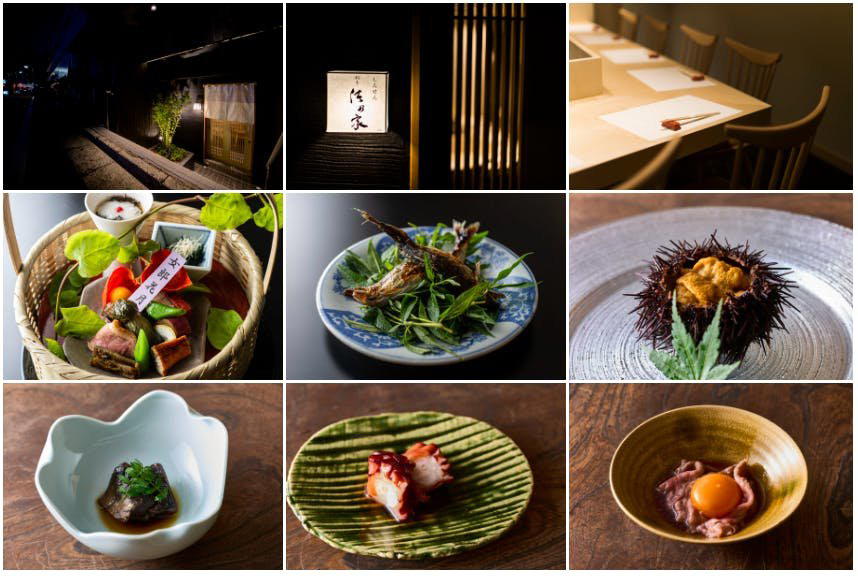
Kappo Dining in Shinsencho: The Format Before the Venue
Tokyo's kappo tradition predates omakase as a global export category by several decades. Where omakase sushi counters have been systematised into recognisable international shorthand, kappo remains more opaque to outside audiences. The format is built on a different contract: the chef cooks across multiple techniques in front of guests, the menu is responsive rather than fixed, and the relationship between kitchen and counter is the architecture of the meal. Shinsencho, the low-key residential quarter tucked between Daikanyama and Shibuya's western edge, has housed this kind of establishment for years, partly because its streets lack the foot traffic that rewards louder formats.
しんせん割烹 佐乃家 occupies a basement space in a building on Shinsencho 2-9, beneath a maibasuketto convenience store, which places it in a lineage of Tokyo dining rooms that rely on word of mouth over signage. The basement location is not incidental. In a city where ground-floor visibility commands premium rent, the decision to go below street level has historically been a signal of confidence in a loyal return clientele rather than a play for new discovery.
What Keeps Regulars Returning
The logic of a regulars-driven kappo counter is worth understanding before booking. In this format, the meal that a first-time guest receives and the meal that a tenth-visit guest receives are often materially different, not because of preferential treatment in a cynical sense, but because the kitchen can calibrate more precisely when it knows a guest's preferences, pace, and tolerance for the more challenging seasonal ingredients. A counter that has been operating long enough to develop genuine regulars is, in effect, running two parallel services: one for the room and one for specific individuals.
For the kappo model to work at this level, the kitchen needs a supply chain with enough flexibility to respond to what arrives from market each morning. Tokyo's wholesale fish and produce infrastructure supports this better than almost any other city in the world. The Ota Market system and the direct relationships that long-standing kappo chefs develop with suppliers over years mean that the menu on any given evening reflects genuine availability rather than a printed card with token seasonal adjustments. This is the version of seasonality that regulars return for: not the abstract promise of it, but the specific reality of a dish that exists because a particular fish arrived in condition that morning.
For broader context on how Tokyo's kappo and kaiseki counters position themselves relative to one another, the contrast with destinations like RyuGin in Roppongi is instructive. RyuGin operates at the formal kaiseki end of the spectrum, with three Michelin stars and a tasting structure that is more codified. A neighbourhood kappo counter like 佐乃家 operates in a different register entirely, one where the editorial point is informality of access rather than ceremony of presentation. Both are serious kitchens. The comparison clarifies what each format asks of the guest.
Shinsencho as a Dining Address
The neighbourhood itself shapes the character of what operates within it. Shinsencho is primarily residential, bounded by the Keio Inokashira Line to the west and the quieter streets that fall away from Shibuya's commercial core. It lacks the destination-restaurant density of Minami-Aoyama or the omakase-per-block concentration of Ginza, which means the establishments that endure here do so on the basis of a local clientele rather than visiting diners triangulating from a review list.
This is not incidental to the kappo format. Counter restaurants that depend on regulars tend to cluster in residential zones because those zones produce regulars. The guest who walks ten minutes from home on a Tuesday is a categorically different customer from the one who has taken a taxi from a hotel in Akasaka, and the kitchen knows this. For visitors approaching 佐乃家 from elsewhere in the city, the Keio Inokashira Line from Shibuya to Shinsen Station puts the address within a few minutes, and the basement entrance on the 2-9 block is marked by proximity to the convenience store rather than formal signage.
For comparison points on Tokyo's wider dining map, Harutaka in Ginza represents the city's rarefied sushi counter tier, while L'Effervescence and Sézanne represent French-influenced fine dining that has absorbed Japanese technique. Crony sits at the innovative end of that French-Japanese conversation. 佐乃家 operates in a different current altogether, one defined by Japanese counter tradition rather than international positioning, which is precisely why it attracts the kind of guest who already knows what they are looking for. Our full Tokyo restaurants guide maps these tiers in detail.
Japan's Wider Kappo Context
To read 佐乃家 accurately, it helps to hold it against kappo and kaiseki traditions across Japan. Gion Sasaki in Kyoto operates at the formal end of kaiseki, where Kyoto's historical relationship with temple cuisine and seasonal restraint shapes every decision. HAJIME in Osaka approaches Japanese fine dining from a direction that draws on European technique. Goh in Fukuoka works with Kyushu's specific coastal and agricultural supply chains. Each of these operations reflects its city's particular ingredient culture. A Tokyo neighbourhood kappo counter does the same: it is shaped by the Kanto supply network, by the city's density, and by the specific residential character of its district. Further afield, akordu in Nara demonstrates how Japanese regional dining has absorbed other culinary traditions while remaining anchored to local produce. Regional Japanese restaurants including 一本木 有川制 in Nanao, 夕凪山乃 in Sapporo, 湖辺庵 in Takashima, 庄羽屋 in Nishikawa Machi, Birdland in Sakai, and Bistro Ange in Toyohashi collectively show how Japan's prefectural dining culture resists reduction to a single capital-city narrative. For international reference on what counter dining achieves at its most ambitious, Atomix in New York City and Le Bernardin in New York City represent the points at which counter-adjacent fine dining reaches institutional status in another market.
Know Before You Go
Address: 〒150-0045 Tokyo, Shibuya, Shinsencho 2-9, Charme Shinsen B1 (basement level, diagonally opposite the maibasuketto convenience store)
Access: Shinsen Station (Keio Inokashira Line) is the nearest station. The walk is short. Shibuya Station is also accessible on foot in approximately 10 minutes.
Booking: No booking platform or website is listed in publicly available data. Contact via telephone or in-person inquiry is the most reliable route, consistent with how many neighbourhood kappo counters in Tokyo manage reservations.
Price range: Not published. Kappo counters in this district typically range from mid-tier to premium depending on the evening's ingredients and length of the meal. Budget accordingly.
Language: Shinsencho neighbourhood counters rarely have English-language menus or staff as a default. If you do not read Japanese, arrange translation assistance in advance or contact the restaurant through a hotel concierge with Japanese-speaking capability.
Frequently asked questions
What do people recommend at しんせん割烹 佐乃家?
How hard is it to get a table at しんせん割烹 佐乃家?
What is the signature at しんせん割烹 佐乃家?
Can しんせん割烹 佐乃家 adjust for dietary needs?
Is eating at しんせん割烹 佐乃家 worth the cost?
What kind of experience is しんせん割烹 佐乃家 well suited to, and how is it different from a kaiseki dinner?
Quick Comparison
Comparable venues nearby, for context on price, style, and recognition.
| Venue | Cuisine | Price | Awards | Notes |
|---|---|---|---|---|
| しんせん割烹 佐乃家This venue (the venue you are viewing) | Kaiseki Kappo | $150–200 | Not listed | Not listed |
| Tokuyama | Traditional Fugu & Seasonal Japanese Kaiseki | $150–200 | Tabelog 100 #67 | Minato |
| Otani No Sushi | Traditional Japanese Omakase | $300–500 | Not listed | Minato |
| Morimoto | Modern Japanese Sushi and Teppanyaki | $200–300 | Not listed | Minato |
| Oryori Mukyu | Seasonal Japanese Fine Dining | $100–150 | Tabelog 100 #78 | Minato |
| Tempura Yokota | Traditional Japanese Tempura Omakase | $100–150 | Tabelog 100 #97 | Minato |
Continue exploring
More in Tokyo
Restaurants in Tokyo
All restaurants in Tokyo →


Bars in Tokyo
All bars in Tokyo →




Details
- Intimate
- Elegant
- Sophisticated
- Special Occasion
- Date Night
- Chefs Counter
- Sake Program
- Local Sourcing
- Counter Dining
- Tasting Menu
- Sake
Current opening hours
- Monday
- Closed
- Tuesday
- 6:30–9:30 PM
- Wednesday
- 6:30–9:30 PM
- Thursday
- 6:30–9:30 PM
- Friday
- 6:30–9:30 PM
- Saturday
- 6–9 PM
- Sunday
- 6–9 PM
Hours can change for holidays and private events. Hours as of .
Cozy and refined counter seating for 8 guests with personalized service in a quiet neighborhood setting.