

Michelin Bib Gourmand · We're Smart World 2 Radishes
Our verdict
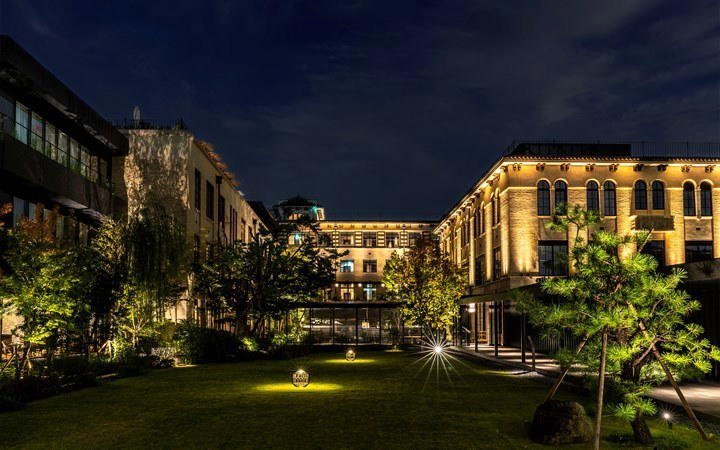
A Michelin Bib Gourmand recipient in Higashiyama, Tan draws its identity directly from Kyotango, the coastal northern region of Kyoto Prefecture. Rice grown by the staff, vegetables sourced from Tango farmers, and gohan cooked in clay pots define a menu that treats ingredient provenance as the central argument. Diners gather around a communal daidokoro table, making this one of the more grounded, produce-led addresses in the city.

Pearl is the En Primeur Club membership app, where members save venues, book tables and use the concierge.
The menu
What to order
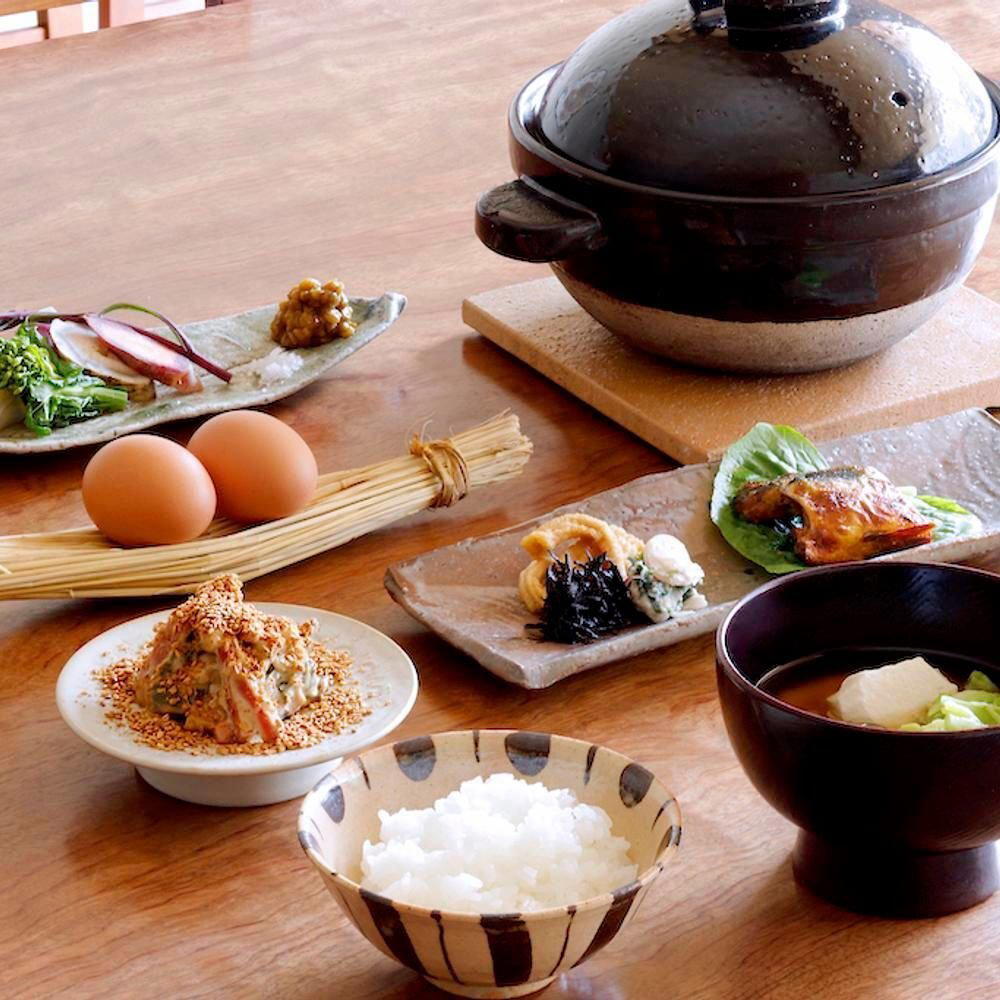
- Bonito Grilled with Straw
- Seasonal vegetable dishes
- Japanese breakfast set
Eating from the Land: Kyotango on a Kyoto Table
Kyoto's vegetable tradition is among the most documented in Japanese culinary history. Kyo-yasai, the collective term for Kyoto's heritage vegetables, carries protected designation status, and the city's kaiseki houses have built centuries of reputation on their handling of seasonal produce. What is less discussed is the Tango peninsula, the coastal northern corner of Kyoto Prefecture, where rice paddies and mountain farms supply a different register of ingredient, rougher in edge, closer to the soil, and largely absent from the fine-dining circuit that fills the reservation queues in Gion. Tan works from that northern supply chain, and the distance between Tango's agricultural character and Kyoto's refined vegetable culture is precisely where the restaurant finds its identity.
That positioning places Tan in a distinct tier within Higashiyama. At the higher end of the neighbourhood, venues like Gion Matayoshi and Isshisoden Nakamura anchor the kaiseki tradition with multi-course formality and price points to match, while Kenninji Gion Maruyama sits within the same refined bracket. Tan's ¥¥ pricing reads as a deliberate departure from that register, not a compromise in seriousness, but a different argument about what a meal should be. The Michelin Bib Gourmand in both 2024 and 2025 confirms that the guide's reviewers read the cooking on its own terms rather than against the kaiseki standard.
The Daidokoro Table and What It Asks of the Guest
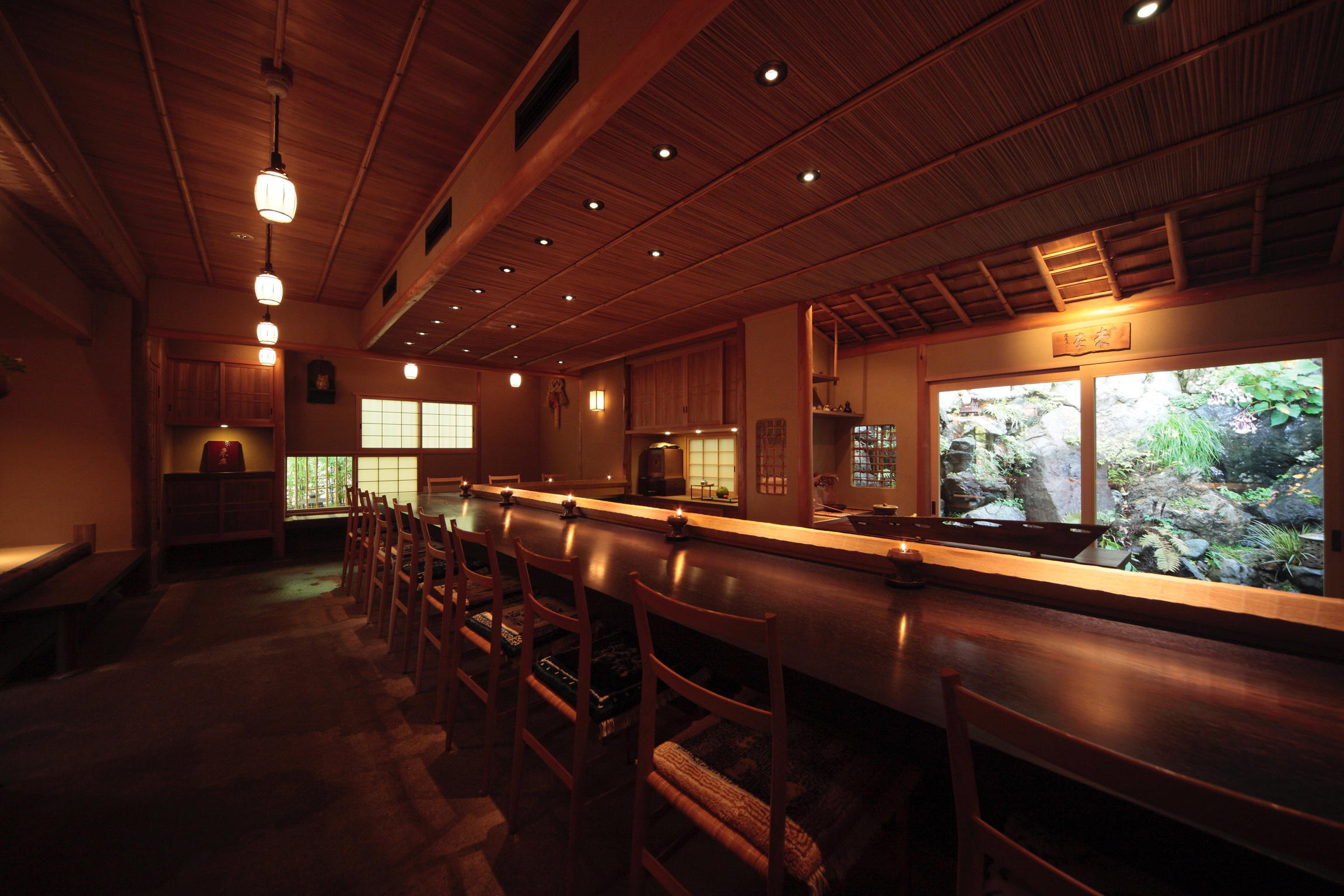
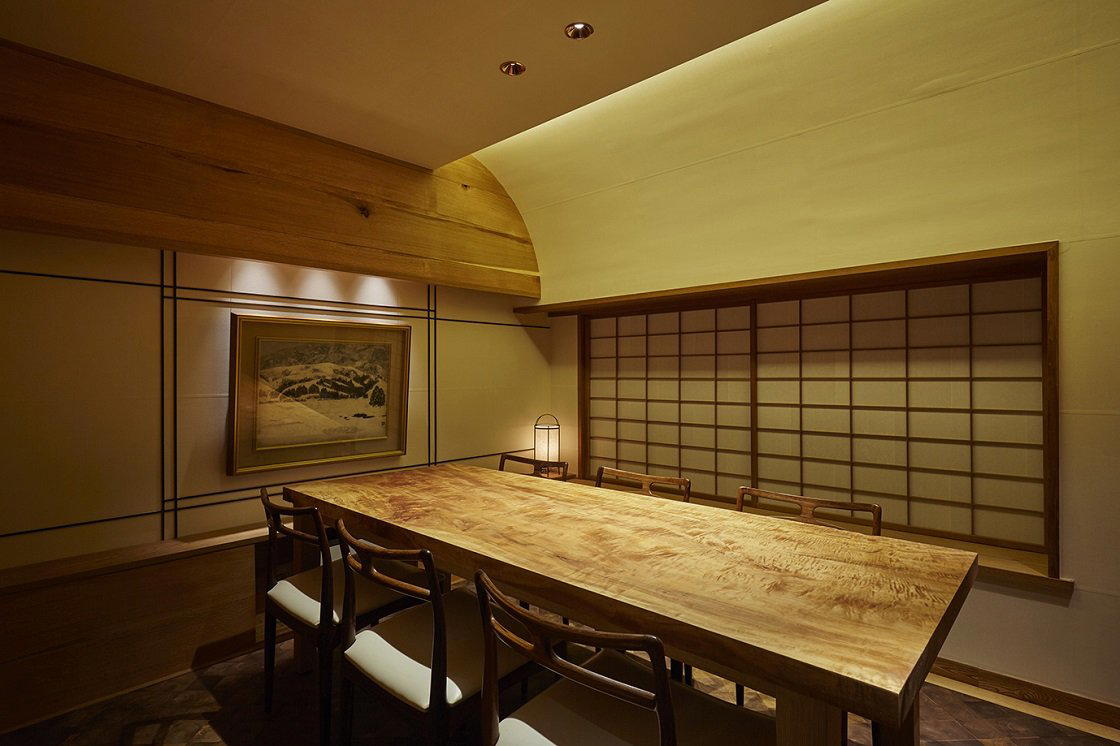
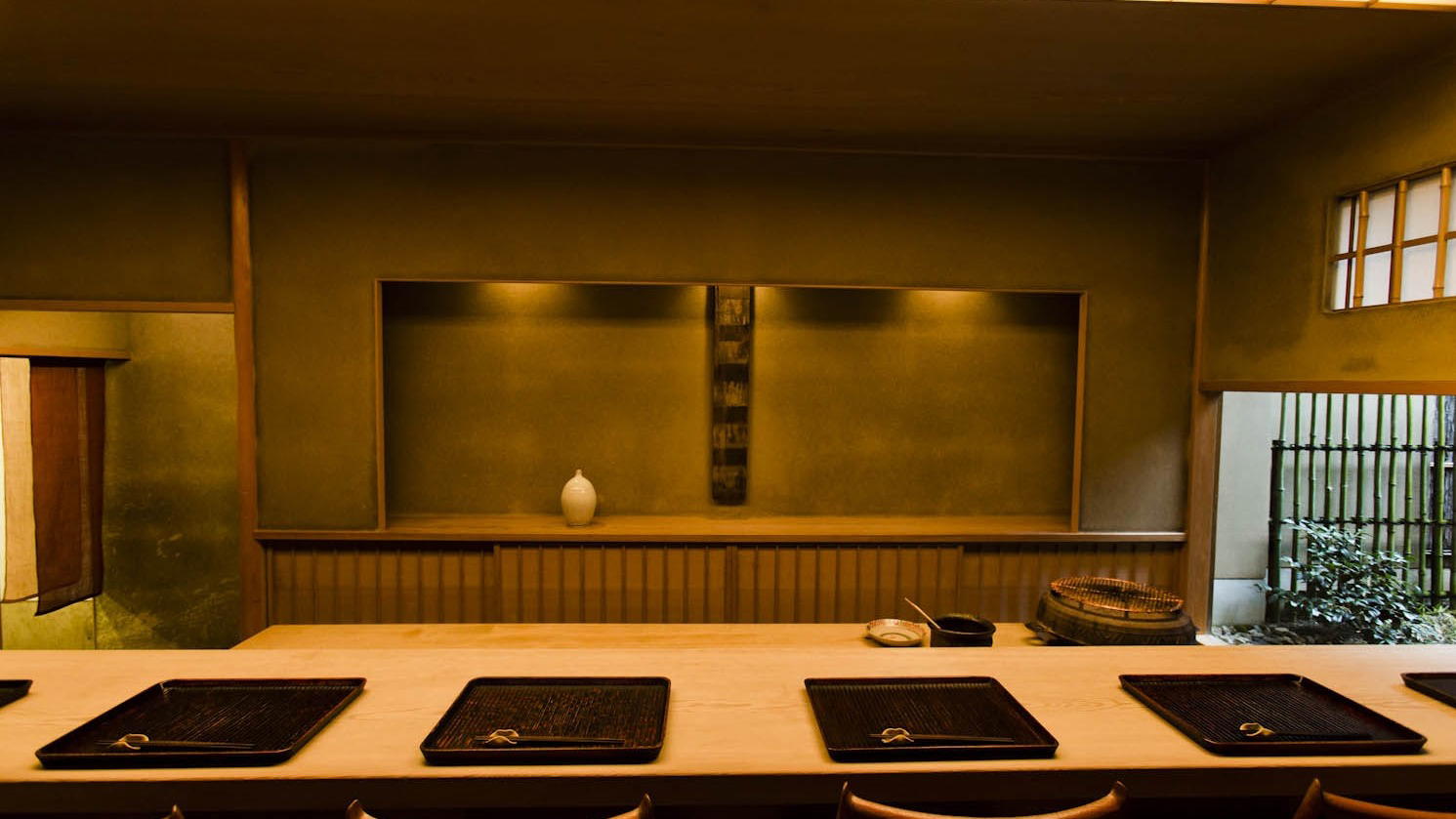
In traditional Japanese domestic architecture, the daidokoro is the kitchen, the working heart of the house. Naming the central communal table after that space is not incidental. The format at Tan places all diners around a single large table, which changes the social contract of the meal. In the multi-course kaiseki rooms that define much of Kyoto's premium dining, places like Kikunoi Roan or Kodaiji Jugyuan, the architecture keeps tables separate and the service formal. Here, the proximity is the point. Being seated with others around a shared surface is closer to eating in someone's home than to a restaurant transaction. That informality is not accidental ease; it is a structural choice that shapes how the food is received.
Across Japan's broader restaurant culture, the communal table has gained ground as a format in produce-forward, chef-driven spaces. The same shift appears in Osaka at HAJIME, and in smaller regional cities like Nara at akordu, where the format signals that the kitchen sees the meal as a collective experience rather than a series of individual transactions. At Tan, the daidokoro frame extends that logic into something more domestic: the table as kitchen, the guest as household member for the duration of the meal.
Provenance as the Menu
The rice served at Tan is grown by staff members. That detail is not marketing copy, it is a supply-chain position. When the people cooking and serving the food are also responsible for its cultivation, the relationship between kitchen and ingredient operates outside normal procurement. The vegetables arrive from Tango-region farmers, specified as unsprayed and supplied as naturally as possible, with the kitchen restocked each morning from whatever that day's supply offers.
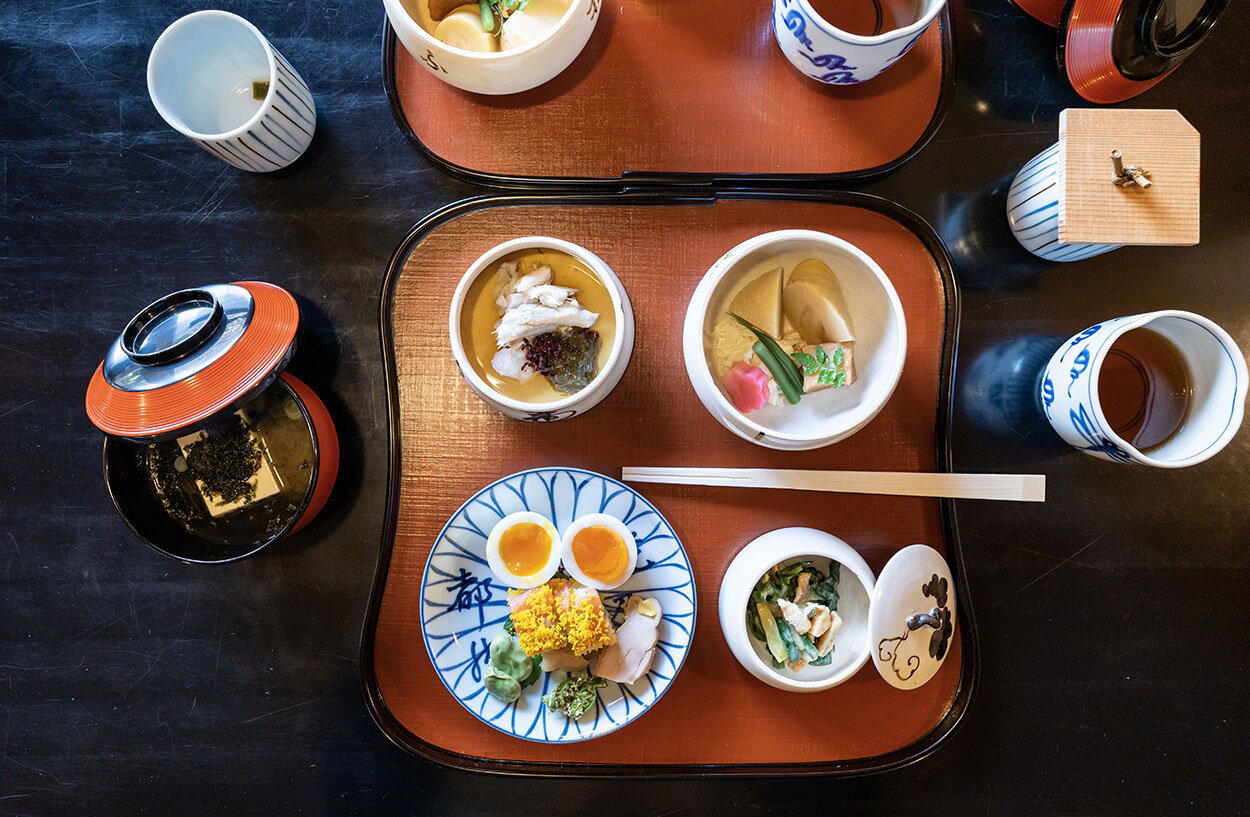
Gohan, the plain cooked rice that closes a Japanese meal, is prepared in clay pots timed to be ready precisely as guests arrive. That timing is logistically demanding: clay pot rice requires close monitoring, cannot be held well without quality loss, and signals a kitchen that has built its schedule around the ingredient rather than around service convenience. Aemono, the dressed vegetable preparations served alongside, use sesame as a primary seasoning agent, a technique that allows the vegetable character to carry through while adding fat and depth without obscuring the source material.
The We're Smart Green Guide, which evaluates restaurants on plant-based ingredient use, has noted that the depth of Tan's vegetable sourcing could support a dedicated plant-based menu without difficulty. Currently, a fully plant-based meal requires three days' advance notice, a booking consideration worth noting for vegetarian or vegan guests. That lead-time requirement is consistent with kitchens that build menus around daily supply: a pure plant menu needs pre-commitment because the kitchen cannot guarantee that morning's vegetable intake will cover the format without prior arrangement.
For context on how Japan's plant-forward fine dining addresses the same supply questions at different price points, Myojaku in Tokyo and Azabu Kadowaki approach seasonal produce from within established kaiseki structures, while Goh in Fukuoka and 1000 in Yokohama demonstrate how regional ingredient specificity operates at the higher price tier. Harutaka in Tokyo and 6 in Okinawa each map ingredient provenance to a specific coastal geography, which is structurally similar to Tan's Tango sourcing logic applied to a different coastline.
Chef Matt Sussman and the Question of Authorship
An American chef running a Kyotango-sourced, clay-pot rice restaurant in Higashiyama is an unusual configuration. Japanese culinary tradition places high weight on lineage and local formation; the non-Japanese chef working inside that tradition occupies an inherently complicated position. What matters, from an editorial standpoint, is that the Michelin Bib Gourmand committee, which assesses cooking on quality-to-price terms rather than provenance of the cook, awarded recognition in consecutive years. The food is being assessed on its own merits, and those merits hold.
Planning Your Visit
Tan is located at 106-13 Gokencho, Higashiyama Ward, Kyoto. The address sits in the denser residential and temple quarter of Higashiyama, within walking distance of the major eastern shrine corridor. Reservations: advance booking is strongly advised; the communal table format means capacity is limited and fills quickly. Vegetarian/Vegan: a fully plant-based option is available with three days' advance notice, confirm this requirement when booking. Budget: ¥¥ pricing positions Tan firmly below the city's kaiseki tier; the Bib Gourmand designation reflects Michelin's assessment of the value-to-quality ratio. Recognition:
For more on eating in Kyoto across price points and formats, see our full Kyoto restaurants guide. Planning a longer stay? Our Kyoto hotels guide, bars guide, wineries guide, and experiences guide cover the broader city picture.
Frequently asked questions
What awards or recognition does Tan have?
Tan has received recognition including: ‘Tan’ comes from the city of Kyotango in Kyoto Prefecture. Naturally, the food hails from the Tango region too: rice grown by staff members; vegetables from the region’s farmers. Gohan is cooked in clay pots, timed to be ready just as guest….
Is Tan focused on a specific cuisine style?
What's the signature dish at Tan?
The gohan cooked in clay pots is the clearest expression of what Tan does. Rice is grown by staff members from the Kyotango region and timed to finish cooking precisely as guests are seated. It arrives alongside aemono, seasonal vegetables dressed with sesame, sourced from Tango-region farmers and supplied unsprayed.
What's the price range at Tan?
Pricing at Tan is listed as ¥¥.
Where is Tan located?
Tan is located at 106-13 Gokencho, Higashiyama Ward, Kyoto, 605-0036, Japan, Kyoto.
Who is the chef at Tan?
The chef associated with Tan is Matt Sussman.
Can I walk in to Tan?
Given that the rice is timed to be ready the moment guests arrive, Tan operates on a structured sitting basis that makes unannounced walk-ins impractical. Guests requiring a fully plant-based menu must give at least three days' notice. The restaurant holds Michelin Bib Gourmand recognition for both 2024 and 2025, which adds further weight to booking in advance.
Fast Comparison
| Venue | Cuisine | Price | Awards | Notes |
|---|---|---|---|---|
| TanThis venue (the venue you are viewing) | Traditional Japanese Kaiseki with Tango Peninsula Ingredients | $30–50 | Michelin Bib Gourmand · We're Smart World 2 Radishes | Not listed |
| Gion Sasaki | Modern Kaiseki | $300–500 | 3 Michelin Stars · La Liste Top Restaurants | Kaiseki, Japanese |
| cenci | Innovative Italian-Japanese Fusion | $100–150 | 1 Michelin Star · World's 50 Best #76 | Italian |
| Ifuki | Sumibi Kappo Kaiseki | $200–300 | 2 Michelin Stars · La Liste Top Restaurants | Kaiseki |
| Kyokaiseki Kichisen | Kyoto Kaiseki | $200–300 | 2 Michelin Stars · La Liste Top Restaurants | Japanese |
| Kyo Seika | Modern Chinese Fine Dining | $150–200 | 1 Michelin Star · Tabelog Bronze #216 | Chinese |
Recognition history
Dated appearances from independent guides and award organizations, with the underlying list record or original source where available.
Michelin Bib Gourmand
Michelin
Opinionated About Dining Casual in Japan Ranked #17
Opinionated About Dining
We're Smart World 2 Radishes
We're Smart World
Full recognition history (5 entries)
Michelin Bib Gourmand
Michelin
Michelin Bib Gourmand
Michelin