
NANAHIRO in Nishiazabu holds a 2025 Michelin Plate and operates at the ¥¥¥ price tier, placing it in Tokyo's mid-to-upper contemporary Japanese bracket. The menu lists only ingredients, letting the progression from seasonal vegetables and seafood through to rice and a sweet course unfold as discovery. The kitchen draws on both Japanese and Western technique without fully committing to either tradition.
Pearl is the En Primeur Club membership app — saves, bookings, and concierge access live there. Same editors, same standards.
- Address
- Japan, 〒106-0031 Tokyo, Minato City, Nishiazabu, 4 Chome−2−5 ArtSilo 3F
- Phone
- +81 80-9349-6427
- Website
- omakase.in
- Directions
- Get directions
 Saves & bookings on Pearl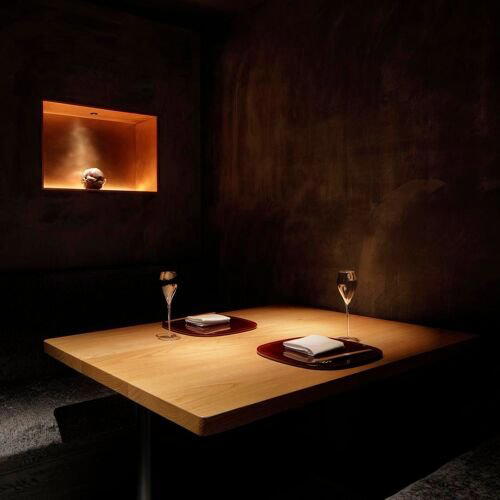
Where Japanese and Western Technique Converge
Tokyo's contemporary dining scene has spent the better part of two decades working through a specific problem: how to treat Western culinary technique not as an imposition on Japanese cooking but as a genuine extension of it. One considered answer to that question tends to arrive not at the poles, pure kaiseki at one end, French-trained fine dining at the other, but somewhere in the middle, where the logic of seasonal progression and ingredient primacy holds firm while the methods remain open. NANAHIRO, operating from the third floor of ArtSilo in Nishiazabu, sits in that negotiated space.
For context on how that positions the restaurant: the upper tier of Tokyo contemporary dining, venues such as nôl or FUSOU, tends to operate at ¥¥¥¥ and above, with omakase formats anchored firmly in Japanese culinary logic. NANAHIRO's ¥¥¥¥ positioning and hybrid concept place it in a distinct tier: technically accomplished, seasonally grounded, but accessible relative to the room above it. Among Michelin Plate holders in Minato City, that combination of price point and conceptual range is less common than it might appear.
The Architecture of the Meal
The approach to presenting a menu at NANAHIRO is itself an editorial statement about the dining ritual. Where most contemporary restaurants describe dishes in full, technique, garnish, provenance, the menu here lists only ingredients. A single line might read as a cluster of nouns: a vegetable, a protein, a seasoning. The dish itself remains unrevealed until it arrives at the table.
This format has a specific effect on the pacing of the meal. When the description is withheld, anticipation accumulates across courses rather than being spent on reading. The diner's attention stays at the table, engaged with what is placed in front of them rather than cross-referencing expectation against delivery. It is a format that rewards patience and punishes distraction, not a passive experience but a structured one, with the kitchen controlling the tempo.
The progression follows a logic familiar from Japanese culinary tradition: the meal opens with seasonal vegetables, moves through seafood and meat, and closes with freshly steamed rice before a delicate sweet course. That arc, from light to substantial and back to elemental, mirrors the kaiseki rhythm of many serious Japanese restaurants, yet the techniques applied along the way do not stay within any single tradition. The hybrid approach is most visible in the middle courses, where the treatment of protein and sauce may draw on Western methods even as the ingredient selection and seasoning remain distinctly Japanese in their sensibility.
This kind of cross-traditional cooking has parallels elsewhere in Asia. Jungsik in Seoul applies French fine dining structure to Korean ingredients; HAJIME in Osaka pushes Japanese precision into territory that is unmistakably European in its plating language. NANAHIRO works in a similar register, though at a different price tier and with a less declarative conceptual identity, the cooking speaks without insisting on a manifesto.
Nishiazabu as a Setting for Serious Eating
The address matters here. Nishiazabu occupies a particular position in Tokyo's restaurant geography: quieter than Roppongi to the immediate north, more residential than Azabu-Juban to the south, and carrying a density of serious independent restaurants that rarely surfaces in tourist itineraries. The neighbourhood has long attracted chefs who want space for a considered room without the theatre of a high-traffic dining district.
A third-floor address in a building like ArtSilo reinforces that tendency. These are not venues designed to catch passing trade. The guests who find NANAHIRO in Nishiazabu have sought it out, which changes the character of the room before the first course arrives. Compare that self-selecting dynamic with the visibility-driven dining of, say, HYÈNE or JULIA, both of which operate in settings where the room and the street interact more openly. NANAHIRO's remove is deliberate, not incidental.
For travellers building a broader Tokyo itinerary, our full Tokyo restaurants guide maps the city's dining tiers in more detail, and our full Tokyo hotels guide covers accommodation options within reach of Minato City's restaurant cluster. For evenings around Nishiazabu, our full Tokyo bars guide identifies the neighbourhood's most considered drinking options.
How NANAHIRO Sits Within the Contemporary Japanese Category
The Michelin Plate is the guide's signal that cooking merits attention without yet placing a restaurant in starred territory. Within Tokyo's contemporary bracket, Plate-level recognition at the ¥¥¥ tier describes a specific kind of restaurant: technically credible, editorially coherent, but not yet competing directly with the ¥¥¥¥ rooms that have accumulated starred status over multiple cycles. For the reader deciding between NANAHIRO and a comparable set that includes venues like hakunei, the distinction is less about quality ceiling and more about format, price position, and how much the ritual of the meal itself is foregrounded.
At NANAHIRO, the ritual is foregrounded deliberately. The ingredient-only menu, the seasonal arc, the hybrid technique, these are all devices that make the act of eating something to pay attention to rather than a backdrop for conversation. That places it closer to the meditative end of the contemporary dining spectrum, which has a specific appeal for guests who come to Tokyo to engage with its food culture rather than to check off a list.
For comparison across Japan, Gion Sasaki in Kyoto and akordu in Nara both work through the Japanese-Western intersection at different price points and with different ingredient philosophies. Further afield, Goh in Fukuoka and 6 in Okinawa represent regional takes on the same question. 1000 in Yokohama offers a closer geographic comparison for guests splitting time between the two cities. For a Western-city parallel, César in New York City operates in a comparable contemporary register, with similar questions about how to position hybrid cooking within a structured meal format.
Planning Your Visit
NANAHIRO is located at 4 Chome-2-5 Nishiazabu, Minato City, Tokyo, on the third floor of ArtSilo. The price tier sits at ¥¥¥, placing it below the ¥¥¥¥ bracket that dominates Tokyo's starred contemporary rooms. The restaurant holds a 2025 Michelin Plate.
Budget Reality Check
Comparable venues nearby, for context on price, style, and recognition.
| Venue | Cuisine | Price | Awards | Notes |
|---|---|---|---|---|
| NANAHIROThis venue — the venue you are viewing | Minato, Modern Japanese Tasting Menu | $$$$ | Michelin Plate | Not listed |
| Suzutashiki | Minato, Wood-Fired Kaiseki | $$$$ | Not listed | Not listed |
| Hakkoku | Chūō, Edomae Omakase | $$$$ | Not listed | Not listed |
| Kizaki | Minato, Edomae Sushi Omakase | $$$$ | Not listed | Not listed |
| Arakicho Kintsugi | Not listed | $$$$ | Michelin Plate | Shinjuku, Michelin-Recognized Seasonal Kaiseki Omakase |
| Iyuki | Chūō, Kyoto-style Kaiseki | $$$$ | Not listed | Not listed |
Recognition history
Dated appearances from independent guides and award organizations, with the underlying list record or original source where available.
Michelin Plate
Michelin
Michelin Plate
Michelin













At a Glance
- Intimate
- Minimalist
- Elegant
- Sophisticated
- Date Night
- Special Occasion
- Solo
- Chefs Counter
- Open Kitchen
- Sake Program
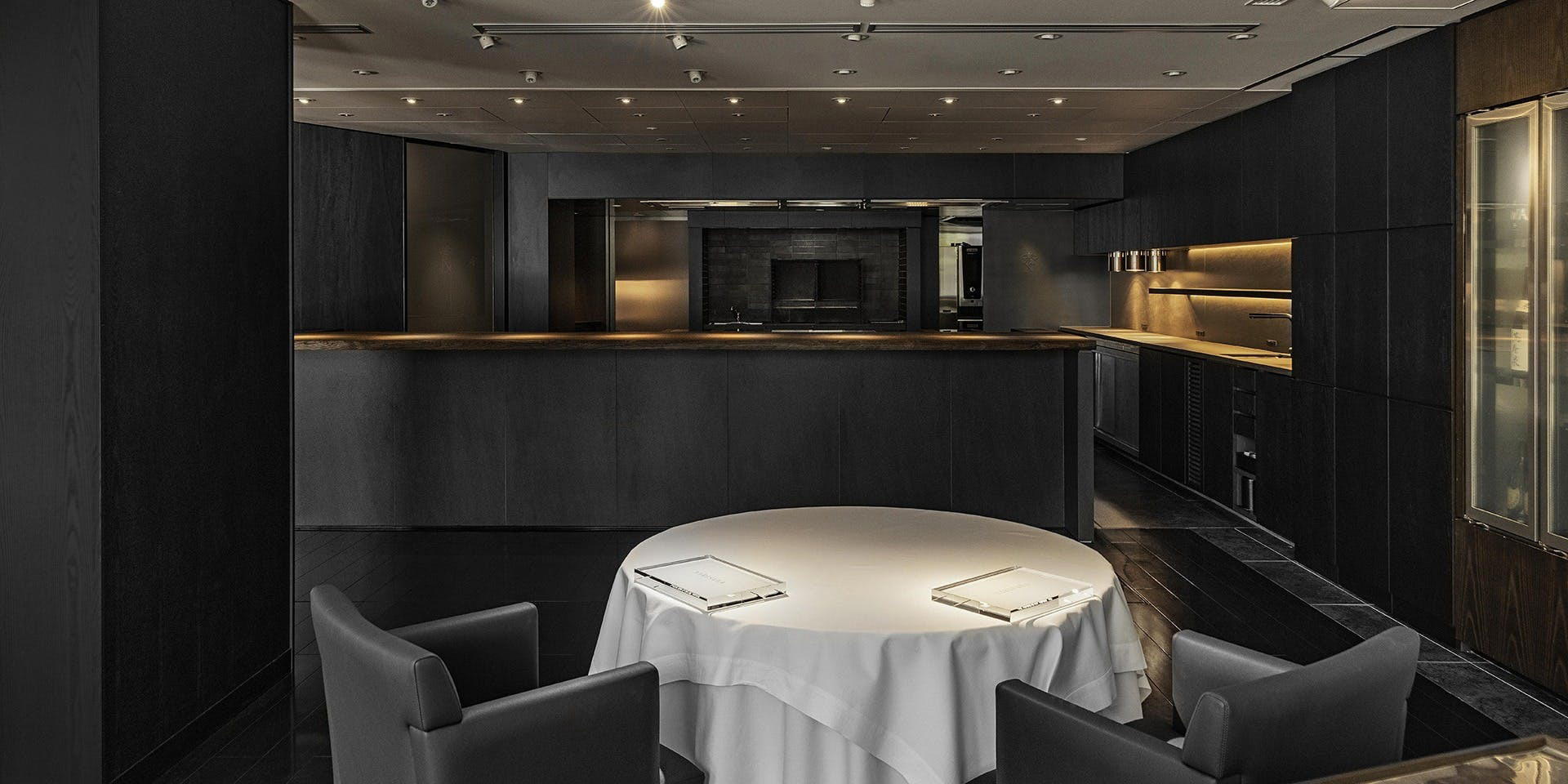
Hushed and serene with flattering lighting, soothing textures, and unobtrusive service in a stylish, relaxing space.