Our verdict
Motoyoshi (天ぷら 元吉) occupies a basement space in Minami-Aoyama, positioning itself within Tokyo's quieter, counter-format tempura tradition rather than the city's higher-profile kaiseki or sushi circuits. The address places it among Aoyama's constellation of serious, low-signage specialist restaurants where the format and the craft carry the full weight of the experience.

Pearl is the En Primeur Club membership app — saves, bookings, and concierge access live there. Same editors, same standards.
- Address
- 南青山3-2-4 (セントラル青山No.6 B1F), 港区, 東京都, 107-0062
- Directions
- Get directions
Counter Tempura in Minami-Aoyama: Where the Format Does the Talking
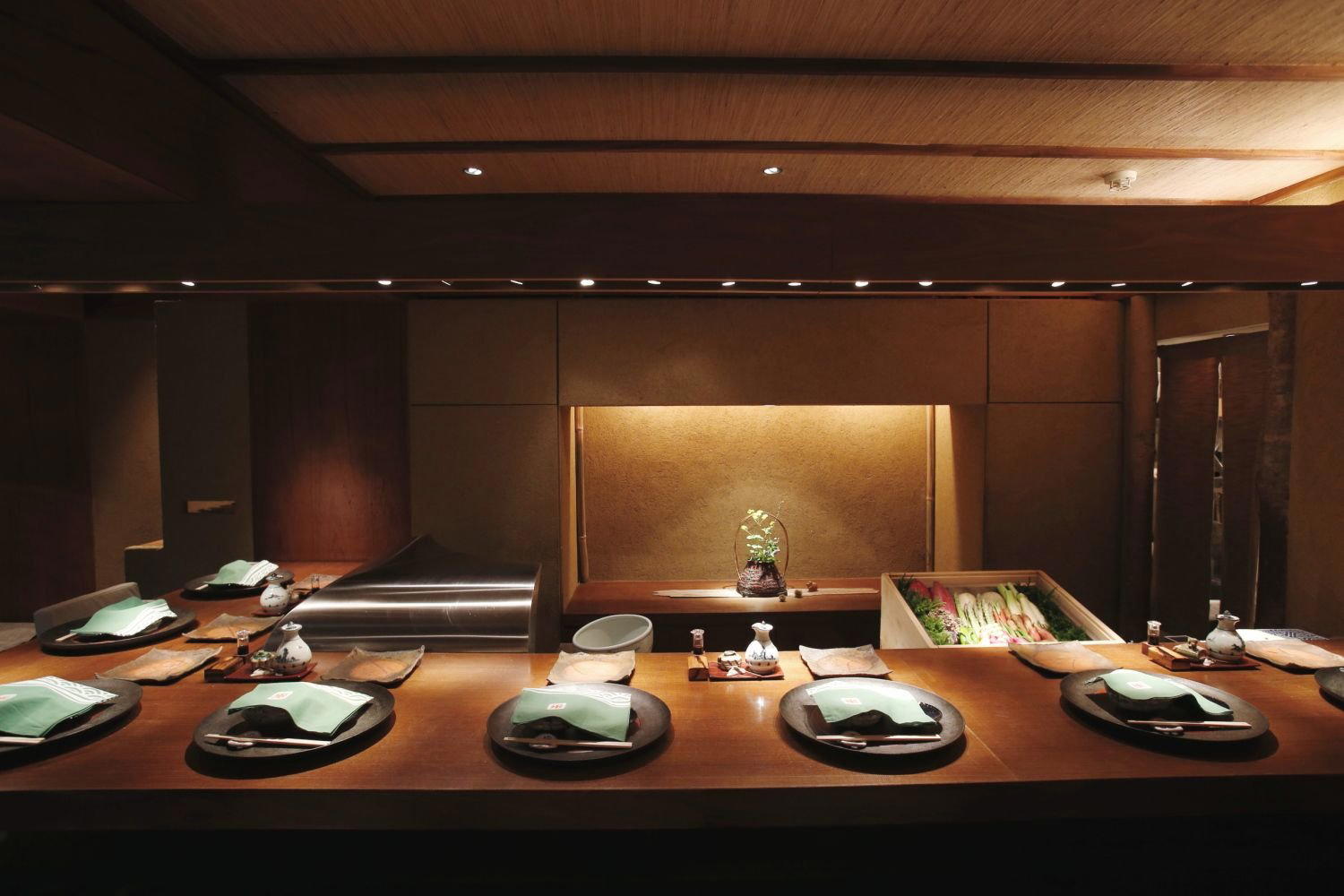
The basement entrance on Minami-Aoyama 3-chome signals something specific before you reach the counter. In Tokyo's most coherent restaurant district, below-grade addresses are rarely accidents. They mark spaces designed for a particular kind of attention: low ambient noise, controlled light, a room that asks you to focus on what is placed in front of you. Motoyoshi (天ぷら 元吉) operates within this grammar, joining a Minami-Aoyama corridor where the building index points downward and the cooking quality points sharply upward.
Tempura as a counter discipline occupies a distinct position in Tokyo's fine-dining matrix. Unlike kaiseki, where the kitchen's complexity is largely invisible, or sushi omakase, where fish provenance and knife technique are the dominant conversation, tempura counter work puts the act of frying at the center. The batter temperature, the oil clarity, the ingredient sequence — these are live decisions made by a team working in full view. At the high end of this category, the dynamic between the person at the fryer, the person managing the room's rhythm, and whoever is handling the drink pairing is what separates a technically correct meal from one that holds its pace and tone across twenty-odd courses.
The Counter Format and Its Collaborative Logic
Tokyo's premium tempura counters — a tier that includes addresses like RyuGin at the kaiseki end and Harutaka at the sushi end of comparable price brackets, share one structural characteristic: the experience depends entirely on real-time coordination between specialists. No brigade is invisible here. In tempura specifically, the sequencing of ingredients from the lightest vegetable to the richest seafood, the timing of each piece handed across the counter, and the management of the guest's attention require a team operating with something close to choreographic precision.
This is where the editorial angle on Motoyoshi becomes most productive. The venue's location in a building basement on Seントral Aoyama No. 6 is consistent with a room designed for intimacy rather than visibility. That physical choice shapes the team dynamic: a smaller, enclosed space compresses the distance between kitchen and guest, which raises the stakes for front-of-house reading of pace. A good tempura counter room is never fully silent but never loud enough to break the concentration on what is cooking. Managing that acoustic register is a front-of-house skill as practiced as any knife work.
Minami-Aoyama's Restaurant Context
Aoyama sits between Omotesando's brand-architecture boulevard and the quieter residential lanes of Nishi-Azabu and Hiroo. The area's restaurant concentration skews toward the specialist and the deliberately understated. It is home to several of Tokyo's most serious counter restaurants across categories, and it has the residential density and wealth profile to sustain them without reliance on tourist footfall. This matters for how a venue like Motoyoshi functions: its guest base is likely to include regular Tokyo diners who know tempura counter formats well, which in turn shapes how the team reads the room. A practiced local audience changes what front-of-house needs to explain and what it can leave to the guest's own knowledge.
For visitors arriving from outside Tokyo, Minami-Aoyama is accessible via the Ginza Line at Omotesando Station or the Chiyoda Line at the same hub, placing it around three to four minutes on foot from a major interchange. The area rewards arriving early enough to walk the surrounding streets before a reservation, the neighborhood's architecture and gallery density are part of its character.
Those building a broader Japan itinerary around serious counter dining can find comparable format discipline at different points along the price and cuisine spectrum: Gion Sasaki in Kyoto operates in kaiseki tradition with similar counter intimacy, while HAJIME in Osaka takes a more architectural approach to the progression format. Within Tokyo itself, the contrast between Motoyoshi's tempura focus and the French-inflected counters at L'Effervescence, Sézanne, and Crony illustrates how thoroughly Tokyo has segmented its premium dining by both cuisine type and structural format. Our full Tokyo restaurants guide maps these tiers in more detail.
How Motoyoshi Sits Within the Tempura Counter Tier
Premium tempura in Tokyo commands a smaller audience than sushi omakase or multi-course kaiseki, in part because the category requires diners to engage with frying as an art form on its own terms rather than as a supporting technique. There is nowhere to hide in a tempura counter format, which is why team coordination matters as much as individual skill.
For broader context on comparable counter precision in other categories and cities, Le Bernardin in New York City represents a comparable model of team-discipline applied to seafood at the highest level, while Atomix in New York City shows how the counter format has migrated into Korean fine dining with equivalent attention to pacing and service coordination.
Within Japan's wider regional picture, the counter tradition extends well beyond Tokyo's major addresses. Goh in Fukuoka, akordu in Nara, and smaller regional specialists including 一本木 佐川製 in Nanao, 古代山乃 in Sapporo, 湖畔荘 in Takashima, 庄羽屋 in Nishikawa Machi, Birdland in Sakai, and Bistro Ange in Toyohashi collectively demonstrate how deeply the counter discipline has spread across Japan's culinary geography.
Planning Your Visit
| Venue | Category | Price Tier | Format |
|---|---|---|---|
| Motoyoshi (天ぷら 元吉) | Tempura | Not confirmed | Counter, basement, Minami-Aoyama |
| Harutaka | Sushi | ¥¥¥¥ | Omakase counter |
| RyuGin | Kaiseki | ¥¥¥¥ | Multi-course, seated |
| L'Effervescence | French | ¥¥¥¥ | Multi-course, seated |
| Crony | Innovative French | ¥¥¥¥ | Counter, open kitchen |
The address is 南青山3-2-4, セントラル青山No.6 B1F, 港区, Tokyo 107-0062, accessible from Omotesando Station on the Ginza or Chiyoda lines.
Frequently asked questions
Where exactly is Motoyoshi (天ぷら 元吉)?
Motoyoshi (天ぷら 元吉) is located at 南青山3-2-4 (セントラル青山No.6 B1F), 港区, 東京都, 107-0062, Tokyo.
How does Motoyoshi (天ぷら 元吉) compare to other premium tempura counters in Tokyo?
Tokyo's premium tempura counter tier is smaller than its sushi or kaiseki equivalents, with addresses concentrated in Ginza, Aoyama, and Akasaka. Motoyoshi sits within that category from its Minami-Aoyama basement location, placing it geographically between the Omotesando restaurant corridor and the quieter residential dining of Nishi-Azabu. The basement-level, counter-only format is consistent with how Tokyo's most focused tempura kitchens operate — removing ambient distraction to keep attention on the frying sequence.
What should I order at Motoyoshi (天ぷら 元吉)?
Motoyoshi operates as a counter tempura venue, which means the kitchen — not the diner — sets the sequence. There is no à la carte selection; you eat what arrives from the fryer in the order the chef determines. This is standard practice for premium tempura counters in Tokyo, where ingredient sourcing and frying sequence are treated as a compositional whole.
Do I need a reservation for Motoyoshi (天ぷら 元吉)?
Yes. Counter tempura addresses in Minami-Aoyama at this tier do not hold walk-in seats. Motoyoshi is located in the basement of a building on Minami-Aoyama 3-chome, with no website or phone number published through standard channels, which means reservations typically require contact through a hotel concierge or a trusted local intermediary.
What's the defining dish or idea at Motoyoshi (天ぷら 元吉)?
The defining idea is the counter format itself. At Motoyoshi, the eight-to-ten seat arrangement places diners directly opposite the fryer, so timing, oil temperature, and ingredient order are experienced as a continuous performance rather than a series of plates. Premium tempura in Tokyo at this level treats batter thickness and frying duration as primary expressive tools, not secondary technique.
Is Motoyoshi (天ぷら 元吉) good for vegetarians?
Standard tempura counters in Tokyo do include vegetable courses — seasonal items such as shiso, lotus root, and ginko are common within the counter tempura format. However, a fully vegetarian omakase is not a documented option at venues of this type, and dietary requirements at counter-only restaurants in Japan generally require advance notice at the time of reservation.
A Quick Peer Check
| Venue | Cuisine | Price | Awards | Notes |
|---|---|---|---|---|
| Motoyoshi (天ぷら 元吉)This venue — the venue you are viewing | Michelin-Starred Modern Tempura Omakase | $200–300 | Not listed | Not listed |
| Harutaka | Edo-Style Omakase Sushi | $200–300 | 3 Michelin Stars · World's 50 Best #76 | Sushi |
| L'Effervescence | Modern French with Japanese Influences | $200–300 | 3 Michelin Stars · World's 50 Best #69 | French |
| RyuGin | Modern Kaiseki | $500+ | 3 Michelin Stars · World's 50 Best #41 | Kaiseki, Japanese |
| Crony | Modern French with Japanese Influences | $150–200 | 2 Michelin Stars · World's 50 Best #34 | Innovative, French |
| Florilège | Modern French-Japanese Plant-Based Fine Dining | $50–100 | 2 Michelin Stars · World's 50 Best #31 | French |