

Menson Rage sits in Suginami City, away from the tourist circuits that concentrate Tokyo dining coverage in Shinjuku or Ginza. The address alone positions it inside a residential dining tradition that Tokyo has long sustained alongside its high-profile counter culture. Visitors willing to travel to Shoan find a neighbourhood format that rewards the effort with a sense of place that central-Tokyo venues rarely project.
Pearl is the En Primeur Club membership app — saves, bookings, and concierge access live there. Same editors, same standards.
- Address
- 3 Chome-37-22 Shoan, Suginami City, Tokyo 167-0054, Japan
- Website
- menson-rage.net
- Directions
- Get directions
 Saves & bookings on Pearl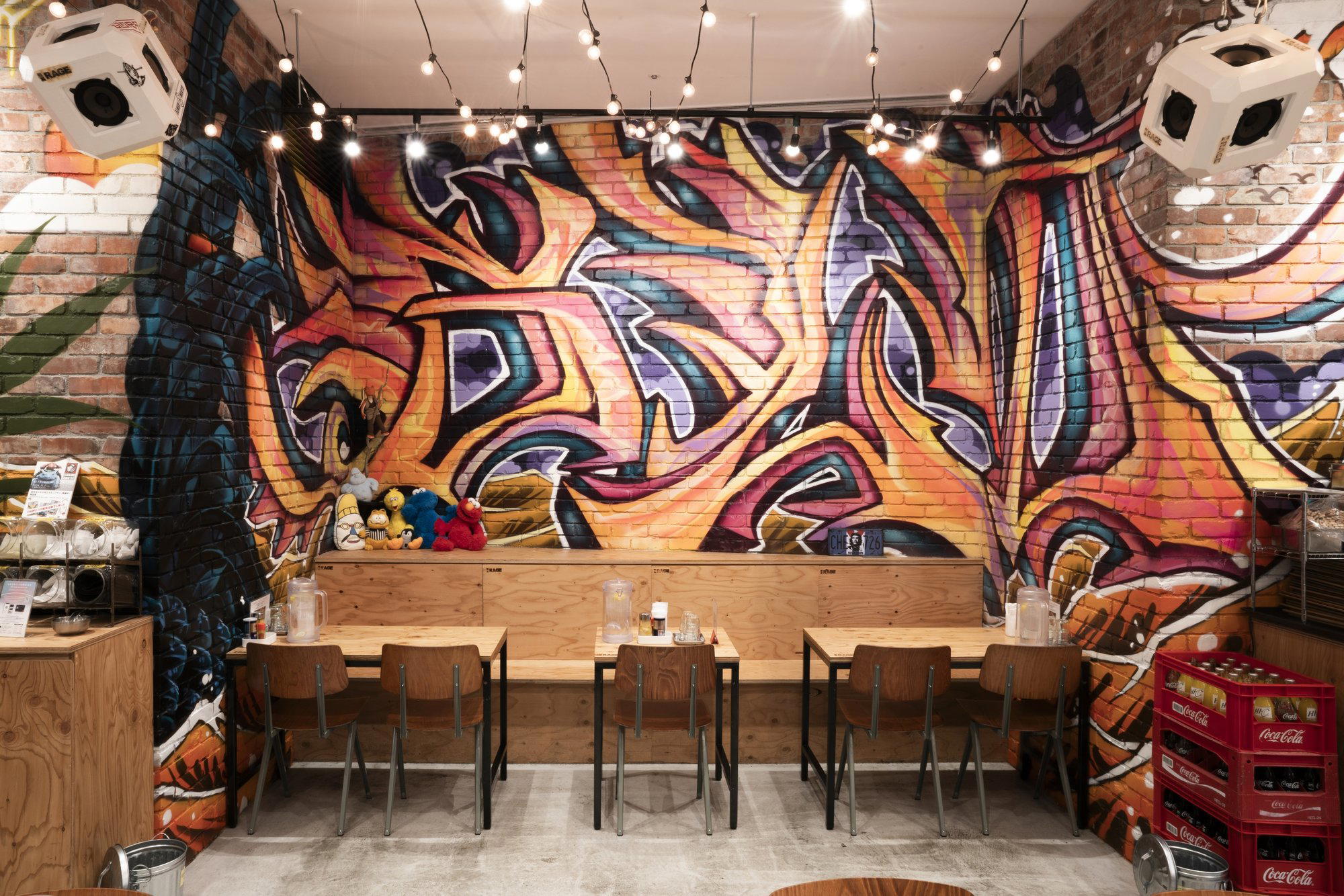
Suginami and the Residential Dining Belt
Tokyo dining coverage clusters heavily around Ginza, Minami-Aoyama, and Nishiazabu, where Michelin density and press access are highest. That concentration obscures a parallel dining culture running through the western residential wards: Suginami, Nerima, Setagaya. These neighbourhoods sustain restaurants on repeat local custom rather than destination traffic, and the format pressures that shape those venues differ considerably from the omakase counters and Franco-Japanese tasting rooms reviewed in most English-language coverage. Menson Rage is a Modern Shamo Ramen restaurant at 3 Chome-37-22 Shoan, Suginami City, Tokyo 167-0054, Japan, and it sits within this residential belt. Its address is not a drawback to be qualified away; it is a positioning signal. Understanding what that positioning implies is the first editorial task before any discussion of what arrives at the table.
The residential ward equivalent operates on different logic: shorter booking windows, neighbourhood regulars, and menus shaped more by what the kitchen wants to do than by what international guests expect to find. That is not a lesser ambition; it is a different contract with the diner.
The Architecture of a Residential Ramen Counter
Suginami's eating culture leans on category specialists: ramen shops, yakitori-ya, and izakaya whose local credibility is built over years of serving the same postcode rather than chasing annual award cycles. The physical format of these spaces tends toward compression: counter seating, minimal signage, hours that match neighbourhood rhythm rather than late-night tourist demand. This format produces a specific meal arc. There is rarely a greeter at the door managing a waitlist by text; there is usually a line, and the line is part of the ritual. The first moments outside the venue, watching the queue form, reading the crowd for regulars versus newcomers, establish the tone before a bowl appears.
Ramen in Tokyo is a category that rewards sequential thinking. A serious meal at a residential counter is not a single impression but a progression: the initial assessment of broth clarity or opacity from a distance as bowls pass; the first spoonful of soup before touching the noodles; the structural evaluation of noodle gauge against broth weight; the point at which toppings are incorporated versus left in their original positions. Diners who treat ramen as a texture-and-temperature exercise rather than a flavour event tend to underread what skilled shops are doing. The residential ward format, because it serves regulars who know the menu cold, tends to produce kitchens that push precision rather than novelty season to season.
The broader Japanese ramen scene has, over the past decade, split into two legible tracks. The first is the media-facing track: shops that pursue Michelin Bib Gourmand recognition, appear on televised ramen rankings, and manage queues through numbering systems or advance-ticket sales. Fuunji in Shinjuku and Tsuta in Sugamo represent this trajectory. The second track is neighbourhood permanence: shops that may have operated for fifteen or twenty years without a single national magazine feature, sustained by a local customer base that views the weekly bowl as infrastructure rather than occasion. Menson Rage's Suginami address places it closer to the second track's logic.
Placing the Meal in Context: Japan's Wider Counter Culture
The residential ramen counter in Tokyo sits within a national counter-dining culture that extends well beyond the capital. HAJIME in Osaka and Gion Sasaki in Kyoto operate at the formal end of that spectrum, where counter format meets kaiseki discipline. At the informal end, shops like Menson Rage represent the daily-use version of the same spatial logic: the cook visible, the sequence controlled, the interaction between kitchen and guest direct and unmediated by a dining room floor staff. Akordu in Nara and Goh in Fukuoka illustrate how that counter intimacy travels across regional formats and price points.
Internationally, the counter-progression model has been absorbed into fine-dining vocabulary. Atomix in New York City applies the sequential presentation logic of Japanese counter dining to a Korean framework, while Le Bernardin sustains a different version of course-by-course progression discipline in a formal French idiom. What Tokyo's residential counters demonstrate is that the progression model does not require luxury pricing to function. The discipline of sequencing, temperature management, and ratio control is as present in a ¥1,000 ramen bowl at a Suginami counter as in a ¥50,000 omakase in Ginza; the stakes are different, the craft logic is not.
Tokyo's French-inflected tasting format, represented by venues such as L'Effervescence, Sézanne, and Crony, operates on explicit multi-course narrative: each plate announced, its position in the meal explained, the progression curated for a two-to-three-hour arc. The residential ramen counter compresses that arc into twenty minutes and one bowl, but the sequencing logic is analogous. How the broth is constructed to sustain interest from the first sip to the last, how the fat disperses as the bowl cools, how the noodles absorb broth over time: these are progression questions, not single-moment questions.
Regional Signals Beyond Tokyo
Suginami's dining scene connects to a broader pattern of non-central Japanese restaurants that carry serious craft credentials without the infrastructure of urban fine dining. This counter in Nanao, this venue in Sapporo, and spots such as this Takashima restaurant and this Nishikawa Machi address all suggest that Japan's most considered eating exists well outside the Michelin mapped zones. Birdland in Sakai and Bistro Ange in Toyohashi reinforce the point from different cuisine directions.
Planning Your Visit
Comparison Snapshot
Comparable venues nearby, for context on price, style, and recognition.
| Venue | Cuisine | Price | Notes |
|---|---|---|---|
| Menson RageThis venue — the venue you are viewing | Modern Shamo Ramen | $$ | Not listed |
| たんたん亭 本店 | Traditional Japanese Ramen | $$ | Hamadayama |
| Azabu Shokudo (麻布食堂) | Yoshoku Omurice | $$ | Nishiazabu |
| Tatemichiya | Punk Rock Izakaya | $$ | Shibuya |
| Sora to Mugi to | Organic Vegan Bakery & Café | $$ | Shibuya |
| 白寧 | Internationally prominent Sushi | Not listed | Minato |
Recognition history
Dated appearances from independent guides and award organizations, with the underlying list record or original source where available.
Opinionated About Dining Casual in Japan Highly Recommended
Opinionated About Dining
Tabelog 100 #56 · No. 56
Tabelog · Tabelog 100 - Ramen - TOKYO - 2025
Continue exploring
More in Tokyo
More from Chef Various
Browse all →
Restaurants in Tokyo
Browse all →




Bars in Tokyo
Browse all →






At a Glance
- Trendy
- Modern
- Energetic
- Casual Hangout
- Open Kitchen
- Local Sourcing
Current opening hours
- Monday
- 11 AM–2:50 PM, 6–8:50 PM
- Tuesday
- 11 AM–2:50 PM, 6–8:50 PM
- Wednesday
- 11 AM–2:50 PM, 6–8:50 PM
- Thursday
- 11 AM–2:50 PM, 6–8:50 PM
- Friday
- 11 AM–2:50 PM, 6–8:50 PM
- Saturday
- 11 AM–2:50 PM, 6–8:50 PM
- Sunday
- 11 AM–2:50 PM, 6–8:50 PM
Hours can change for holidays and private events. Last verified .
Edgy hipster atmosphere with skateboard theme, loud music, and provocative wall posters creating youthful energetic vibe.